All Mushroom Species
143 species with real images, distribution maps, and safety info.
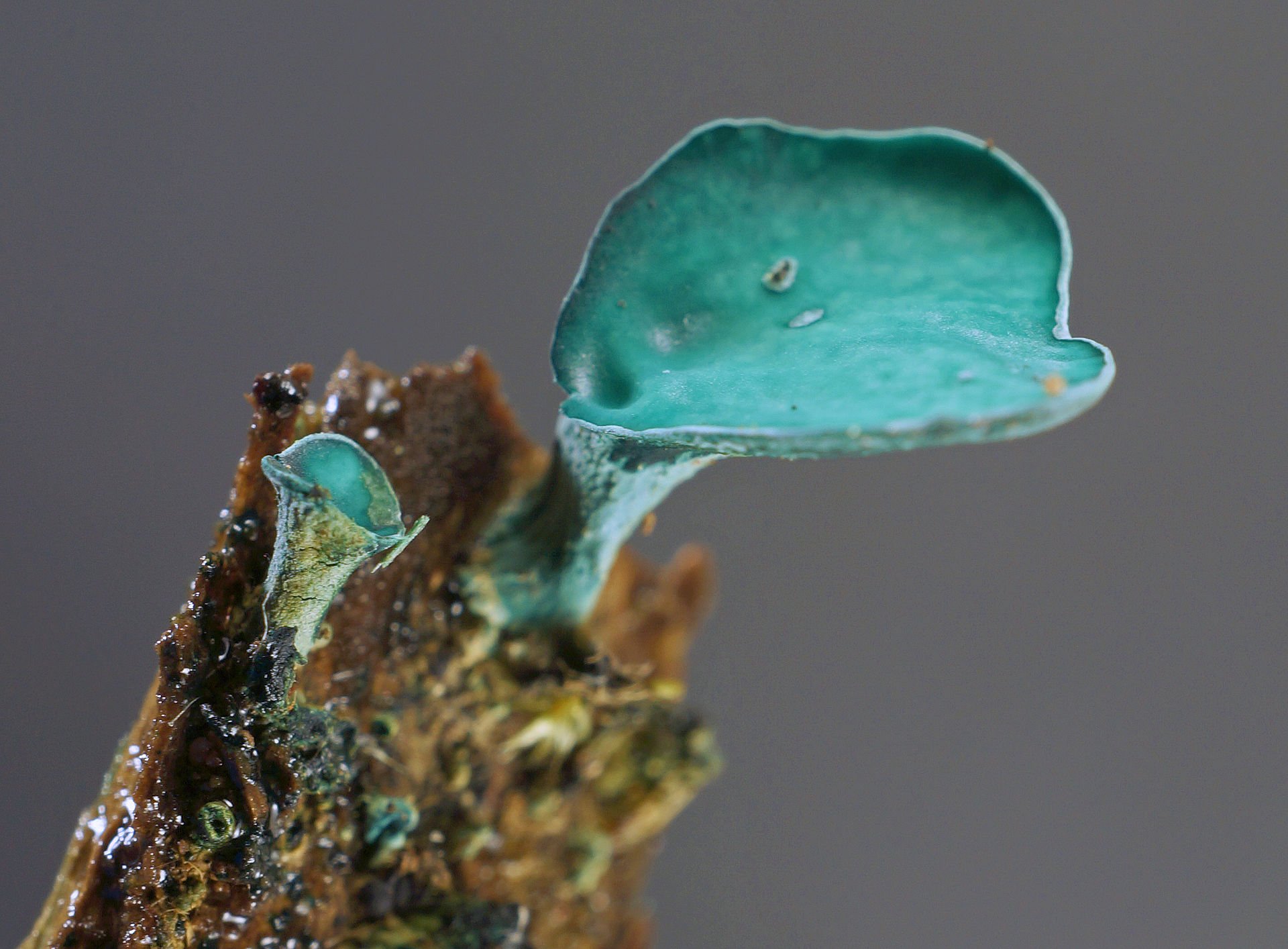
Green Elfcup
Chlorociboria aeruginascens
A tiny, stunning turquoise cup fungus whose real artistry happens inside the wood, not on its surface. Chlorociboria aeruginascens stains dead hardwood a vivid blue-green color that has been prized in decorative woodworking since the Italian Renaissance. The fruiting bodies are rare to see; the stained wood is everywhere.
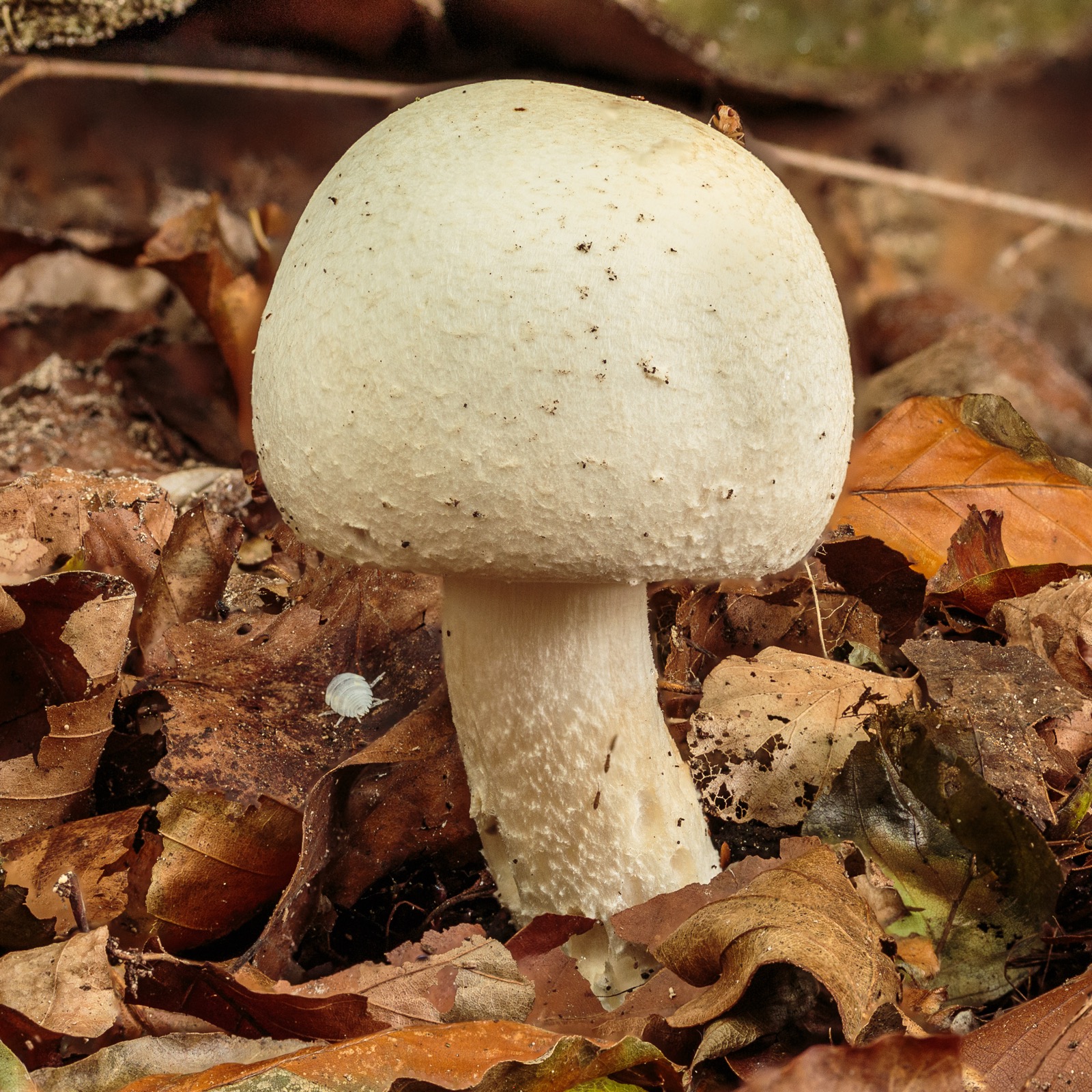
Horse Mushroom
Agaricus arvensis
A big, handsome meadow mushroom with one standout feature: a sweet anise-almond smell that hits you the moment you pick it up. Agaricus arvensis is one of the finest wild Agaricus species — larger than the common field mushroom, more flavorful, and reliably identifiable by its distinctive scent. Just make sure you know the difference between this and the toxic Yellow Stainer.
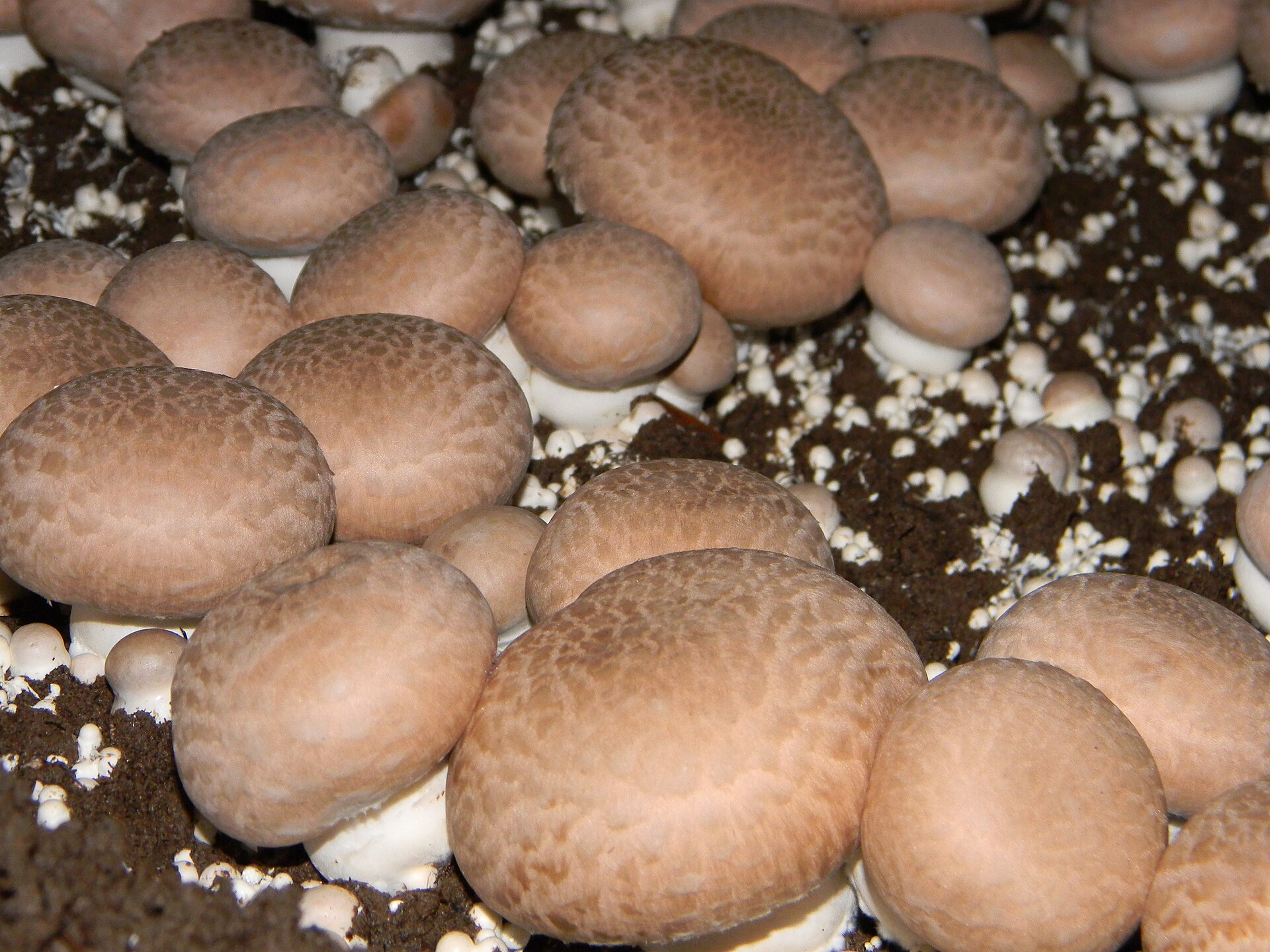
Button Mushroom
Agaricus bisporus
The single most cultivated mushroom species on Earth, responsible for roughly 30% of global mushroom production. Button, cremini, and portobello are all the same species at different stages of maturity, a marketing trick that has fooled grocery shoppers for decades. In the wild, it is a rare grassland species from coastal California.
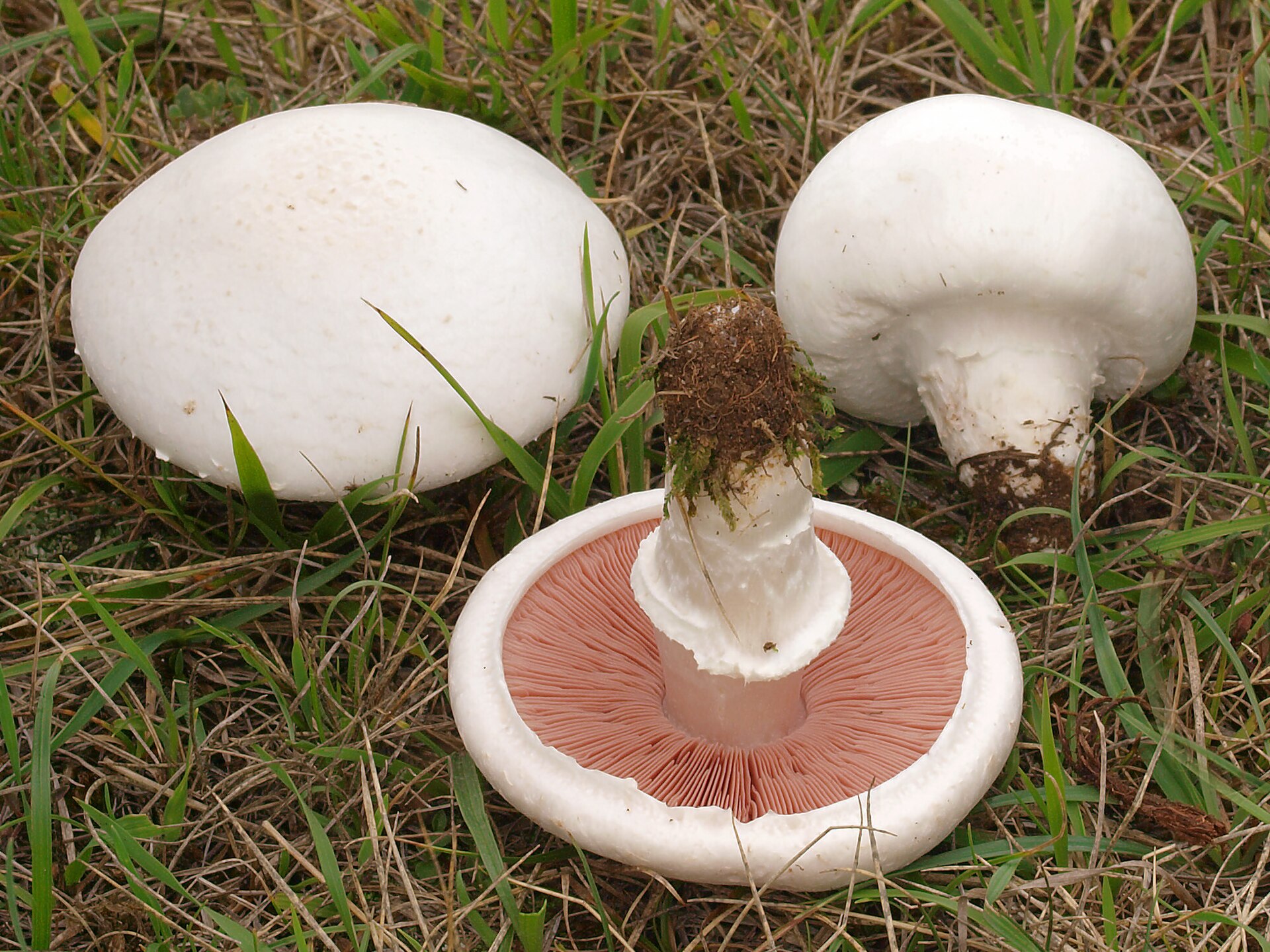
Field Mushroom
Agaricus campestris
The original wild mushroom — the one your grandparents picked from horse pastures before supermarkets existed. Agaricus campestris is the ancestor of the store-bought button mushroom, and it tastes better than anything wrapped in plastic. Just don't confuse a young one with a Death Cap, or your foraging trip becomes a hospital trip.
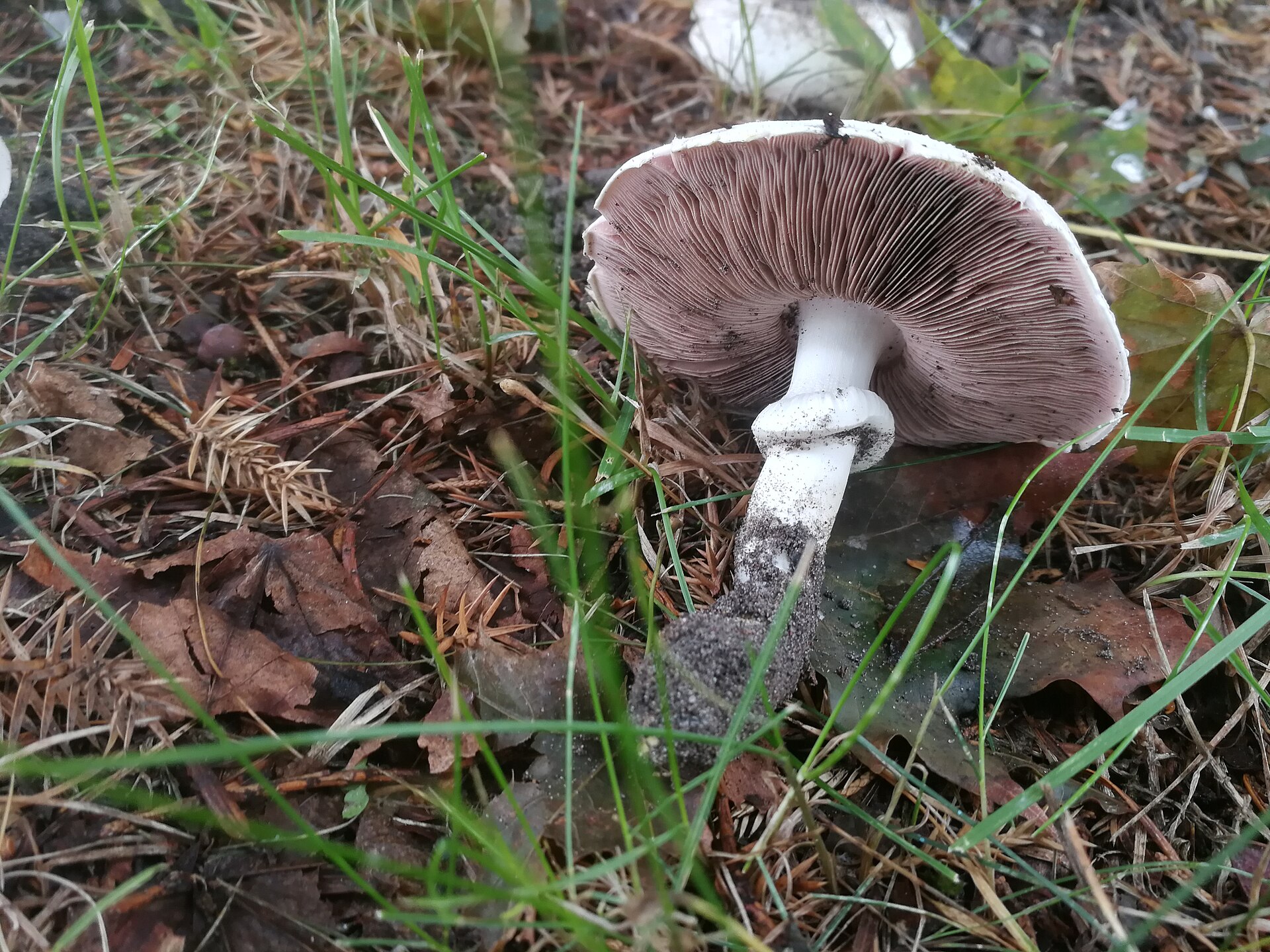
Yellow Stainer
Agaricus xanthodermus
The most common cause of mushroom poisoning in the UK and Australia. The Yellow Stainer is a wolf in sheep's clothing — it looks almost exactly like an edible field mushroom, but scratch the cap or slice the base and it stains a vivid chrome-yellow. Cook it and your kitchen fills with a nauseating chemical stink. Eat it and you'll spend the next 12 hours regretting every life choice that led you to that moment.
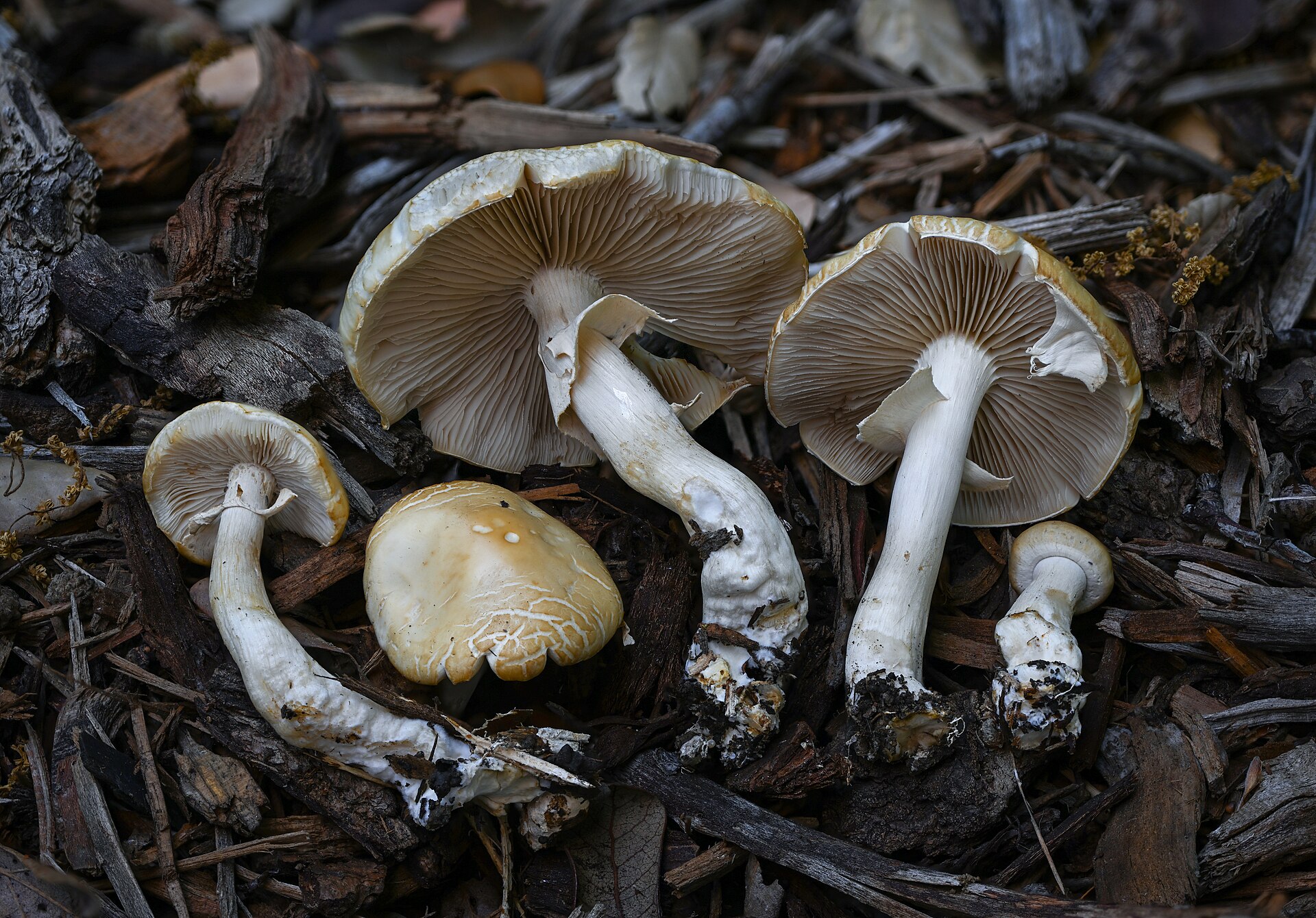
Spring Fieldcap
Agrocybe praecox
One of the first mushrooms to appear each spring, fruiting on lawns, garden paths, wood chip beds, and disturbed ground across the temperate world. An edible species with a mild flavor, though rarely collected because it is small and not well known. Sometimes confused with more dangerous small brown mushrooms.
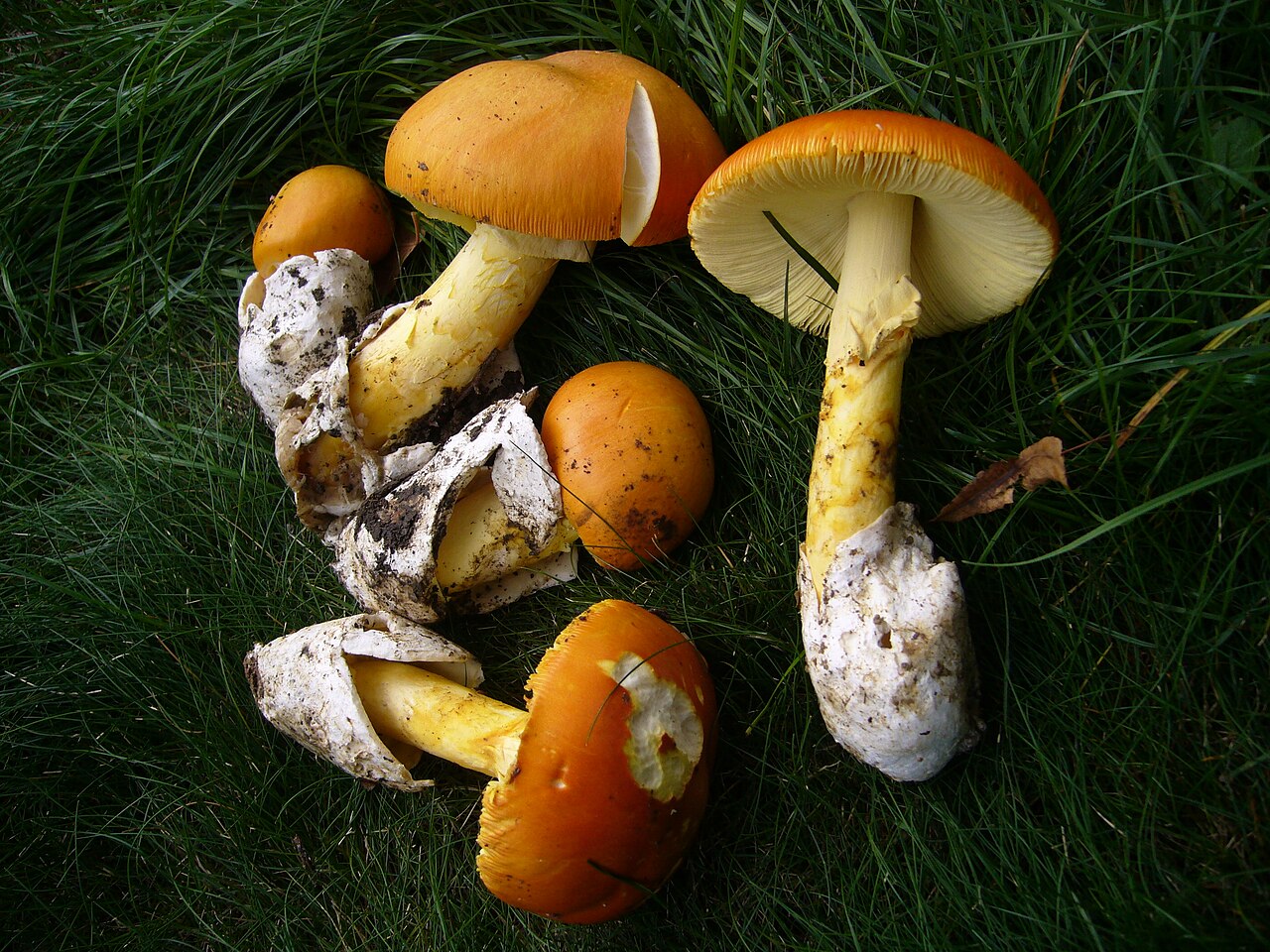
Caesar's Mushroom
Amanita caesarea
The mushroom so delicious that Roman emperors hoarded it for themselves. Caesar's Mushroom is one of the few Amanitas you actually want on your plate — a bright orange beauty prized since antiquity, hiding in plain sight among its deadly relatives.
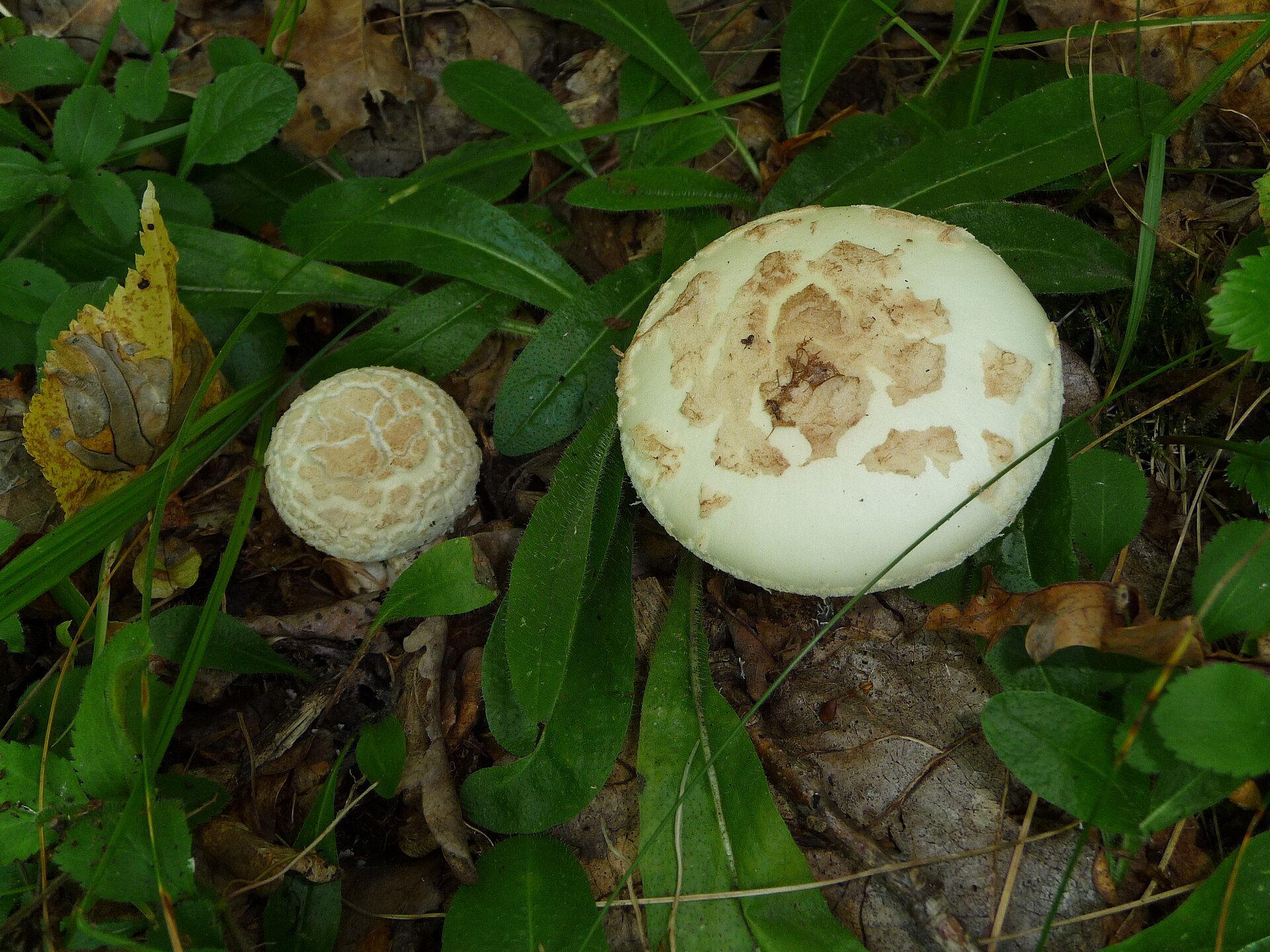
False Death Cap
Amanita citrina
The False Death Cap earns its name by mimicking the world's deadliest mushroom just enough to cause panic. While not lethal, it is considered toxic and inedible, with a raw potato smell that should put off any sensible forager.
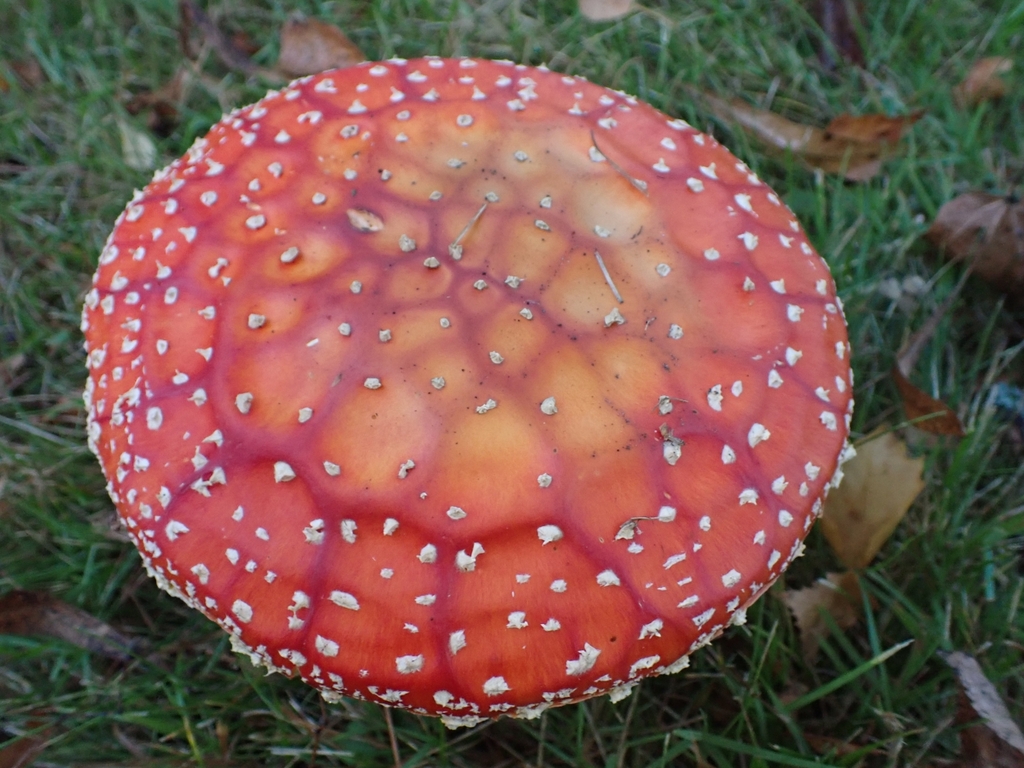
Jewelled Amanita
Amanita gemmata
The Jewelled Amanita is a beautiful golden-yellow mushroom sprinkled with white veil fragments that glitter like gemstones in the forest light. Do not let the charm fool you; it contains ibotenic acid and muscimol, the same toxins found in the Fly Agaric.
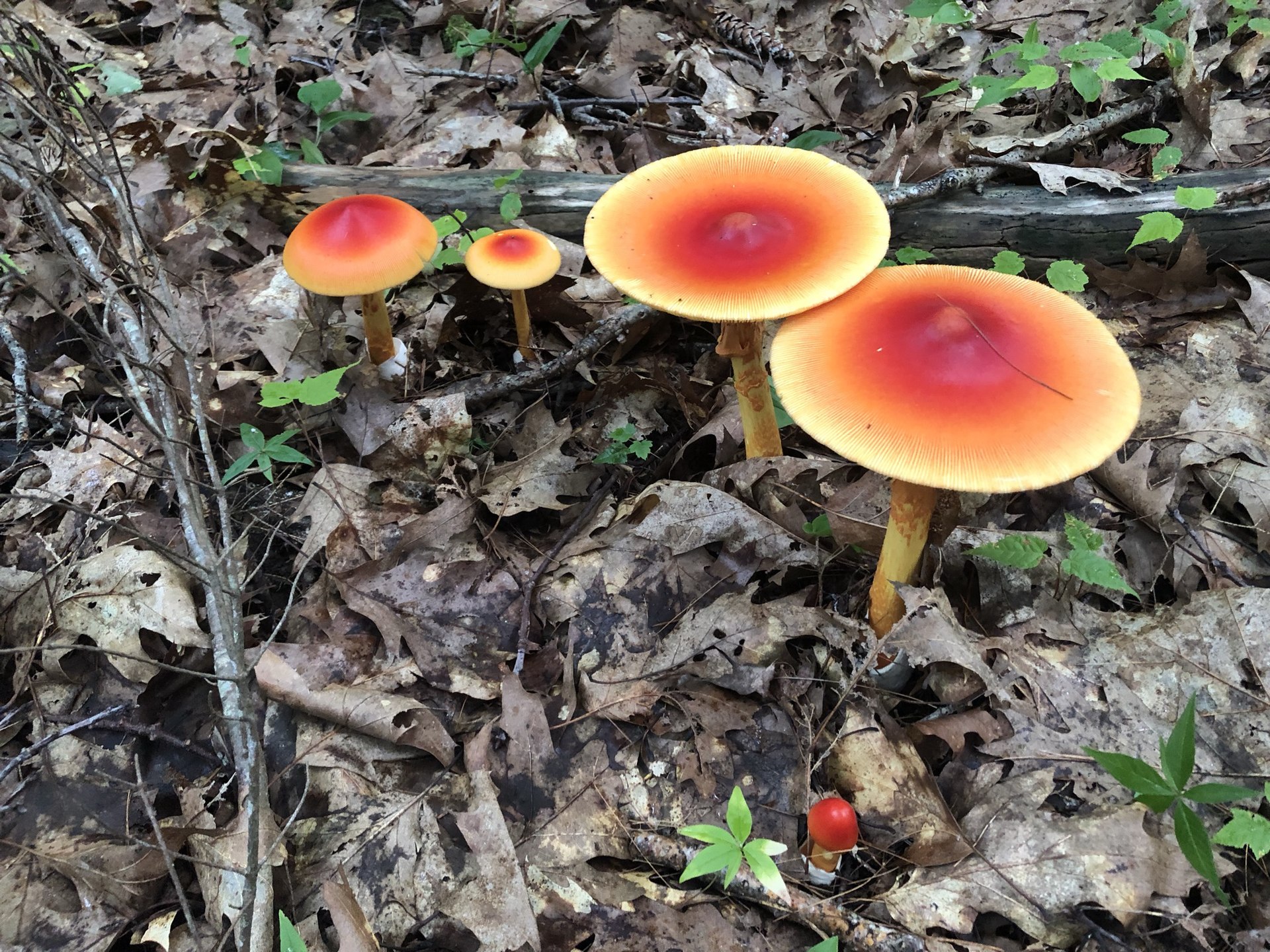
American Caesar's Mushroom
Amanita jacksonii
The New World counterpart of the legendary Caesar's mushroom. A stunningly beautiful orange-red Amanita that is genuinely edible, sitting in a genus otherwise famous for producing the deadliest mushrooms on the planet.
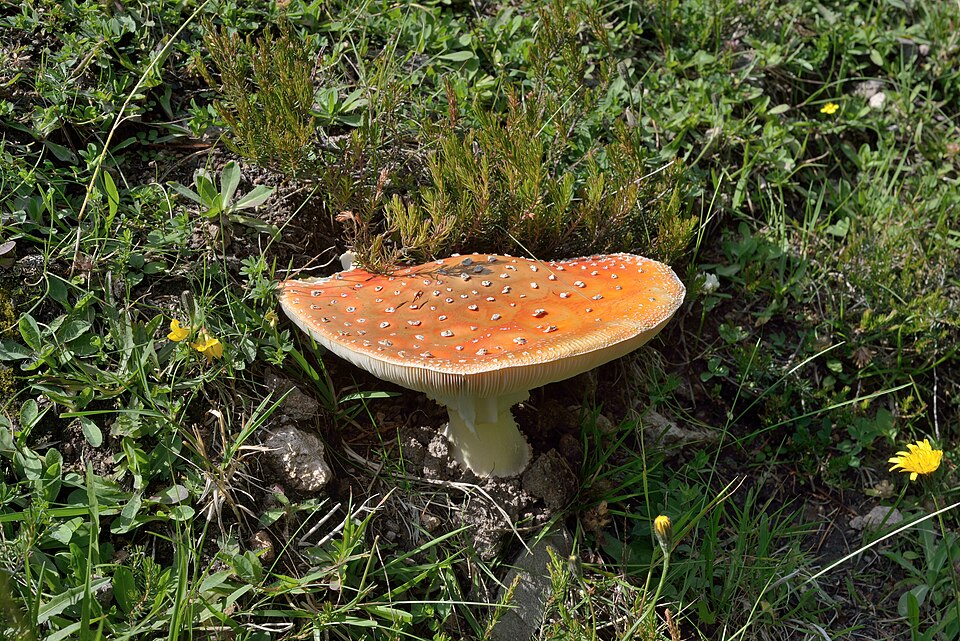
Fly Agaric
Amanita muscaria
If mushrooms had a celebrity, this would be it. The Fly Agaric is the red-and-white polka-dotted icon that shows up in fairy tales, video games, and Christmas decorations — and it's been messing with human minds (literally) for thousands of years.
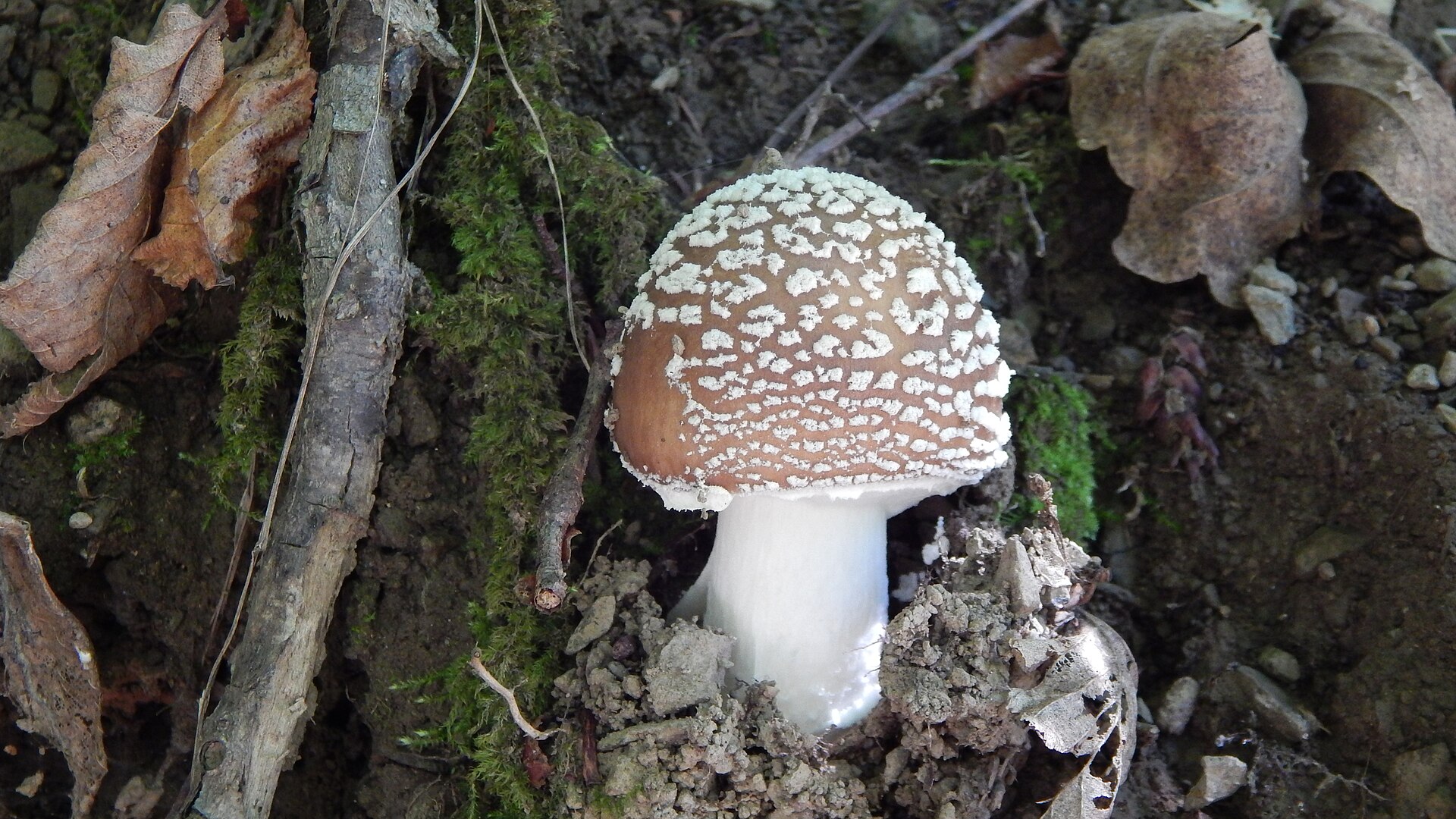
Panther Cap
Amanita pantherina
The Panther Cap is the Fly Agaric's more dangerous cousin, trading the iconic red for a deceptive brown cap dotted with pure white warts. Its toxins hit harder and faster than Amanita muscaria, causing violent delirium, seizures, and occasionally death.
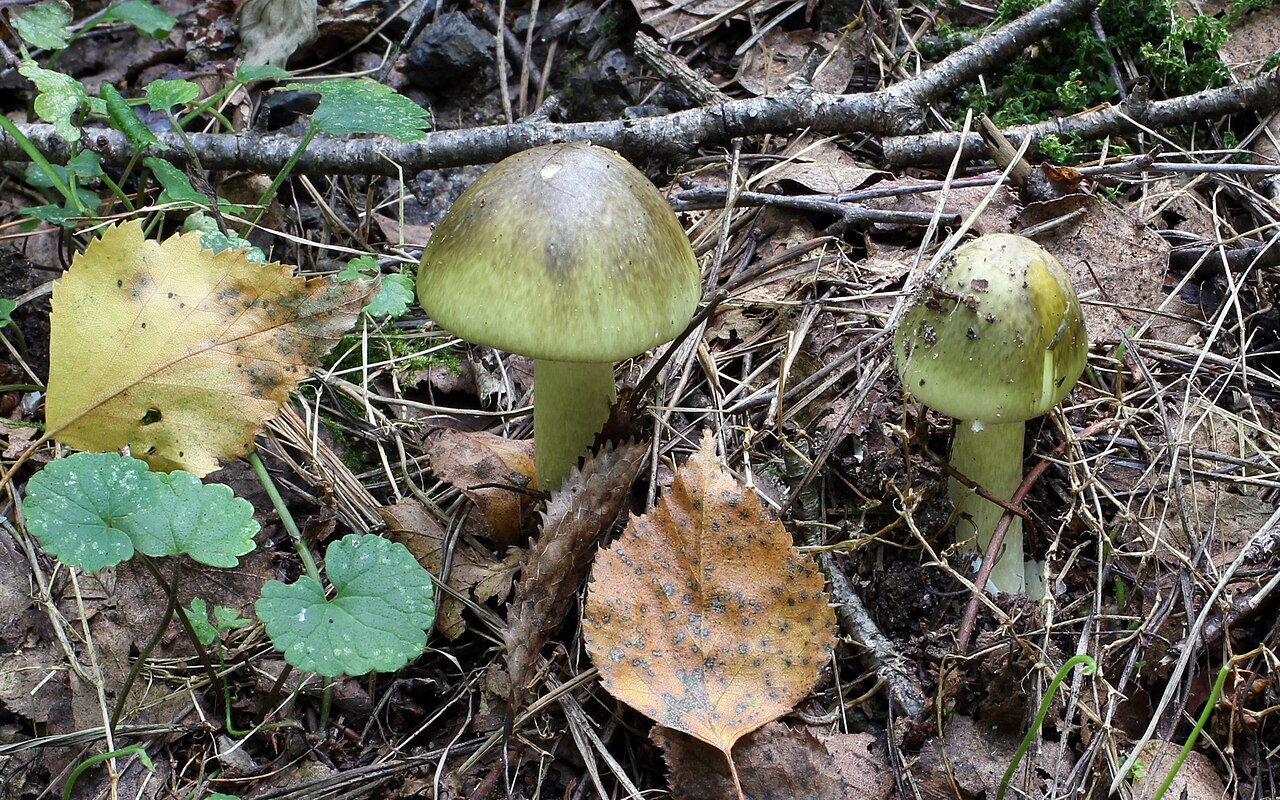
Death Cap
Amanita phalloides
Meet the world's deadliest mushroom. The Death Cap is responsible for roughly 90% of all mushroom-related fatalities worldwide, and it looks disturbingly similar to several edible species.
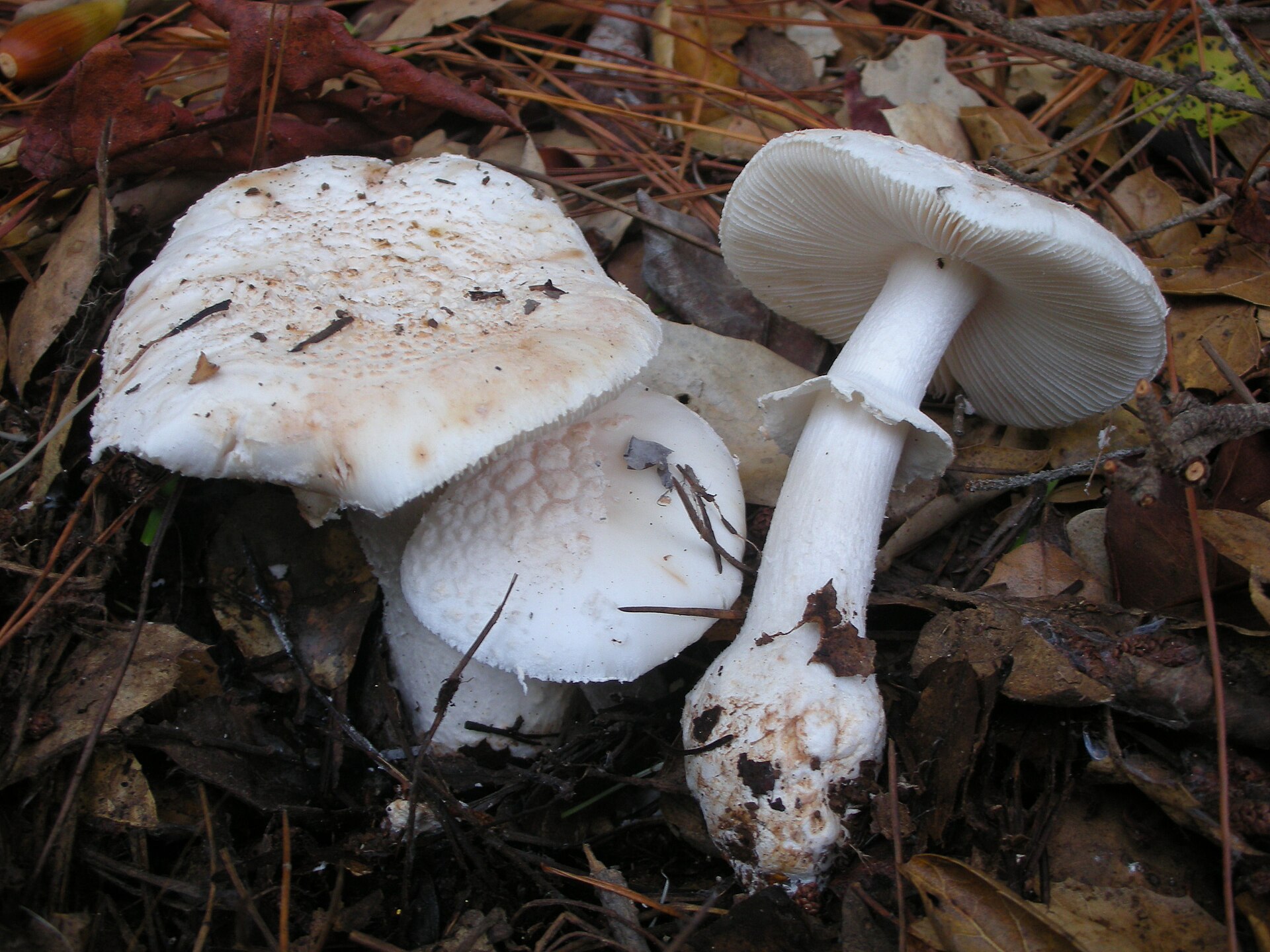
Blushing Bride
Amanita novinupta
The Blushing Bride is a striking white Amanita of western North America that slowly turns pink when handled or cut, like a bride blushing at the altar. Edible when thoroughly cooked, but its resemblance to the deadly Western Destroying Angel makes it a mushroom only for experts who can stake their life on the identification.
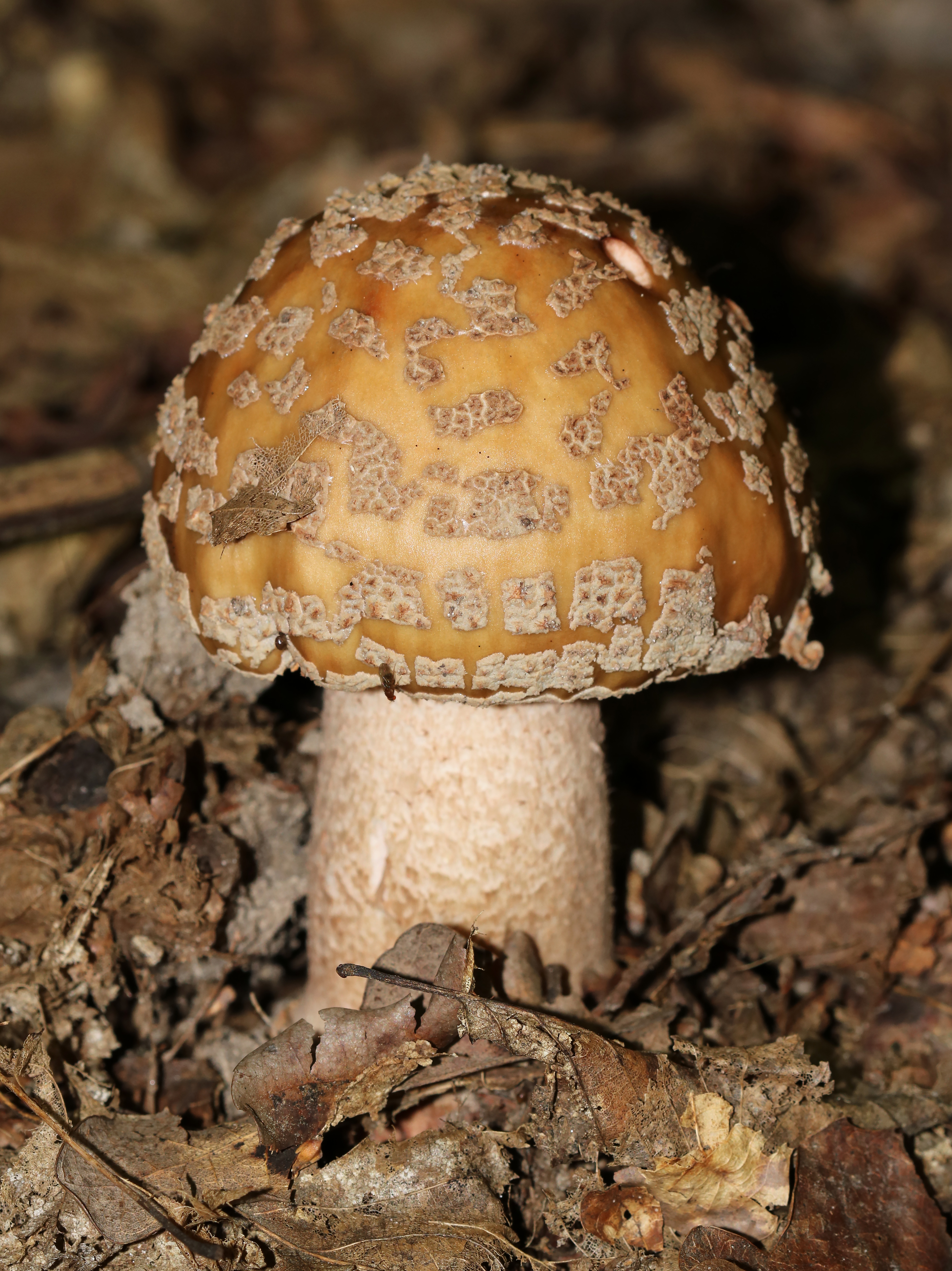
The Blusher
Amanita rubescens
A common woodland Amanita that reveals its identity when you cut it: the flesh slowly turns pink, like it's blushing. Edible when thoroughly cooked, but raw specimens contain a hemolytic toxin that destroys red blood cells. Its resemblance to the deadly Panther Cap makes correct identification genuinely life-or-death.
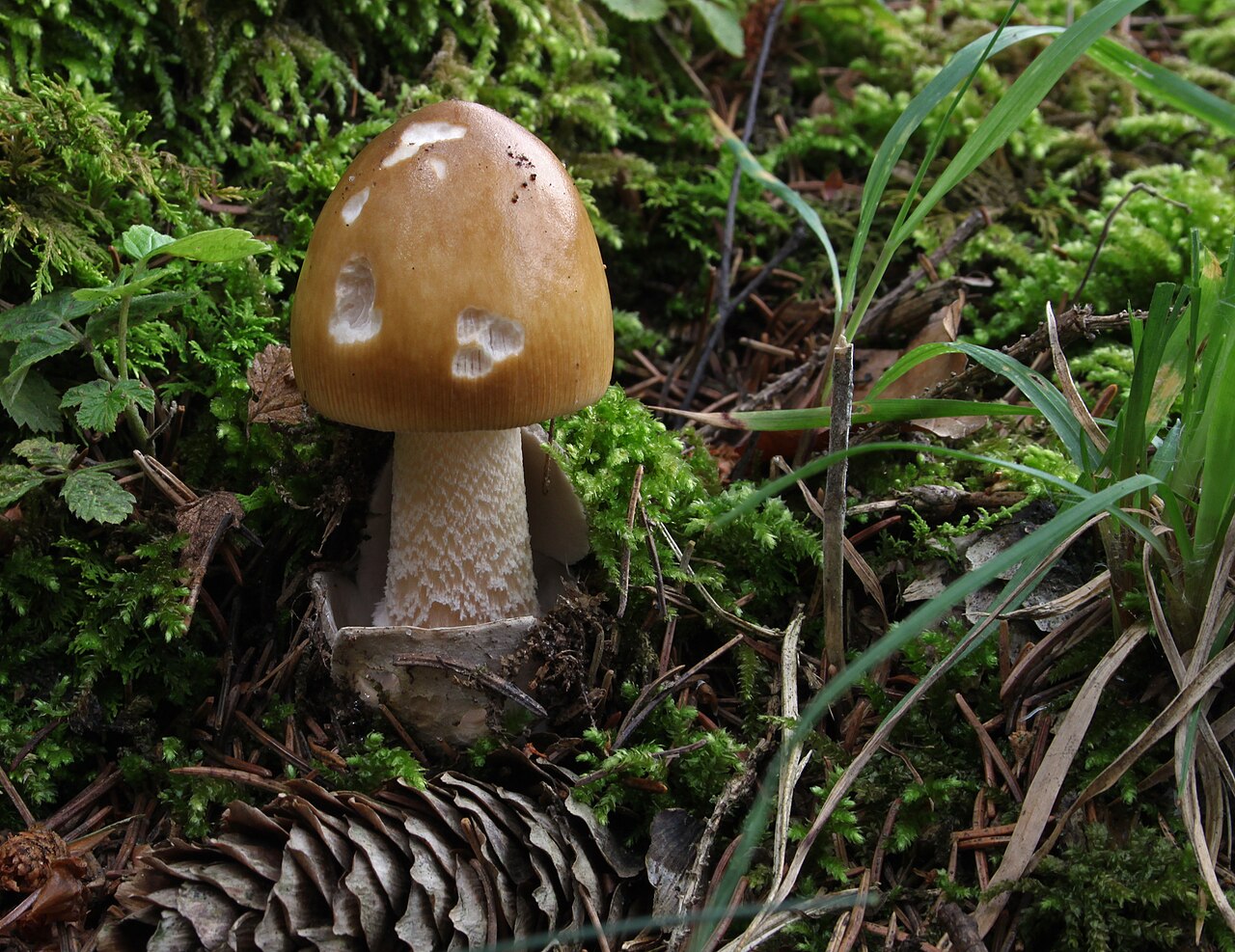
Tawny Grisette
Amanita fulva
An edible Amanita that gives experienced foragers confidence and beginners nightmares. The Tawny Grisette is a graceful, tawny-orange mushroom with a distinctive striate cap margin and a prominent white sac at the base of its stem — but critically, NO ring. That missing ring is what separates the grisette group from their deadly cousins, the Death Cap and Destroying Angel.
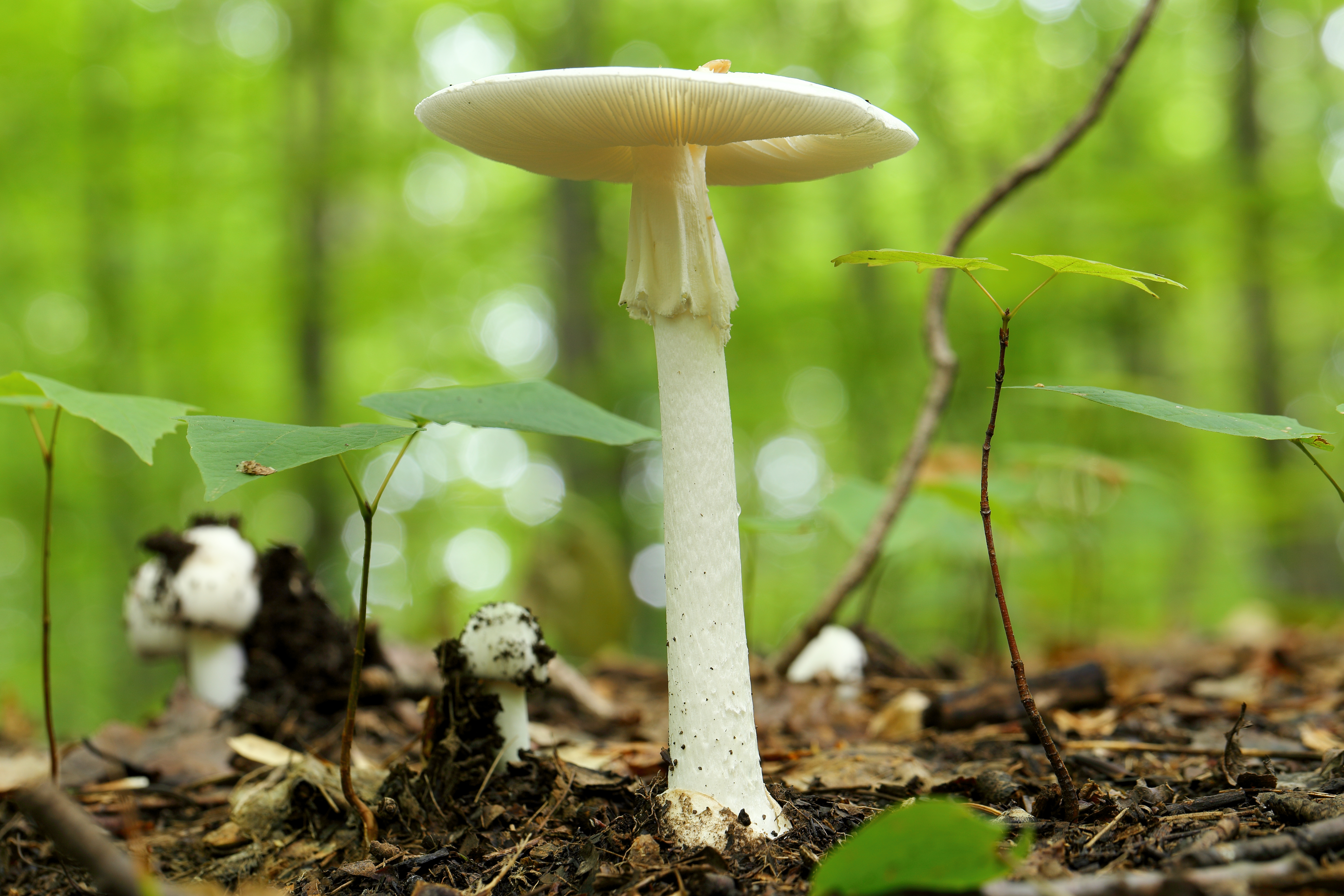
Destroying Angel
Amanita virosa
It looks like any harmless white mushroom you'd find on a morning walk. Pure white, elegant, almost angelic. And it will kill you. The Destroying Angel is one of the deadliest mushrooms on the planet — responsible for more fatal poisonings in Europe than almost any other species.
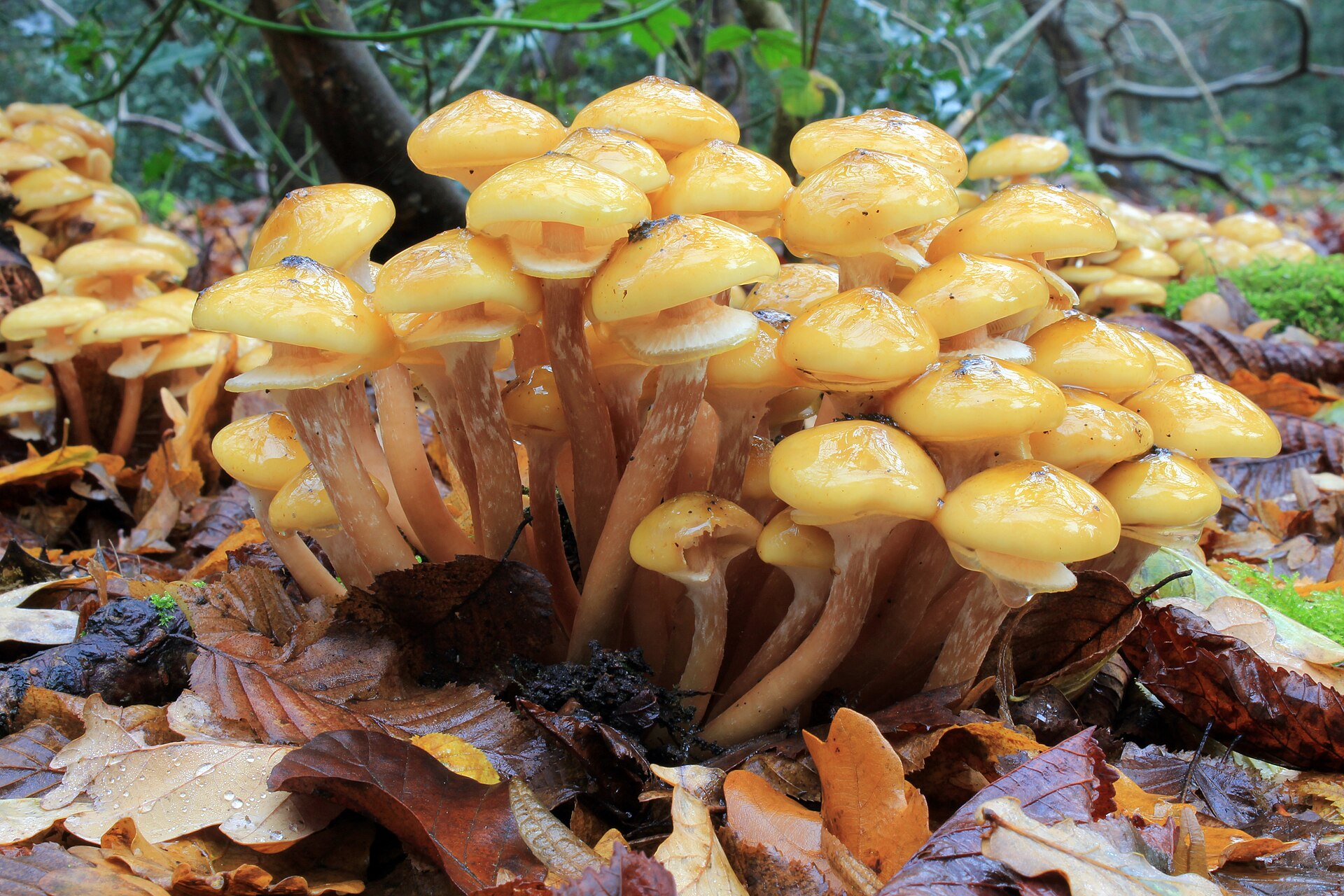
Honey Fungus
Armillaria mellea
The honey fungus is edible when thoroughly cooked — but eat it raw or undercooked and you're in for serious stomach cramps, nausea, and regret. Oh, and the largest living organism on Earth? It's one of these. A single honey fungus clone in Oregon covers 2,385 acres.
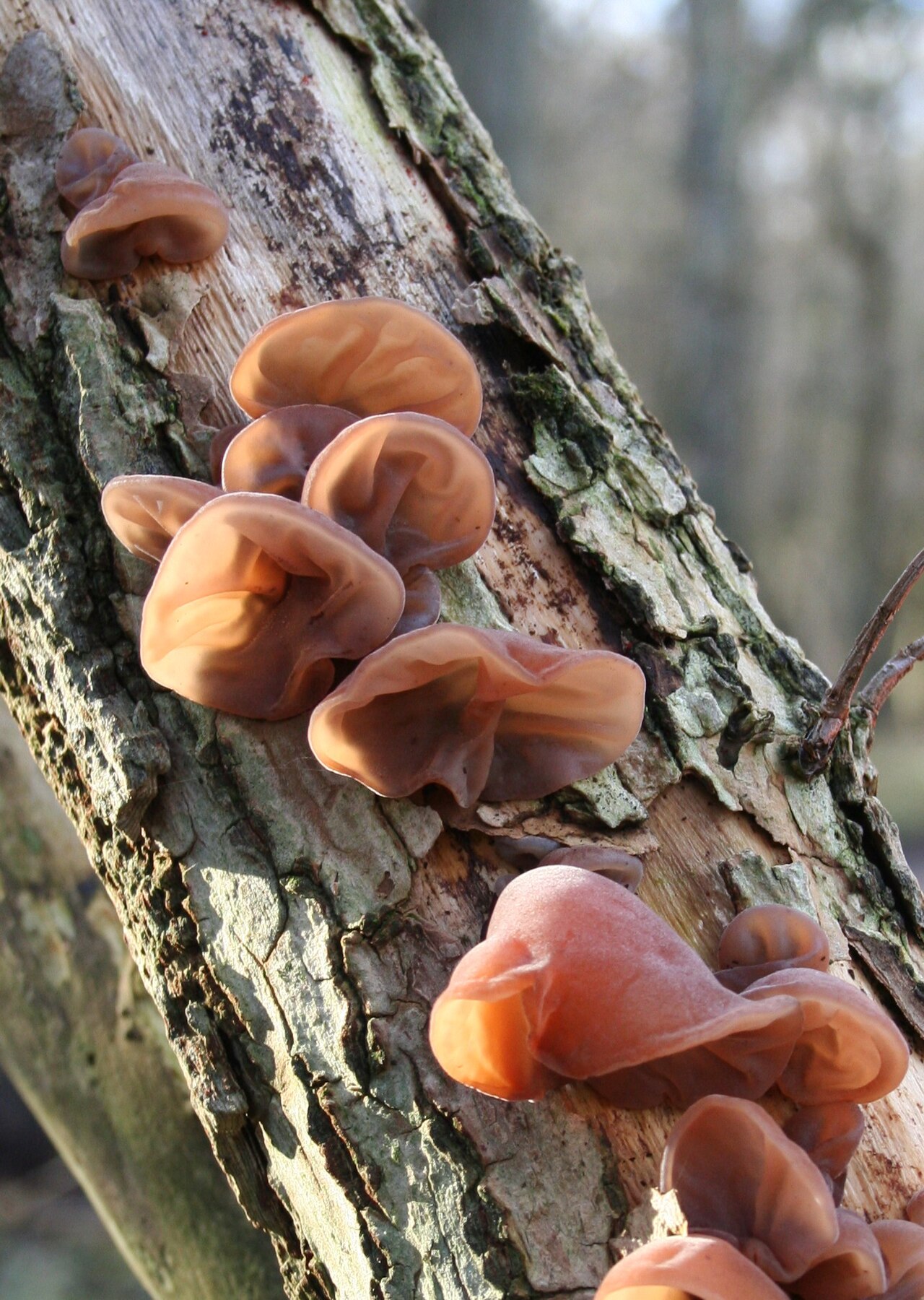
Wood Ear
Auricularia auricula-judae
It looks like a rubbery brown ear growing out of a dead branch, and that is exactly what it is named for. Wood Ear is one of the most consumed mushrooms on the planet, a staple of Chinese cuisine for over a thousand years, prized not for its flavor (which is nearly nonexistent) but for its extraordinary crunchy-gelatinous texture.
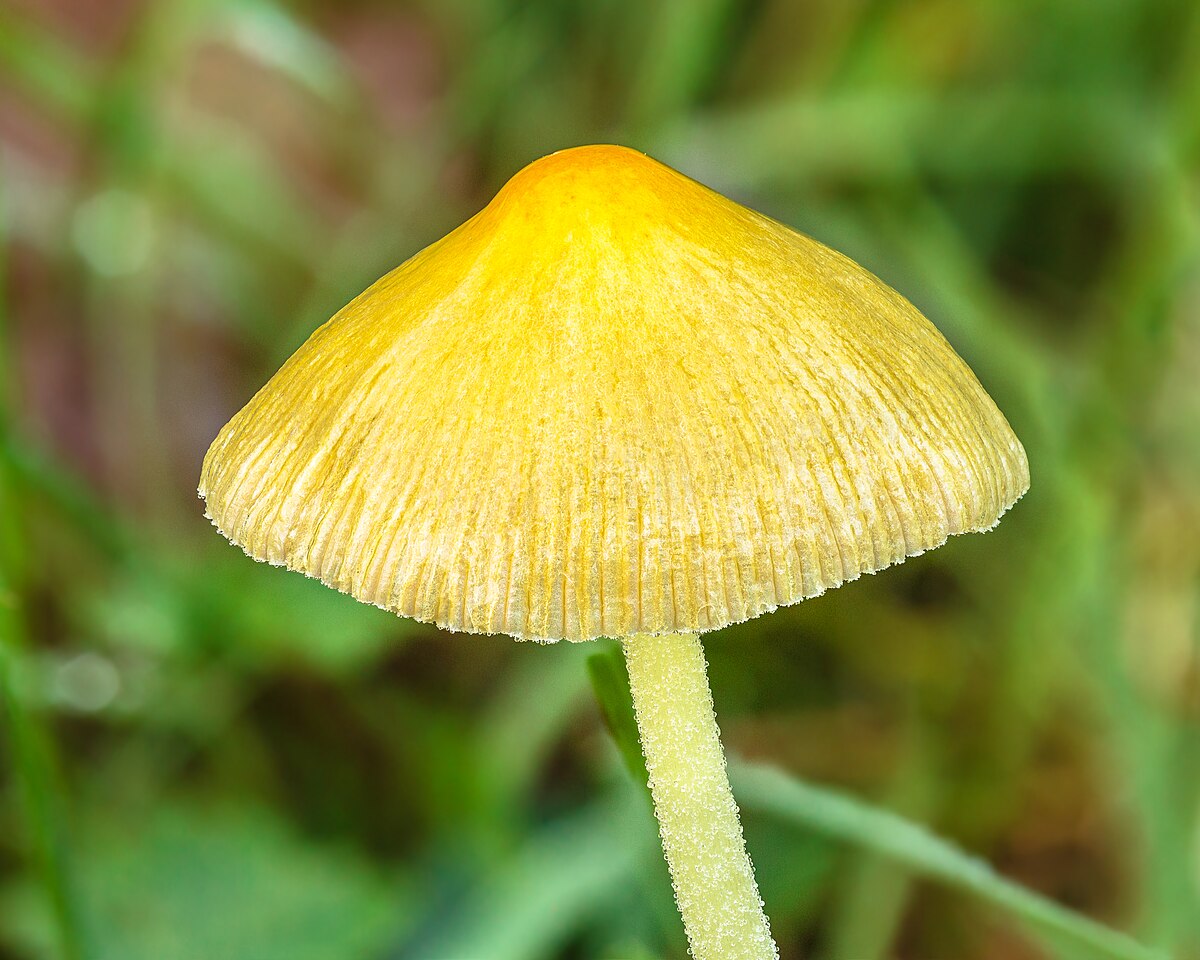
Yellow Fieldcap
Bolbitius titubans
A striking, egg-yolk yellow mushroom that appears overnight on dung, compost, and rich grassland, only to melt away by afternoon. Its glistening, viscid cap and ephemeral nature make it one of the most recognizable yet fleeting fungi in the Northern Hemisphere.
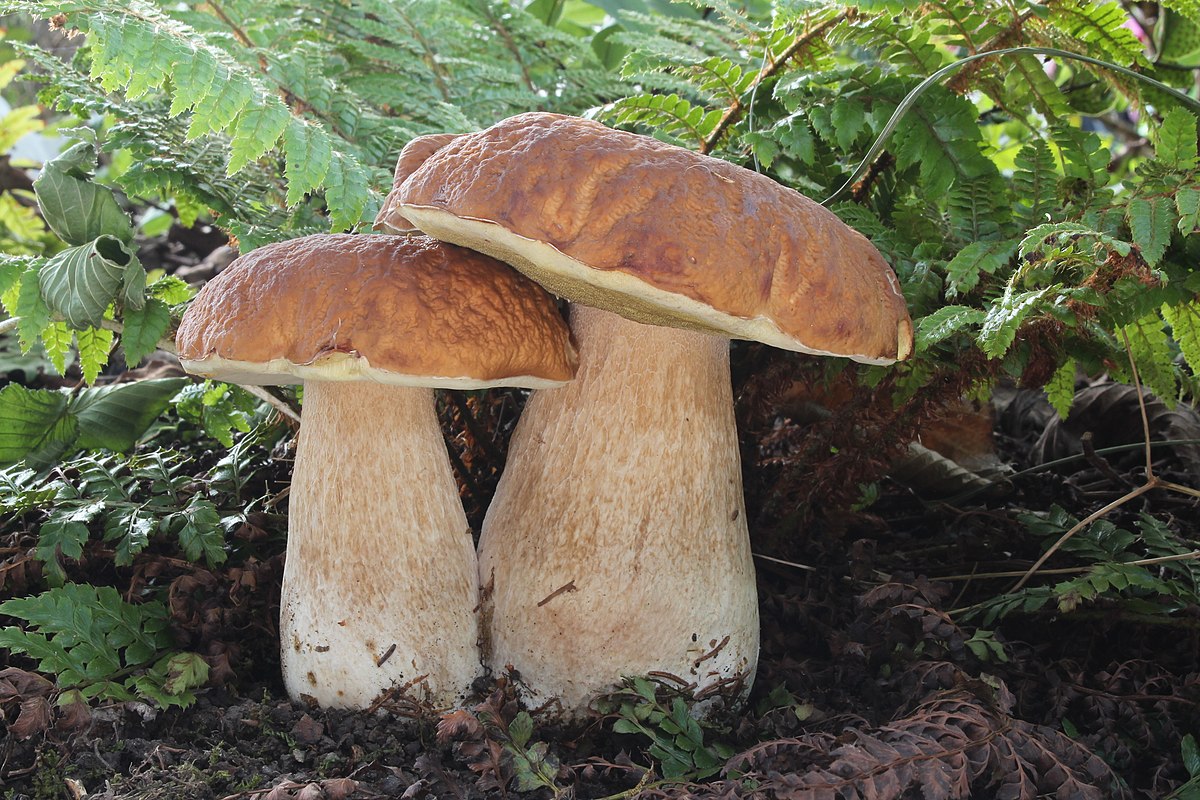
Porcini
Boletus edulis
The undisputed king of edible mushrooms. Porcini — also called King Bolete or Cep — is so outrageously delicious that Italians have built an entire economy around it, foragers guard their spots like state secrets, and despite centuries of trying, nobody has figured out how to farm it.
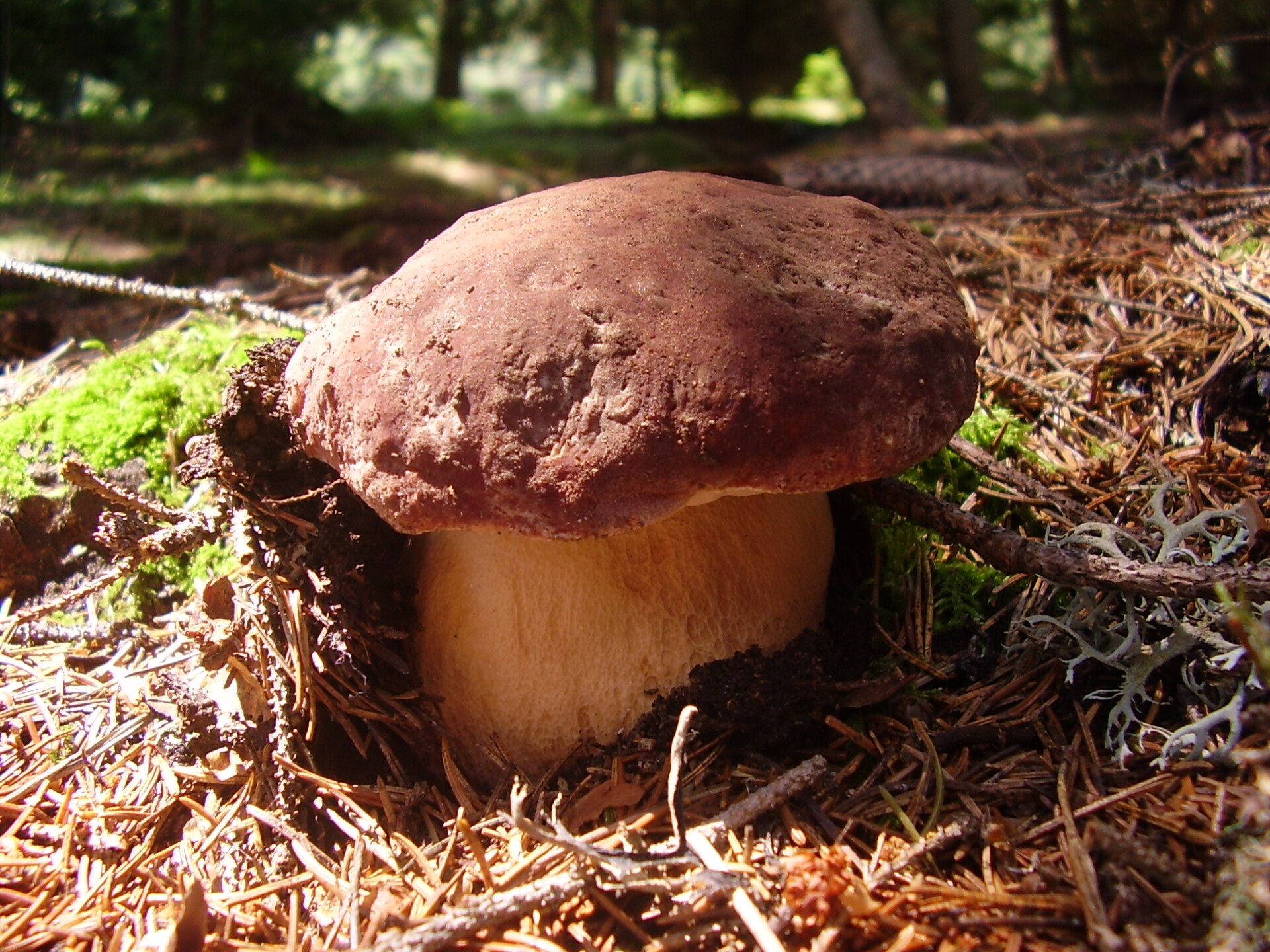
Pine Bolete
Boletus pinophilus
The porcini's burly cousin from the pine forests. Boletus pinophilus is often overlooked in favor of the more famous B. edulis, but experienced foragers know it is every bit as good on the plate, sometimes better. That dark reddish-brown cap and massive, barrel-shaped stem are unmistakable in Scots pine country.
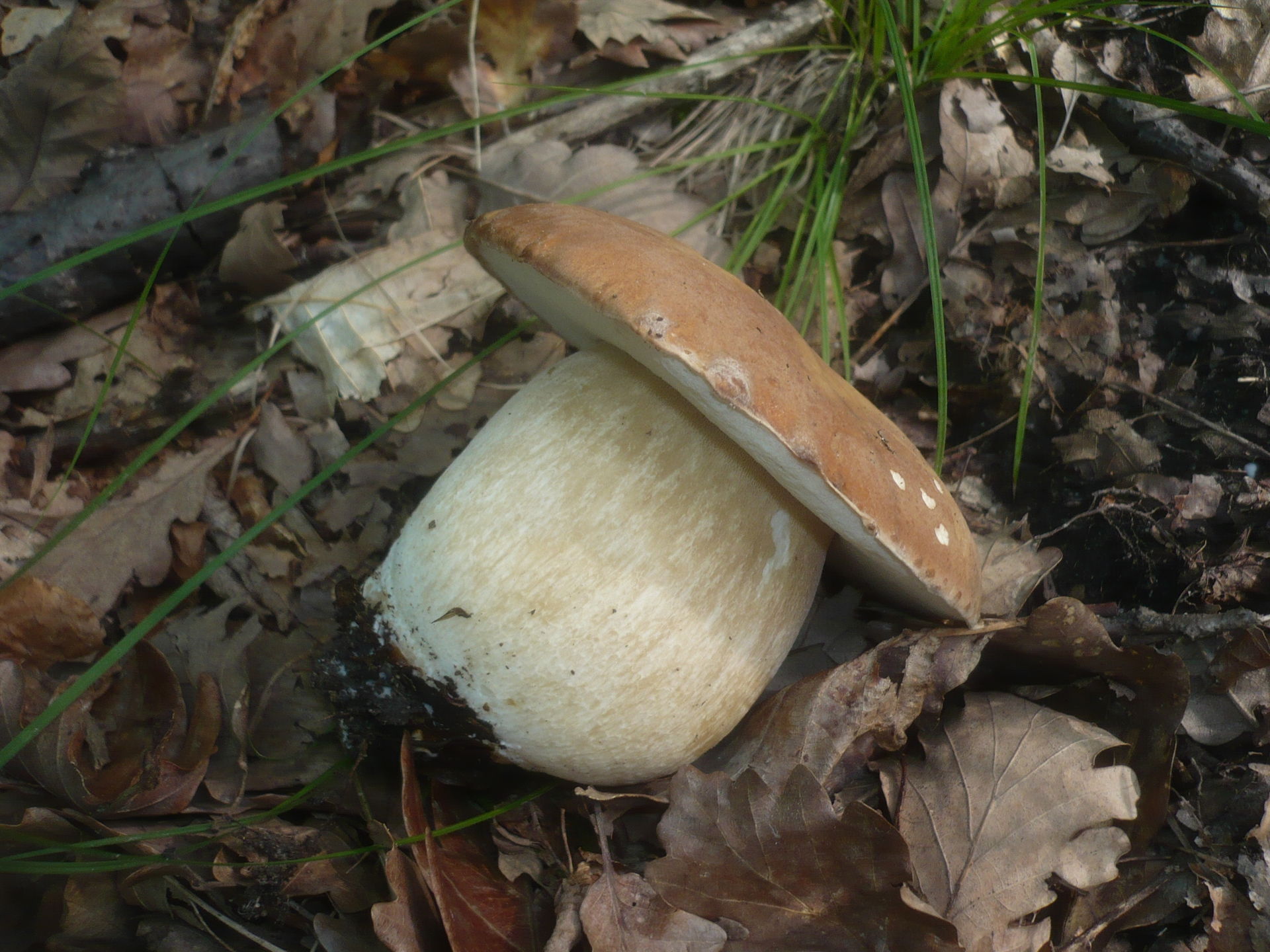
Summer Cep
Boletus reticulatus
The warm-weather cousin of the king bolete. Summer ceps fruit earlier in the season than Boletus edulis, bridging the gap between spring morels and autumn porcini with the same rich, nutty flavor that makes ceps royalty among wild mushrooms.
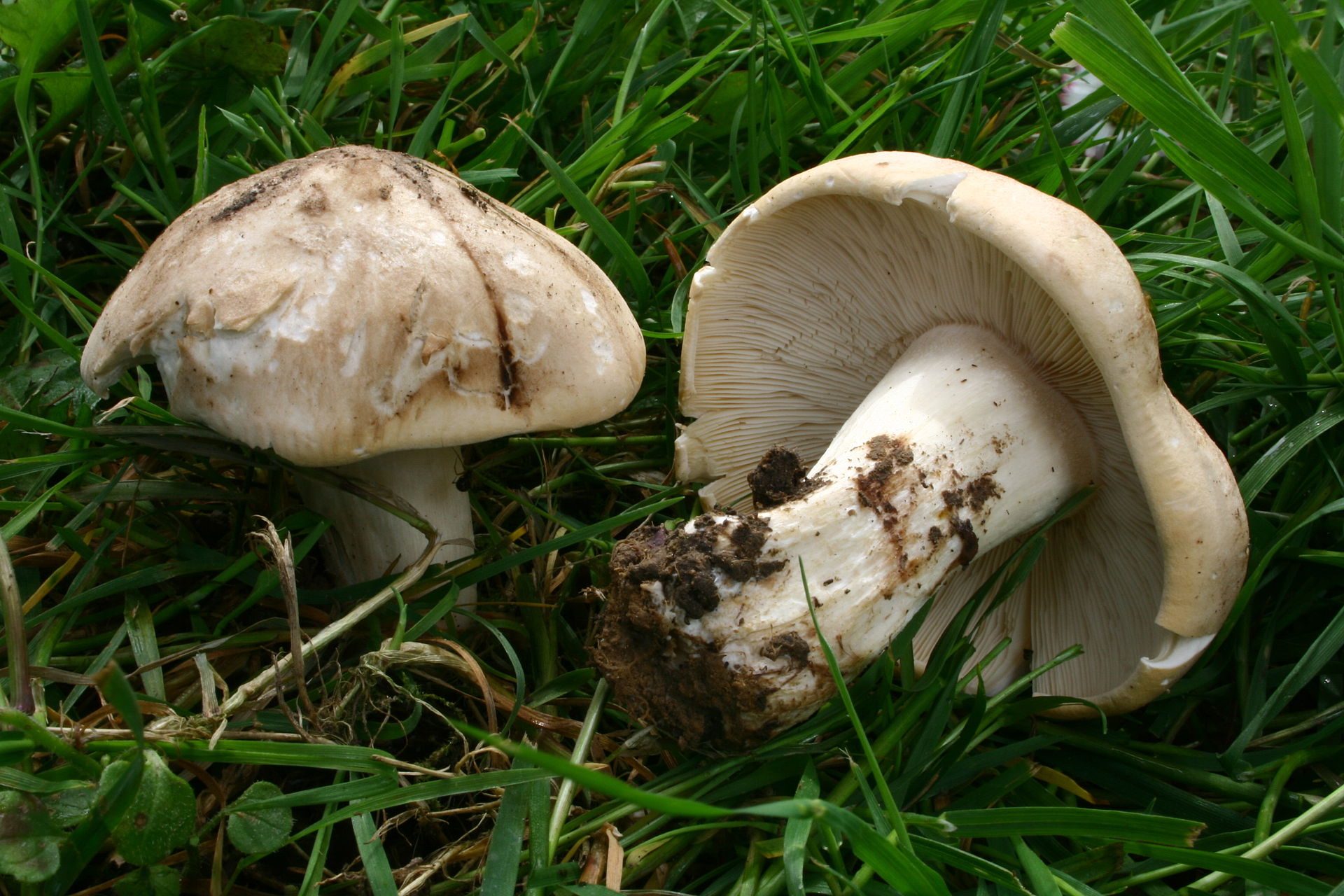
St. George's Mushroom
Calocybe gambosa
The first great edible mushroom of spring, traditionally appearing around St. George's Day (April 23rd) in the UK and Europe. Calocybe gambosa is a chunky, all-white mushroom with a powerful mealy smell that fruits on chalk grasslands and woodland edges weeks before most other edible species show up.
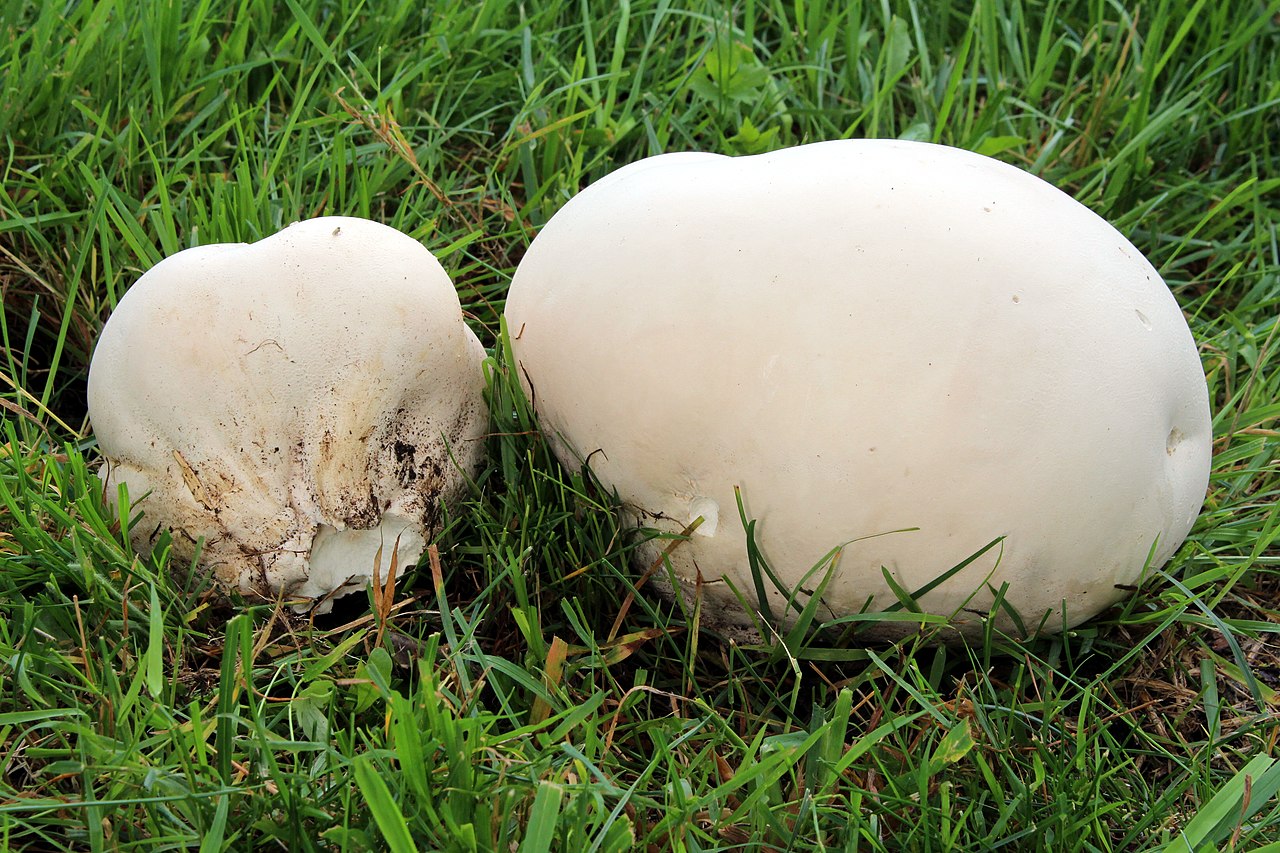
Giant Puffball
Calvatia gigantea
A mushroom that can grow to the size of a basketball — or bigger. The Giant Puffball is one of the easiest fungi on the planet to identify, and when you find a fresh young one, you've basically stumbled onto a free volleyball-sized block of mild, edible mushroom meat.
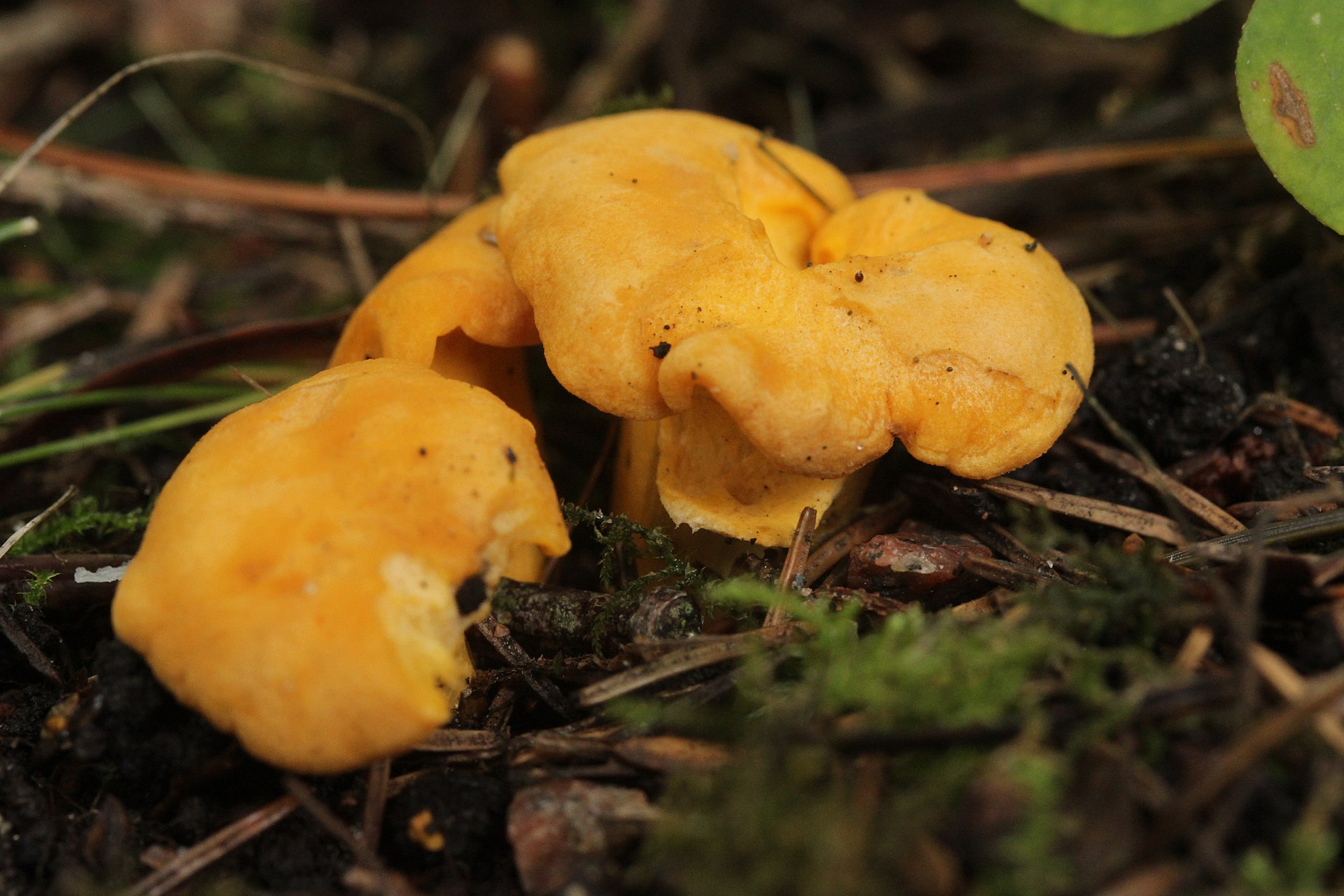
Golden Chanterelle
Cantharellus cibarius
The golden ticket of wild mushroom foraging. Chanterelles are the one mushroom that turns casual hikers into obsessive forest-crawlers who guard their secret spots like buried treasure.
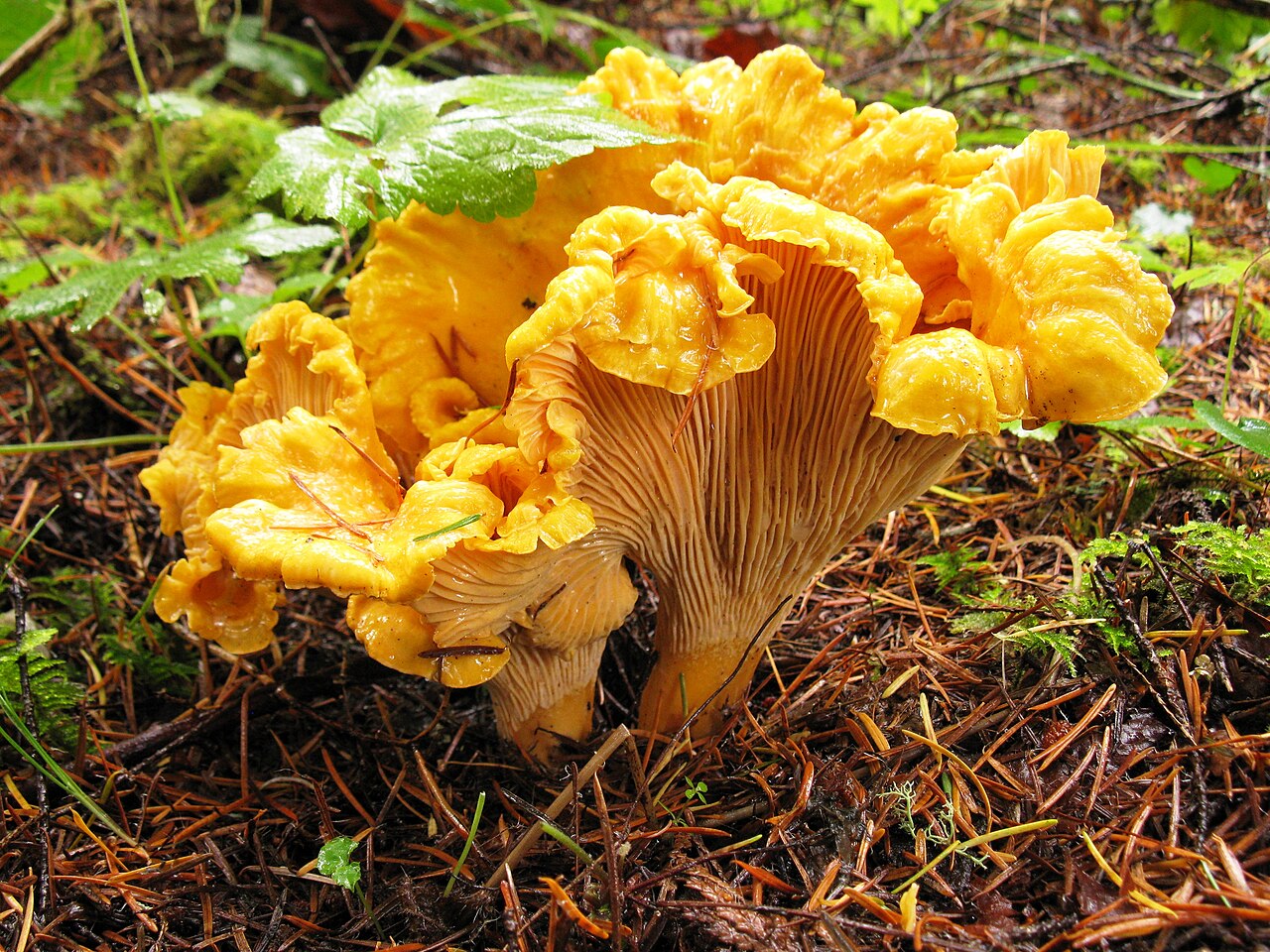
Pacific Golden Chanterelle
Cantharellus formosus
The Pacific Northwest's most celebrated wild mushroom. Cantharellus formosus — the Pacific Golden Chanterelle — is the golden child of West Coast foraging, turning soggy autumn forests from British Columbia to Northern California into treasure hunts that fuel a multi-million dollar harvest industry and an almost religious devotion among mushroom hunters.
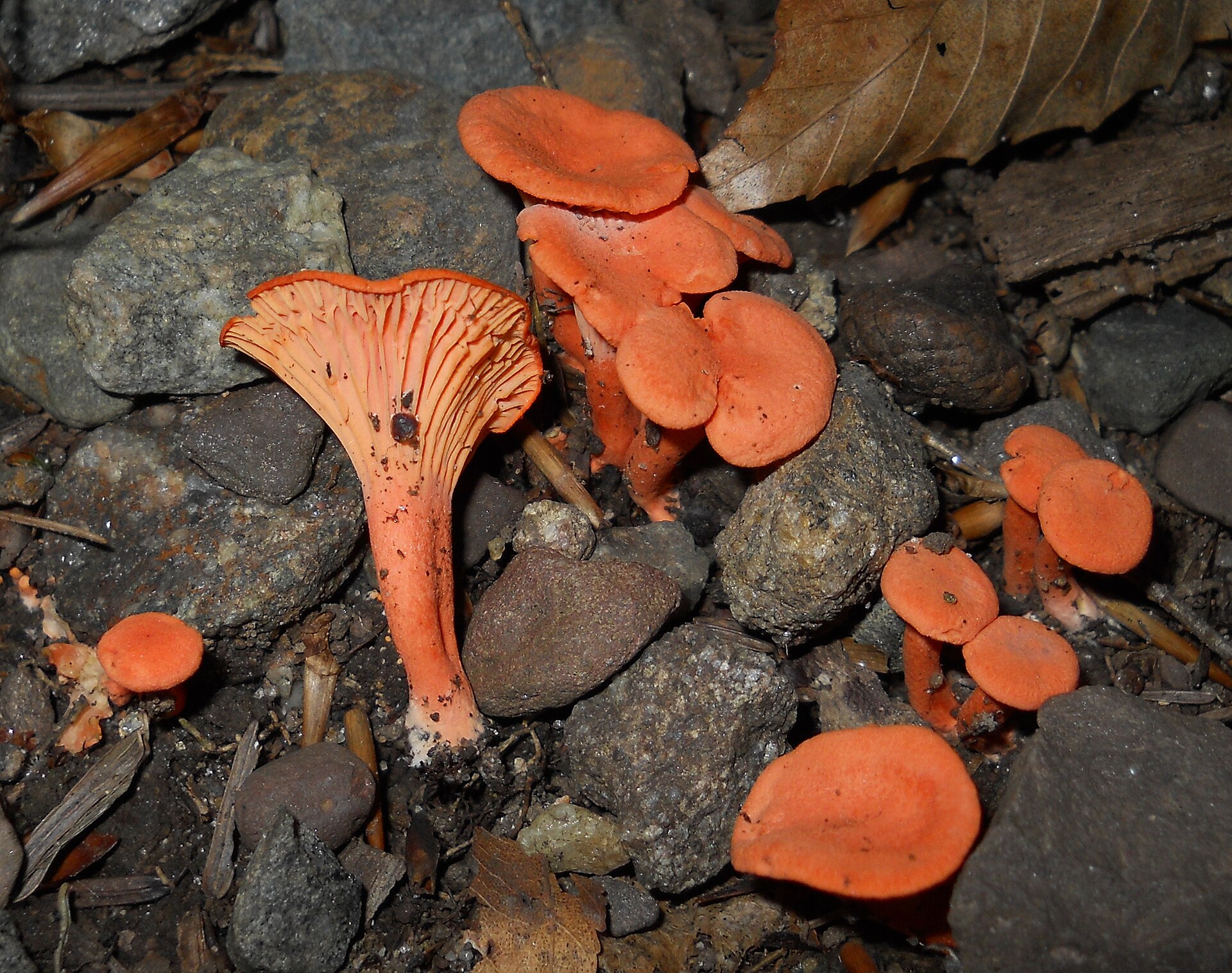
Cinnabar Chanterelle
Cantharellus cinnabarinus
A tiny flame-colored chanterelle that lights up eastern hardwood forests in summer. What cinnabar chanterelles lack in size, they make up for in sheer visual impact and surprisingly concentrated flavor.
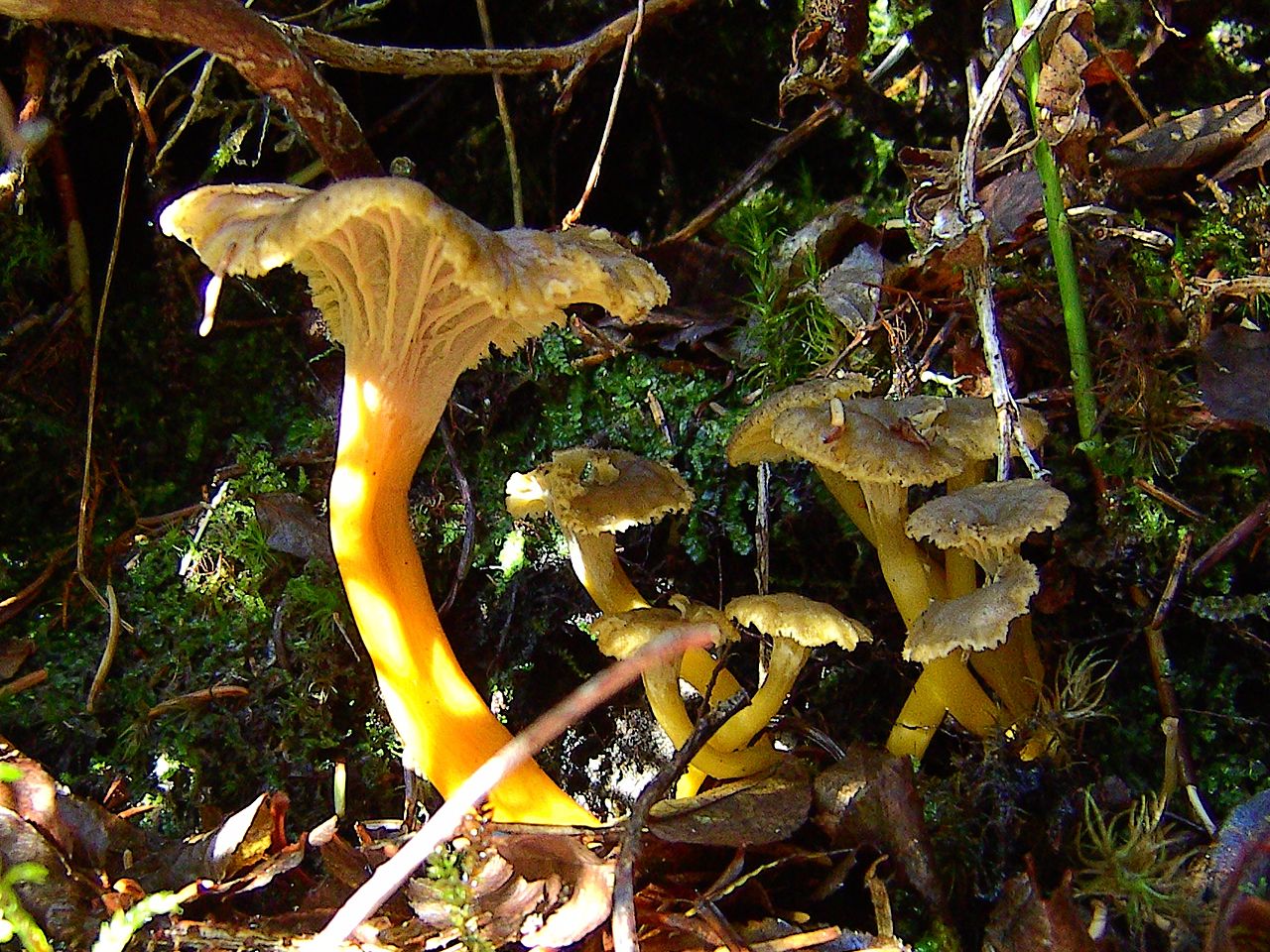
Yellowfoot Chanterelle
Cantharellus tubaeformis
The winter forager's reward. While golden chanterelles hog the spotlight in summer, yellowfoot chanterelles quietly carpet the forest floor from late fall through the first hard freeze, giving dedicated hunters one last reason to stay in the woods.
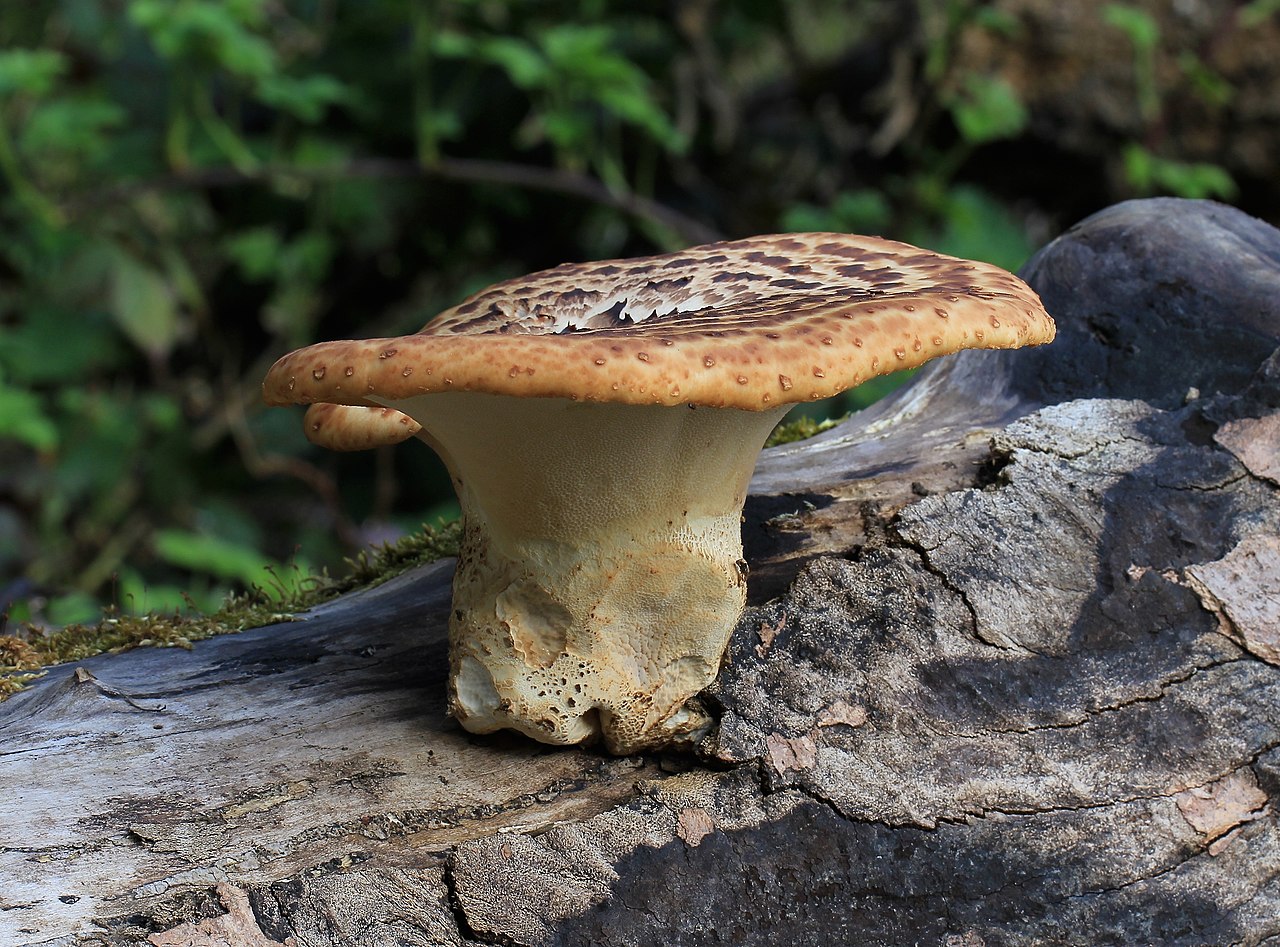
Dryad's Saddle
Cerioporus squamosus
One of spring's first mushrooms and one of the easiest to spot — a massive bracket fungus covered in pheasant-feather scales that smells like watermelon rind when fresh. Also called Pheasant Back, it's a gateway mushroom for beginner foragers.
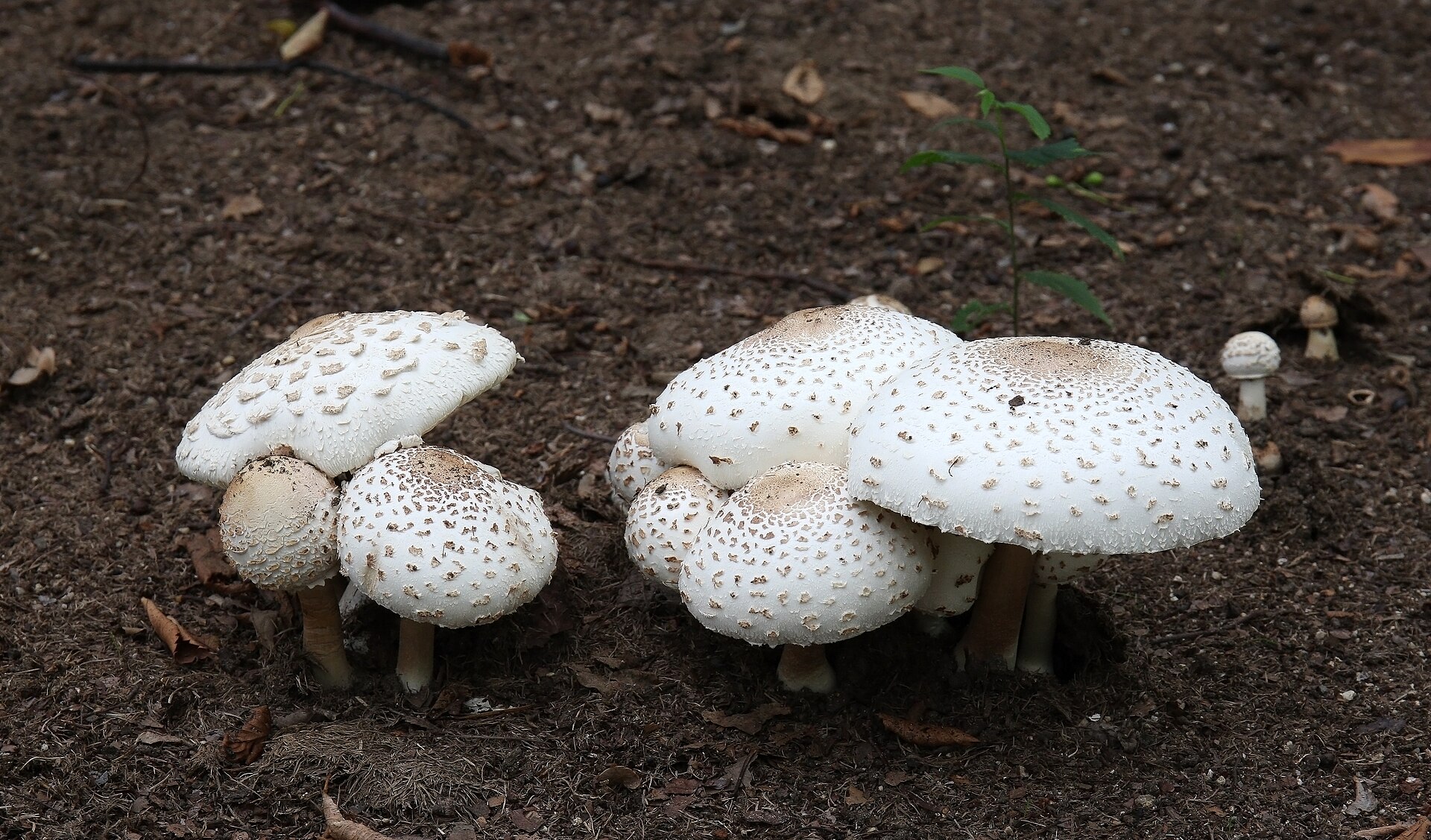
Green-spored Parasol / The Vomiter
Chlorophyllum molybdites
The single most common cause of mushroom poisoning in North America. Chlorophyllum molybdites is a large, handsome parasol mushroom that fruits prolifically on lawns, parks, and athletic fields across warm regions. Its green spore print is the giveaway, but most people never bother to check.
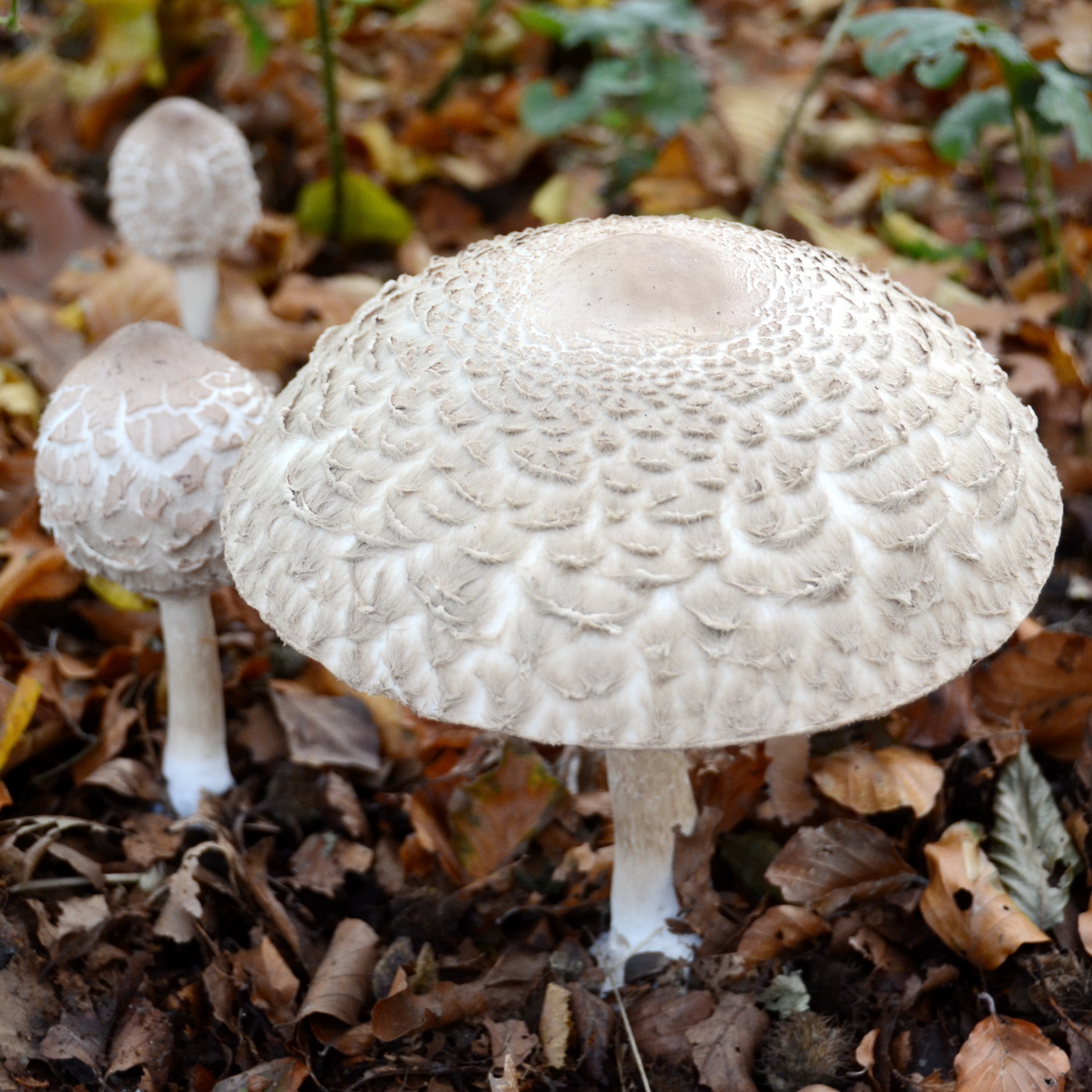
Shaggy Parasol
Chlorophyllum rhacodes
The Shaggy Parasol is a big, dramatic mushroom with a scaly cap that can span a dinner plate — but fair warning: it causes nasty stomach problems in some people even when cooked, and it looks dangerously similar to the toxic Green-spored Parasol, so this is not one for beginners.
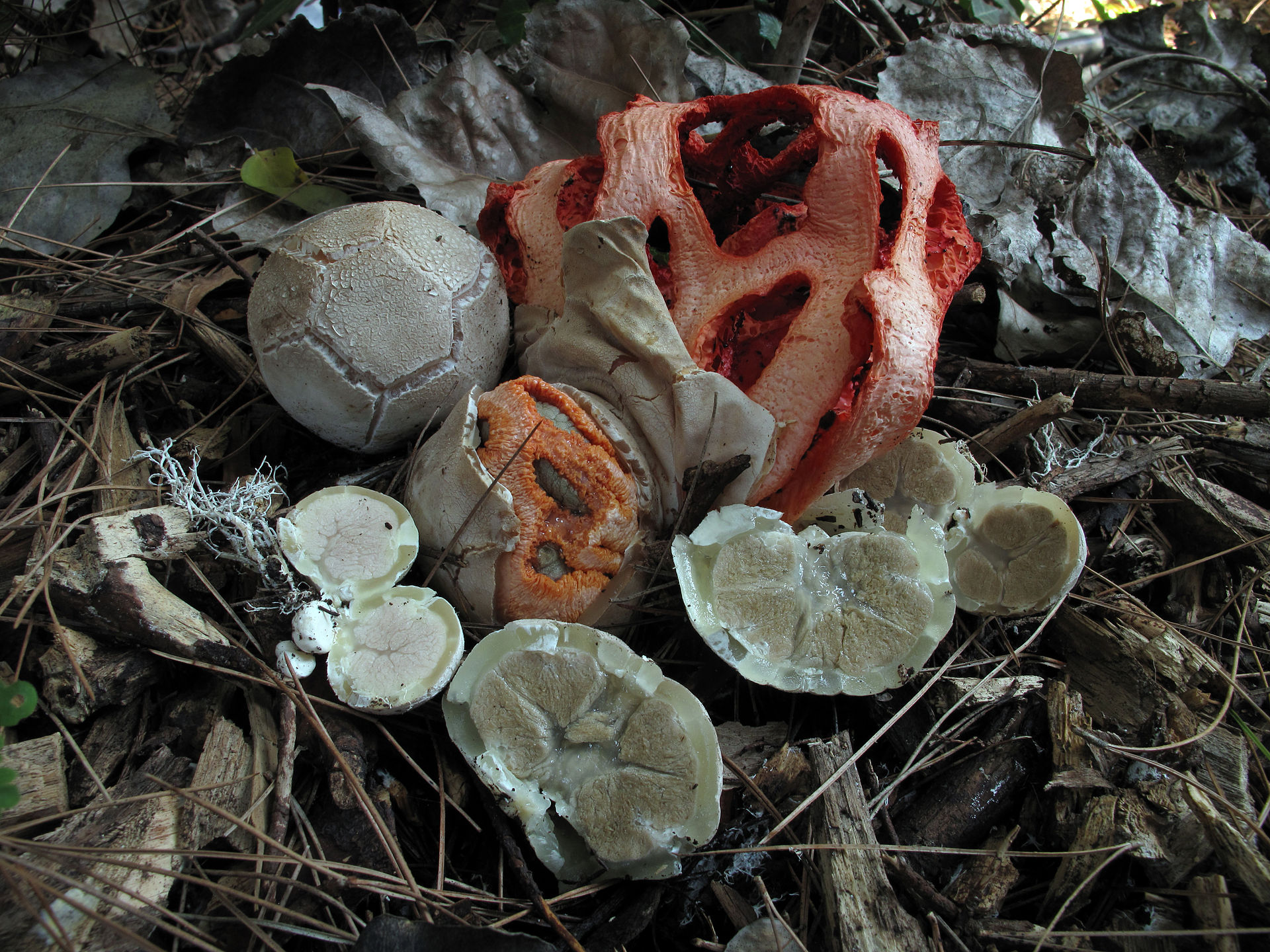
Red Cage Stinkhorn
Clathrus ruber
One of the most alien-looking organisms in the fungal kingdom. The red cage stinkhorn erupts from a white egg to form an intricate lattice sphere that looks like something from another planet, then attracts flies with its putrid rotting-meat stench.
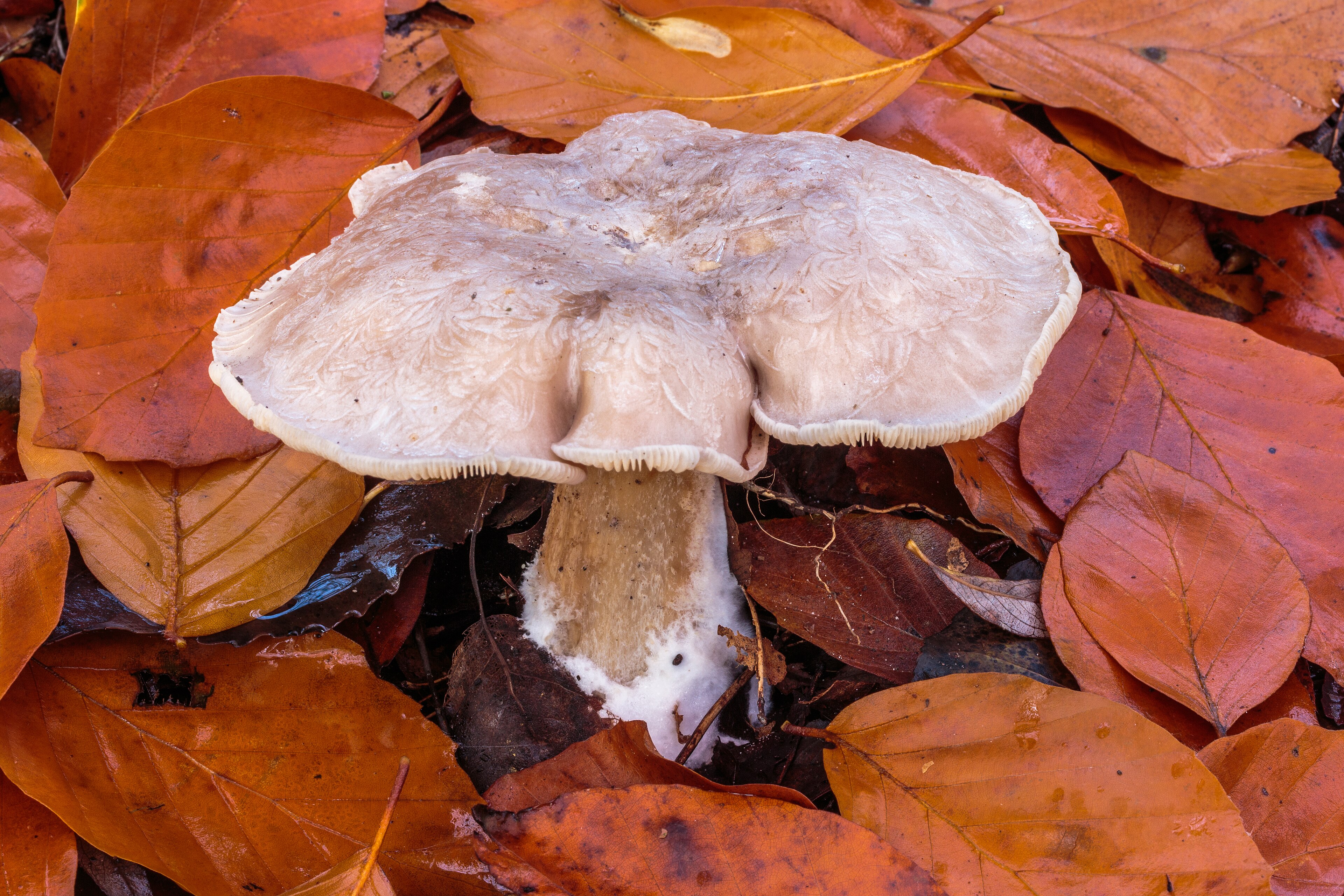
Clouded Funnel
Clitocybe nebularis
A big, fleshy, grayish-white mushroom with a distinctive sweetish smell that divides opinion like few other fungi. Widely eaten across continental Europe — especially France, Spain, and Eastern Europe — yet increasingly viewed with suspicion by modern mycologists because it contains nebularine, a toxic nucleoside that can cause gastrointestinal distress in a significant minority of people.
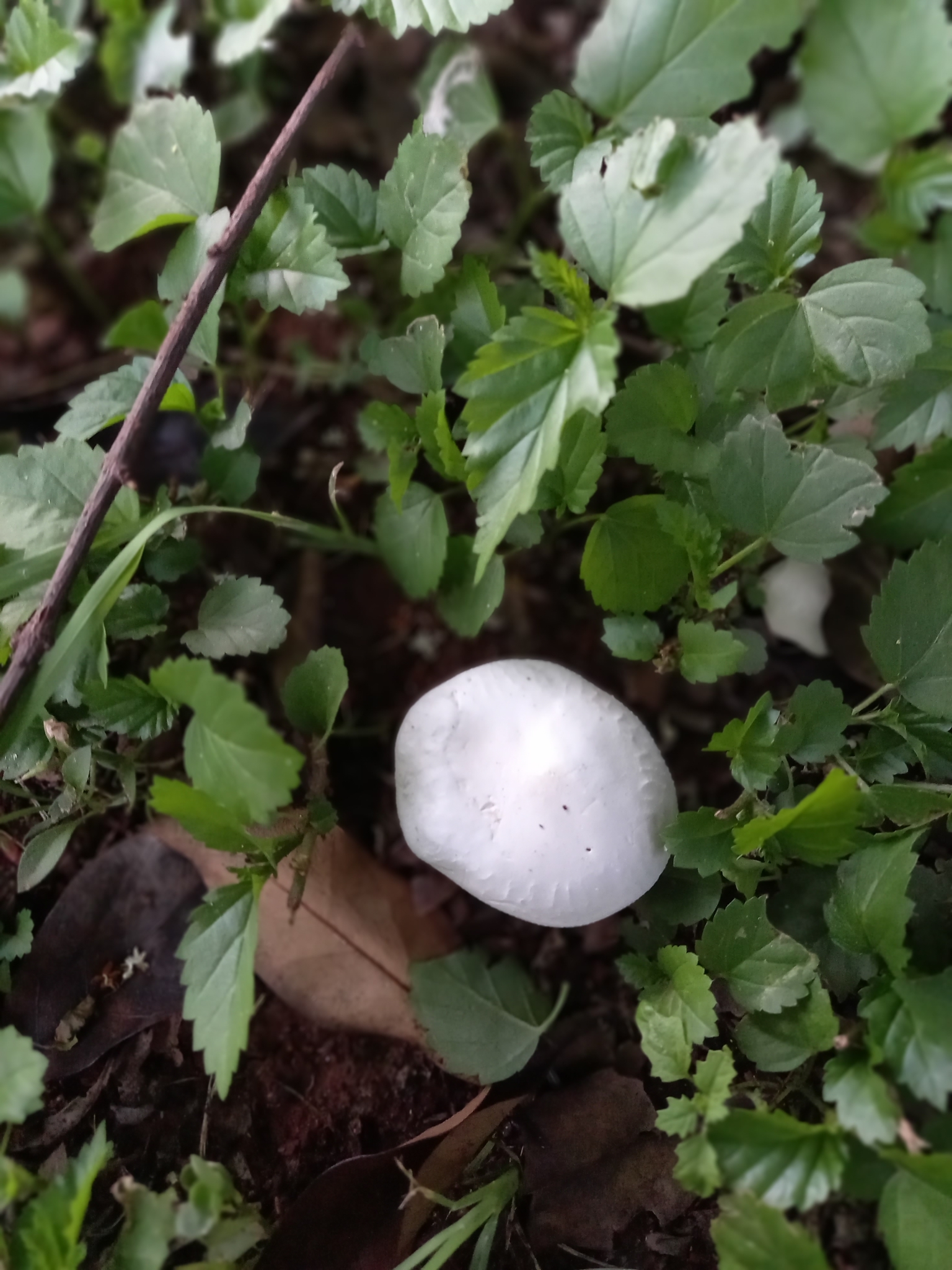
Ivory Funnel
Clitocybe dealbata
The Ivory Funnel is a small, ghostly white lawn mushroom packed with muscarine. It grows in the same grassy areas where people hunt for edible fairy ring mushrooms, making it a textbook case of a dangerous doppelganger hiding in plain sight.
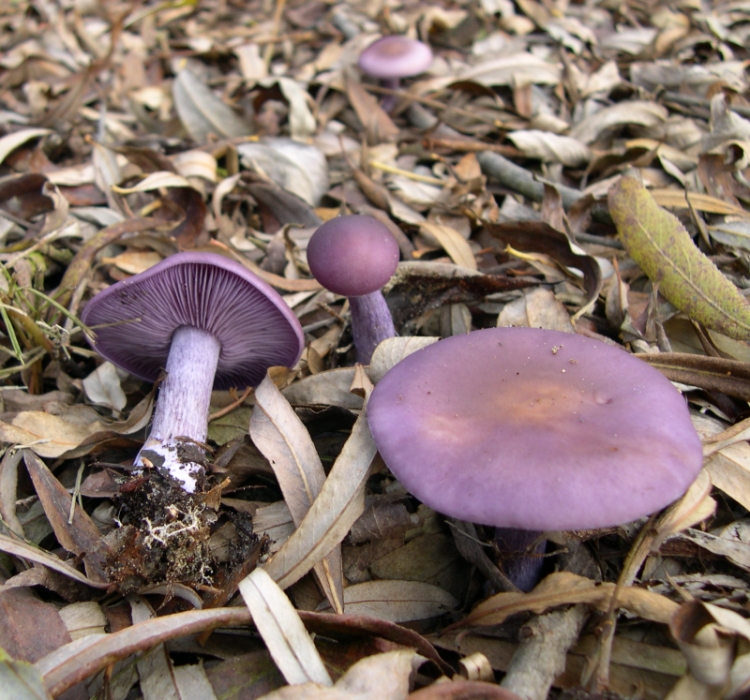
Wood Blewit
Lepista nuda
A stunning violet-lilac mushroom that fruits late in the season when most other species have quit. Wood Blewits are one of the few truly purple mushrooms, and their color alone makes them hard to mistake once you know what you are looking at. Must be cooked thoroughly; raw specimens cause gastric distress.
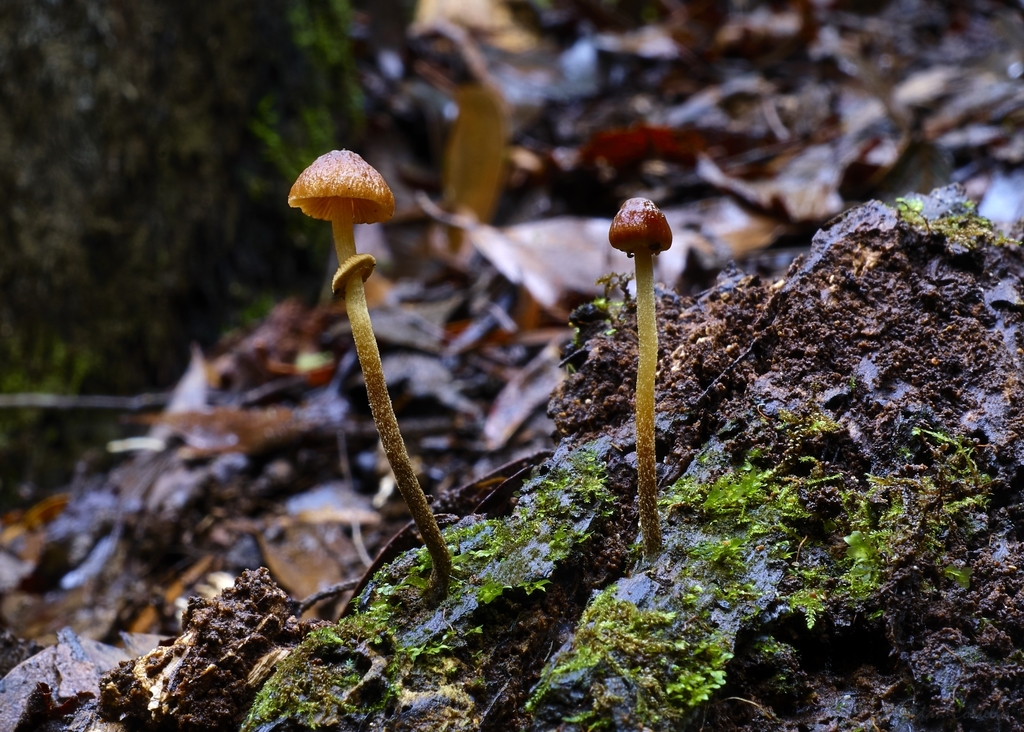
Deadly Conocybe
Conocybe filaris
A tiny, forgettable brown mushroom that pops up in lawns, gardens, and wood chips across North America and Europe. Do not let the size fool you: Conocybe filaris contains amatoxins, the same liver-destroying compounds found in the Death Cap. It is one of the most overlooked deadly mushrooms in the world.
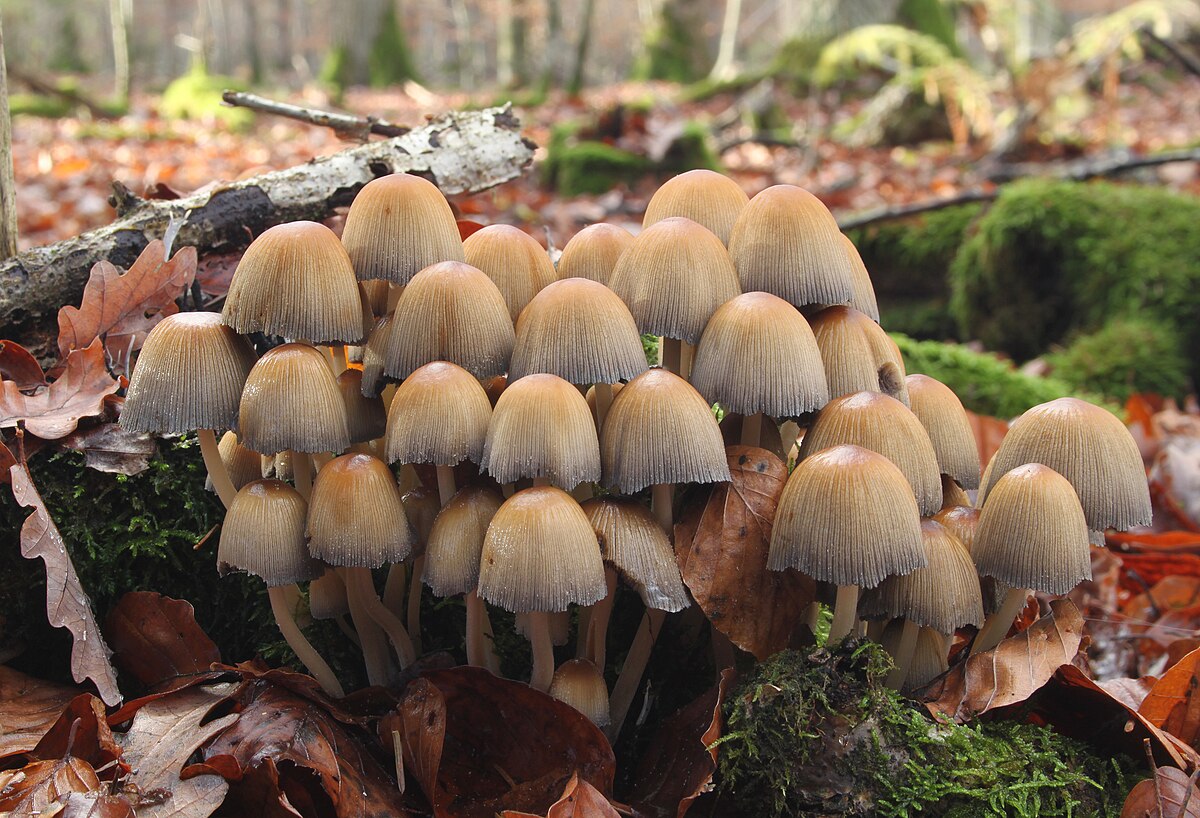
Mica Cap
Coprinellus micaceus
A common and beautiful inkcap that erupts in dense clusters from buried wood and tree stumps, its young caps dusted with glistening mica-like granules that catch the light. Also known as the Glistening Inkcap, it slowly dissolves its own gills into a black, spore-laden ink — a self-destructive reproductive strategy shared by few other organisms on Earth.
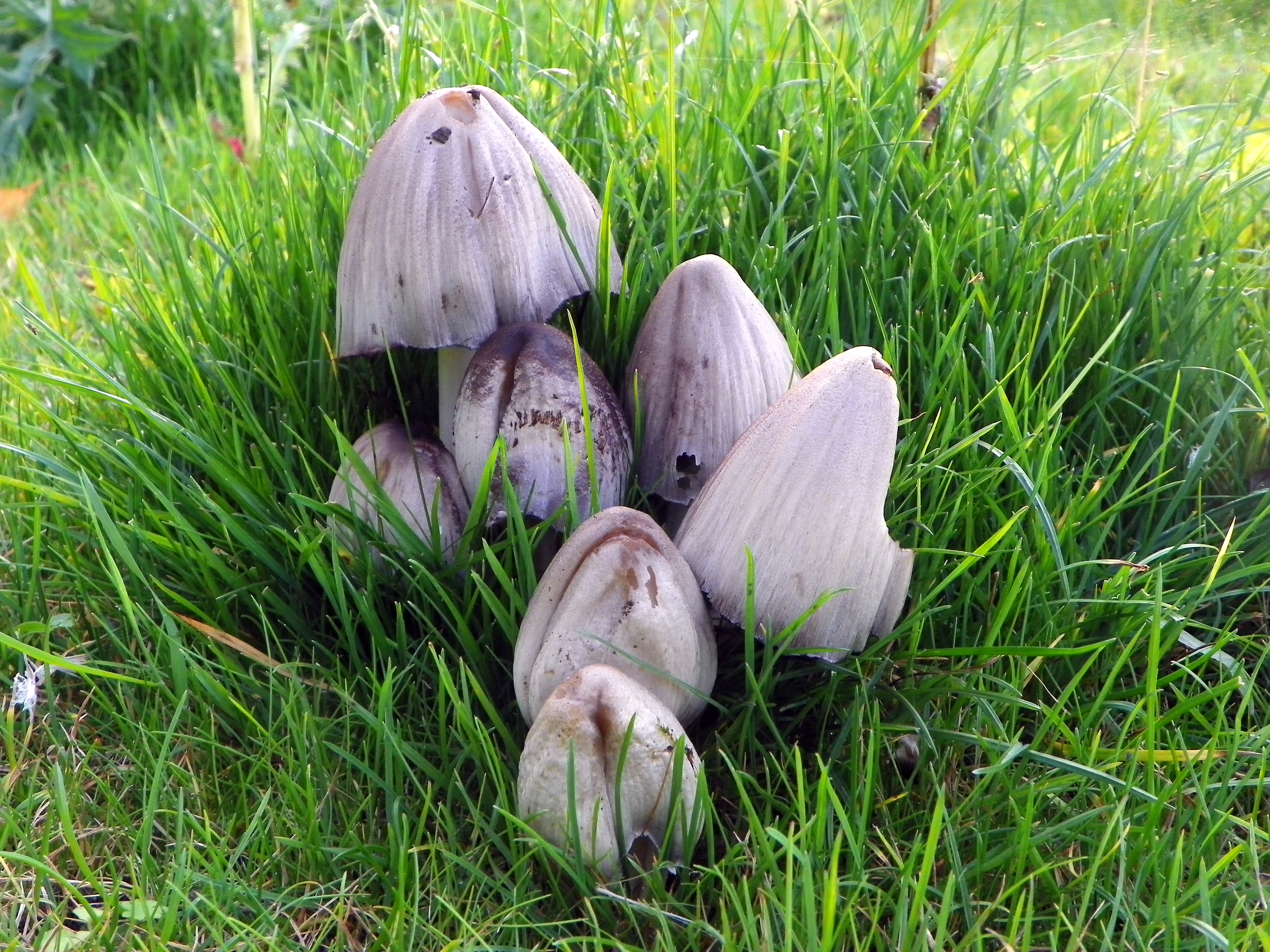
Common Ink Cap
Coprinopsis atramentaria
Meet the mushroom that hates drinking. The Common Ink Cap is perfectly edible on its own — but pair it with alcohol within a few days and you're in for nausea, heart palpitations, and a face that turns bright red. Its nickname 'Tippler's Bane' is well earned. It also dissolves itself into black ink when it's done spreading spores, which medieval monks actually used to write with.
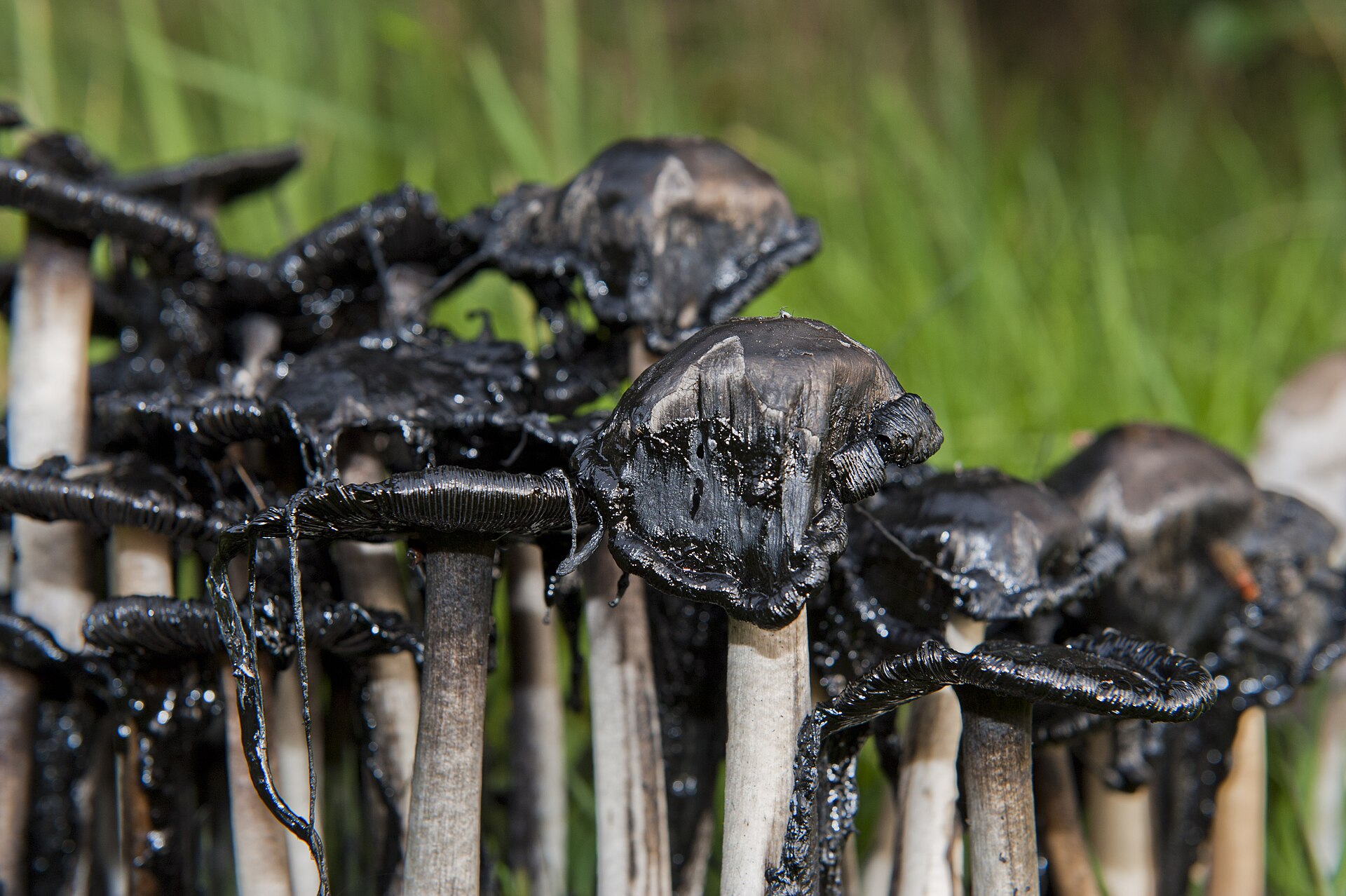
Shaggy Mane
Coprinus comatus
The mushroom with a self-destruct timer. Shaggy Mane is a perfectly delicious edible — if you can get it into the pan before it dissolves into a puddle of black ink. Seriously, this thing melts itself.
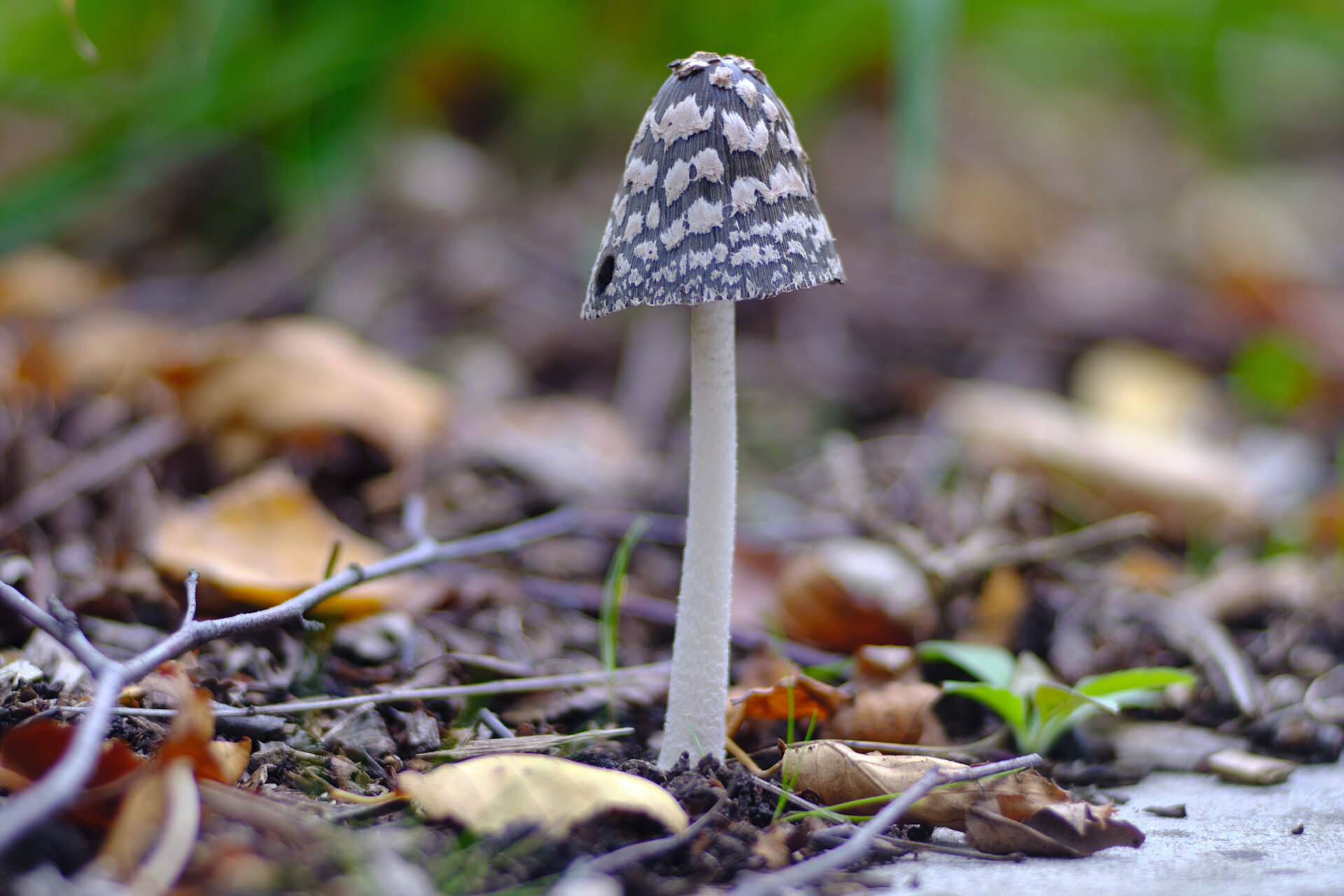
Magpie Inkcap
Coprinopsis picacea
A tall, dramatic inkcap mushroom with a black cap covered in large white patches of veil remnants, giving it a striking magpie-like black-and-white appearance. Found in beech woodlands across Europe and parts of North America. Not edible; causes gastrointestinal upset and is considered too rare and beautiful to pick.
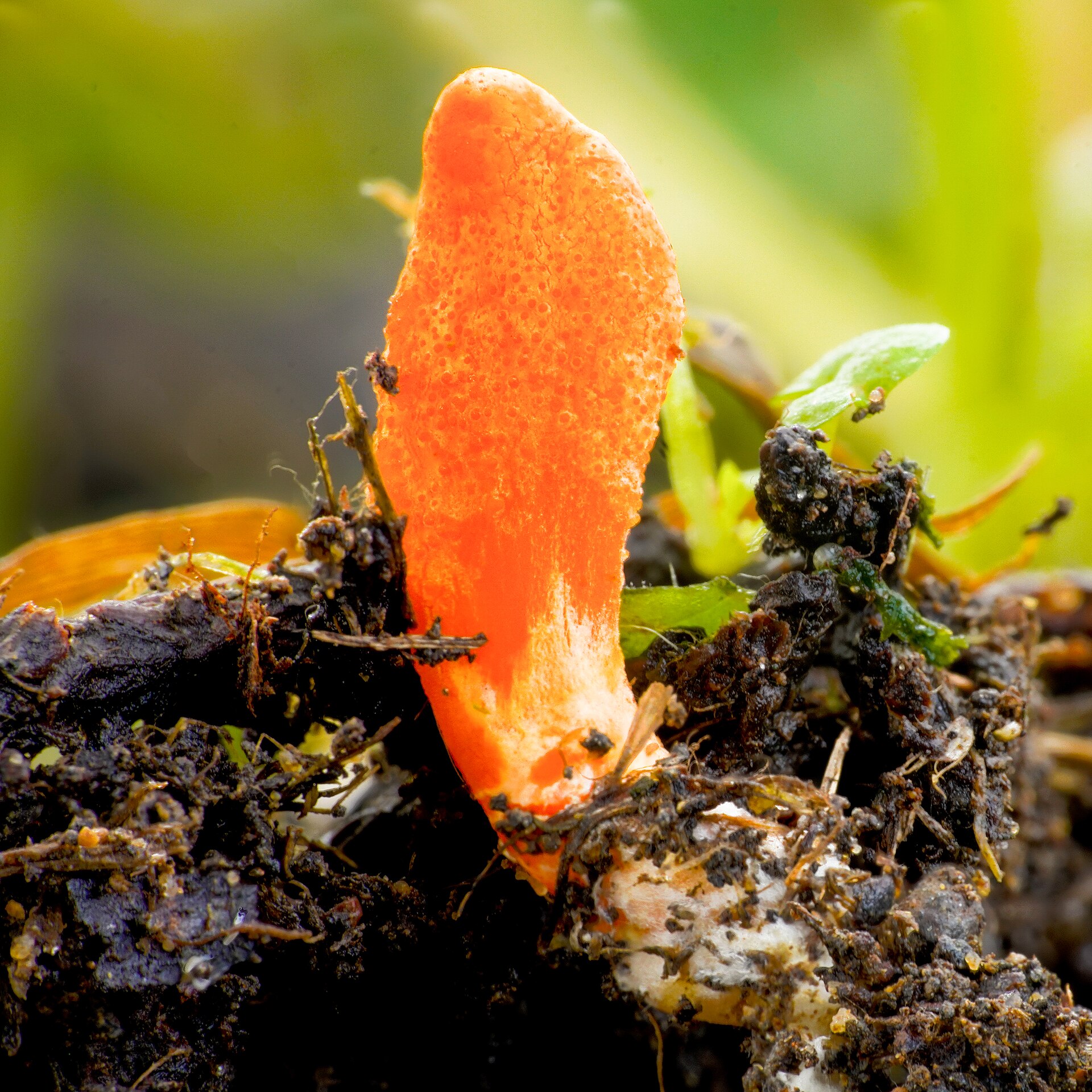
Scarlet Caterpillar Club
Cordyceps militaris
A vivid orange parasitic fungus that infects and kills buried insect pupae, then sprouts a club-shaped fruiting body from the corpse. Cordyceps militaris is the most common and widespread Cordyceps species, found across the Northern Hemisphere, and is now commercially cultivated as a substitute for the astronomically expensive Ophiocordyceps sinensis.
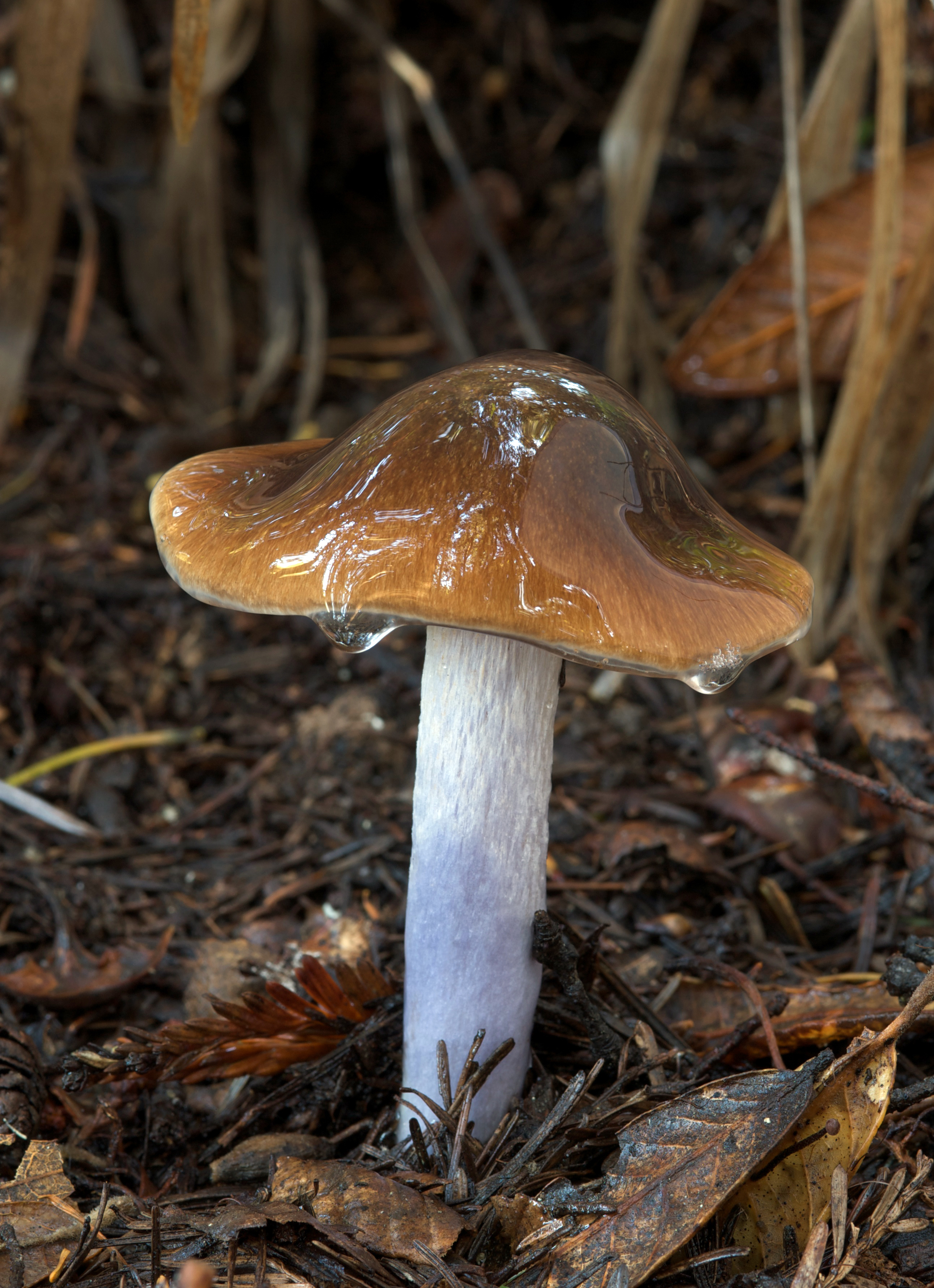
Van Duzer's Cortinarius
Cortinarius vanduzerensis
A striking Pacific Northwest webcap with a slimy chestnut-brown cap and a vivid violet stem. Found almost exclusively in old-growth and mature conifer forests west of the Cascades, this mycorrhizal species is one of the most photogenic Cortinarius in North America — and one of the easiest to identify in its genus.
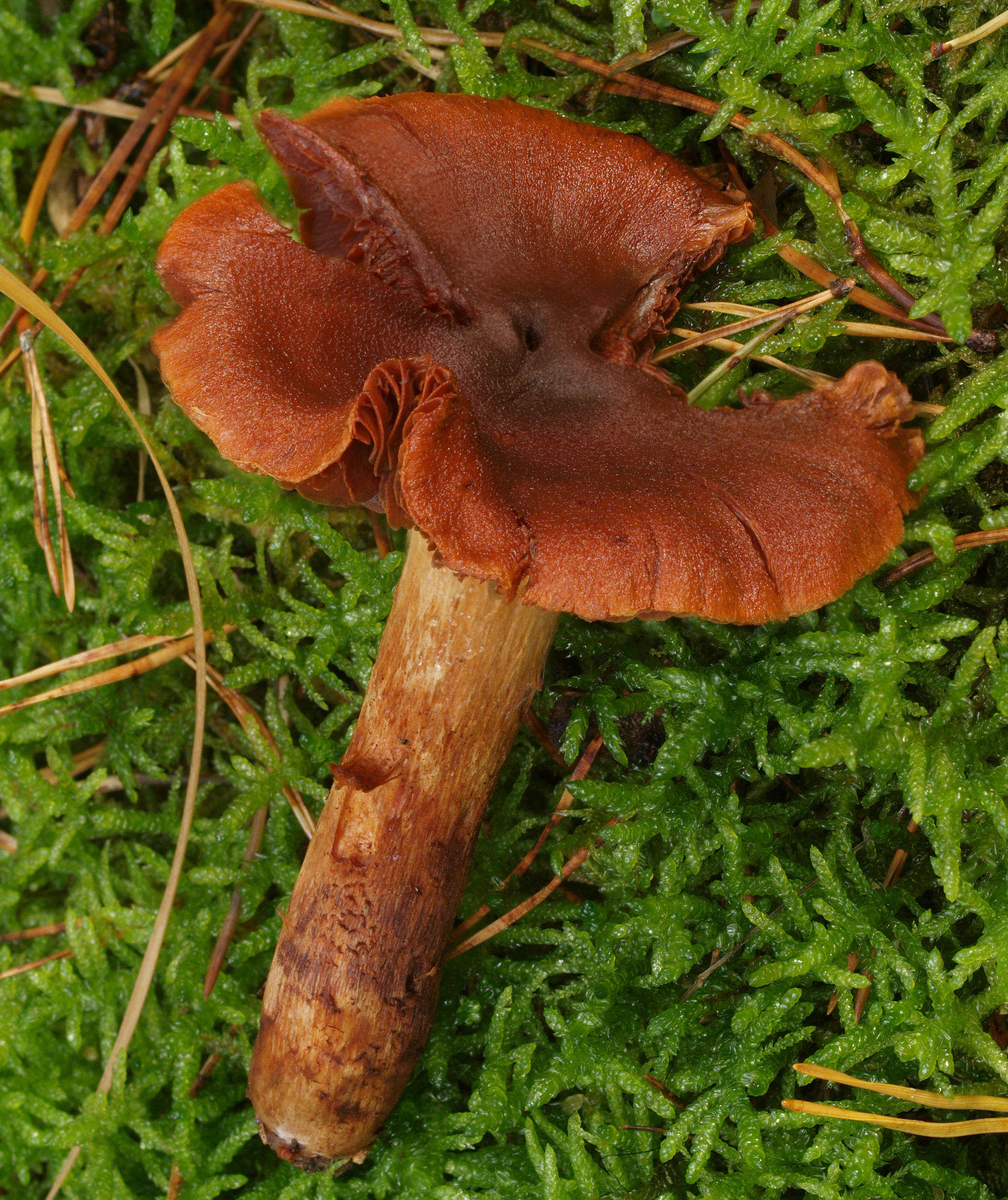
Fool's Webcap
Cortinarius orellanus
The Fool's Webcap is a warm reddish-brown mushroom that quietly destroys your kidneys over the course of days or weeks. It shares the same devastating orellanine toxin as its conifer-loving cousin, the Deadly Webcap, but prefers the company of oaks and beeches.
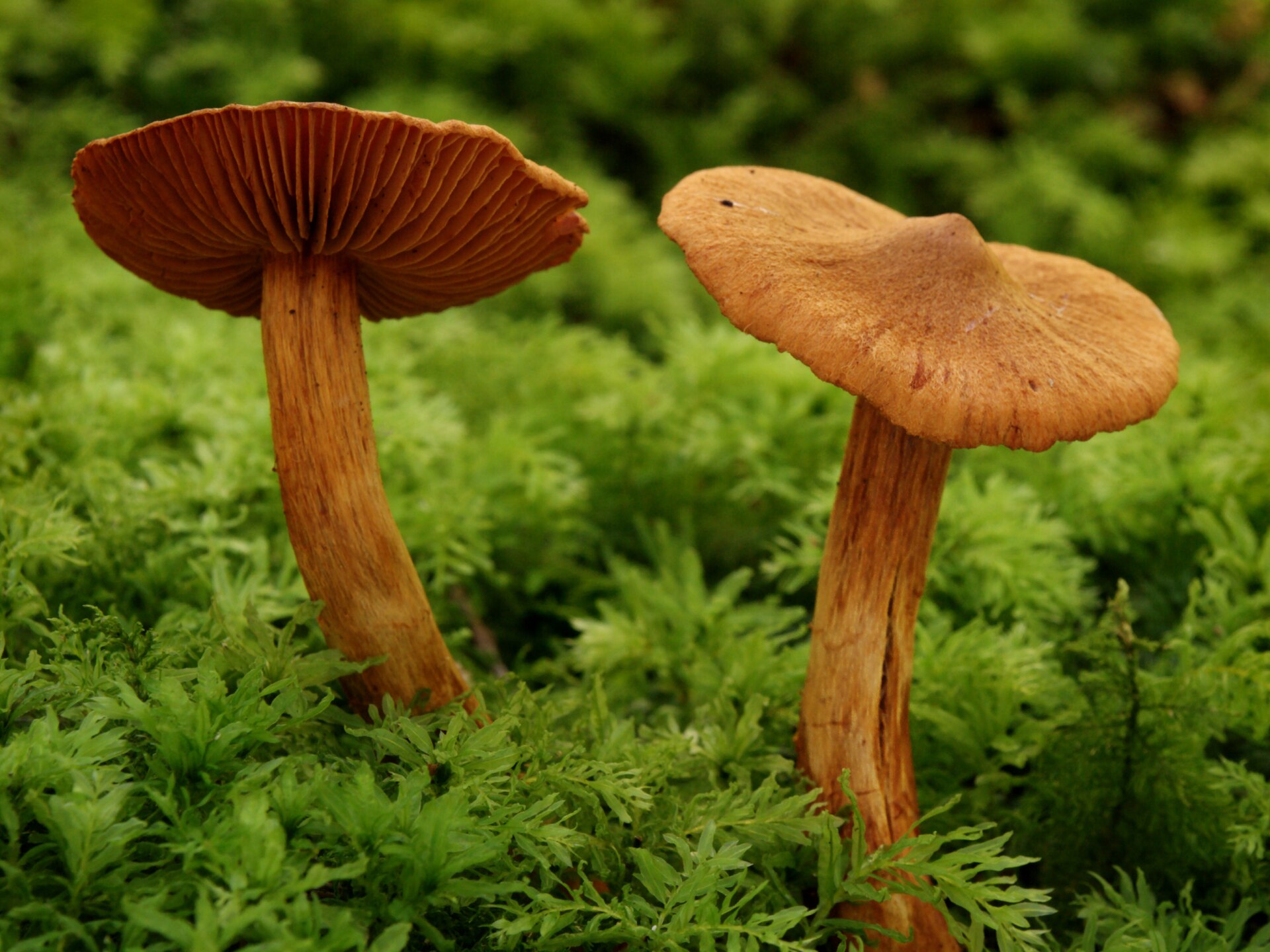
Deadly Webcap
Cortinarius rubellus
The Deadly Webcap is a small, plain, tawny-orange mushroom that destroys your kidneys. Symptoms can take up to three weeks to appear, by which point the damage is irreversible. It is one of the most insidious killers in the fungal kingdom.
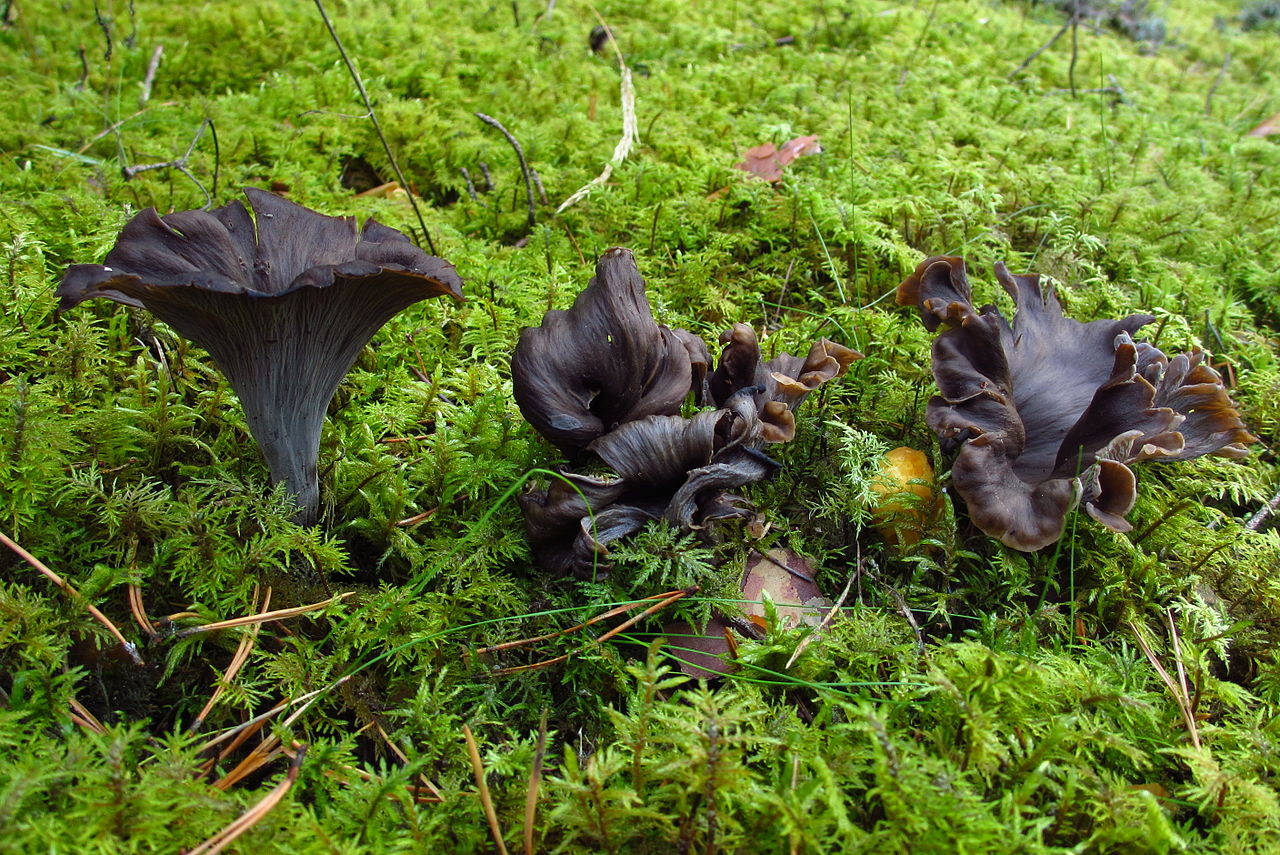
Black Trumpet
Craterellus cornucopioides
It looks like something that crawled out of a Tim Burton movie, but the Black Trumpet is one of the most sought-after wild mushrooms on Earth — nicknamed "black gold" by foragers who spend hours squinting at leaf litter trying to spot them.
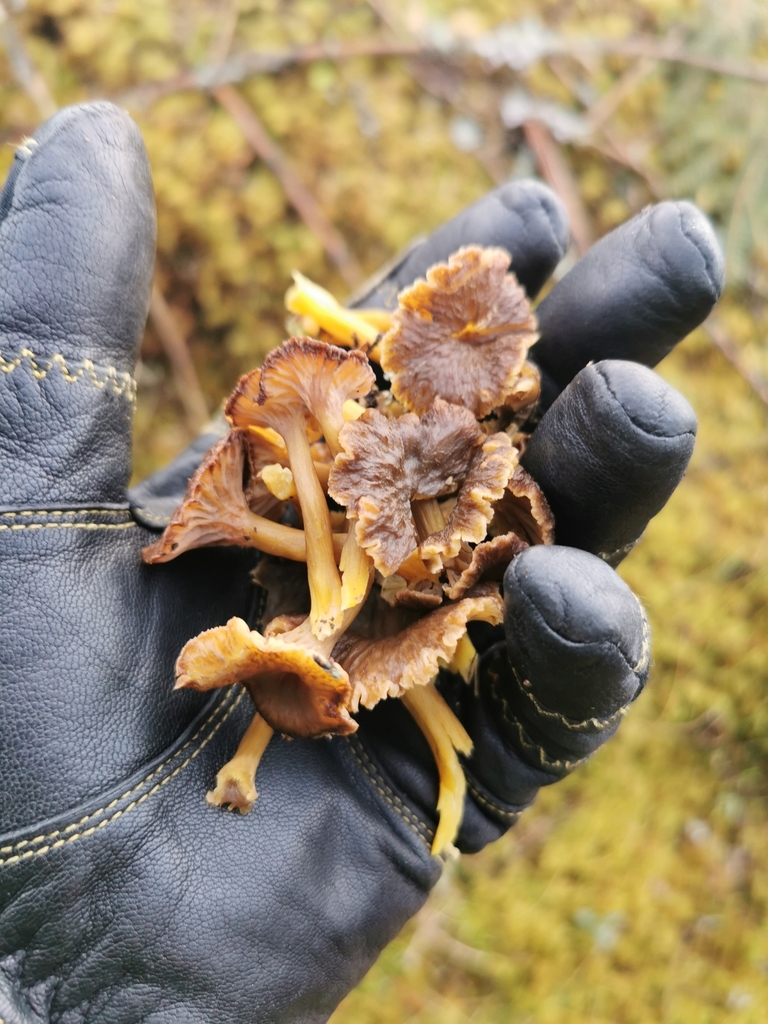
Trumpet Chanterelle
Craterellus tubaeformis
A slender, funnel-shaped chanterelle that carpets mossy conifer forests in autumn. Taxonomists recently moved this species from Cantharellus to Craterellus, but foragers still call it what they always have: a reliable late-season treasure.
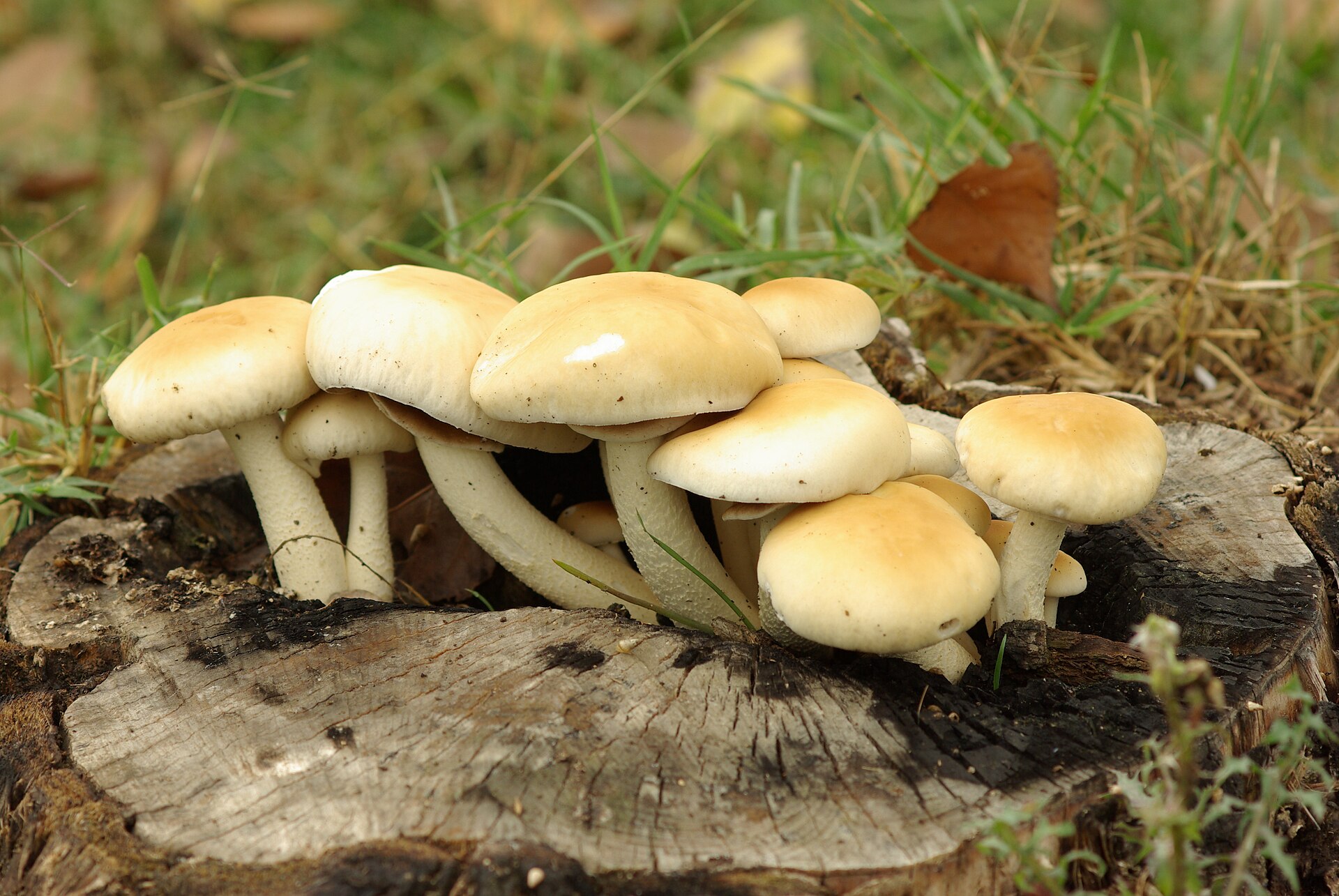
Pioppino
Cyclocybe aegerita
An exceptional edible mushroom that grows in dense clusters on poplar, elm, and other hardwood stumps. Known as Pioppino in Italy and Black Poplar Mushroom in English, Cyclocybe aegerita has been cultivated since Roman times and remains one of southern Europe's most treasured culinary fungi, prized for its firm texture and rich, nutty flavor.
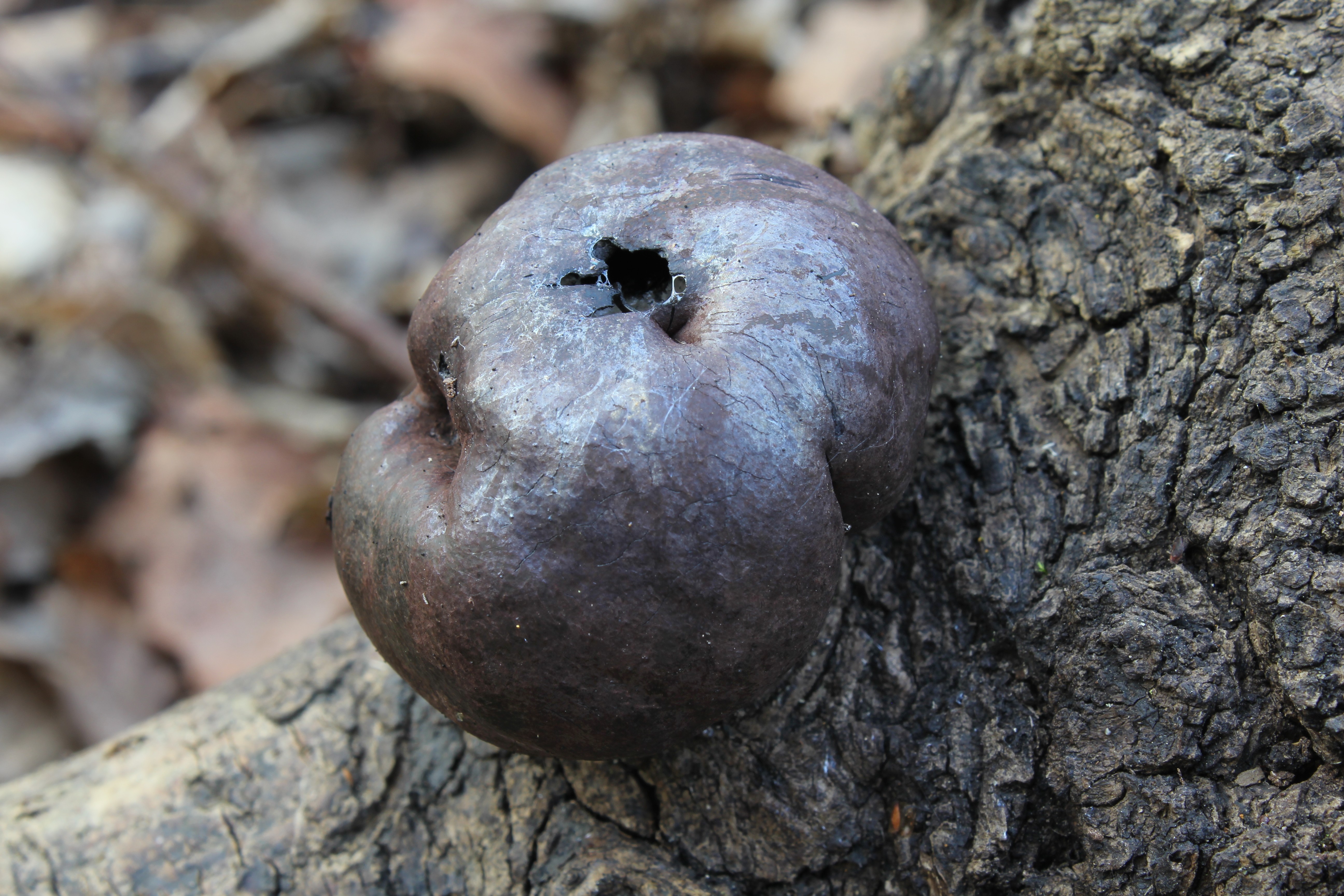
Cramp Balls
Daldinia concentrica
Hard, round, dark brown to black balls found on dead ash wood — slice one open and you'll find beautiful concentric rings like a tiny tree trunk. Also called King Alfred's Cakes after the legendarily distracted king who burned his cakes, and prized by bushcrafters as one of nature's best fire-starting materials.
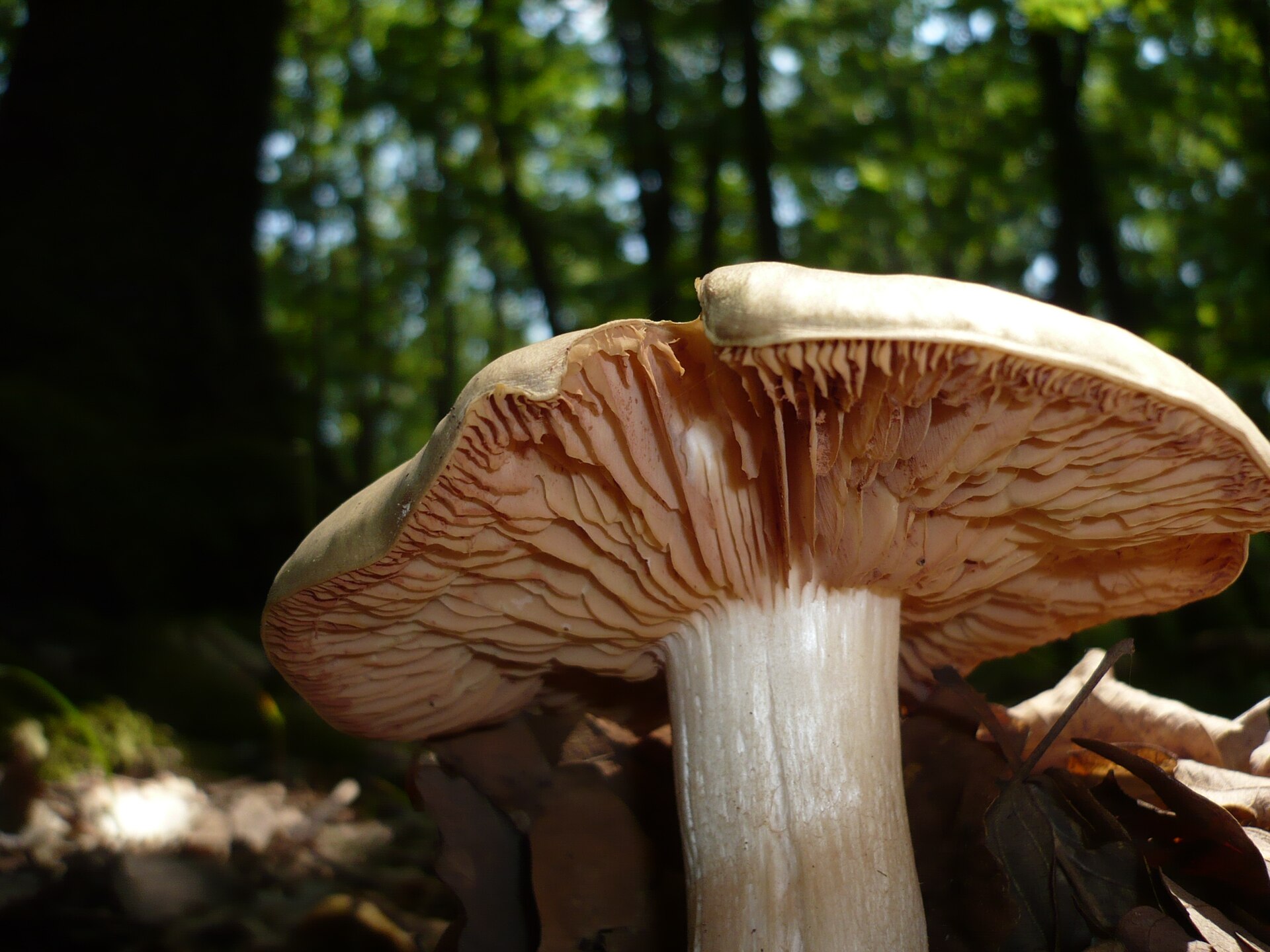
Livid Pinkgill
Entoloma sinuatum
The Livid Pinkgill is Europe's most dangerous Entoloma, a large and deceptively edible-looking mushroom that causes violent, sometimes life-threatening gastrointestinal poisoning. It has been mistaken for St. George's Mushroom, field mushrooms, and even clouded funnels.
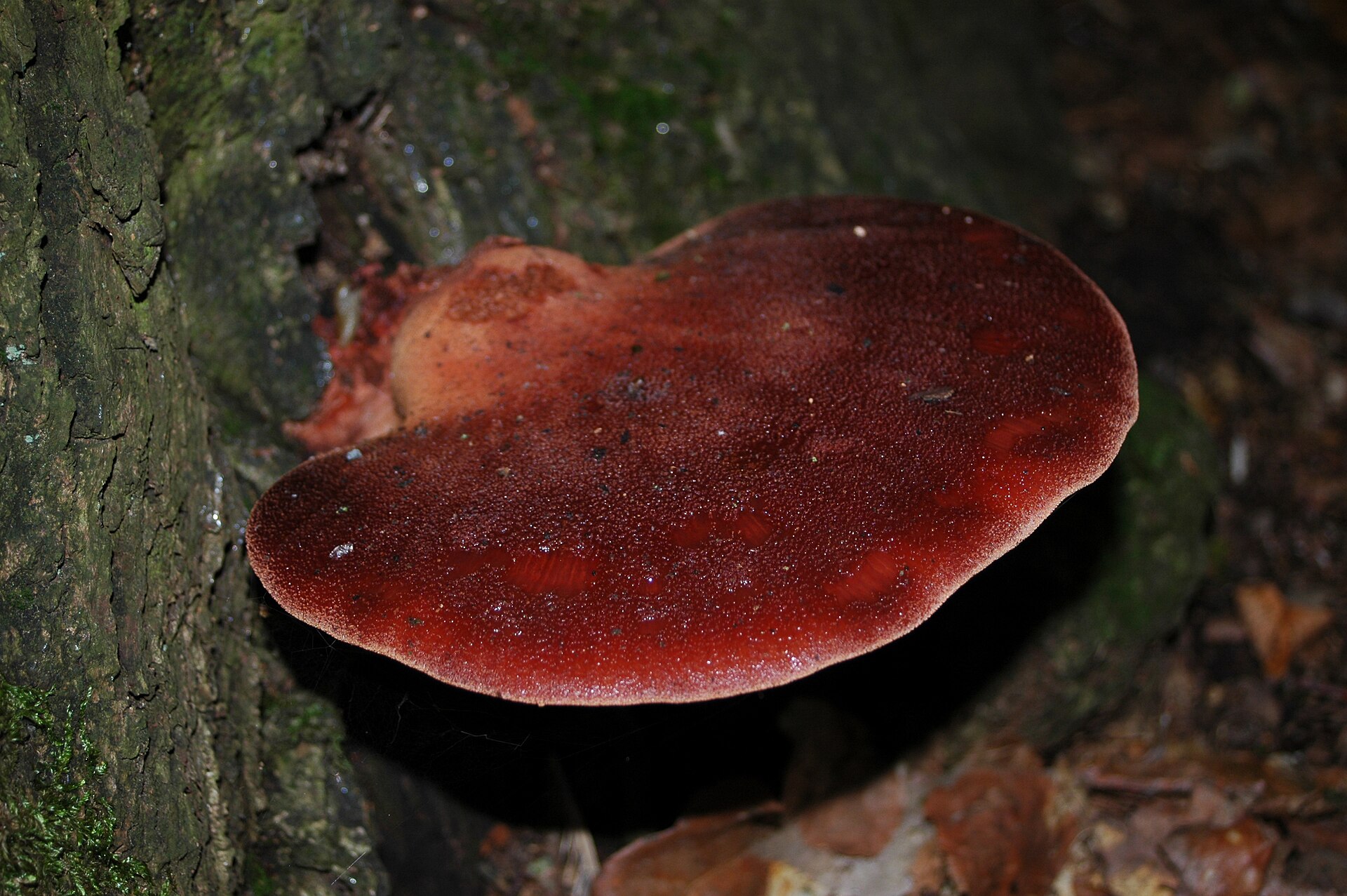
Beefsteak Fungus
Fistulina hepatica
A bracket fungus that looks and bleeds like a slab of raw meat. Fistulina hepatica grows on living oak and sweet chestnut trees, producing a tongue-shaped, blood-red fruiting body that oozes a red juice when cut. Edible with a pleasantly sour, tangy flavor, and paradoxically, the brown heartwood it creates in oak is some of the most valuable timber in the world.
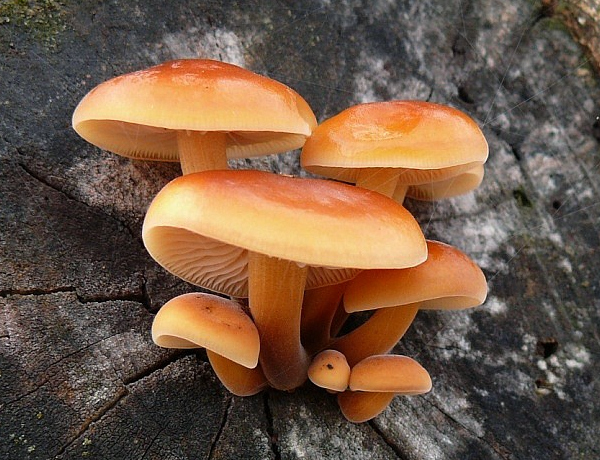
Enoki
Flammulina velutipes
The wild version of this mushroom looks nothing like the skinny white strands you buy at the Asian grocery store. Wild Flammulina has a tawny-orange, slimy cap on a velvety dark stem, and it fruits in the dead of winter when almost nothing else is growing. The cultivated form is grown in darkness and CO2 to produce those elongated, pale clusters.
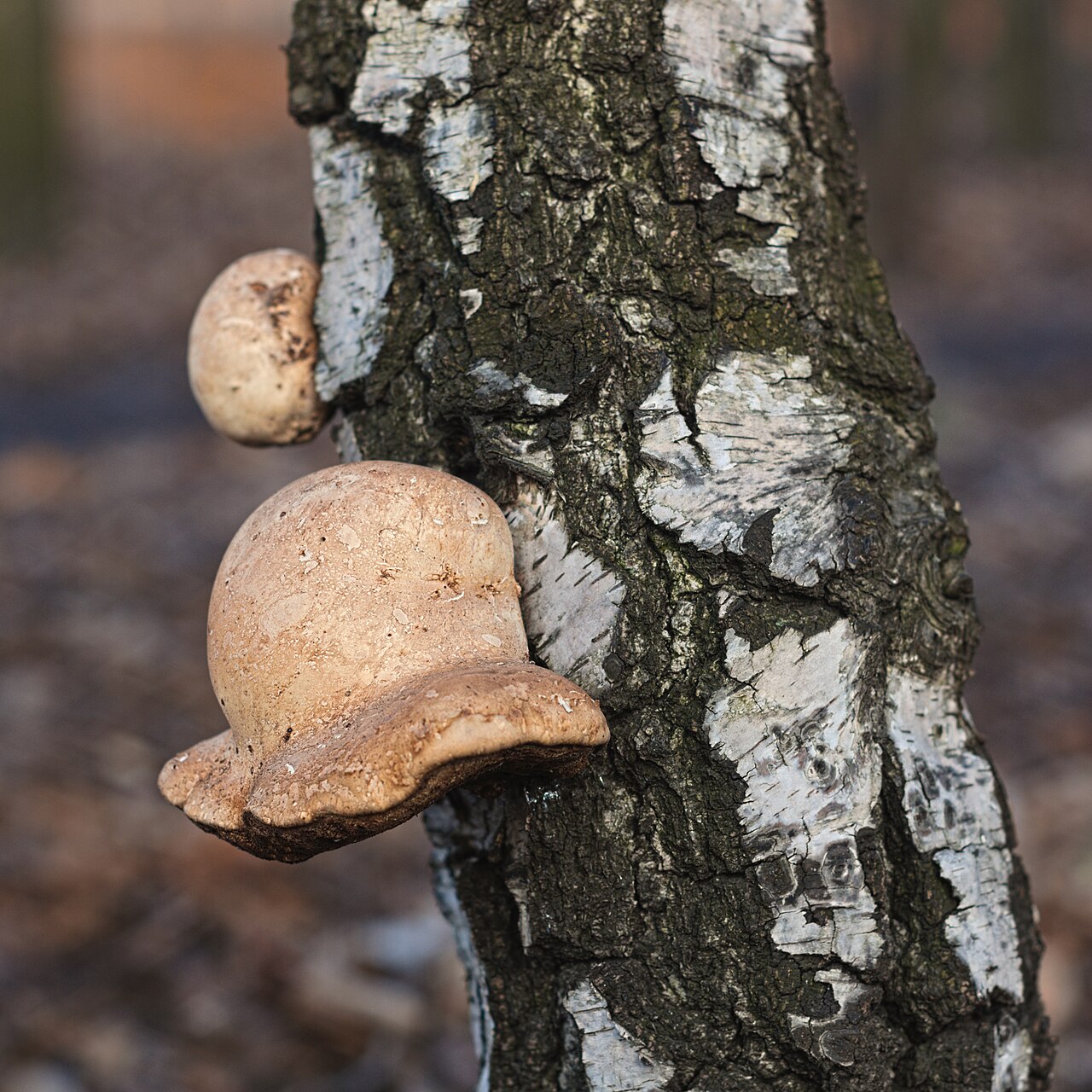
Birch Polypore
Fomitopsis betulina
The mushroom that a 5,300-year-old mummy kept in his pouch. Birch Polypore — also called Razor Strop Fungus — is one of the most historically significant fungi on Earth. Inedible due to its bitterness, but so medicinally and practically useful that Ötzi the Iceman was carrying pieces of it when he died in the Alps.
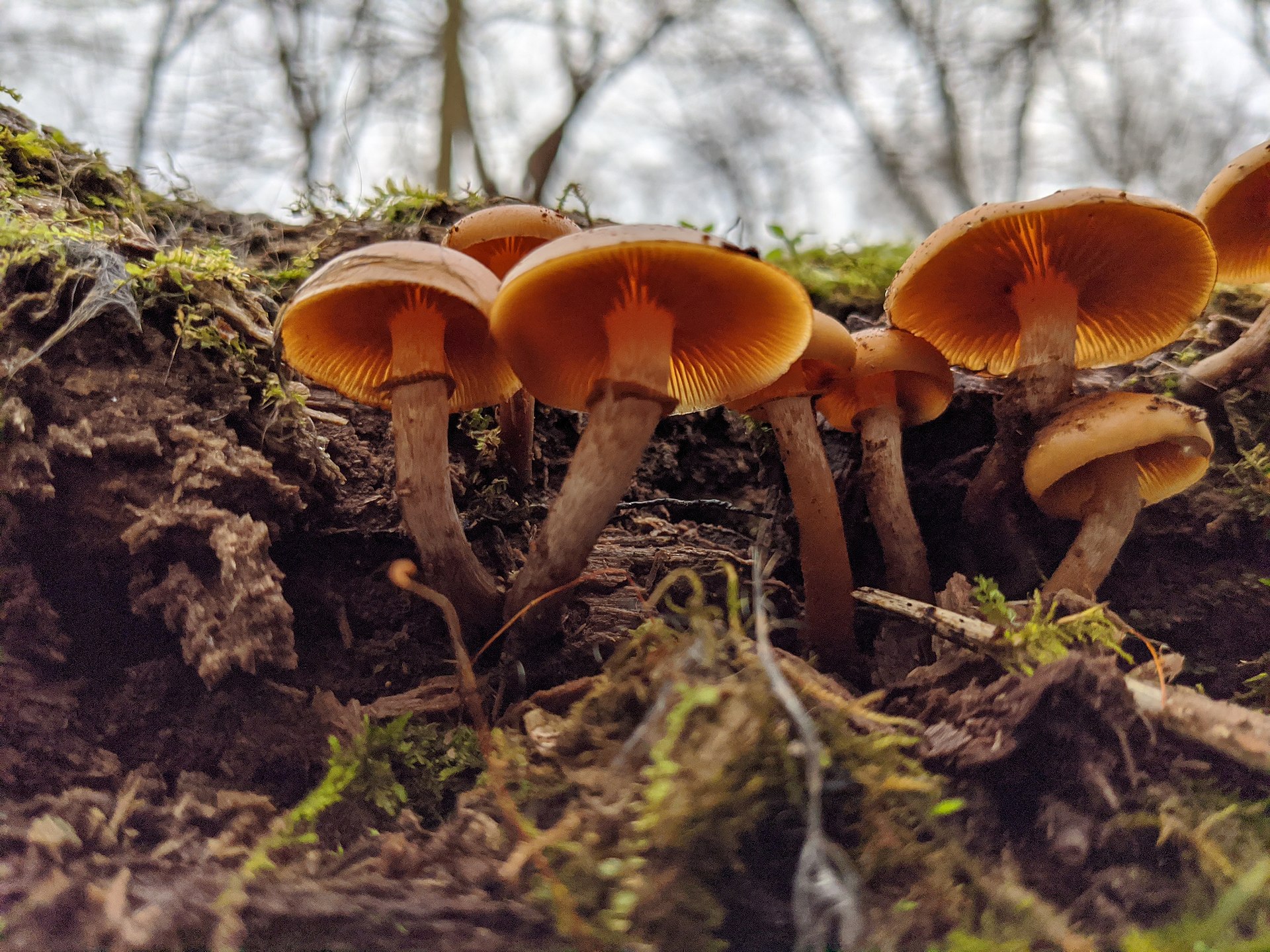
Funeral Bell
Galerina marginata
Don't let the size fool you. Galerina marginata is a tiny, innocent-looking brown mushroom that grows on rotting wood — and it contains the exact same amatoxins that make the Death Cap one of the deadliest organisms on Earth. It's responsible for multiple documented fatalities and is regularly confused with edible species.
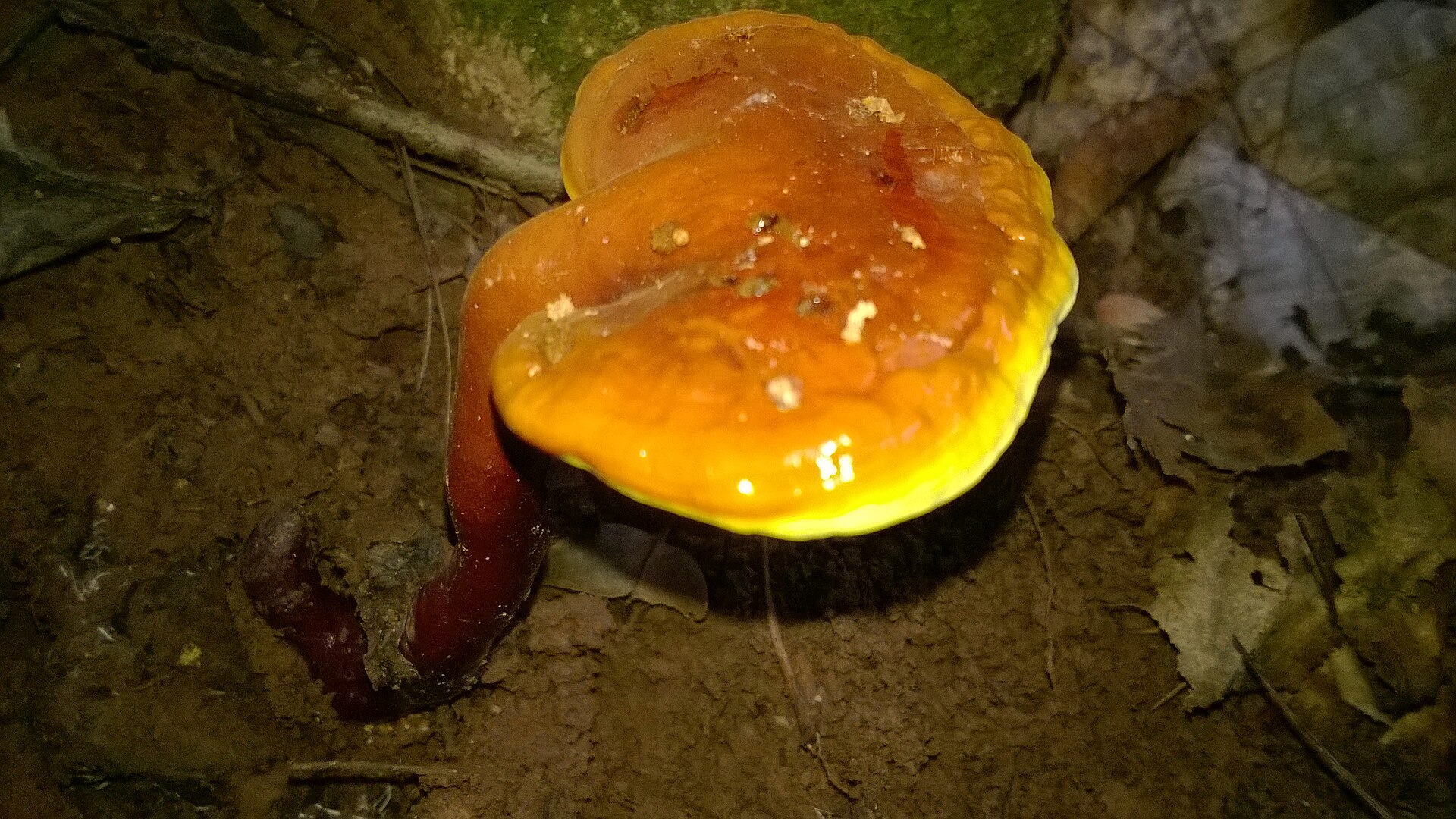
Reishi
Ganoderma lucidum
Meet the mushroom that's been called the 'mushroom of immortality' for over 2,000 years. Ganoderma lucidum — better known as Reishi (in Japan) or Lingzhi (in China) — is a glossy, kidney-shaped shelf fungus that looks like it was lacquered by hand. You can't eat it like a normal mushroom (it's tough as wood), but humans have been brewing it into teas, tinctures, and supplements since ancient Chinese emperors were obsessed with living forever.
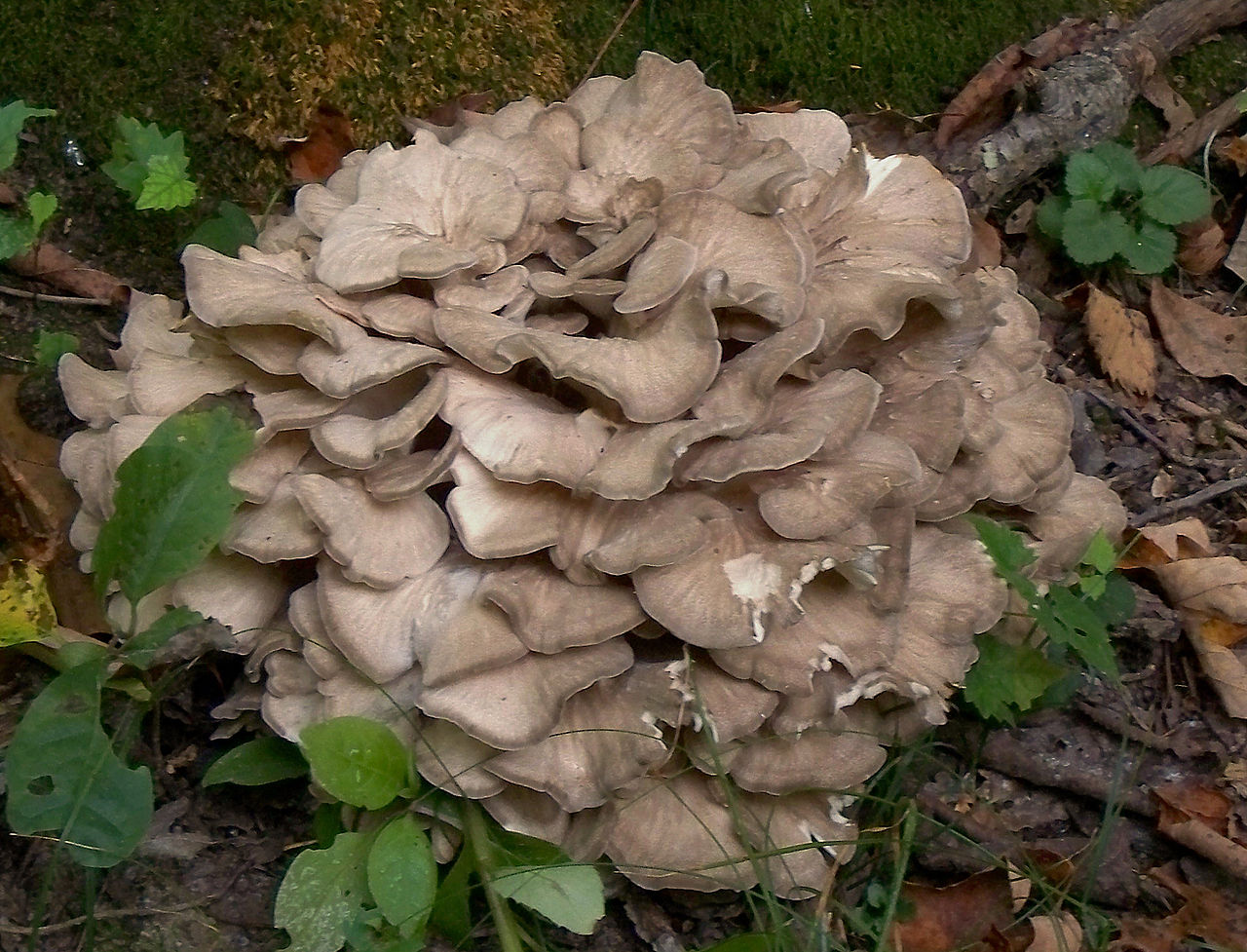
Hen of the Woods
Grifola frondosa
In Japan, they call it maitake — the 'dancing mushroom' — because foragers supposedly danced with joy when they found one. And honestly? If you stumbled across a 50-pound fungus that's both a gourmet ingredient and a medicinal powerhouse, you'd probably dance too.
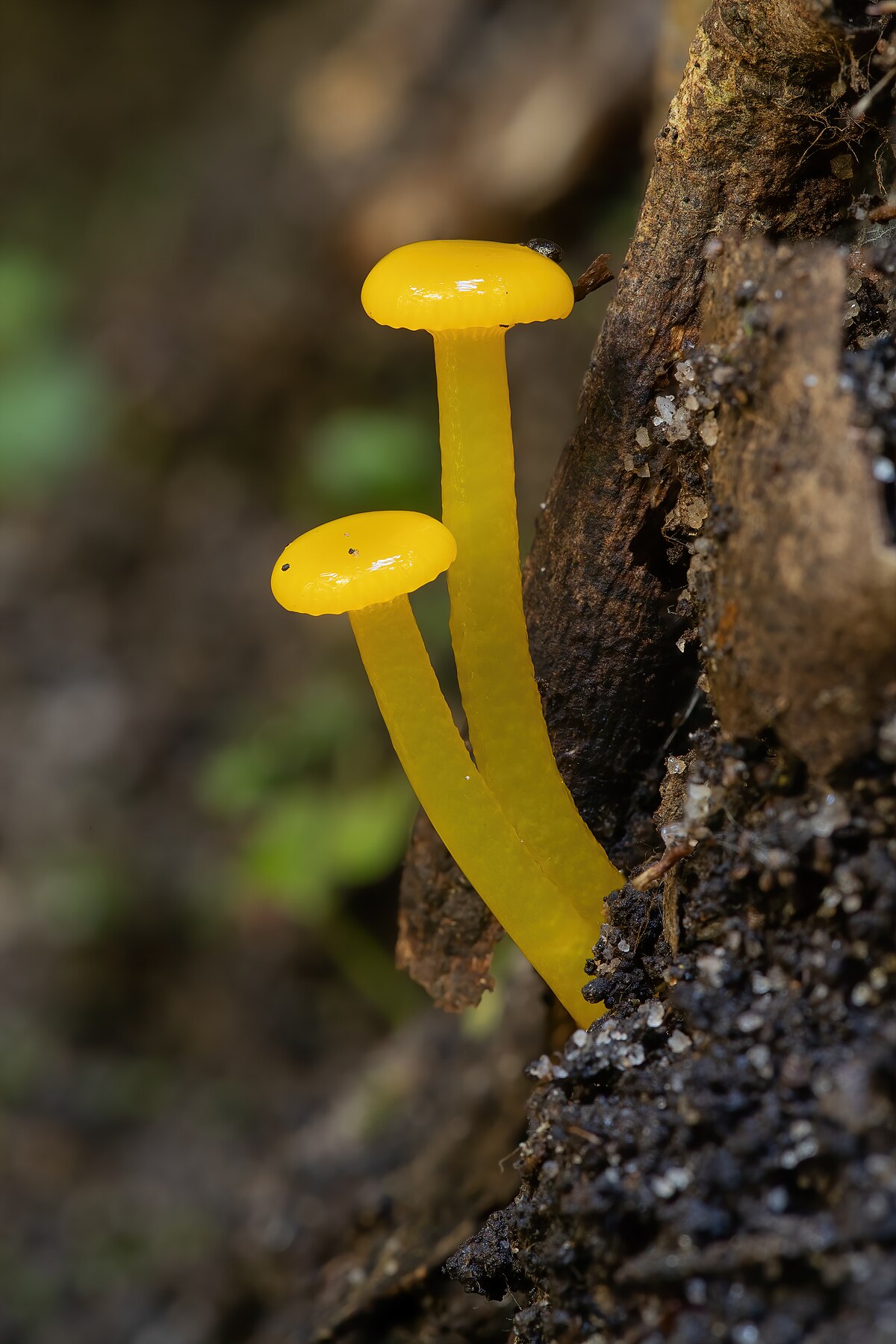
Lemon Waxcap
Gliophorus chromolimoneus
A striking lemon-yellow to chrome-yellow waxcap mushroom found in the temperate rainforests and wet grasslands of Australia and New Zealand. Its intensely slimy cap and stem, translucent flesh, and vivid coloration make it one of the most visually arresting fungi in the Southern Hemisphere.
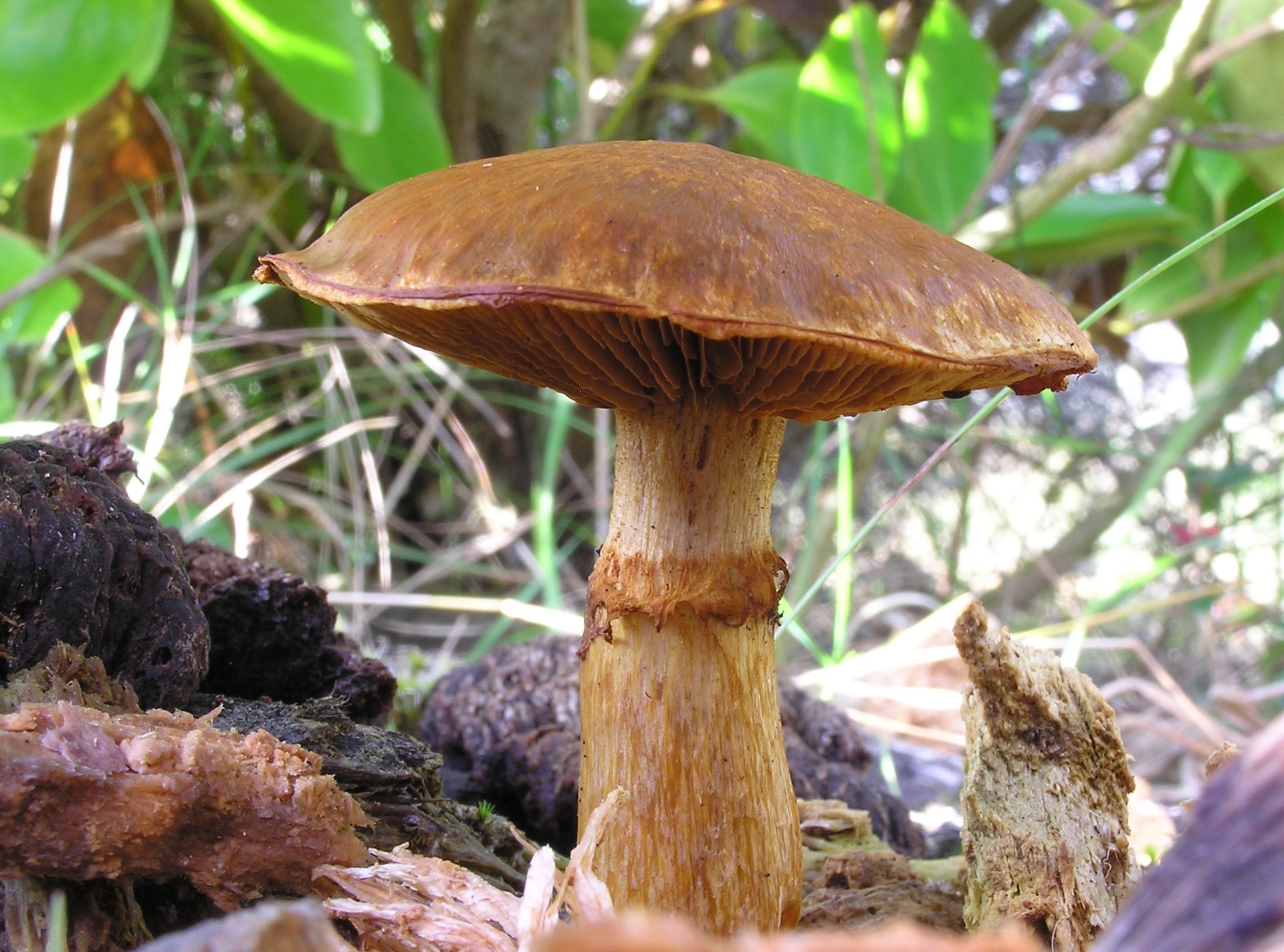
Spectacular Rustgill
Gymnopilus junonius
A large, showy, bright orange-yellow mushroom that grows in dense clusters on hardwood stumps and logs. Some populations contain psilocybin; others do not. The psychoactive content varies dramatically by region and substrate. Previously known as Gymnopilus spectabilis. This page is for educational identification purposes only.
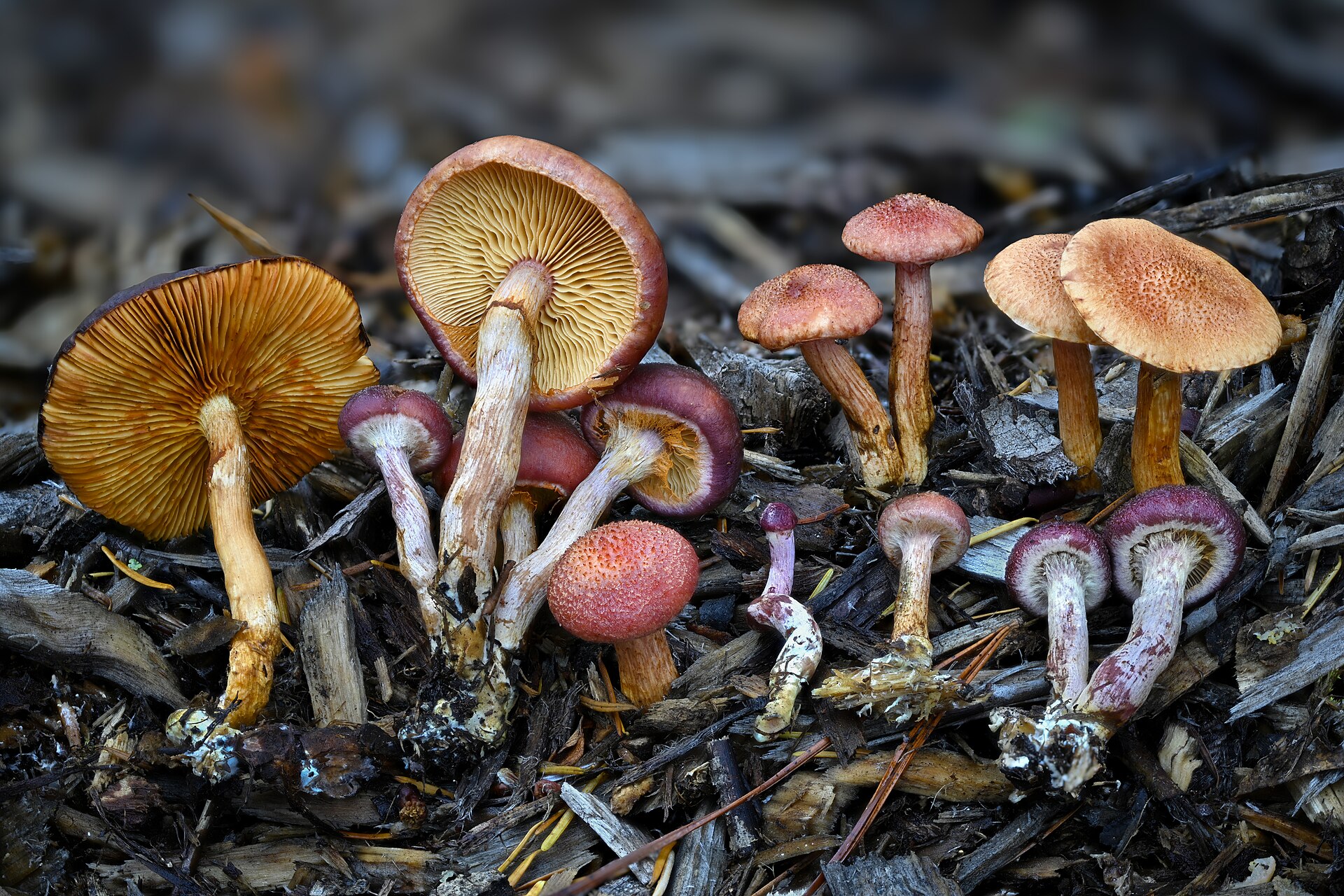
Yellow-gilled Gymnopilus
Gymnopilus luteofolius
A medium-to-large wood-decaying mushroom recognized by its striking purplish-red to rusty-brown cap and bright yellow gills. It grows in dense clusters on dead stumps and logs across North America and beyond. Contains variable amounts of psilocybin and is intensely bitter, making it inedible.
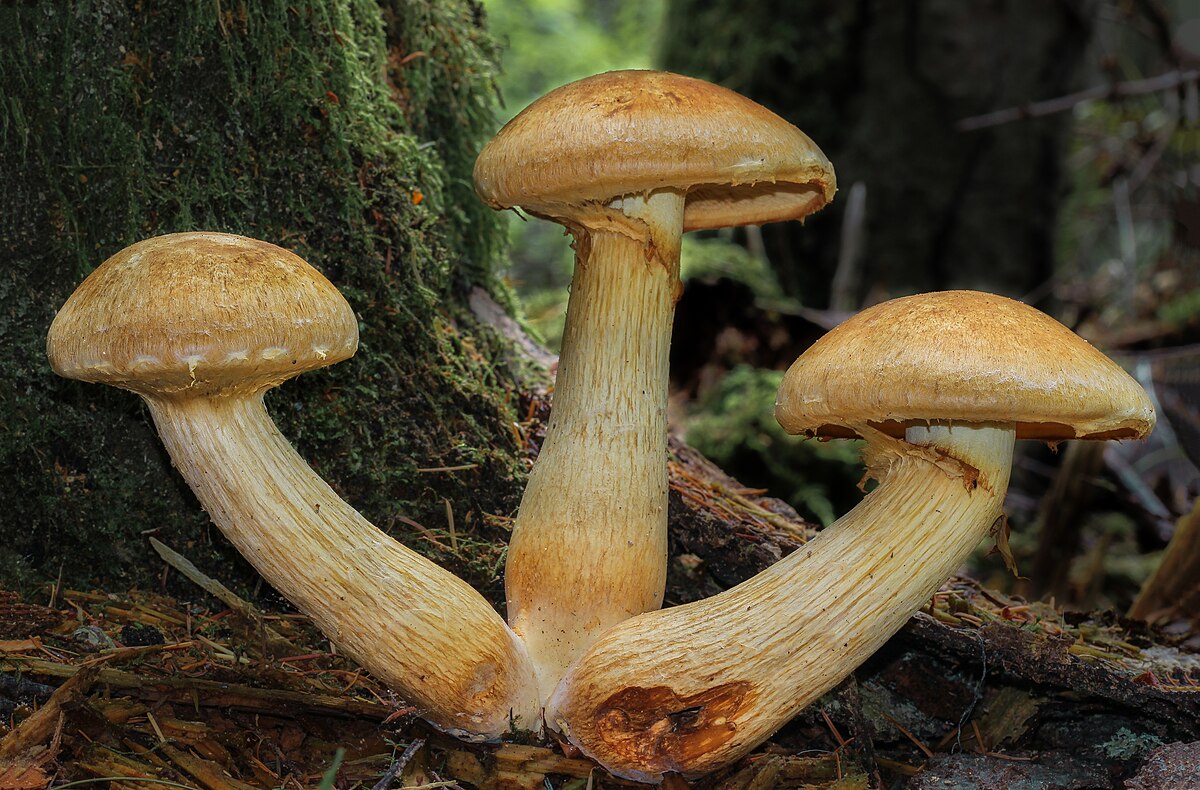
Green-Staining Gymnopilus
Gymnopilus viridans
A rare, wood-inhabiting Gymnopilus species distinguished by its tendency to develop greenish tones on the cap and flesh when handled or aged. Found primarily in the Pacific Northwest of North America, this species contains psilocybin and psilocin. It is one of the least-documented psychoactive Gymnopilus species, with very few confirmed collections since its original description.
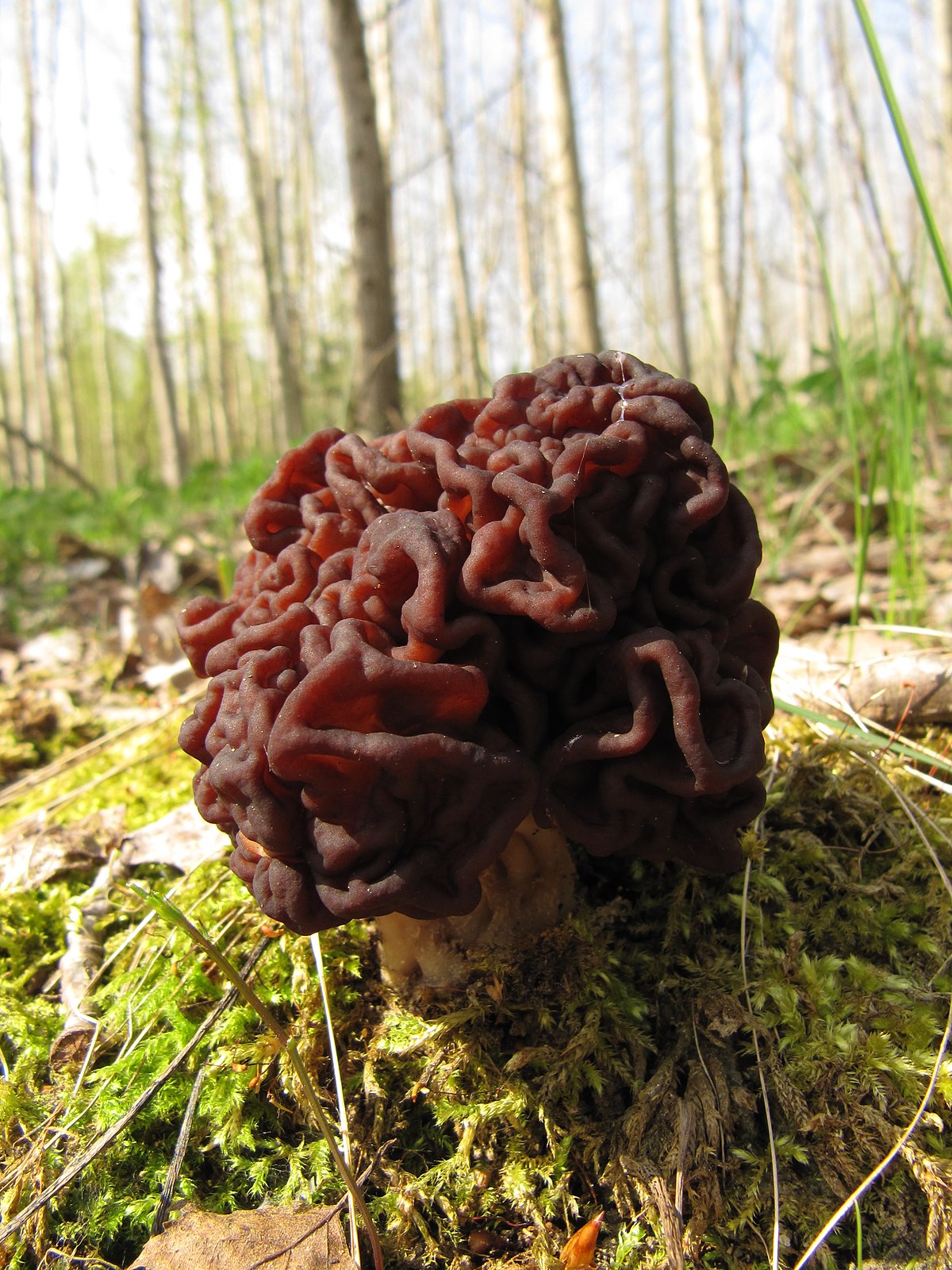
False Morel
Gyromitra esculenta
It looks like a wrinkly brain sitting on a stubby white stem, and it contains a compound that your body converts into literal rocket fuel. Gyromitra esculenta is one of the most paradoxical mushrooms on the planet — officially toxic, yet still eaten as a springtime delicacy across Finland and parts of Eastern Europe.
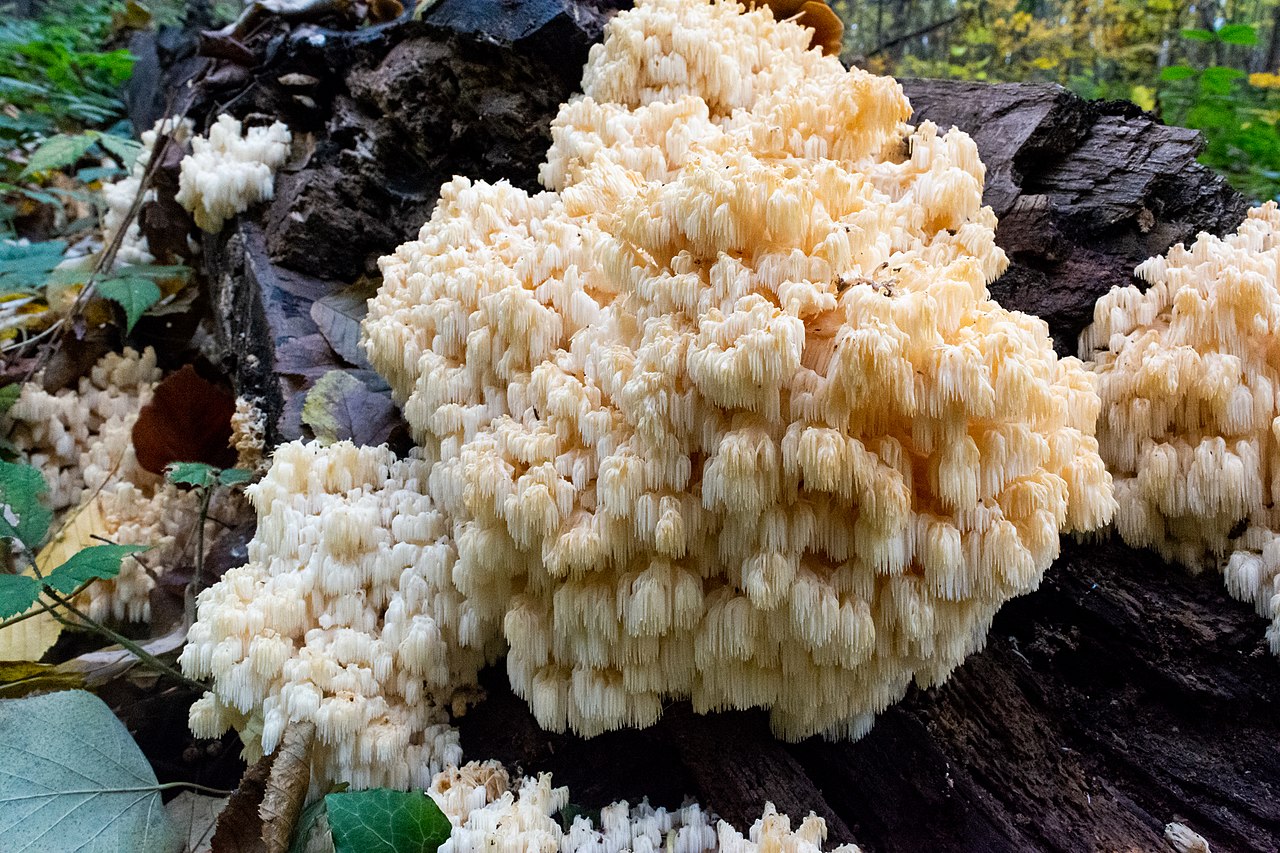
Coral Tooth Fungus
Hericium coralloides
A stunning white fungus that looks like it belongs on a coral reef, not a forest log. Coral Tooth — also called Comb Tooth — grows in delicate branching clusters covered in tiny hanging spines, and it's every bit as delicious as its famous cousin Lion's Mane. Protected by law in several European countries due to declining old-growth habitat.
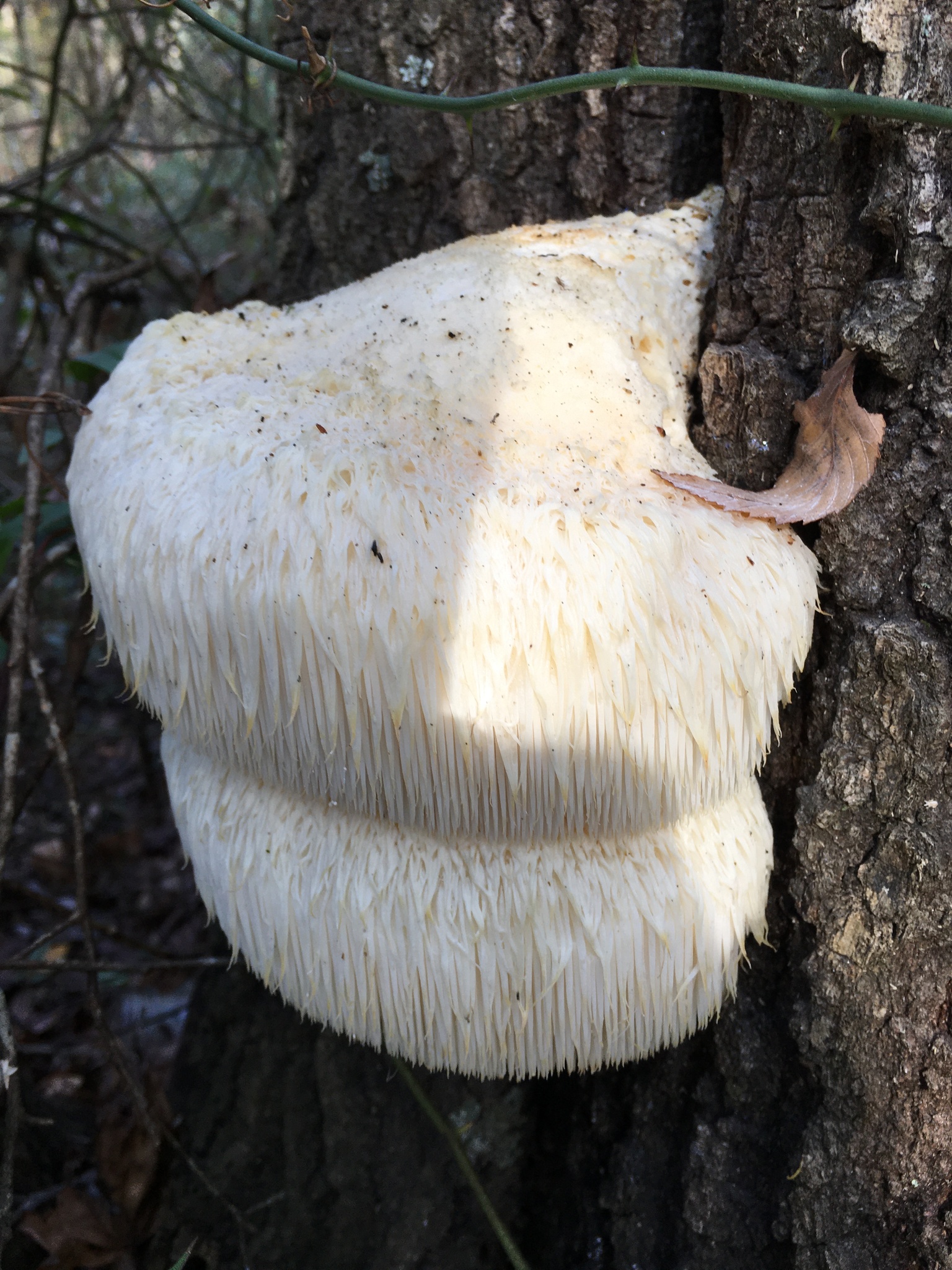
Lion's Mane
Hericium erinaceus
Imagine a white waterfall frozen mid-cascade on the side of a tree. That's Lion's Mane — a bizarre, shaggy mushroom that looks like a wizard's beard and has Silicon Valley convinced it can supercharge your brain.
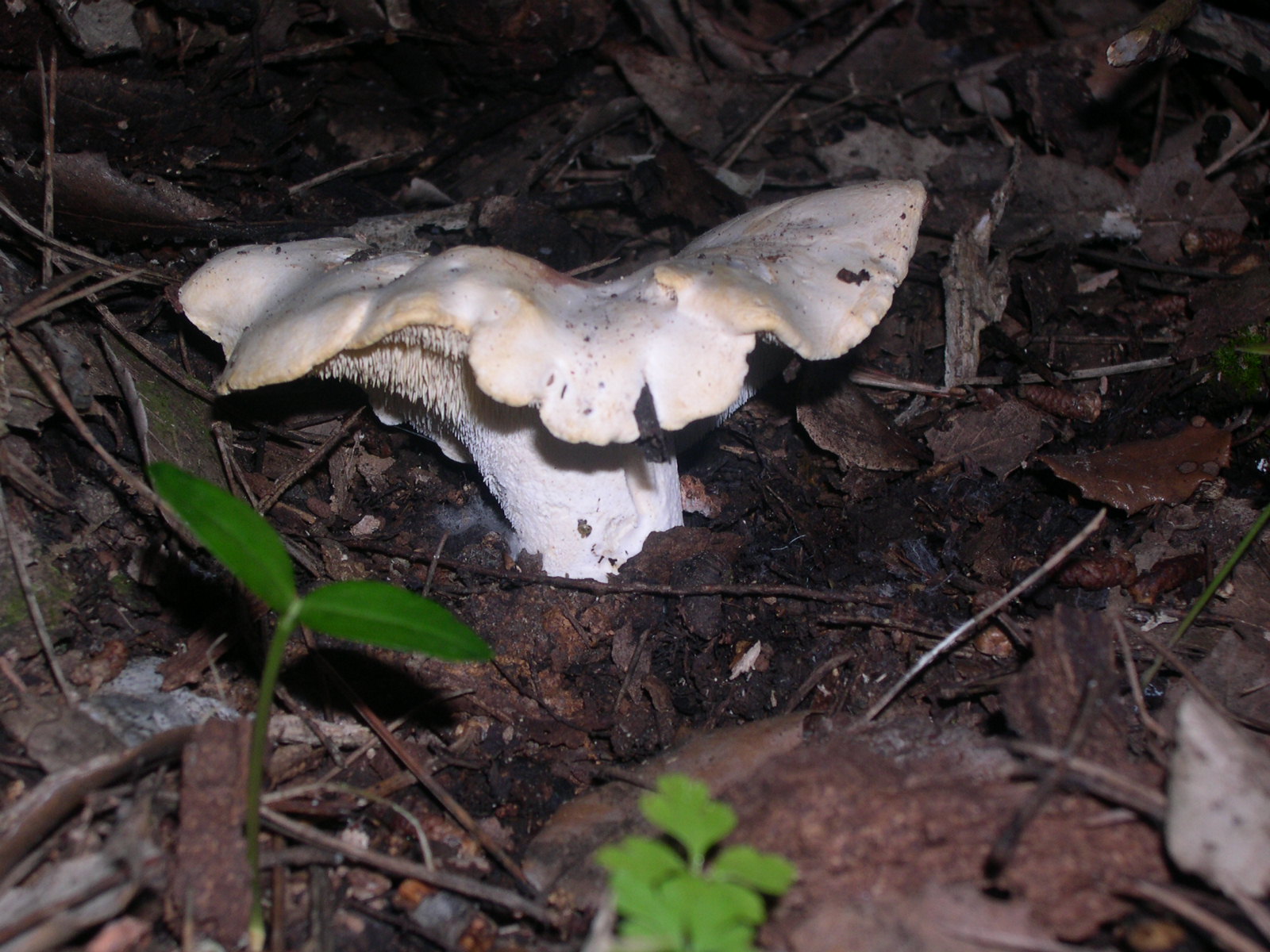
Hedgehog Mushroom
Hydnum repandum
Meet the friendliest mushroom in the forest. The Hedgehog Mushroom has tiny tooth-like spines under its cap instead of gills, making it nearly impossible to confuse with anything dangerous — a true beginner's best friend.
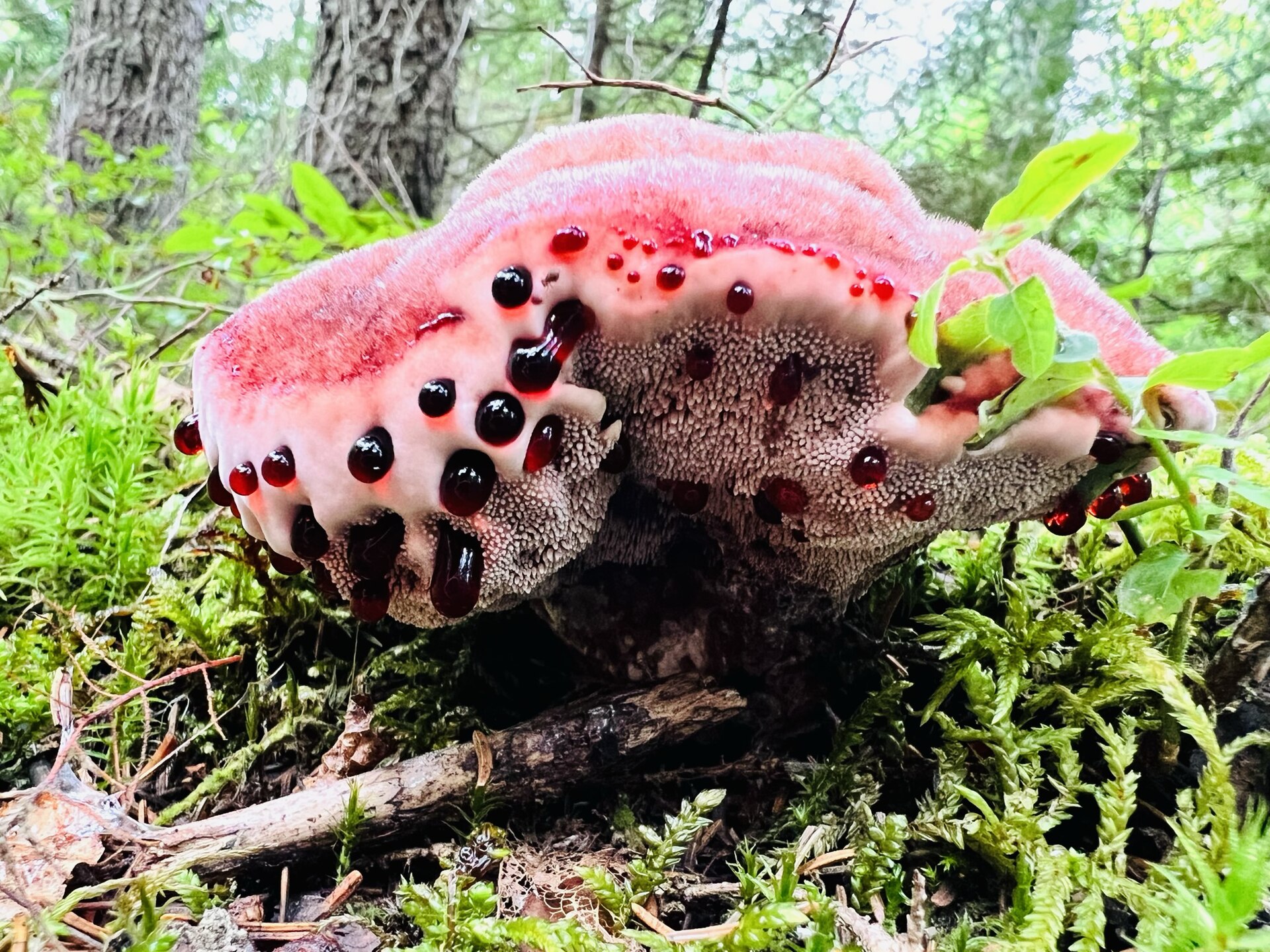
Bleeding Tooth Fungus
Hydnellum peckii
A striking tooth fungus famous for the blood-red droplets that ooze from its white cap through guttation. Ectomycorrhizal with conifers, inedible due to extreme bitterness, and declining across Europe. Contains atromentin, a compound with anticoagulant properties comparable to heparin.
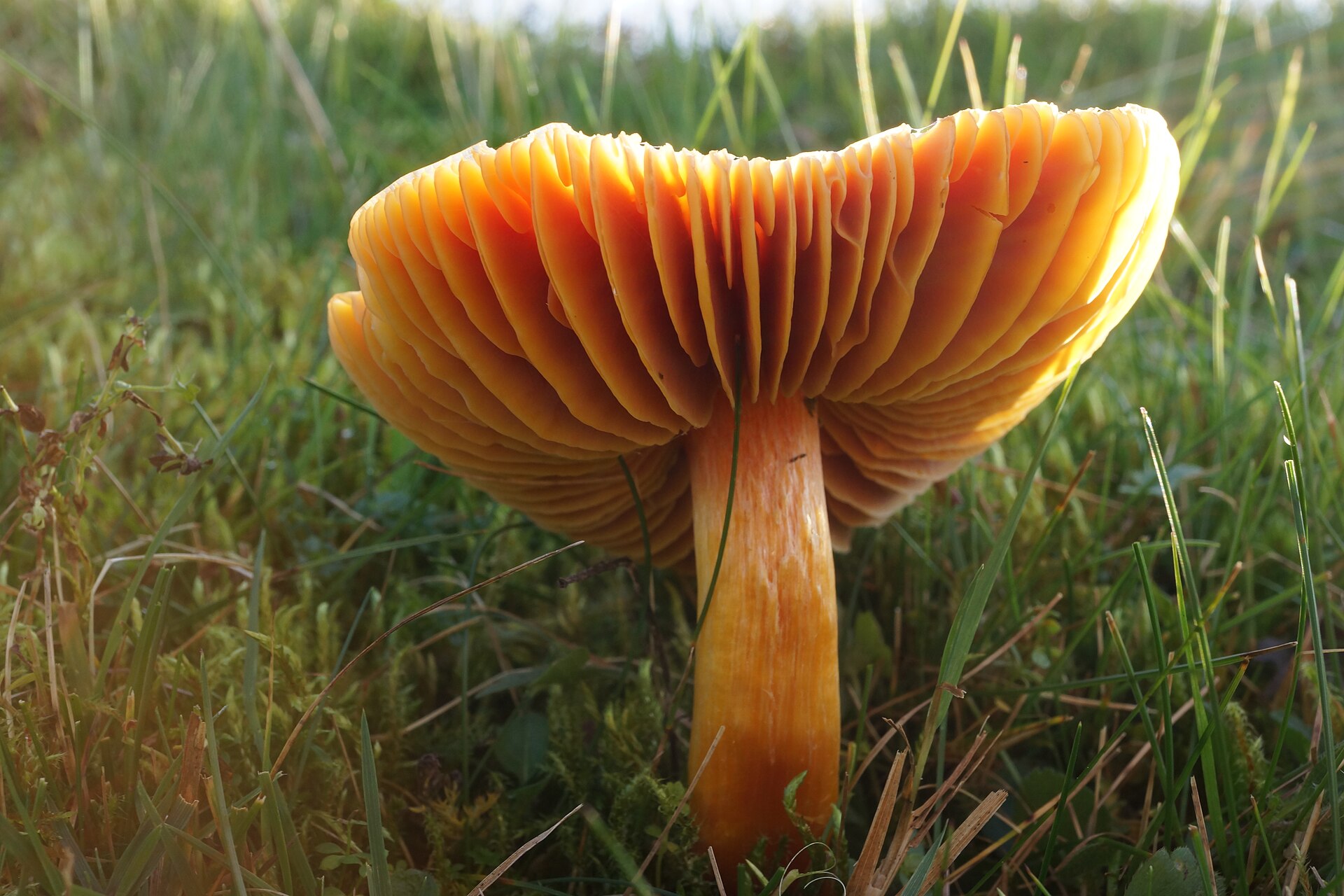
Scarlet Waxcap
Hygrocybe coccinea
A jewel-bright scarlet mushroom that lights up old grasslands in autumn. The Scarlet Waxcap is one of Europe's most visually stunning fungi and a key indicator species for ancient, unfertilized meadows. Though technically edible, it is far more valuable left in place as a conservation marker.
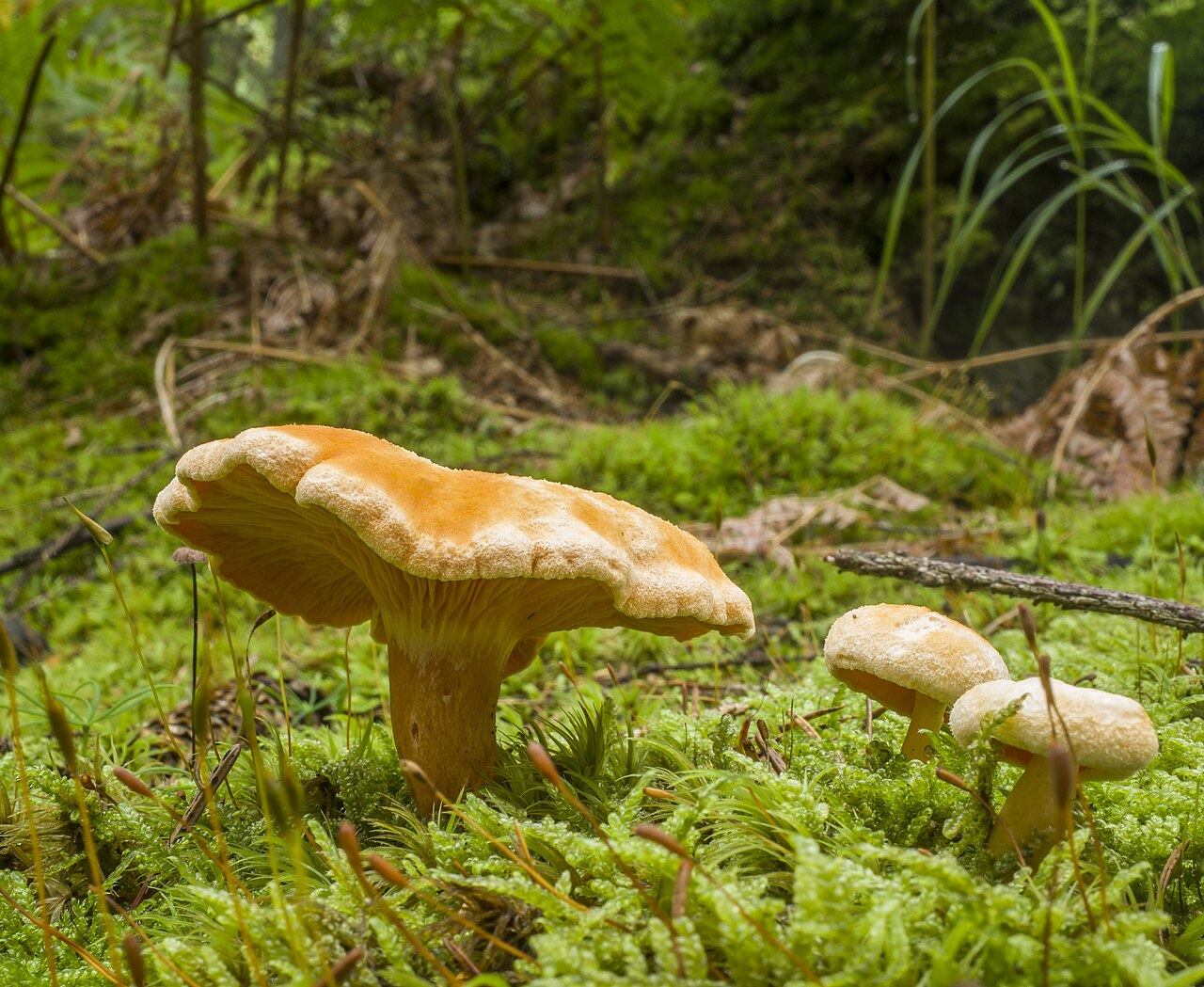
False Chanterelle
Hygrophoropsis aurantiaca
The mushroom that tricks chanterelle hunters. The False Chanterelle is an orange, funnel-shaped fungus with thin, crowded, true gills that grows on rotting wood and conifer debris — a convincing imitation of the prized Golden Chanterelle, but one that falls apart under close inspection. Generally considered edible but causes stomach upset in some people.
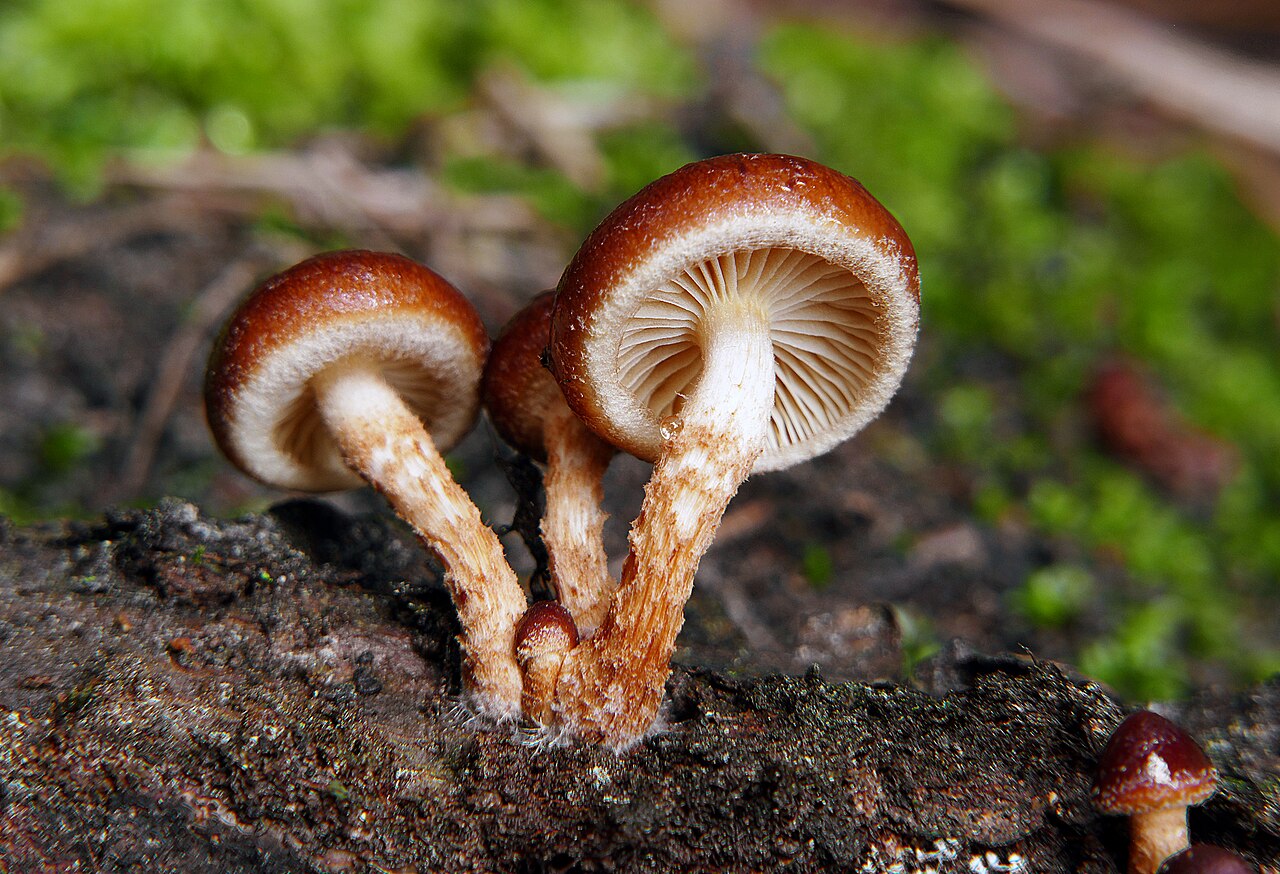
Brick Cap
Hypholoma lateritium
A handsome brick-red mushroom that grows in dense clusters on hardwood stumps every autumn. Brick Cap is edible when properly cooked and positively identified, but it demands respect — its dangerous look-alikes include the deadly Funeral Bell and the toxic Sulphur Tuft. This is not a beginner's mushroom.
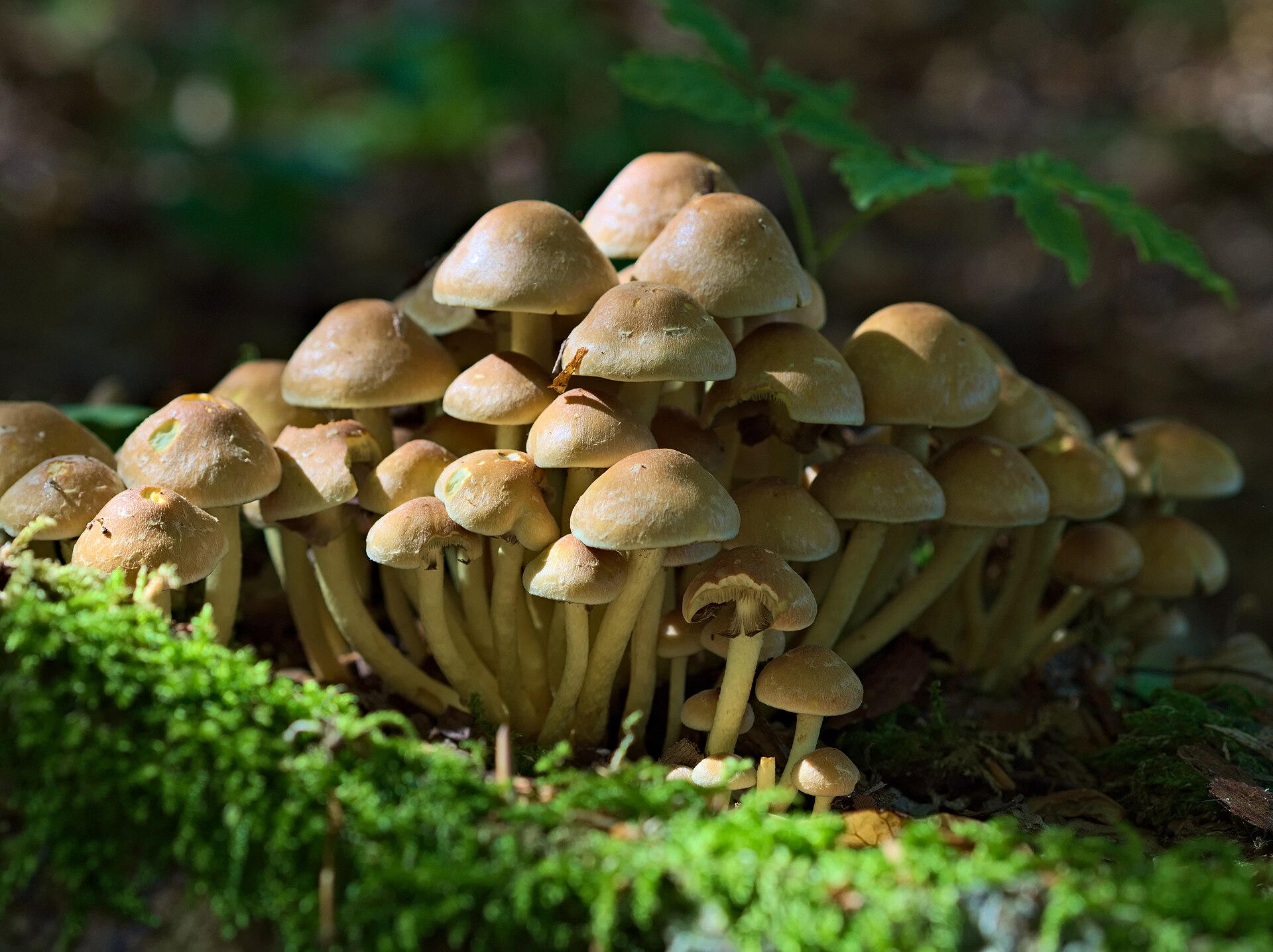
Sulphur Tuft
Hypholoma fasciculare
Sulphur Tuft is one of the most common woodland mushrooms on Earth, forming dense yellow-green clusters on dead stumps year-round. Its bitter taste should stop anyone from swallowing it, but those who persist face liver and kidney damage that can take days to manifest.
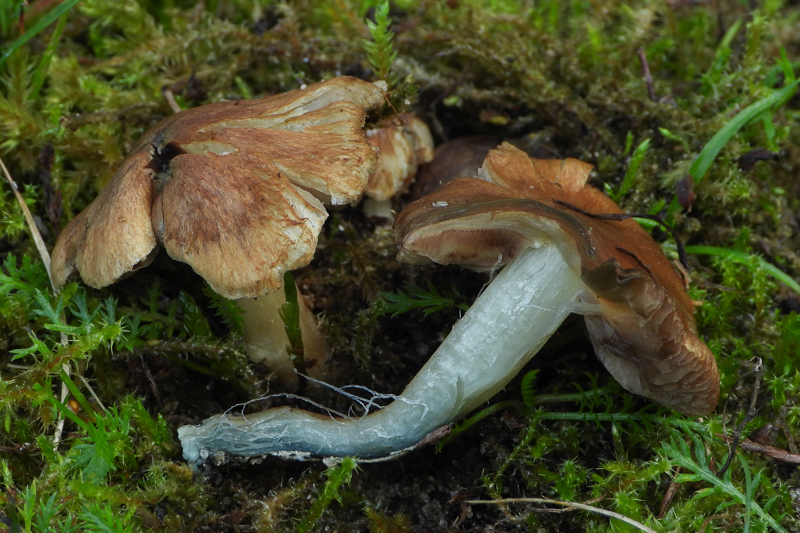
Green-Staining Inocybe
Inocybe aeruginascens
An unusual psilocybin-containing mushroom from a genus better known for producing muscarine poison. Found in parks and gardens across Central Europe, it caused accidental mass intoxications in East Germany when foragers mistook it for edible species. Contains psilocybin; illegal in most jurisdictions. This page is for educational identification purposes only.
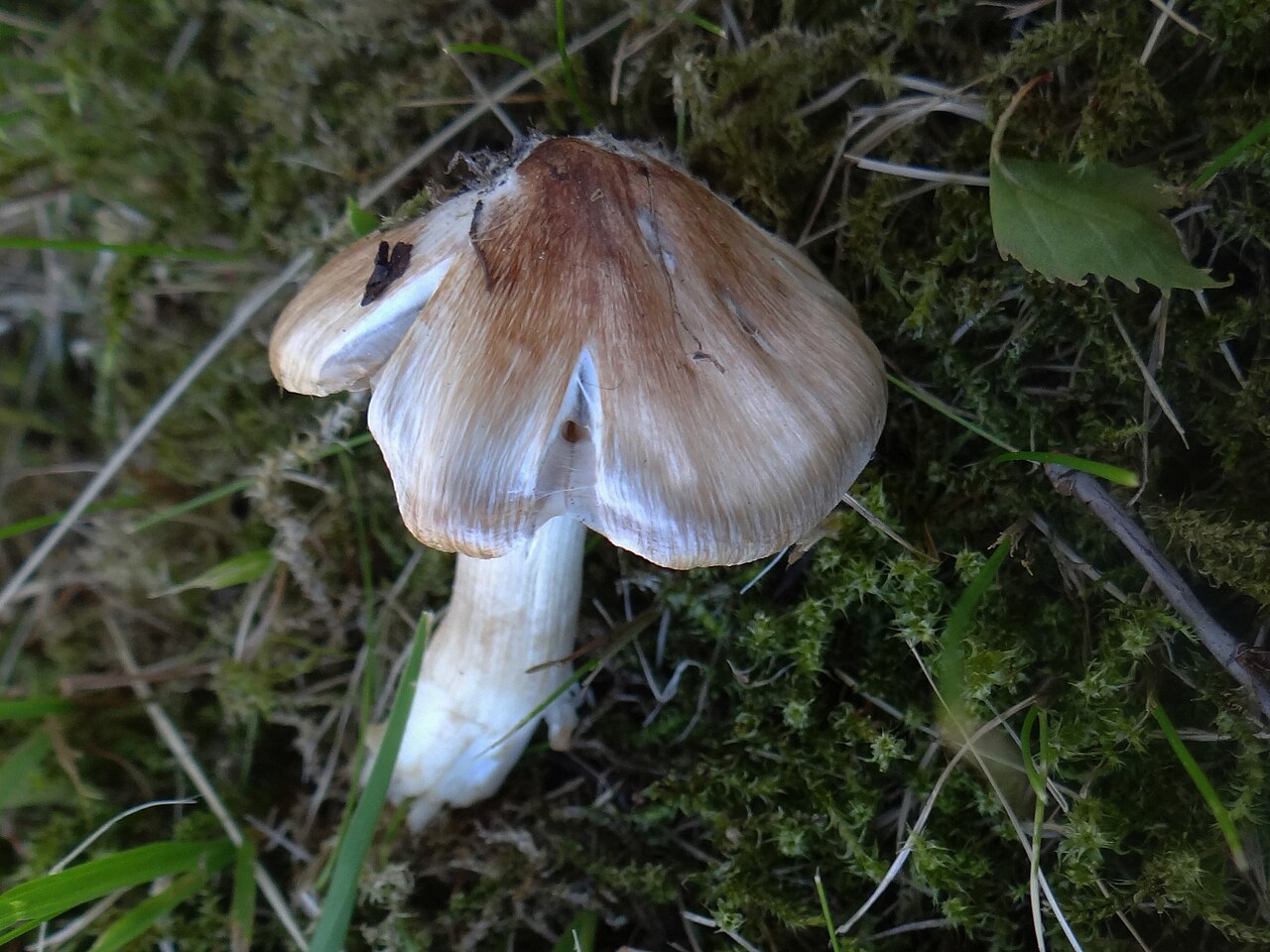
Deadly Fibrecap
Inocybe erubescens
One of Europe's most dangerous mushrooms hides in plain sight. The Deadly Fibrecap contains lethal doses of muscarine — enough to kill — and its plain, unassuming appearance means people mistake it for edible species every year.
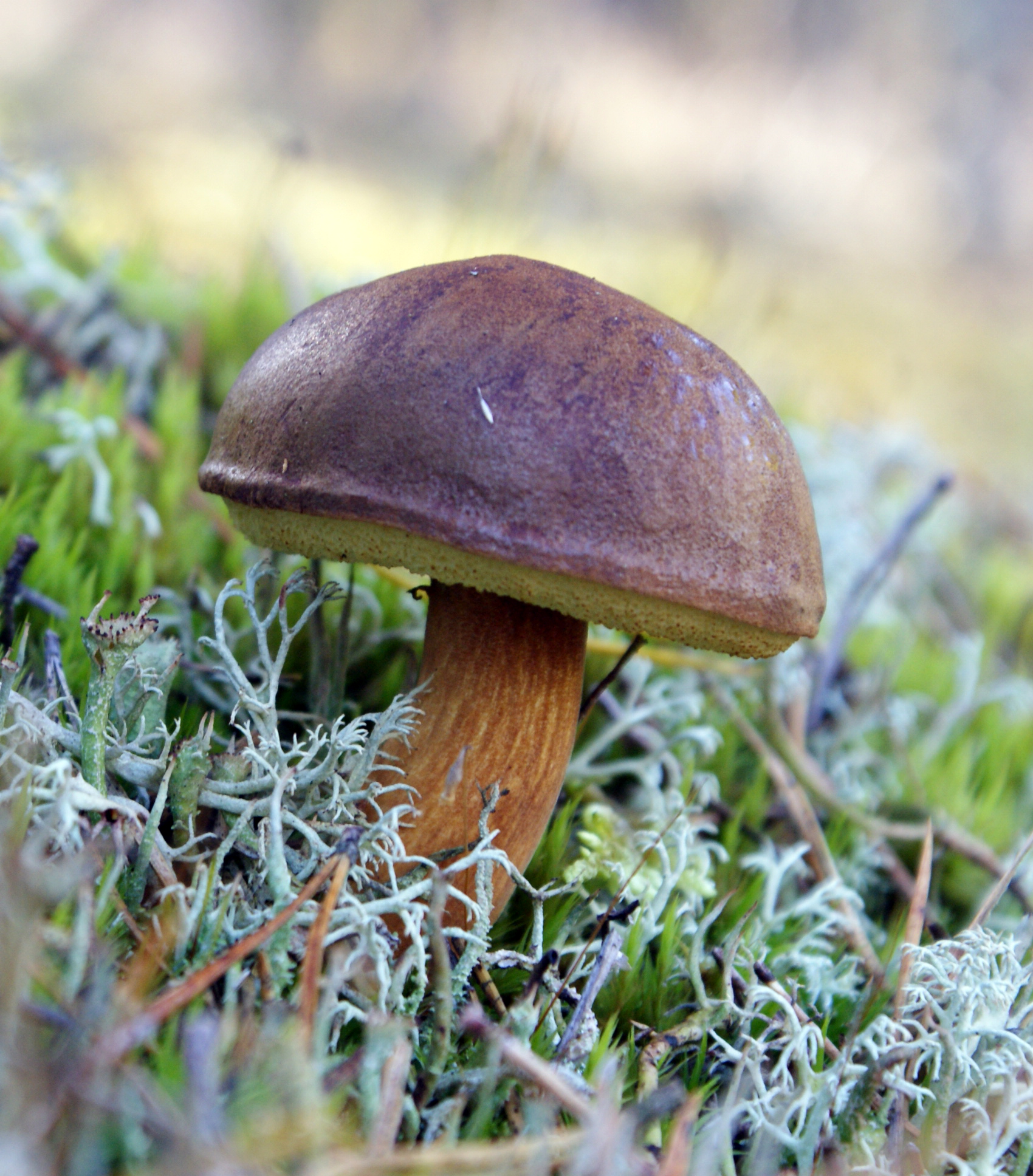
Bay Bolete
Imleria badia
The everyday bolete — less glamorous than porcini but far more abundant and very good eating. Imleria badia is the workhorse of European bolete foraging: it fruits reliably, often in huge numbers, and while it won't make magazine covers, it fills baskets and freezers across the continent every autumn.
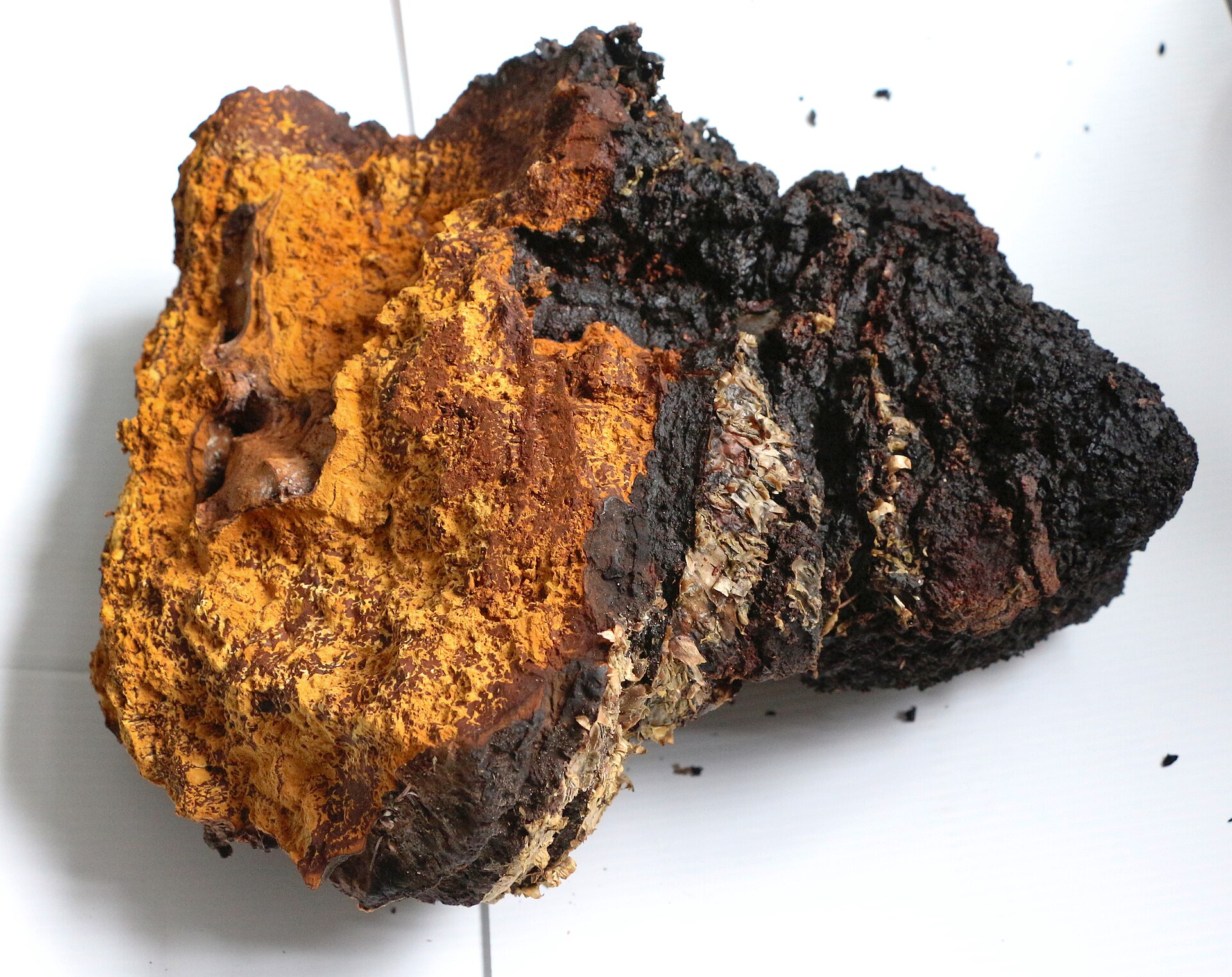
Chaga
Inonotus obliquus
A parasitic fungus that looks like a lump of burnt charcoal growing on birch trees, yet has become one of the most commercially hyped 'medicinal mushrooms' in the wellness industry. Chaga has been used in Russian and Siberian folk medicine for centuries, and modern research has identified bioactive compounds, though the health claims often outpace the evidence.
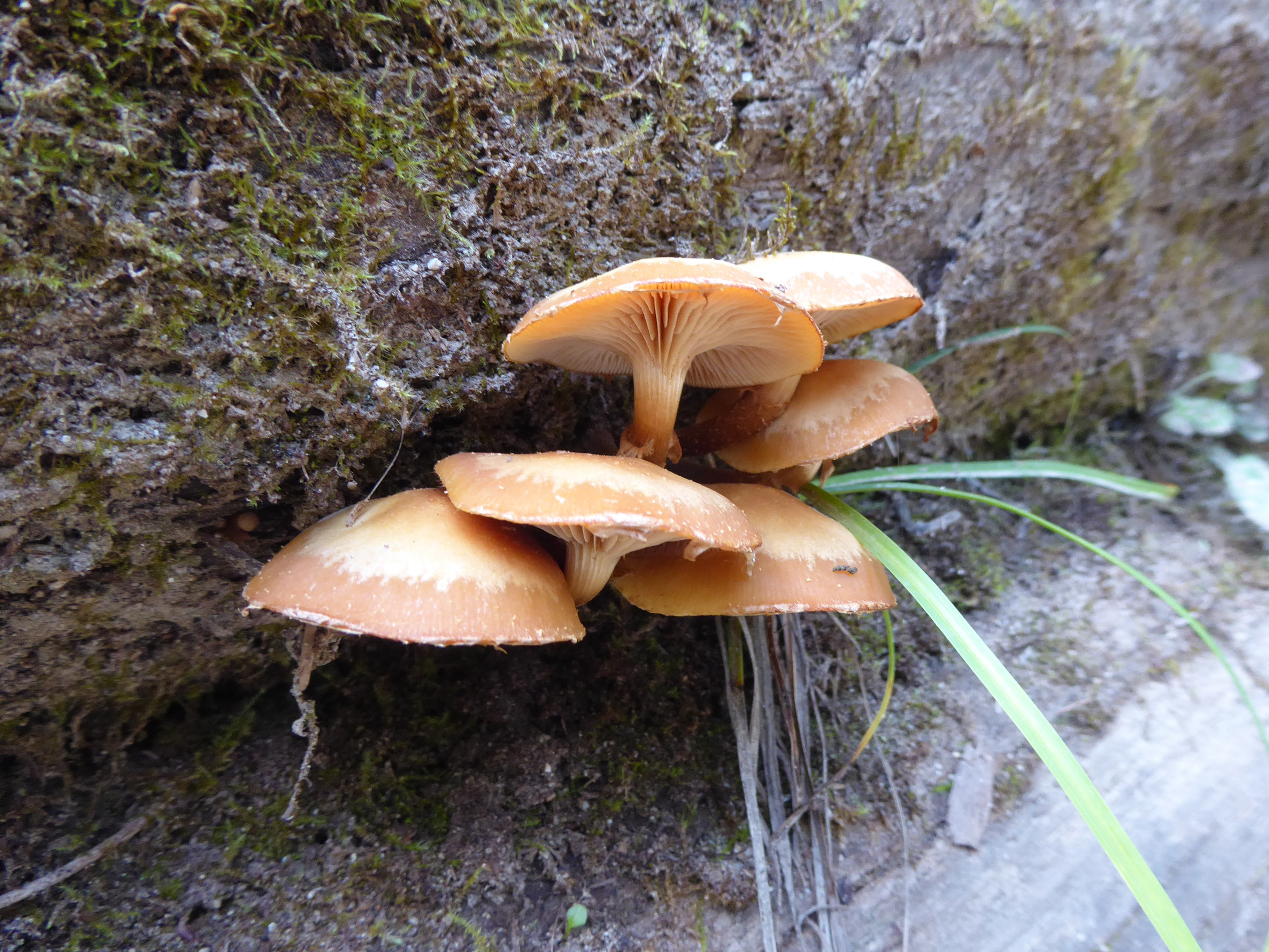
Sheathed Woodtuft
Kuehneromyces mutabilis
A popular edible mushroom in Central Europe, growing in dense clusters on dead hardwood stumps. Prized for its nutty flavor, it is also one of the most dangerous mushrooms to forage because of its close resemblance to the deadly Galerina marginata — a confusion that has caused fatal poisonings.
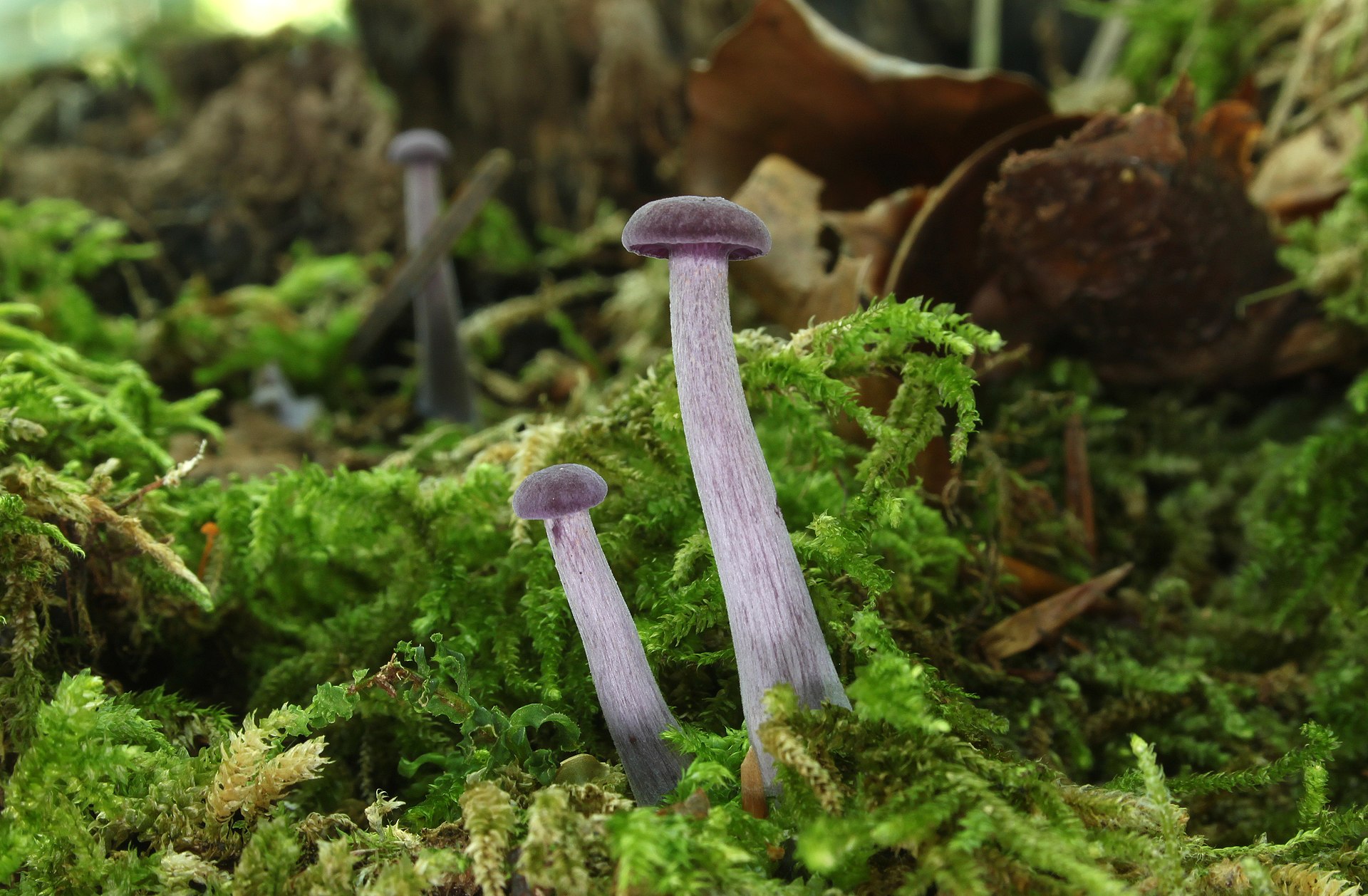
Amethyst Deceiver
Laccaria amethystina
A tiny jewel of the forest floor that's entirely deep purple when fresh — then fades so dramatically that you'd swear it was a different species. The Amethyst Deceiver earns its name honestly: it deceives you by looking completely different depending on whether it rained yesterday or last week. Edible but with a caveat — it accumulates arsenic from the soil.
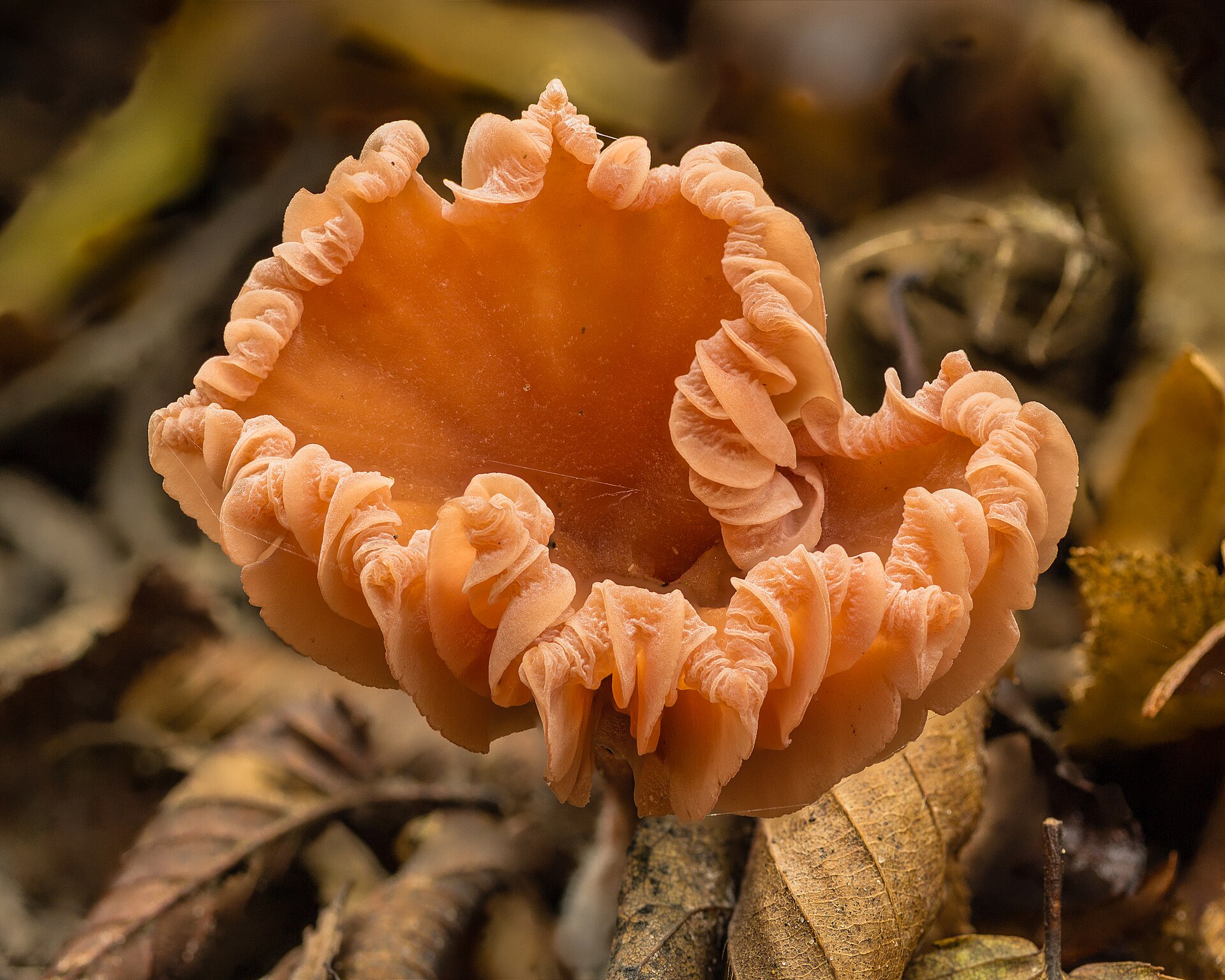
The Deceiver
Laccaria laccata
A small, incredibly variable mushroom that earned the name 'The Deceiver' because it looks different every single time you see it. Cap color swings from brick-red when wet to pale buff when dry, confusing beginners and experienced foragers alike.
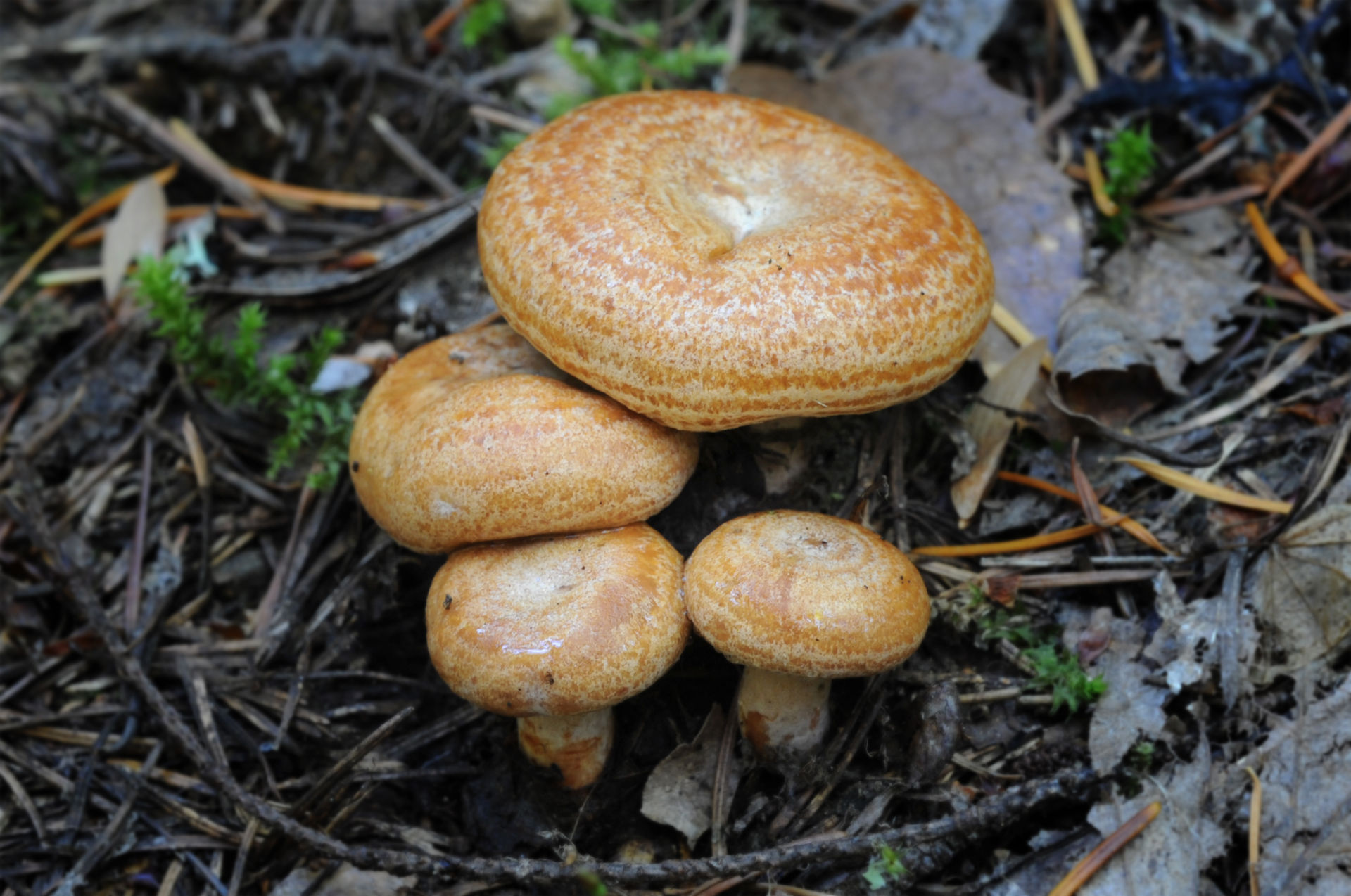
Saffron Milk Cap
Lactarius deliciosus
Cut the flesh and it bleeds carrot-orange milk. That is the test, and that is the magic. Lactarius deliciosus has been prized across the Mediterranean for over two thousand years, and the Romans named it 'deliciosus' for a reason. Just make sure the milk is orange, not white.
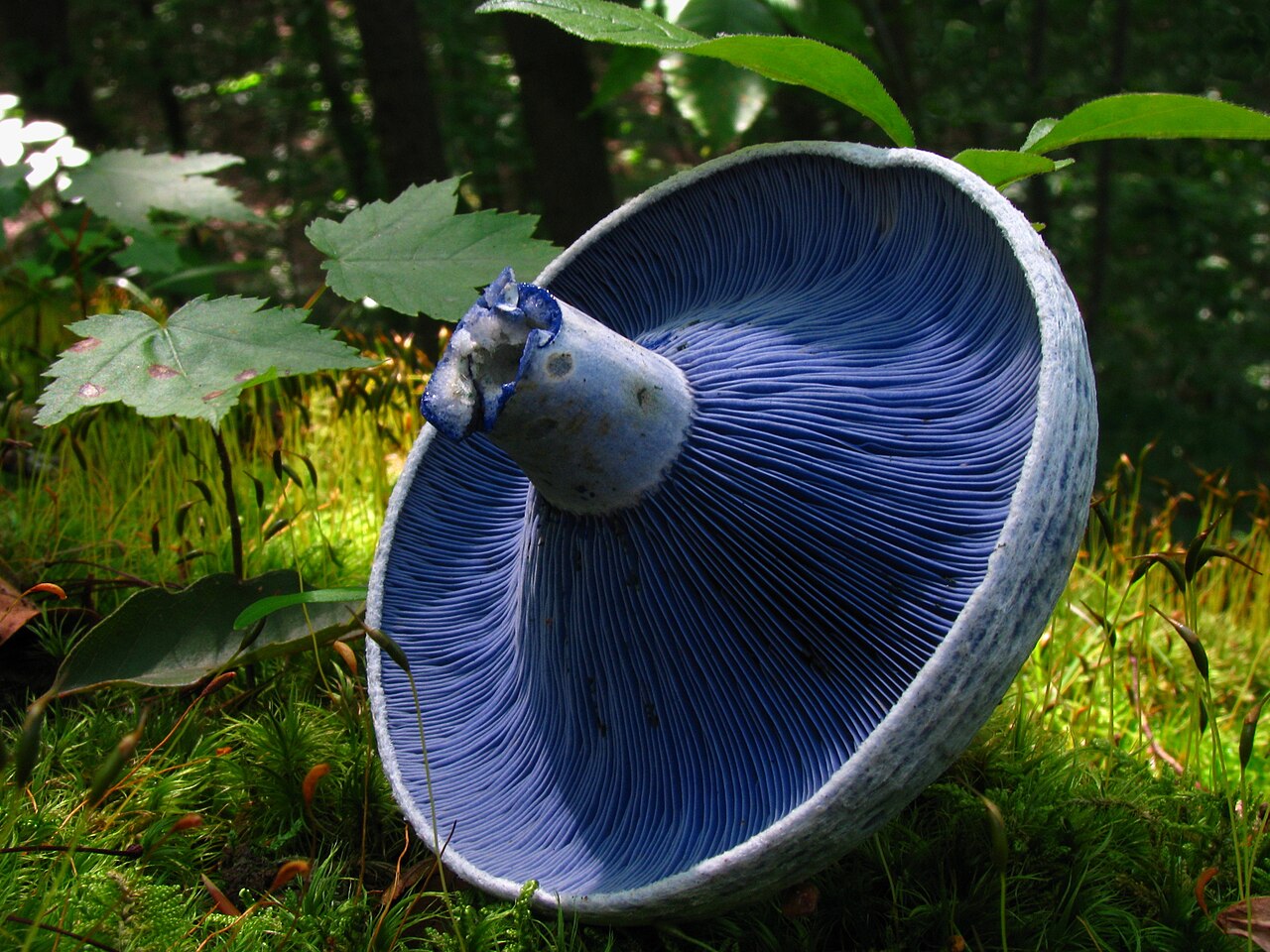
Indigo Milk Cap
Lactarius indigo
A mushroom that bleeds blue. Lactarius indigo is one of the most visually stunning fungi on the planet — entirely indigo-blue, from cap to gills to stem, and when you cut or break it, dark blue latex oozes from the flesh like some kind of alien life form. It's edible, delicious, and sold in rural Mexican markets alongside tomatoes and chili peppers.
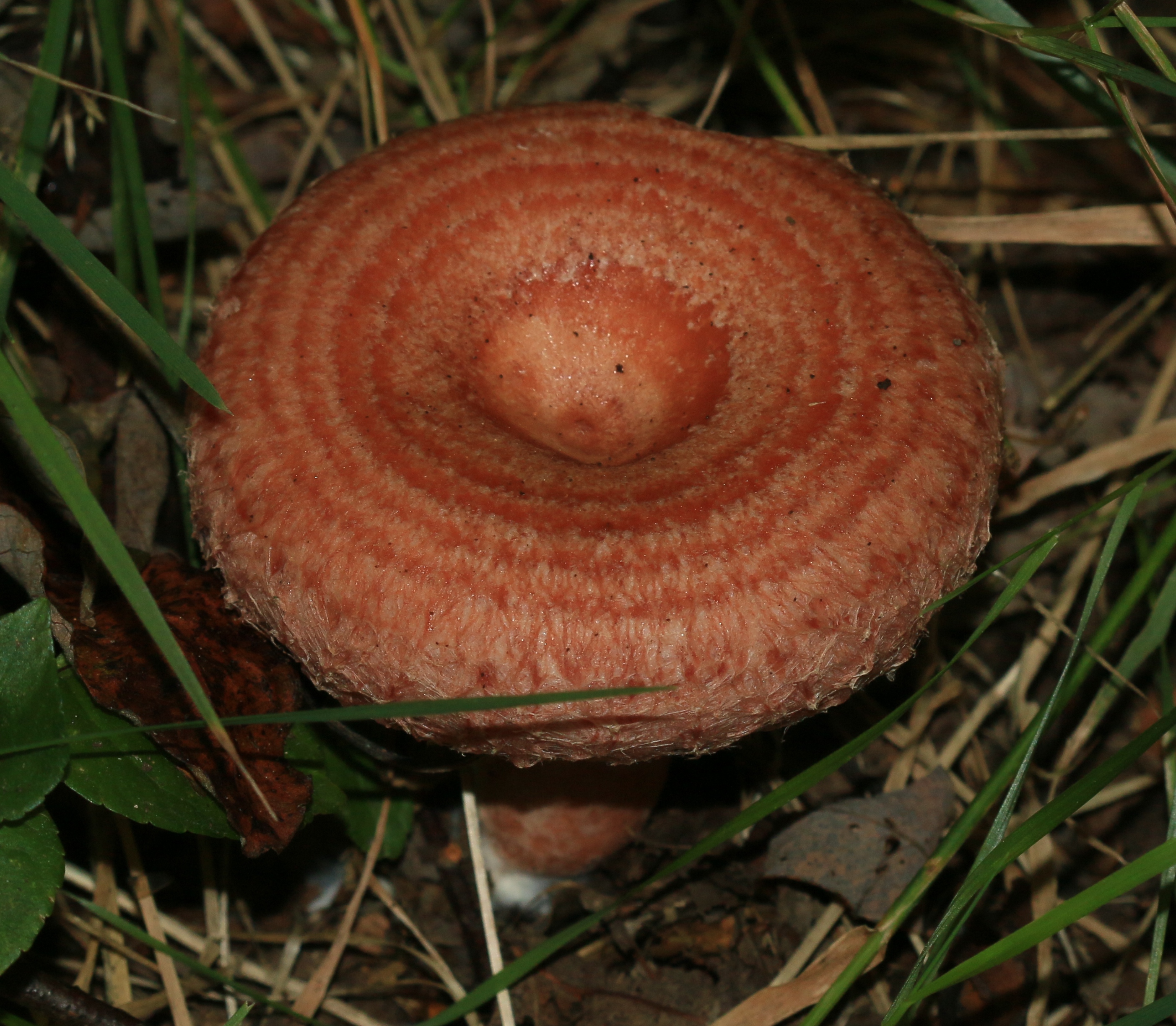
Woolly Milk Cap
Lactarius torminosus
A beautiful pink mushroom with a shaggy, woolly cap margin that will absolutely wreck your stomach if you eat it raw — but that Finns and Russians have been safely eating for centuries after prolonged salt-brining. The Woolly Milk Cap is one of the most striking members of the milk cap family, oozing white acrid latex when cut.
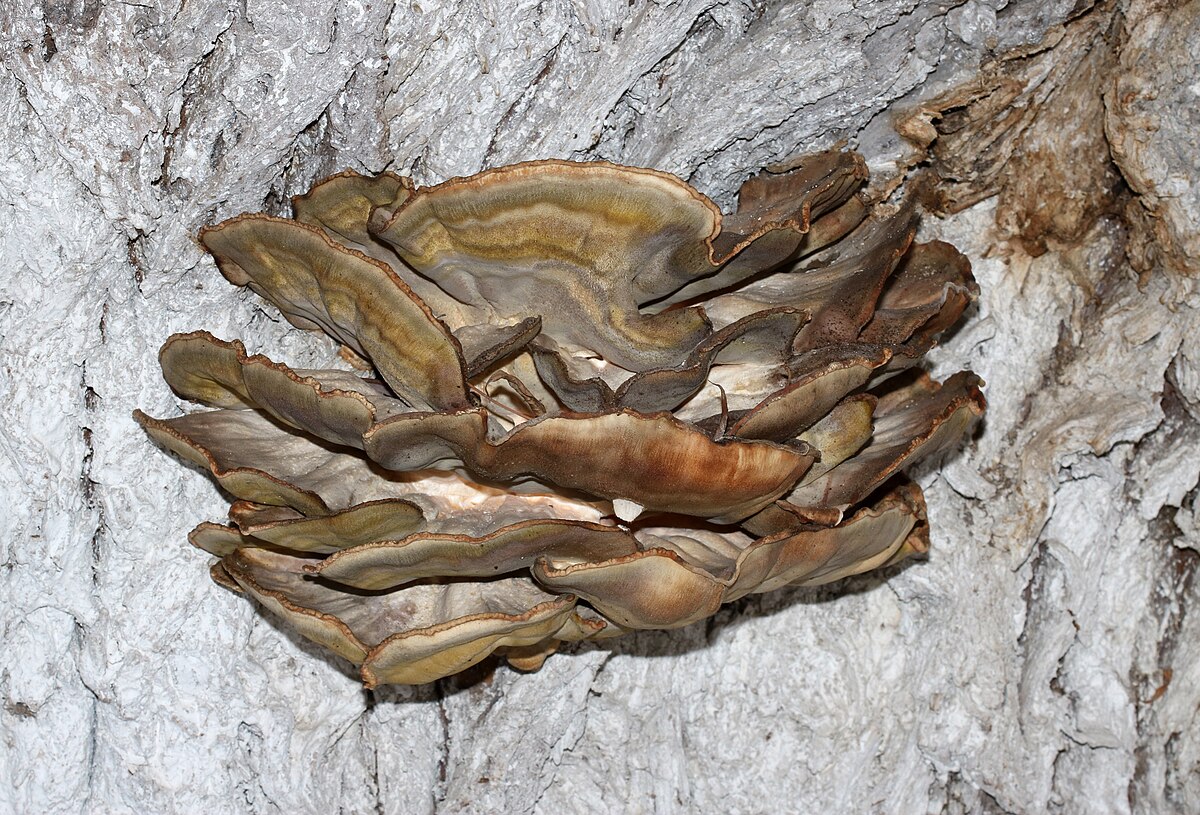
Chicken of the Woods
Laetiporus sulphureus
This one literally tastes like chicken — but some people get sick from it, especially if it's growing on the wrong tree. Stick to specimens from oak, cook it well, and try a small piece first. Get that right, and it's one of the most beginner-friendly wild edibles out there.
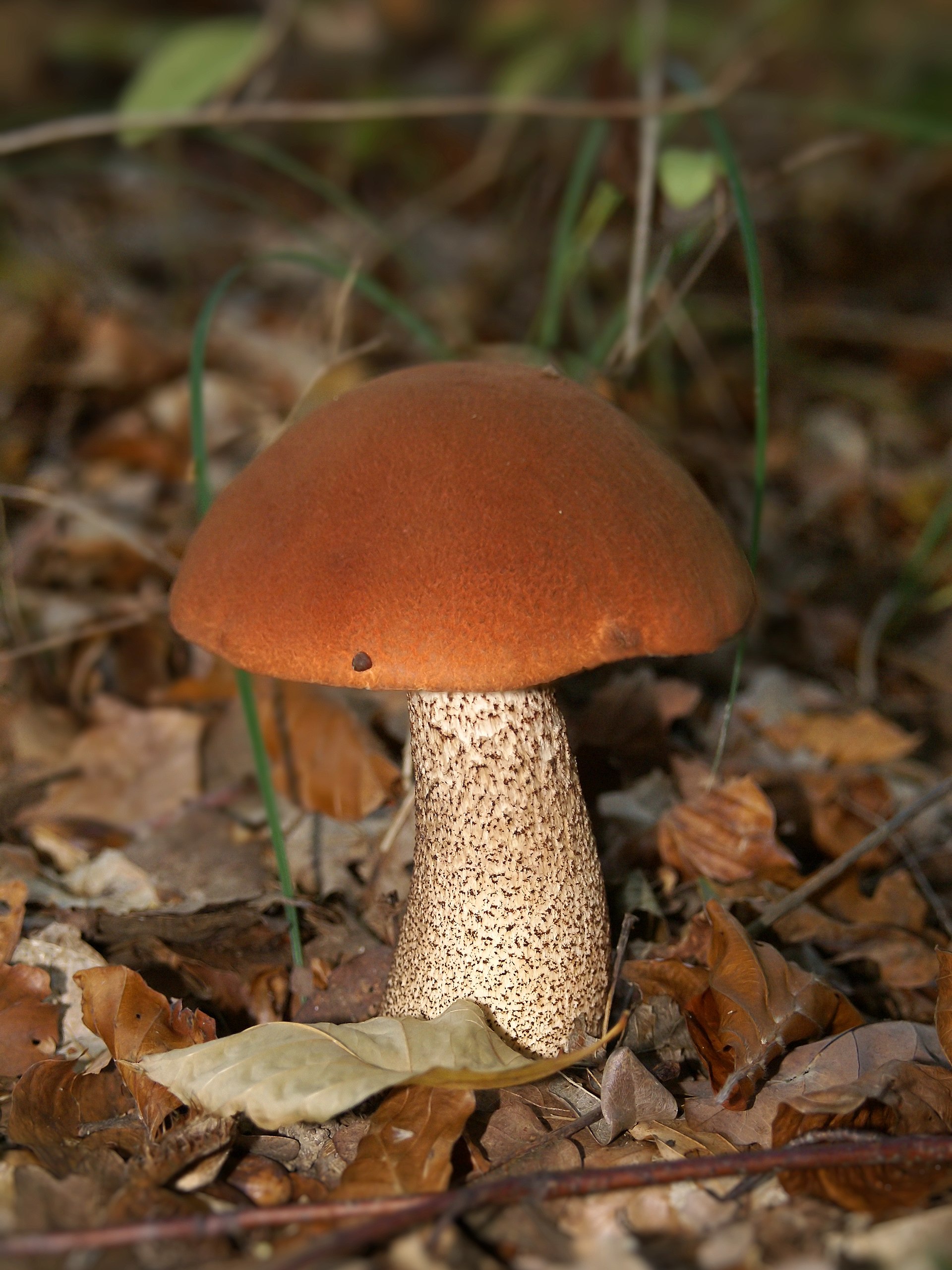
Orange Birch Bolete
Leccinum aurantiacum
A striking, flame-capped bolete that lights up birch and aspen forests like a signal flare in autumn. The Orange Birch Bolete is one of the most photogenic edible mushrooms in the Northern Hemisphere, with vivid orange to brick-red caps perched on tall, scaber-covered stems that can reach impressive sizes.
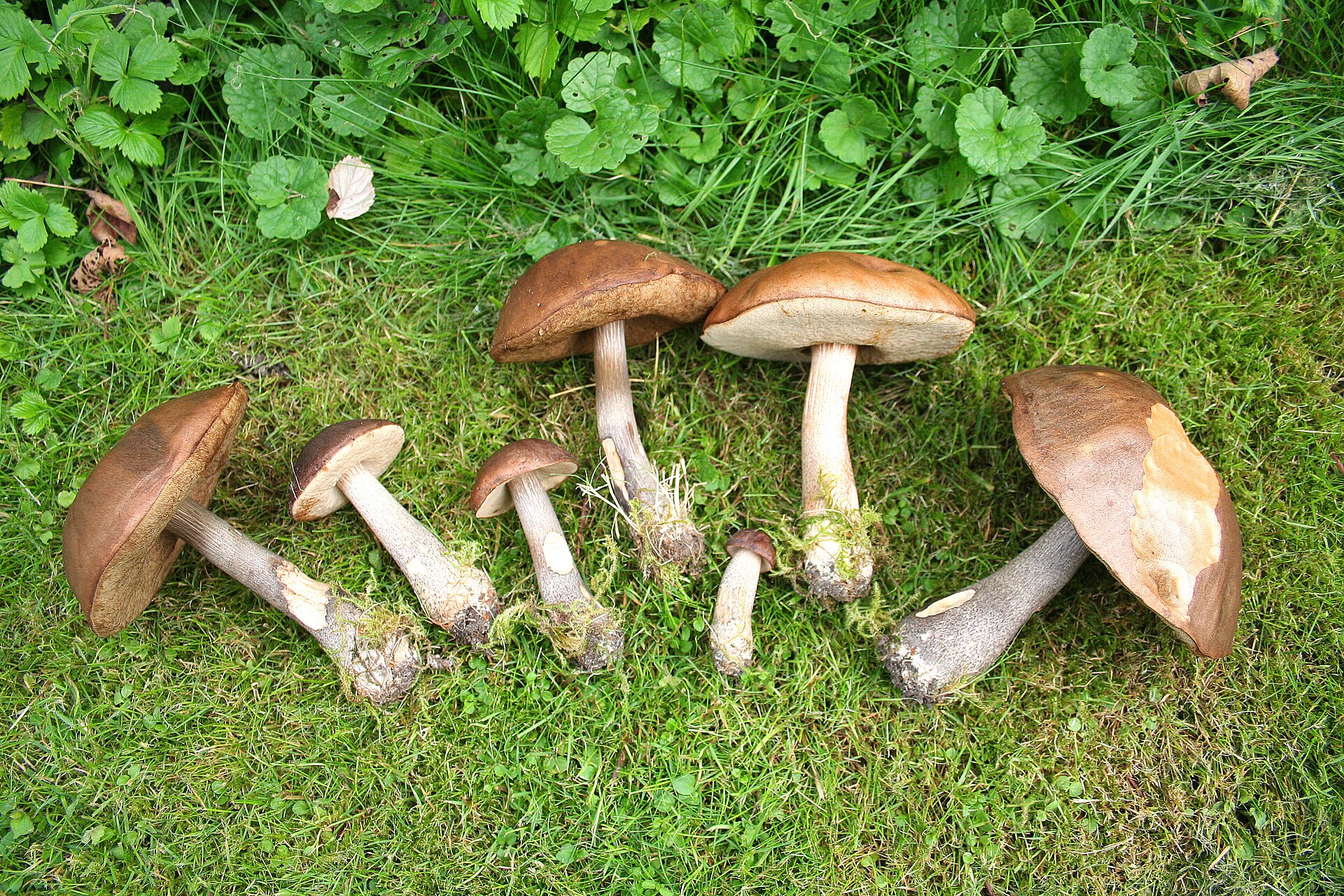
Brown Birch Bolete
Leccinum scabrum
A reliable, beginner-friendly bolete found exclusively under birch trees across the Northern Hemisphere. Not the most glamorous mushroom in the basket, but the Brown Birch Bolete is the dependable workhorse of European and North American foraging: abundant, easy to identify, and perfectly good eating when picked young and firm.
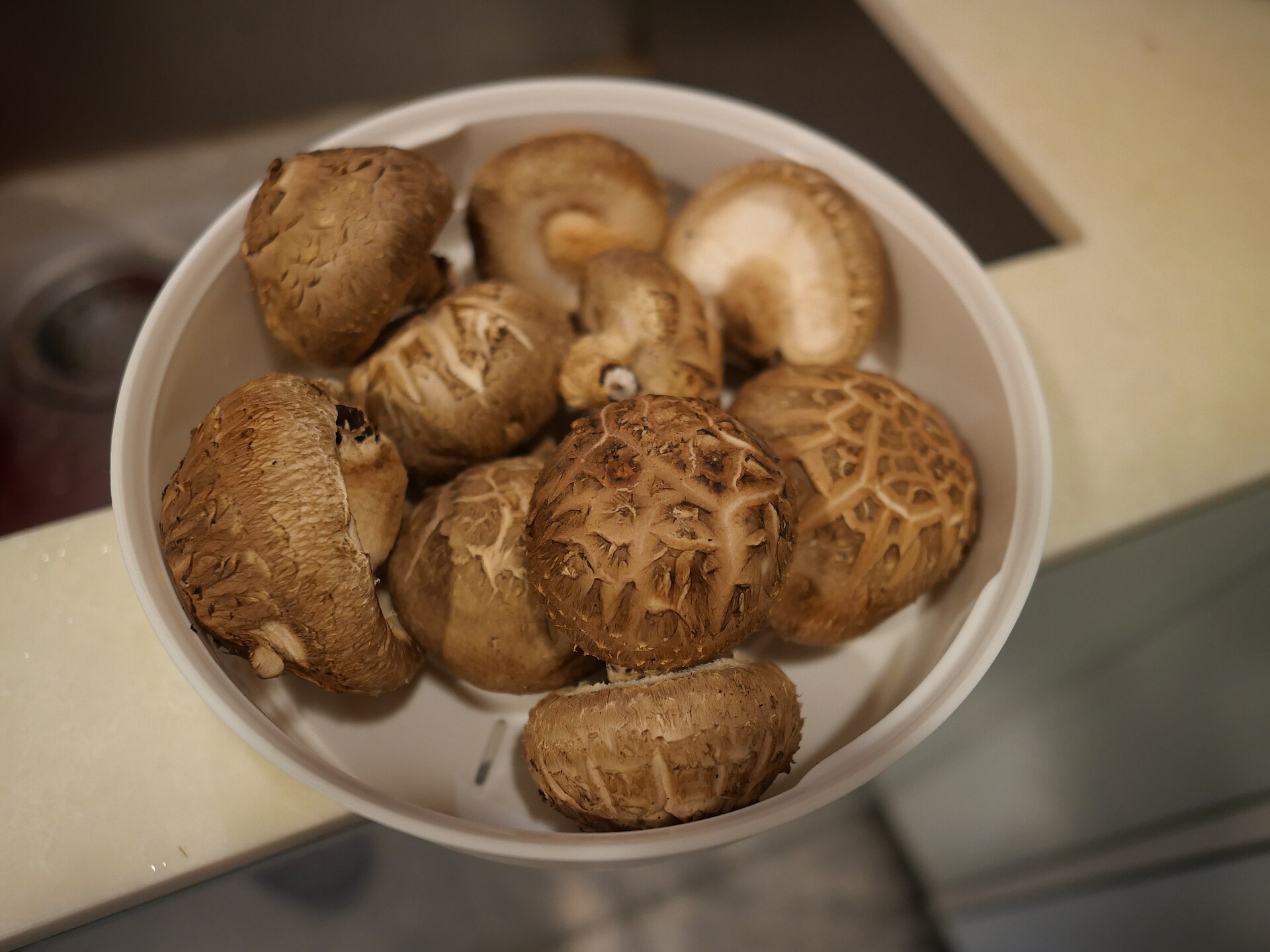
Shiitake
Lentinula edodes
The mushroom that built an empire — from ancient Japanese log cultivation to being in every grocery store on Earth.
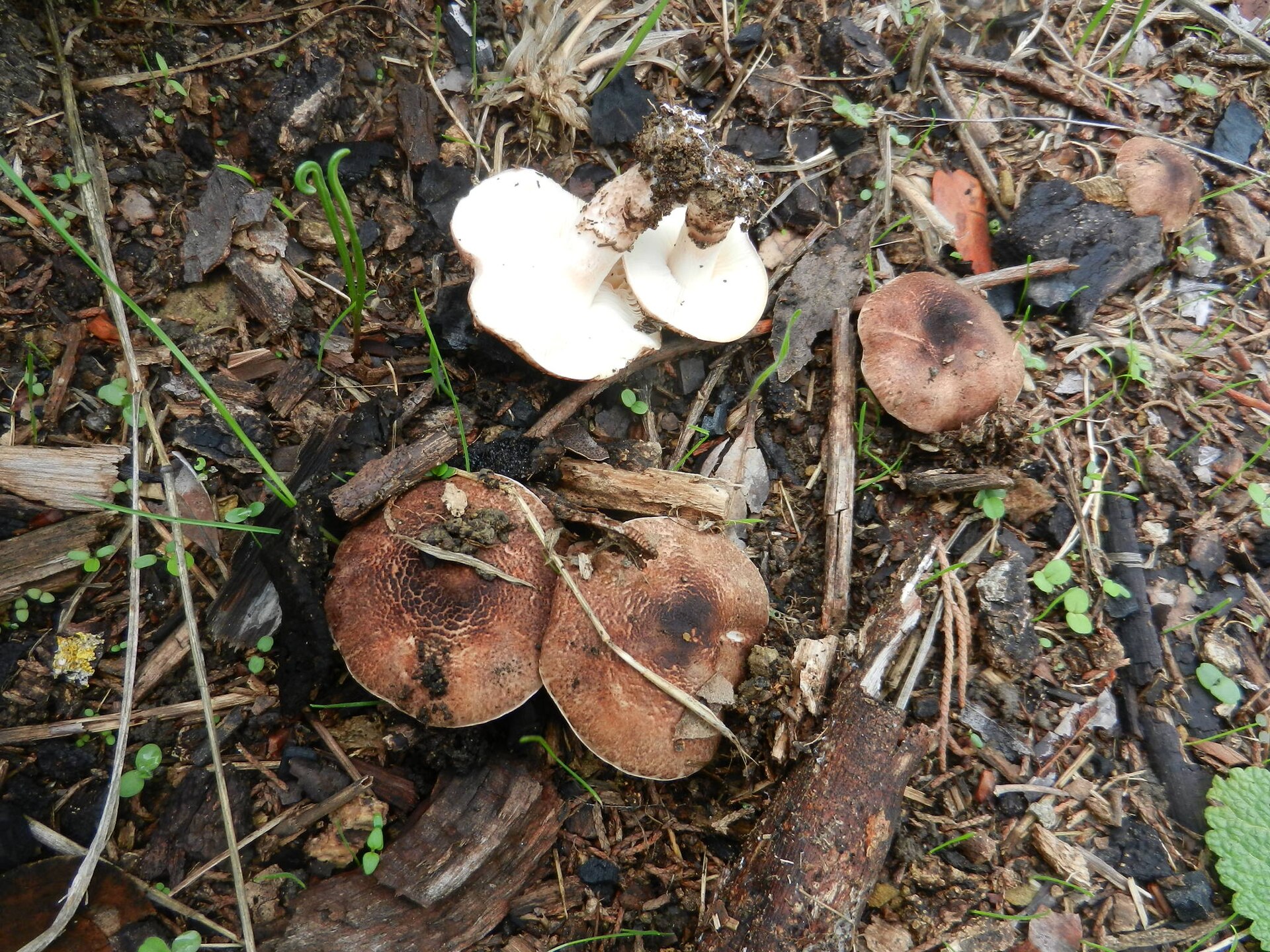
Deadly Dapperling
Lepiota brunneoincarnata
The Deadly Dapperling is a small, lethal mushroom that contains the same amatoxins as the Death Cap. It grows in parks, gardens, and urban green spaces, precisely the places where casual foragers are most likely to encounter it. Its modest size makes it easy to underestimate.
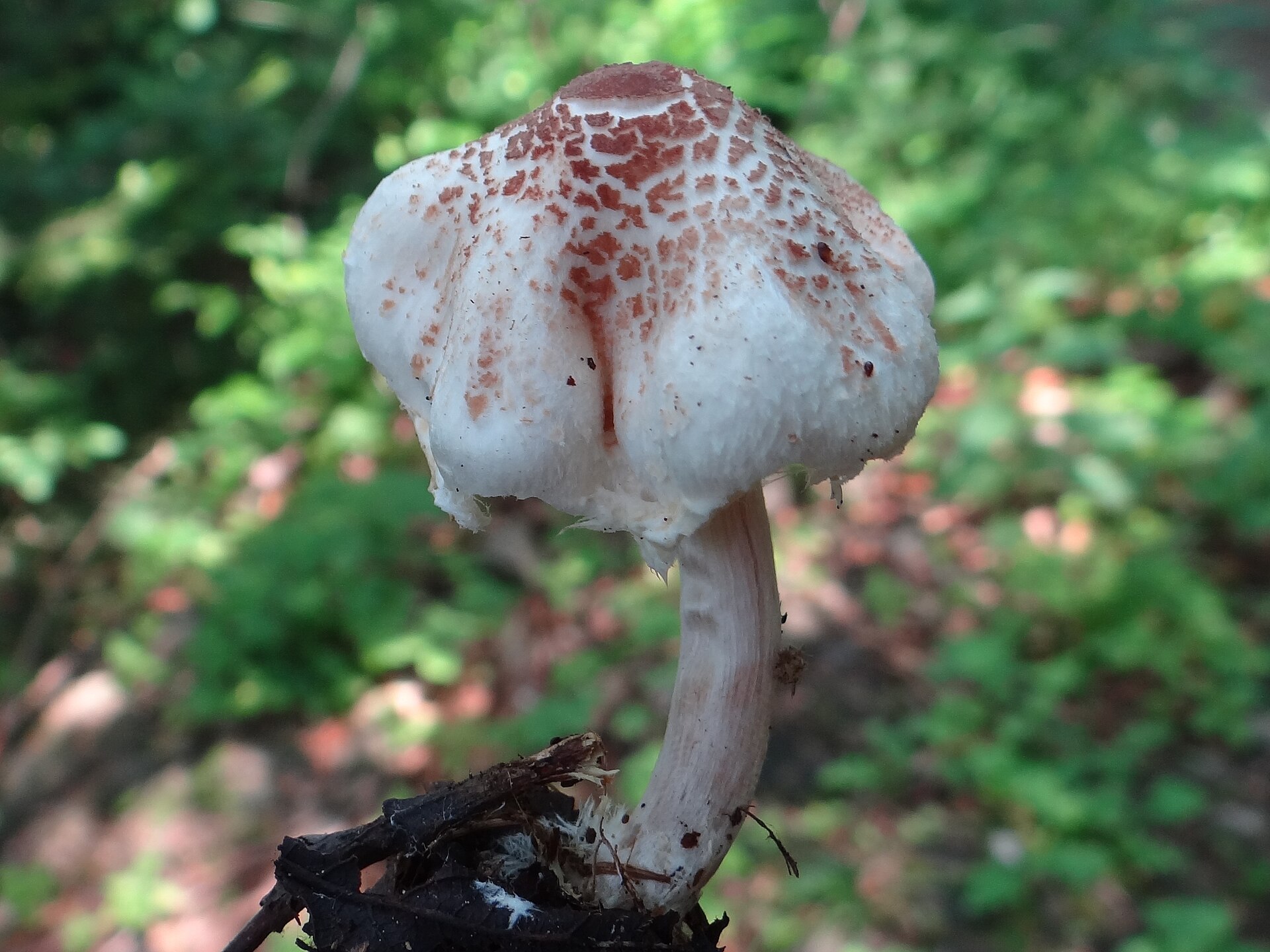
Stinking Dapperling
Lepiota cristata
A small toxic mushroom found in gardens, parks, and woodland edges across temperate regions. Recognized by its reddish-brown concentrically scaled cap and distinctive unpleasant rubbery odor, it contains amatoxins — the same deadly compounds found in the Death Cap.
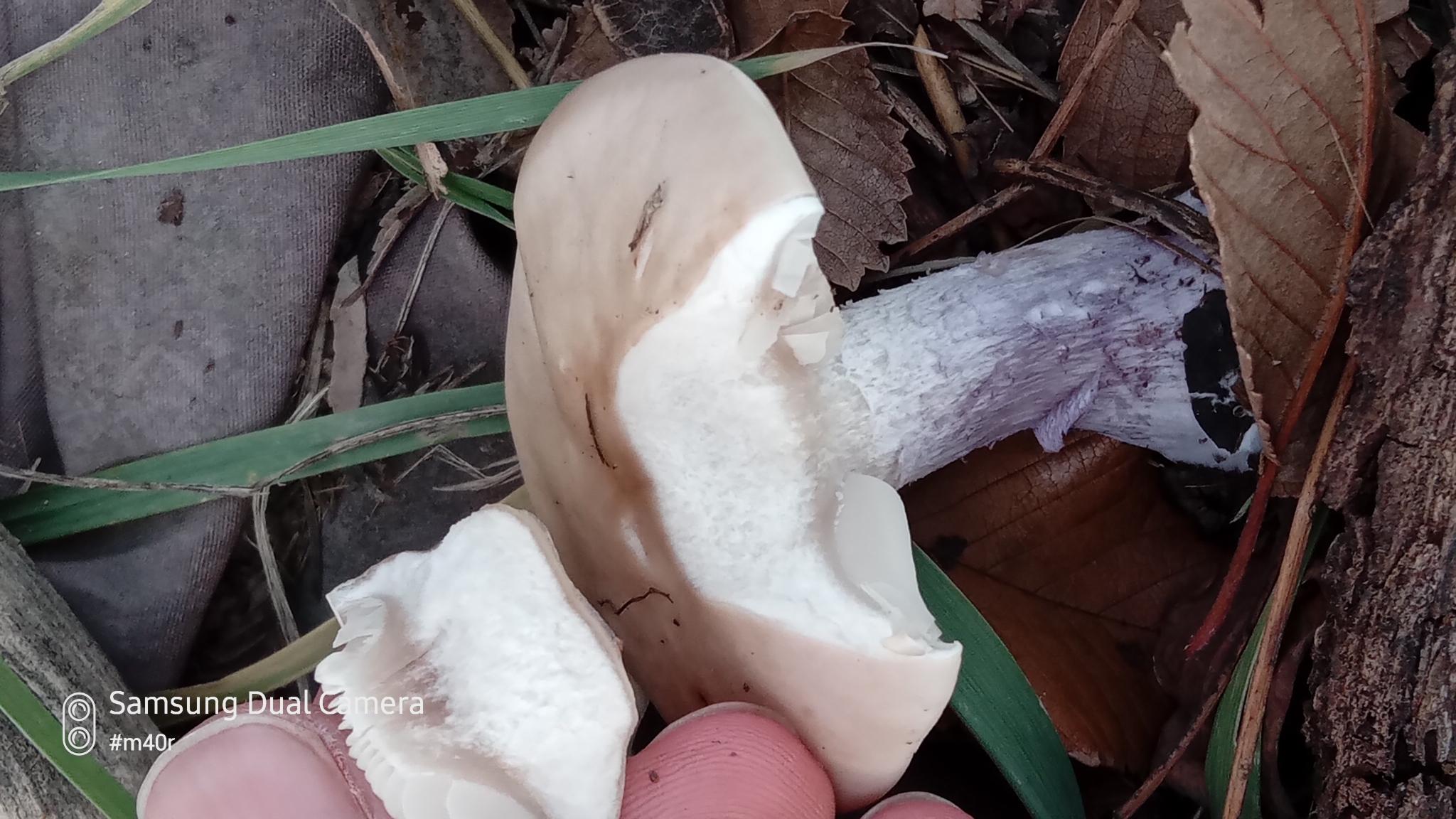
Field Blewit
Lepista saeva
The Field Blewit is the grassland cousin of the Wood Blewit, with a tan cap but that same telltale violet-lilac stem. It fruits in pastures and meadows in late autumn, often in enormous fairy rings that can produce hundreds of mushrooms. One of the best edible species that most foragers never learn about.
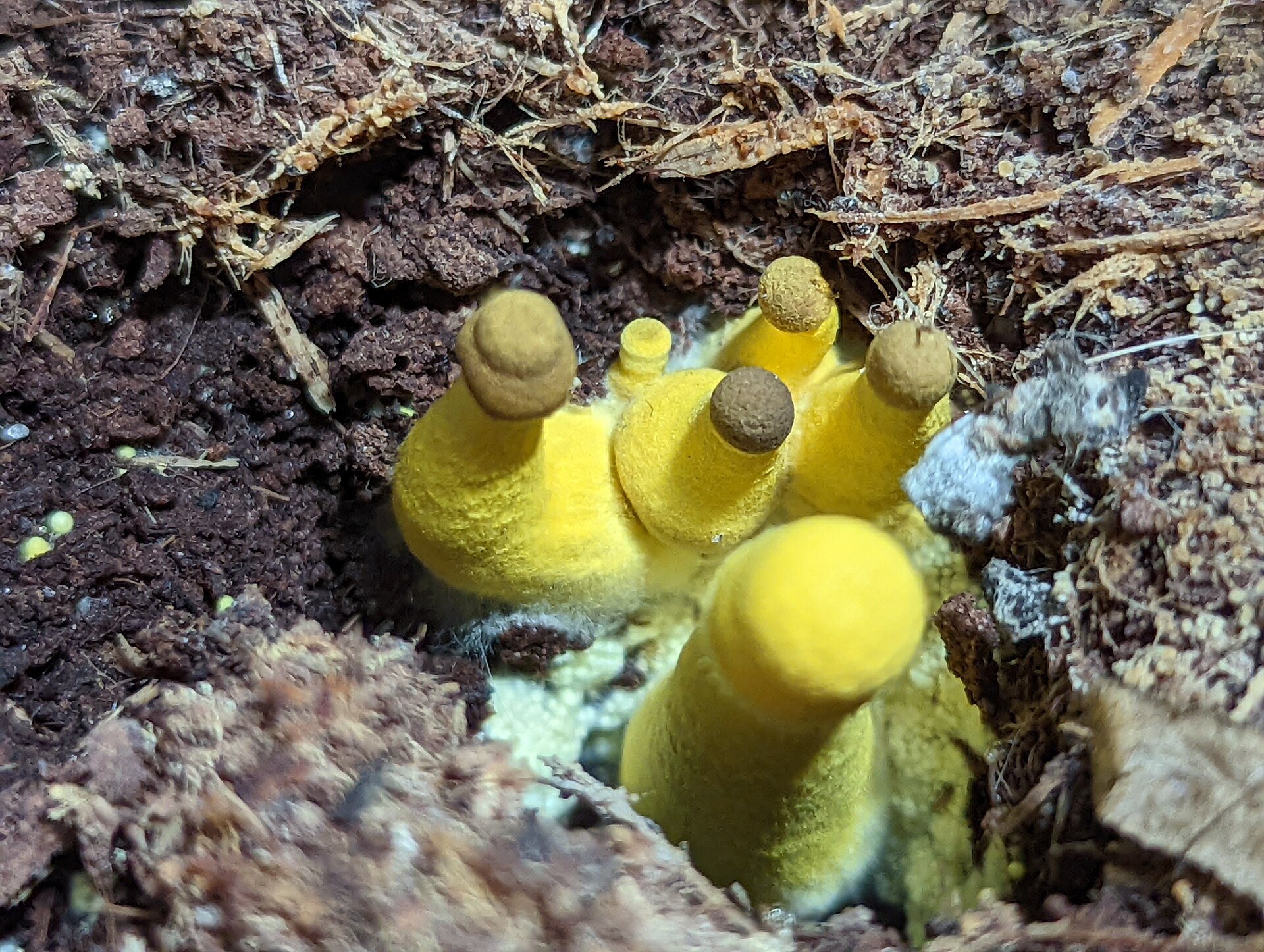
Yellow Houseplant Mushroom
Leucocoprinus birnbaumii
A bright lemon-yellow mushroom that appears uninvited in potted houseplants, greenhouses, and tropical garden soil worldwide. Considered mildly toxic and not edible. One of the most commonly asked-about mushrooms on plant forums, typically triggering panic in houseplant owners who have never seen a mushroom grow indoors.
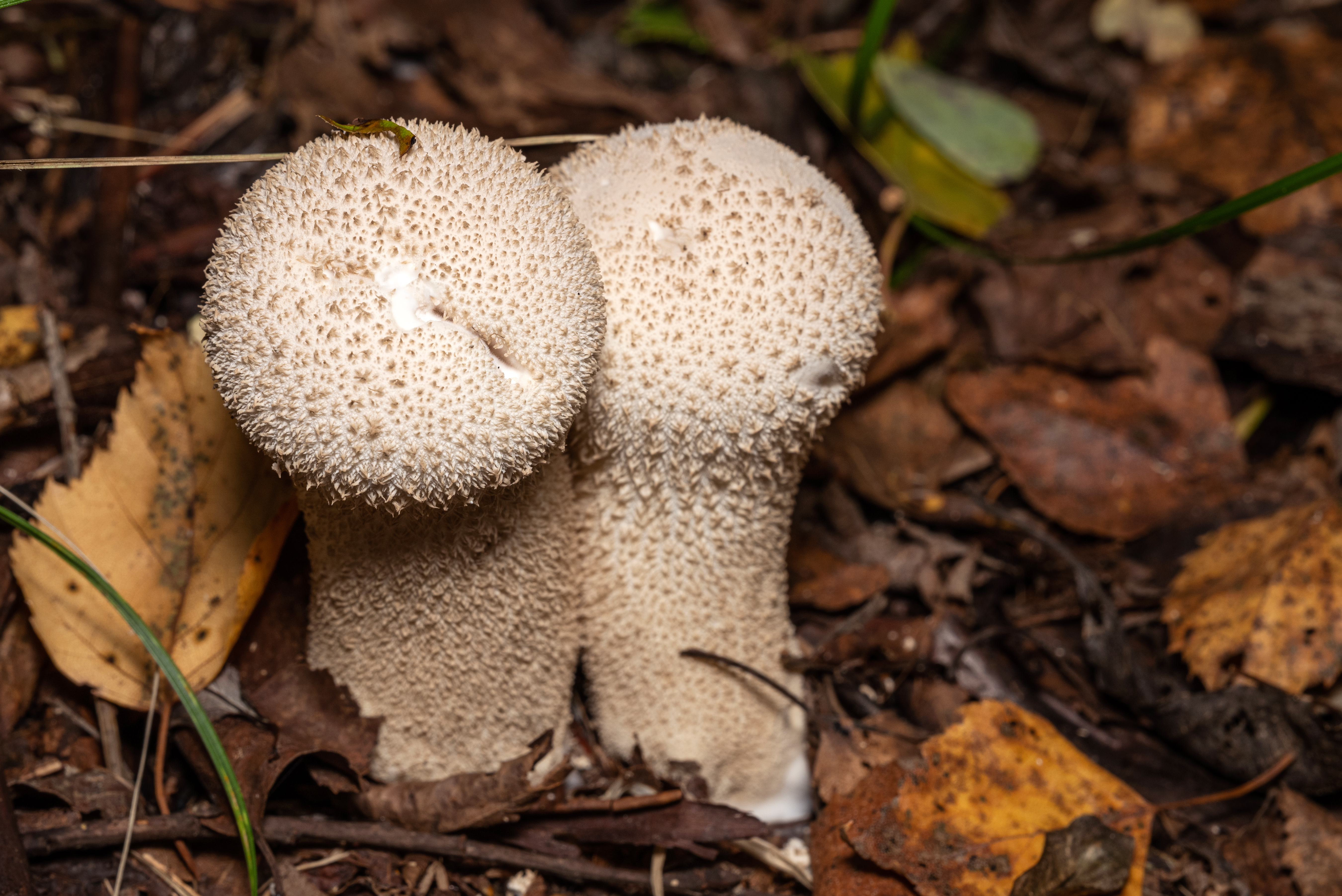
Common Puffball
Lycoperdon perlatum
The Common Puffball is nature's tiny smoke bomb — squeeze a mature one and it fires a cloud of spores into the air. When young and pure white inside, it's a perfectly good edible mushroom that tastes mild and earthy.
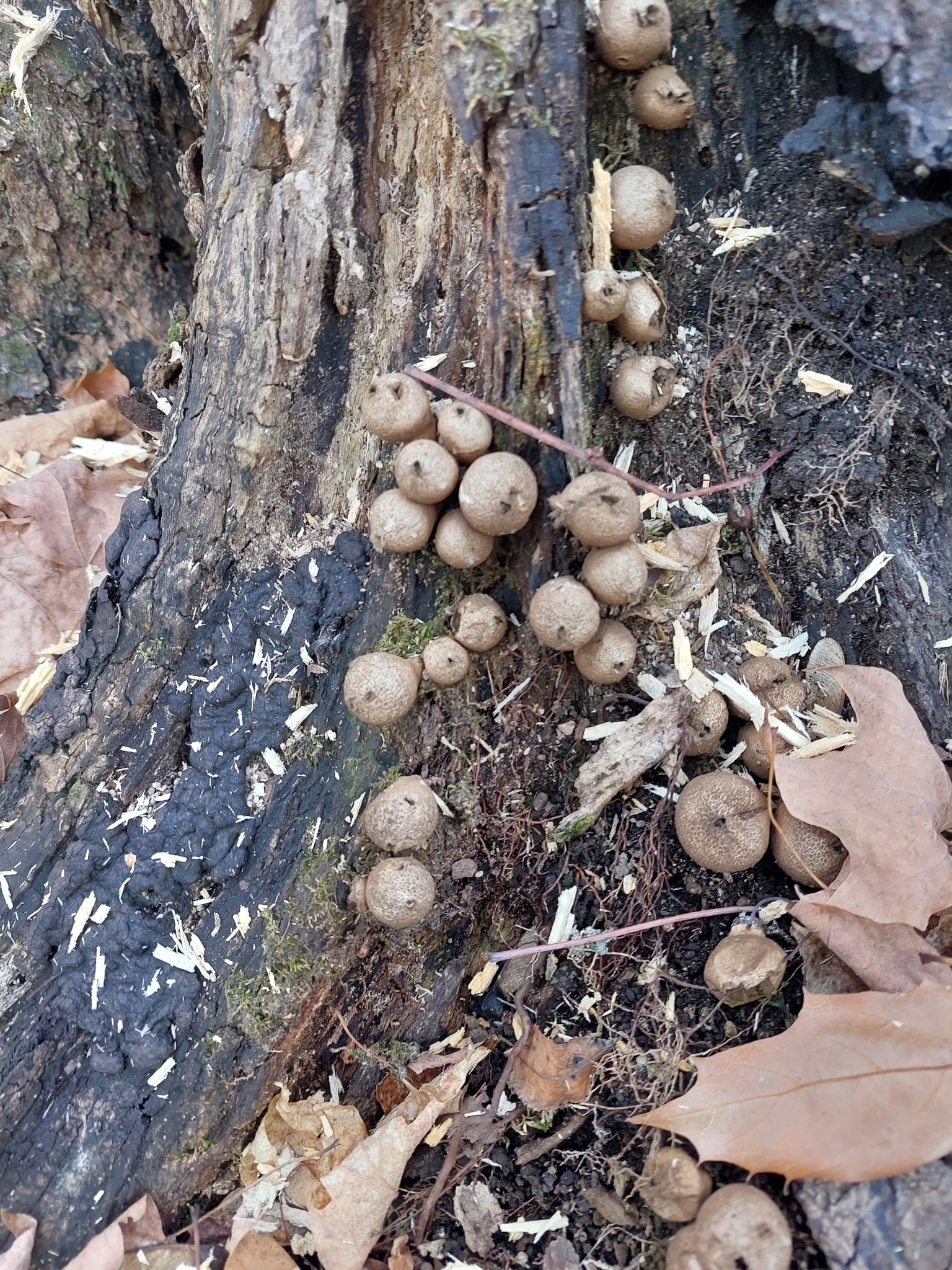
Pear-shaped Puffball
Lycoperdon pyriforme
A small, pear-shaped puffball that grows in dense clusters on decaying wood, stumps, and buried roots. The only puffball species that consistently fruits on wood rather than soil. Edible when young and the interior flesh (gleba) is pure white, but small and not particularly flavorful.
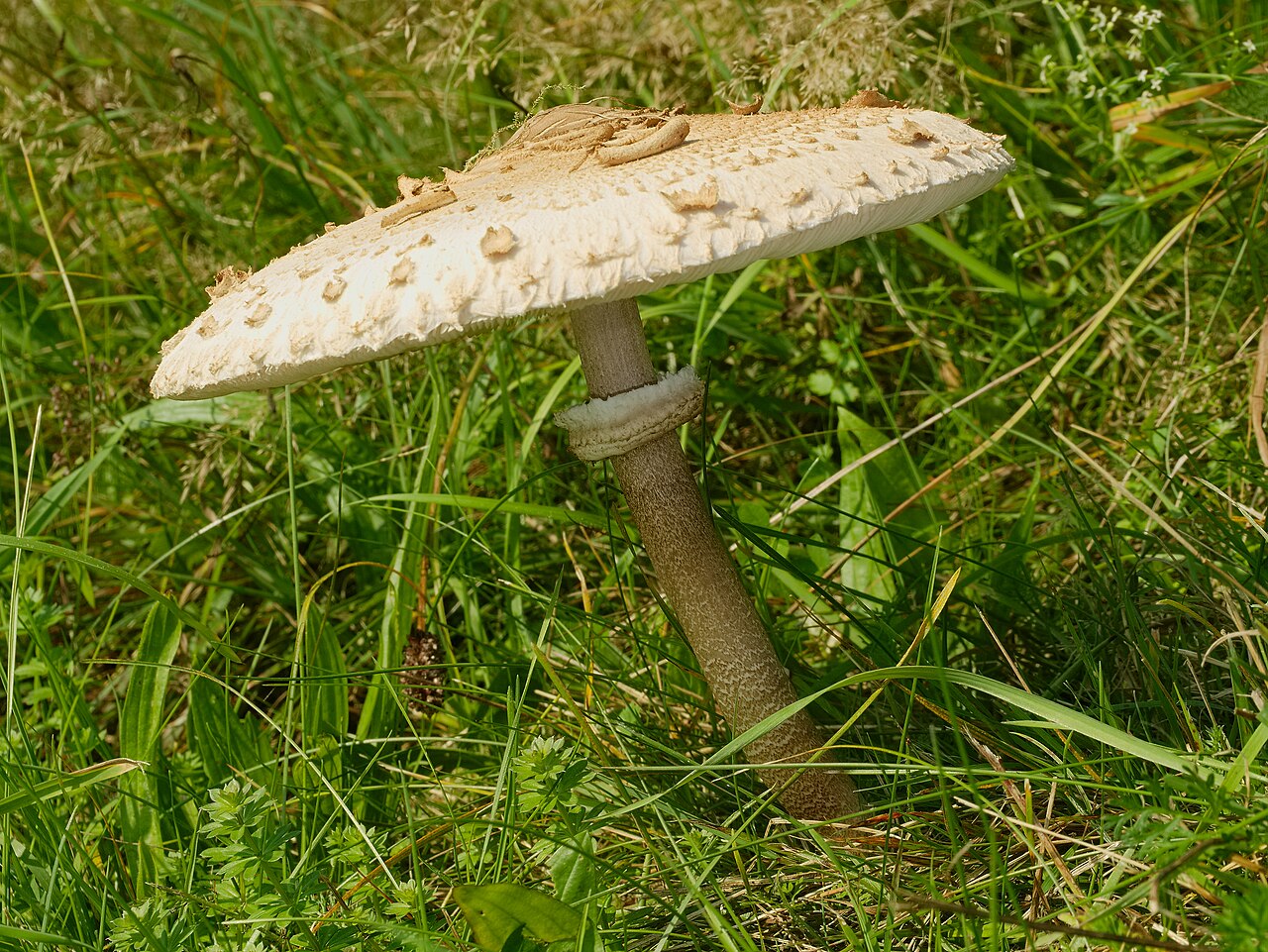
Parasol Mushroom
Macrolepiota procera
Meet the absolute unit of the mushroom world. The Parasol Mushroom can tower over 30 cm tall with a cap the size of a dinner plate — and in Central Europe, people literally bread and fry that cap like a schnitzel. It's one of the best wild edibles out there, and once you've seen a mature one, you won't mistake it for anything else.
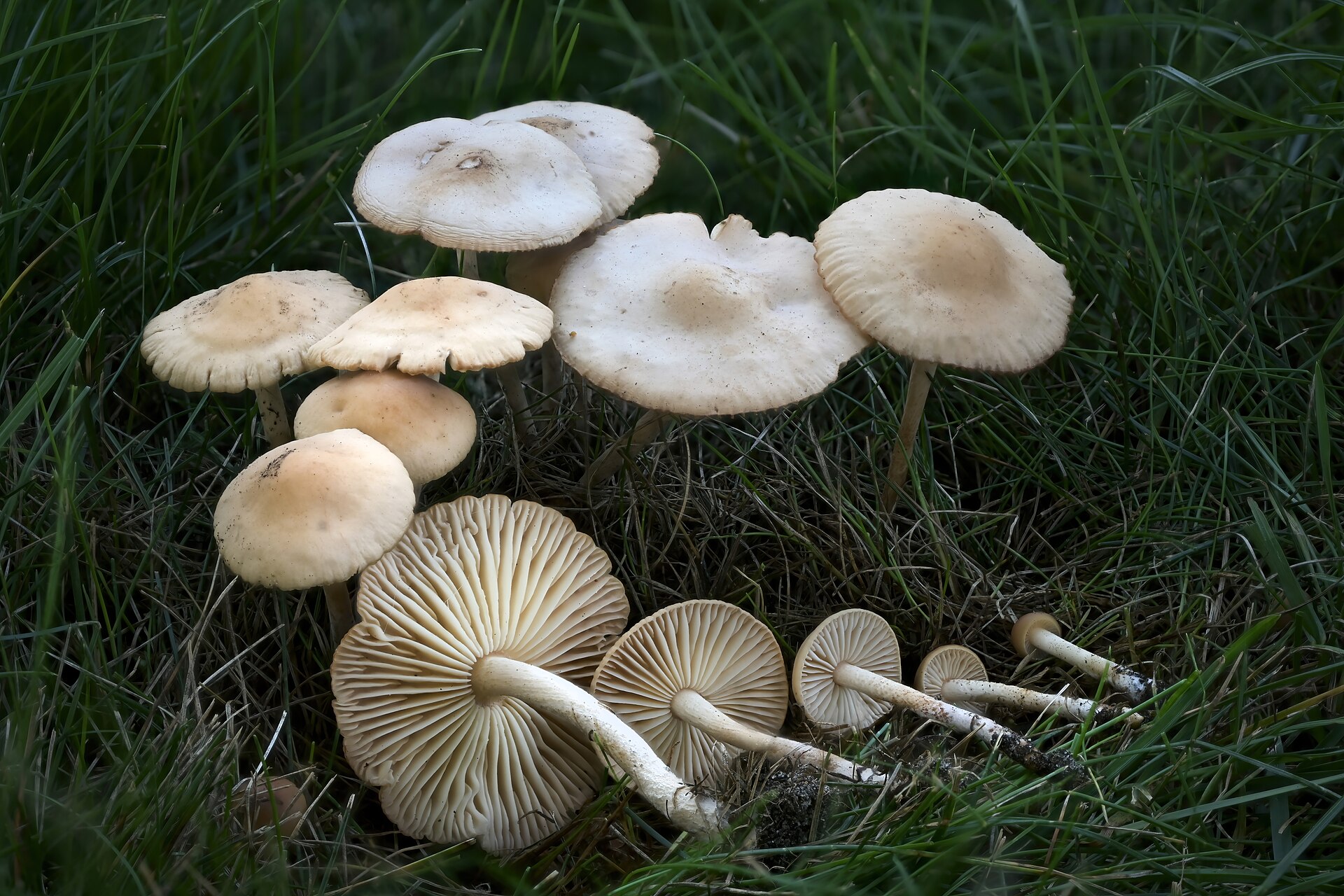
Fairy Ring Mushroom
Marasmius oreades
The mushroom behind those mysterious dark-green circles on lawns and meadows. Marasmius oreades is a small, humble, lawn-dwelling species with surprisingly excellent flavor, prized by foragers who know to look down instead of into the woods. It is also the source of centuries of fairy folklore across Europe.
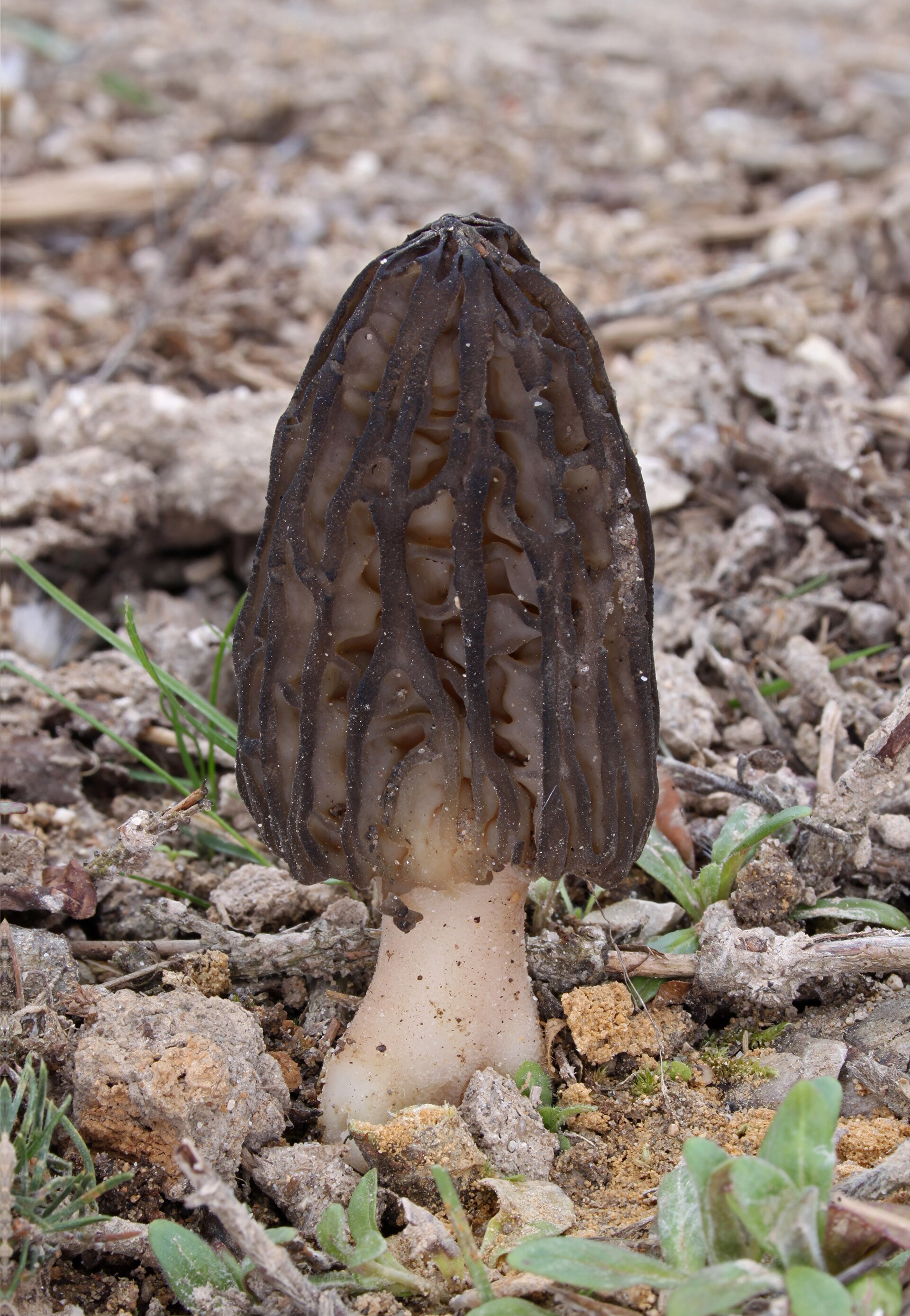
Black Morel
Morchella elata
The dark, smoky cousin of the common morel. Black morels are among the first mushrooms to emerge in spring, and their association with forest fires has created an entire subculture of burn-site foragers who chase last year's wildfires across the western landscape.
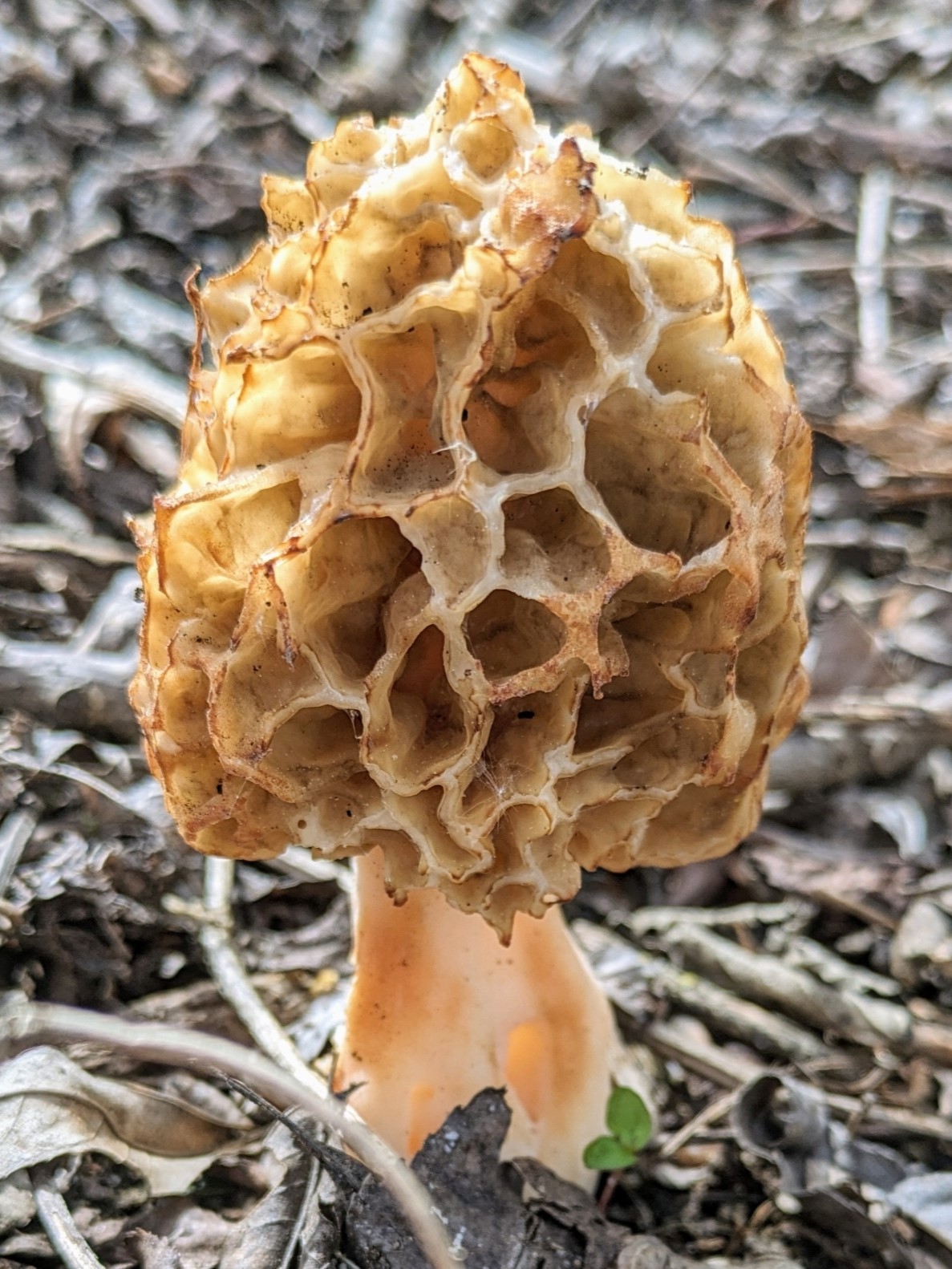
Common Morel
Morchella esculenta
The morel is the mushroom that turns normal people into obsessive treasure hunters every spring — but eat one raw and you'll spend the night in the bathroom. Cook it properly, though, and you've got one of the most prized ingredients in fine dining.
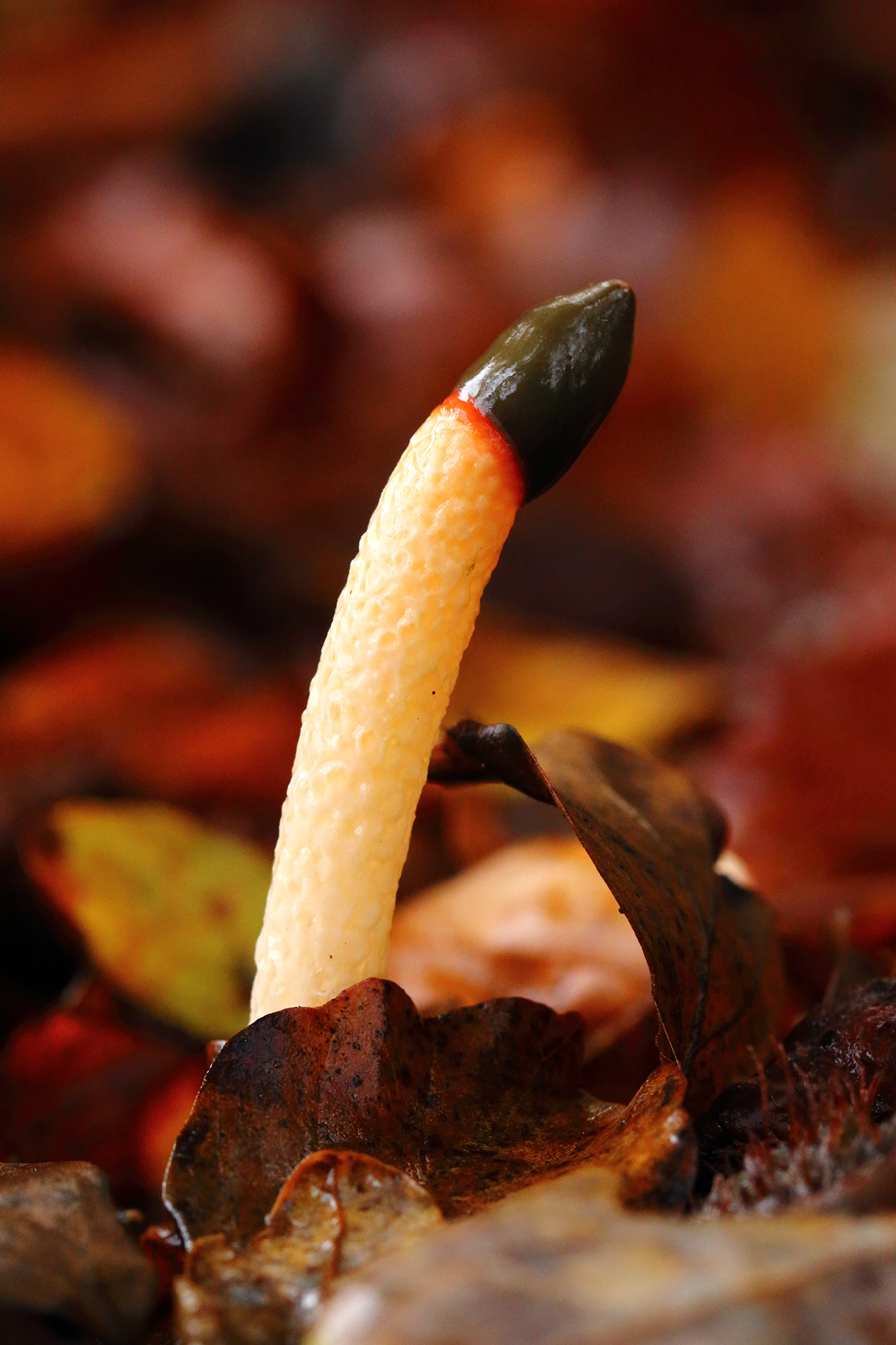
Dog Stinkhorn
Mutinus caninus
A slender, phallic stinkhorn that emerges from a white egg and tips its orange head with a dark, foul-smelling spore mass. The common name is a polite euphemism for what it actually resembles.
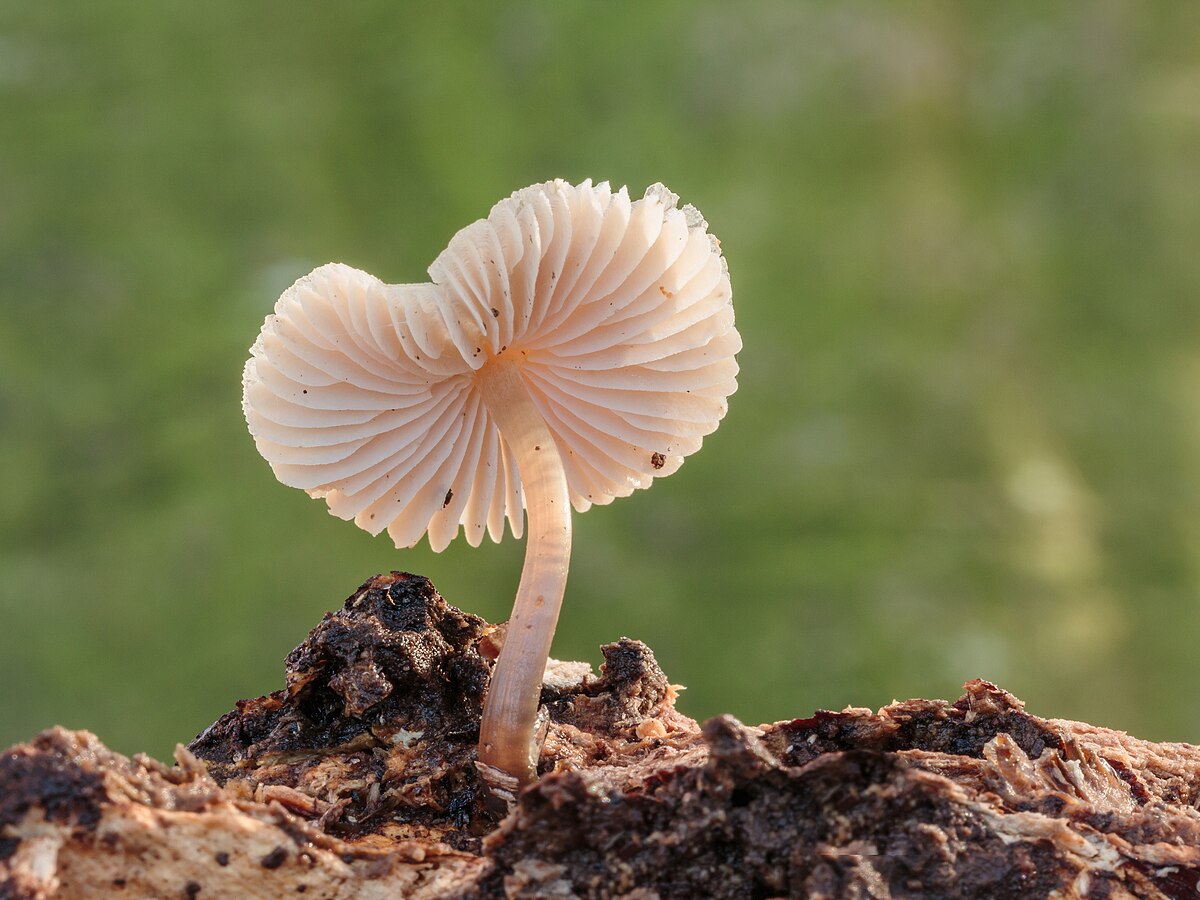
Common Bonnet
Mycena galericulata
The type species of the entire Mycena genus and one of the most abundant woodland mushrooms in the Northern Hemisphere. Found in dense clusters on rotting stumps and logs, Mycena galericulata is distinguished from its many look-alikes by the distinctive cross-veins connecting its gills — tiny ladder-like ridges you can see when you flip the cap over.
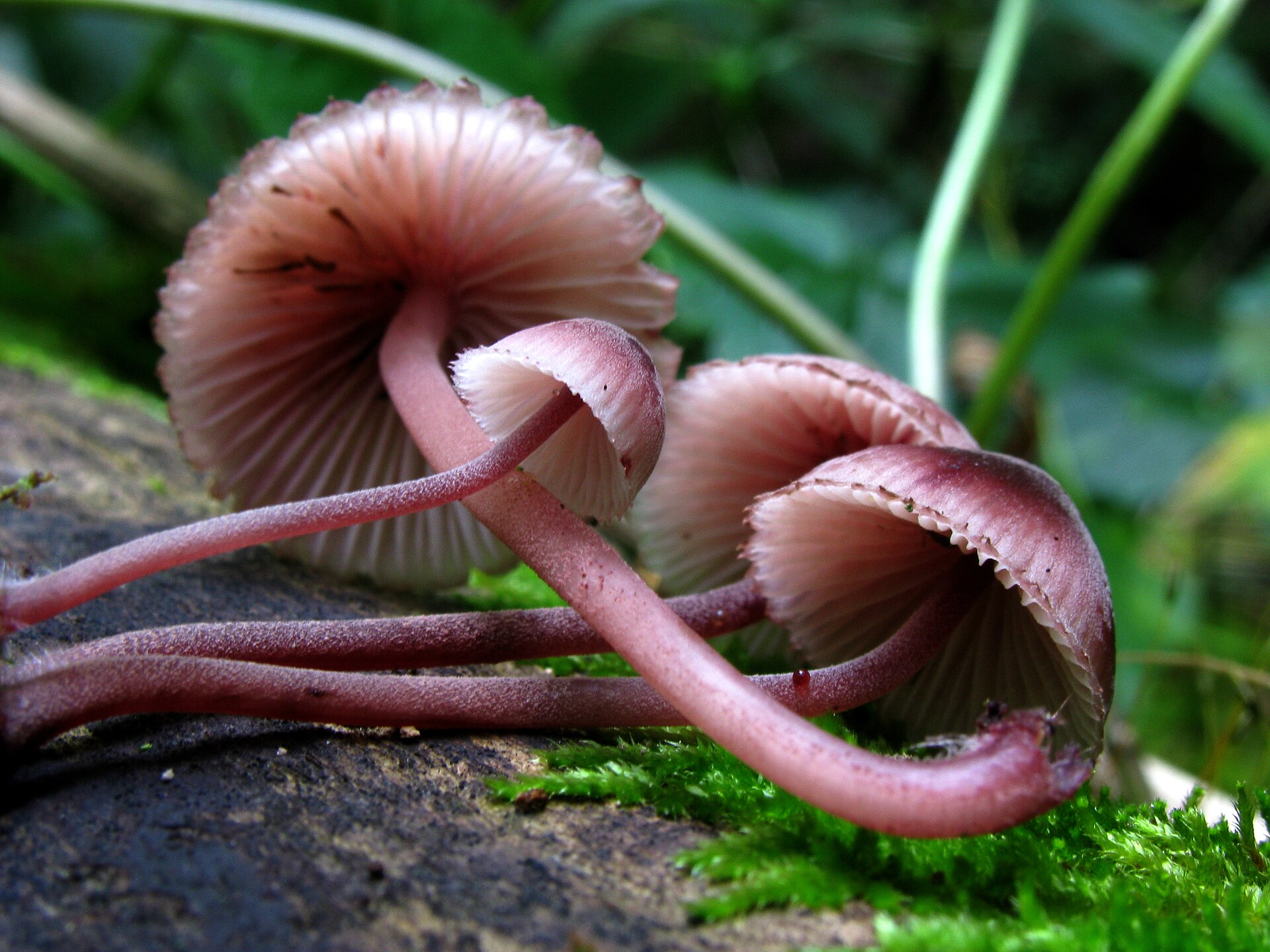
Bleeding Mycena
Mycena haematopus
A delicate, small woodland mushroom that exudes a dark reddish-purple "blood" when the stem is broken or cut. Found in clusters on decaying hardwood logs and stumps across the temperate world. Not edible due to small size and uncertain toxicity, but instantly recognizable and one of the most memorable finds for new foragers.
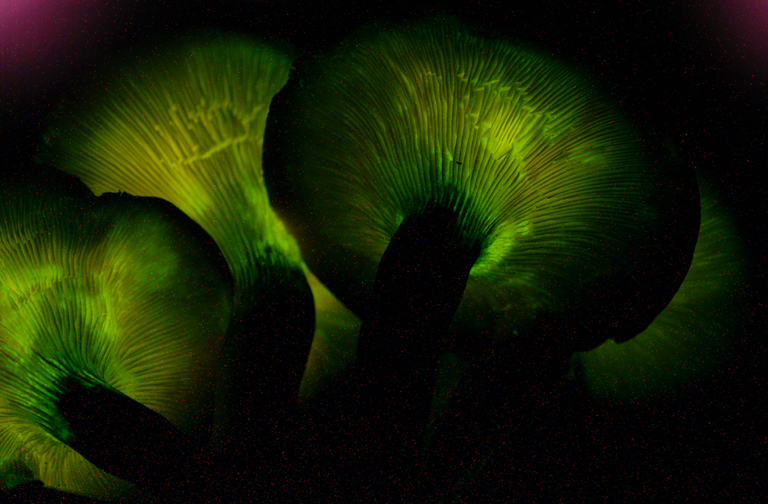
Jack O'Lantern Mushroom
Omphalotus olearius
This bright orange mushroom glows in the dark — literally. The Jack O'Lantern is one of the few bioluminescent fungi you can find in North America and Europe, and it's also the number one mushroom people accidentally eat thinking they've scored chanterelles. Spoiler: the next 12 hours are not fun.
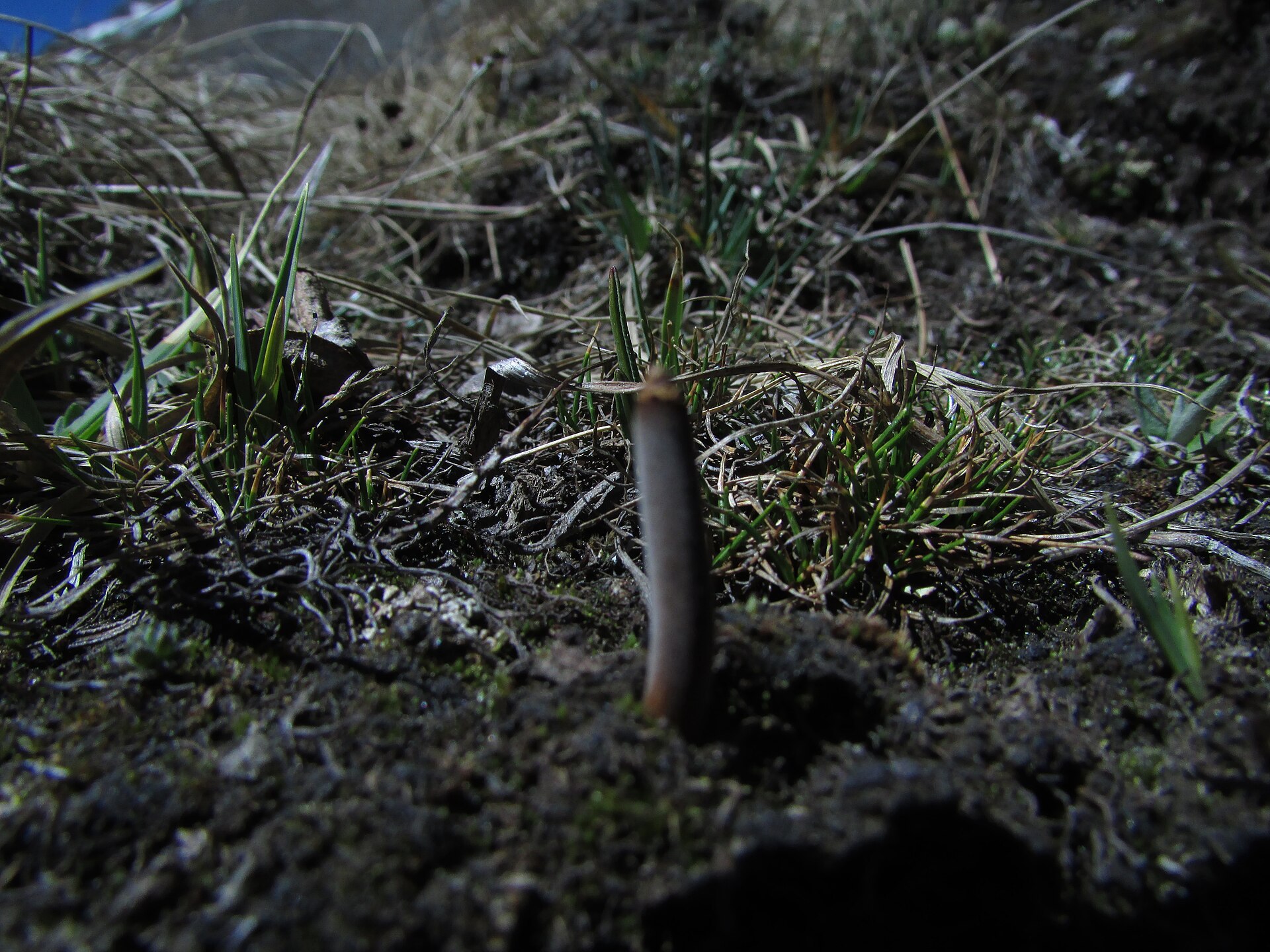
Caterpillar Fungus
Ophiocordyceps sinensis
The most expensive biological commodity on Earth by weight. Ophiocordyceps sinensis, known as yartsa gunbu in Tibetan ('summer grass, winter worm'), is a parasitic fungus that infects ghost moth caterpillars on the Tibetan Plateau. It has been used in traditional Chinese and Tibetan medicine for centuries and at peak market prices has sold for more than three times the price of gold.
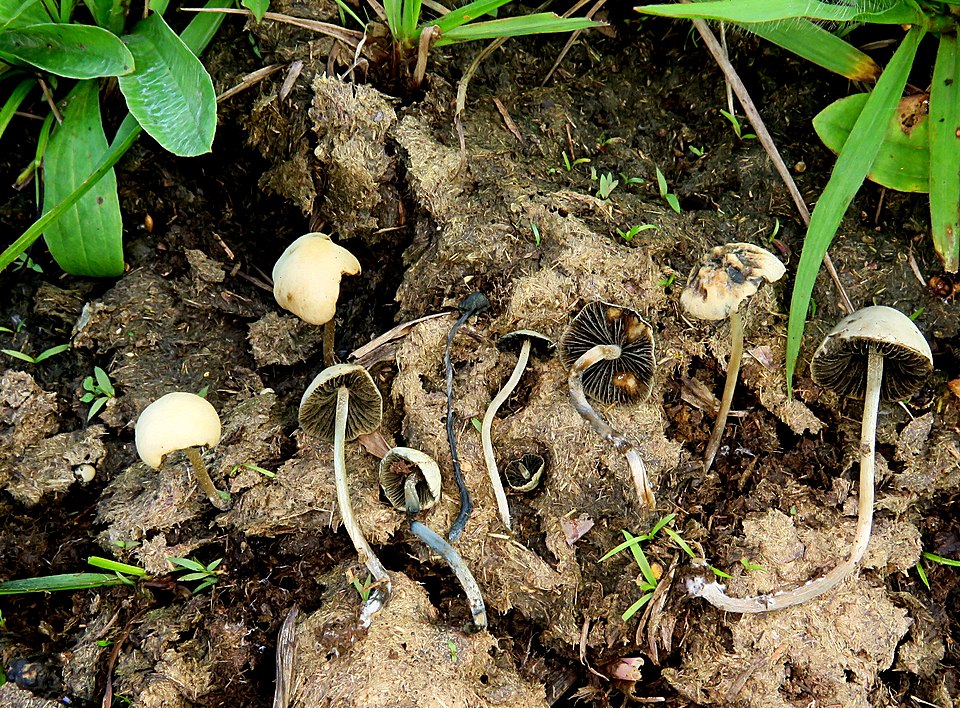
Blue Meanies
Panaeolus cyanescens
A potent psychoactive mushroom that grows on cattle and horse dung in tropical and subtropical regions worldwide. Often confused with Psilocybe cubensis due to overlapping habitat. Contains psilocybin and psilocin, which are controlled substances in most jurisdictions. Also known as Copelandia cyanescens. This page is for educational identification purposes only.
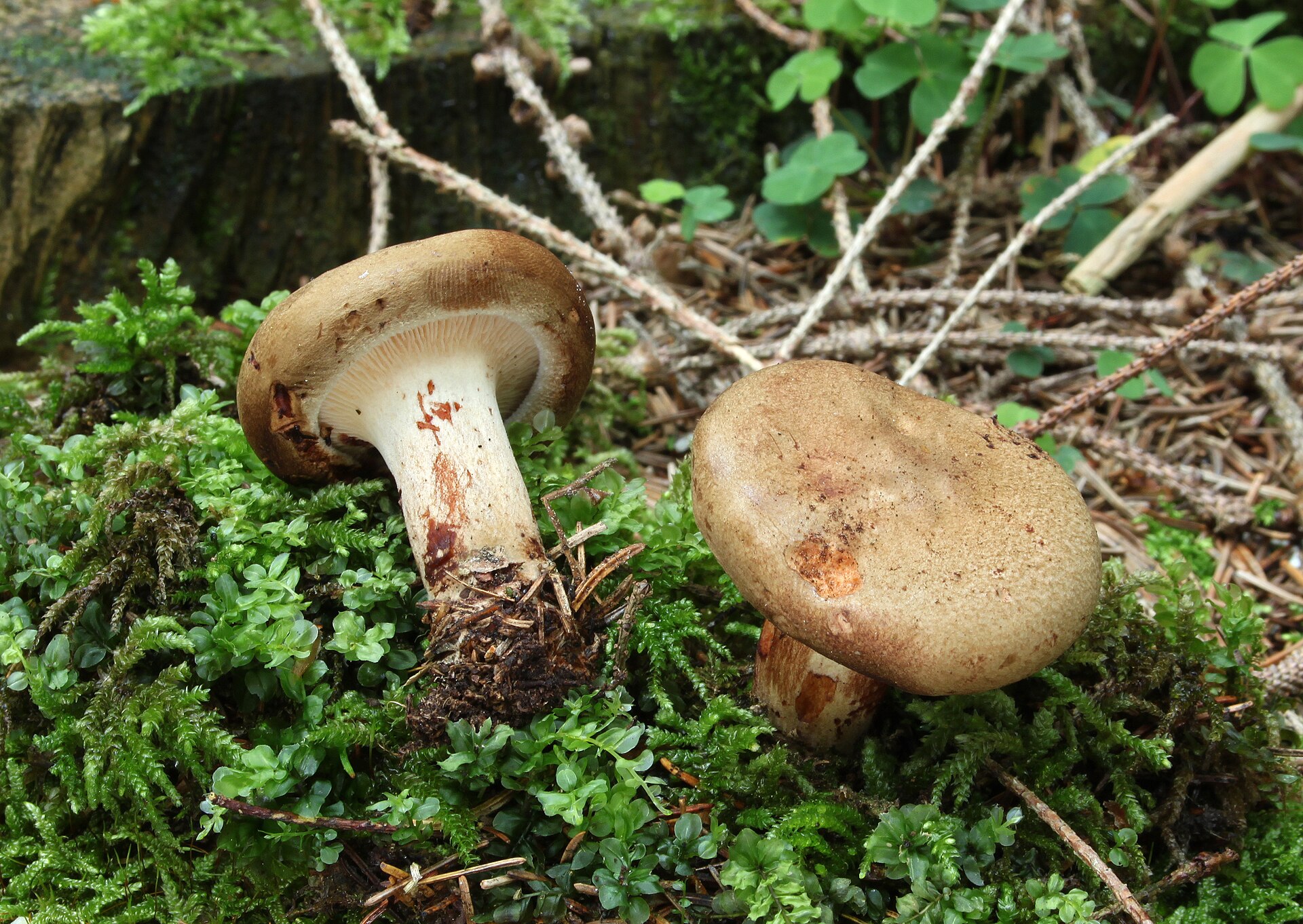
Brown Rollrim
Paxillus involutus
The Brown Rollrim is a common woodland mushroom that was eaten for centuries in Eastern Europe before science revealed it triggers a potentially fatal autoimmune reaction. You might eat it ten times without trouble; the eleventh could kill you.
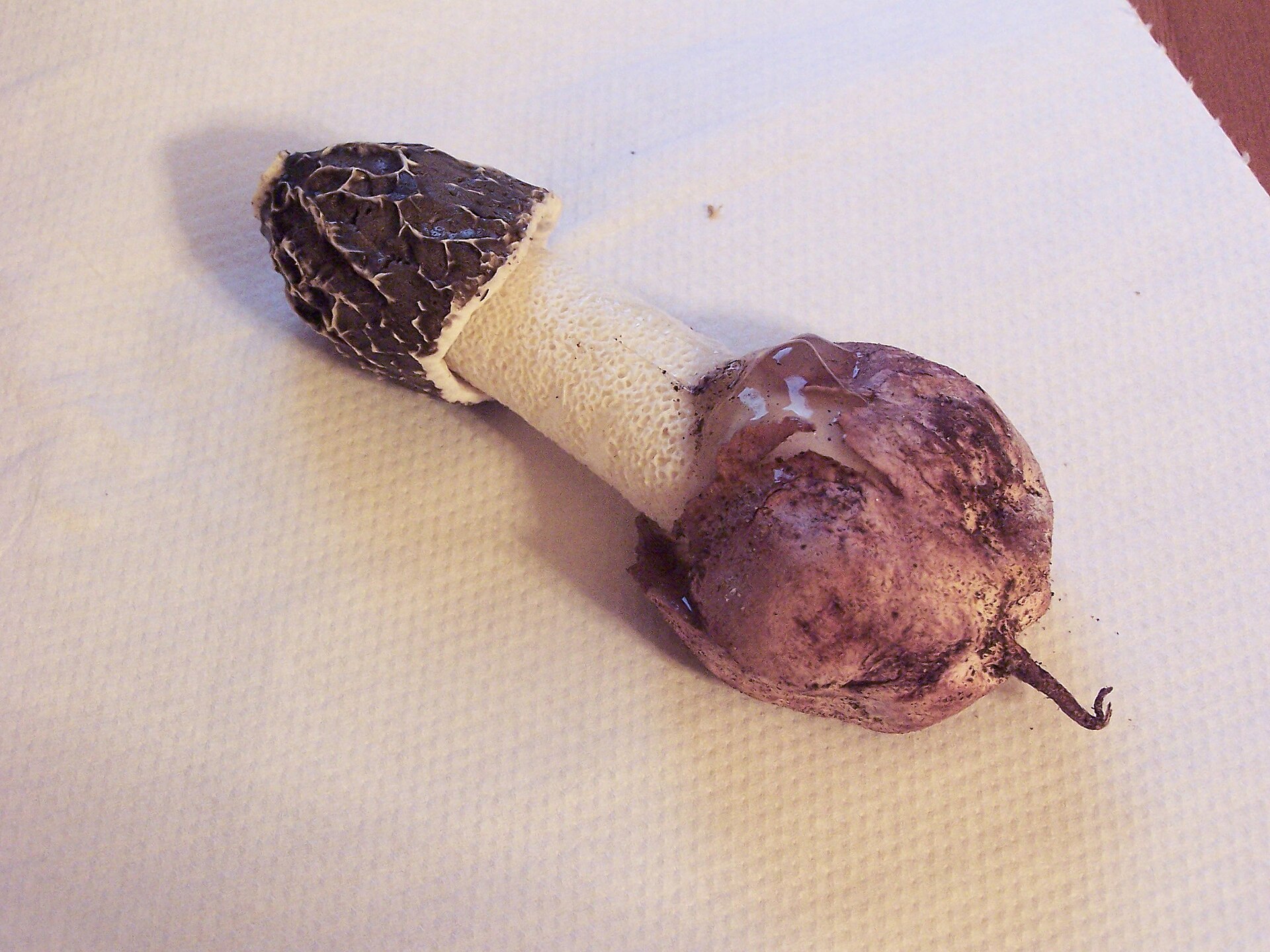
Dune Stinkhorn
Phallus hadriani
A striking stinkhorn mushroom that erupts from a pinkish-purple "egg" and produces a foul-smelling, olive-green spore slime to attract flies. Found in sandy soils, dunes, mulched gardens, and disturbed ground. Technically edible in the egg stage, but the smell and appearance discourage most people from trying.
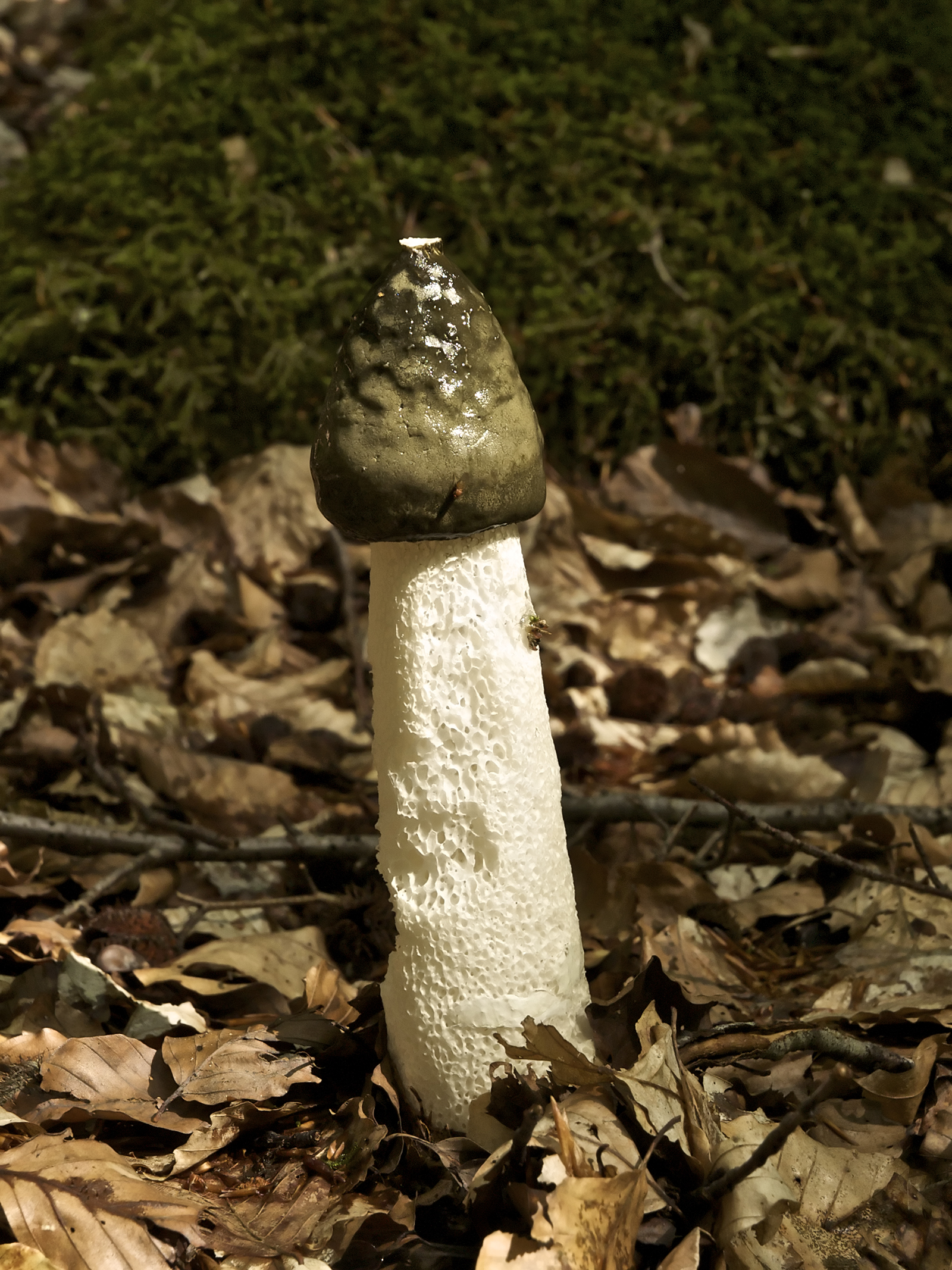
Common Stinkhorn
Phallus impudicus
A mushroom that looks exactly like what its Latin name implies and smells like rotting flesh. The Common Stinkhorn is one of the most recognizable, most discussed, and most polarizing fungi in the world. It emerges from a white 'egg' and reaches full height in just a few hours, then attracts flies with a putrid, dark-green spore slime that coats its tip.
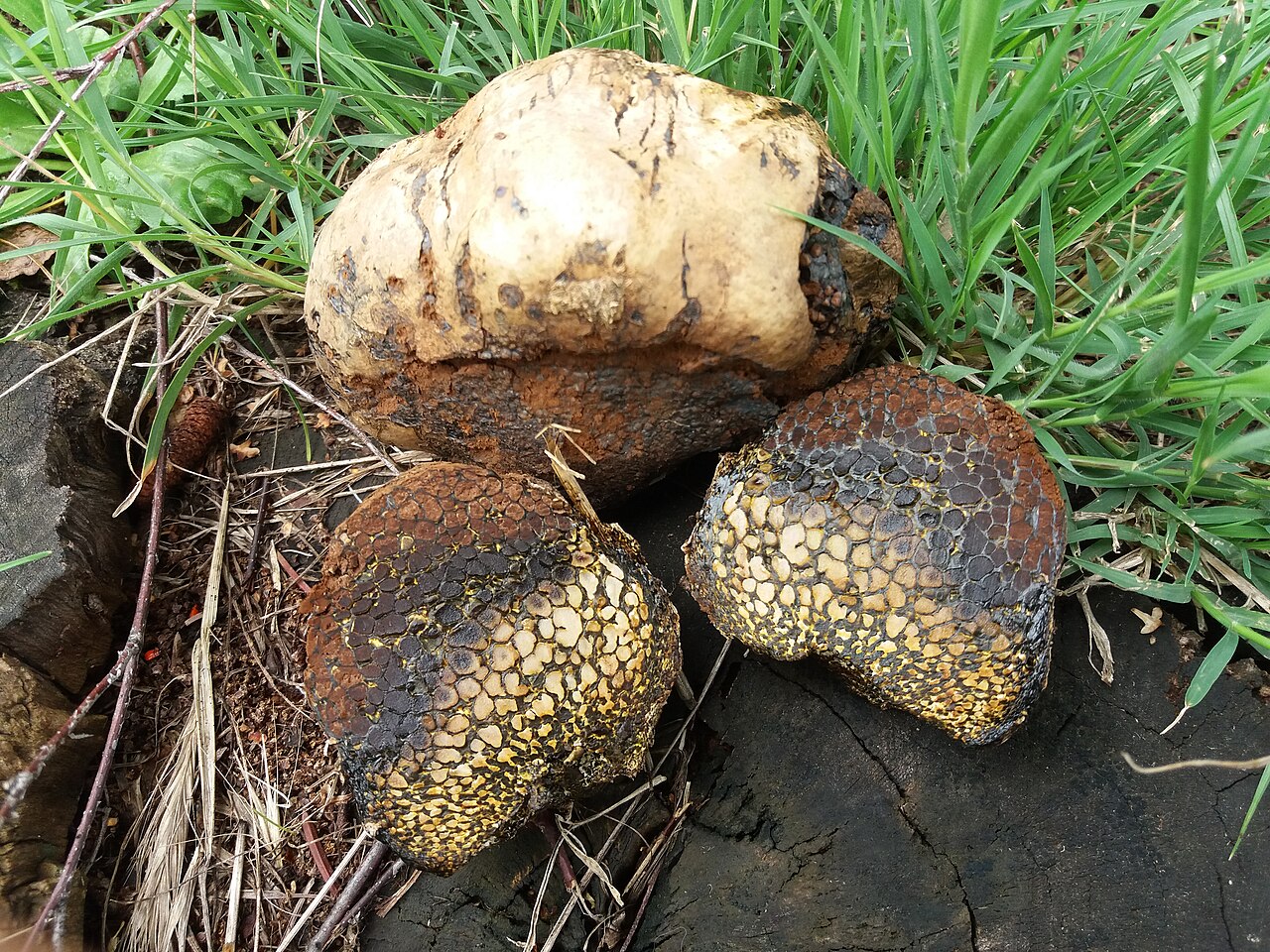
Dyeball
Pisolithus arhizus
A bizarre, lumpy puffball that looks like something from another planet. Dyeball earned its common name because textile artists and natural dyers have used its spore mass to produce rich brown and gold tones on wool and silk for centuries.
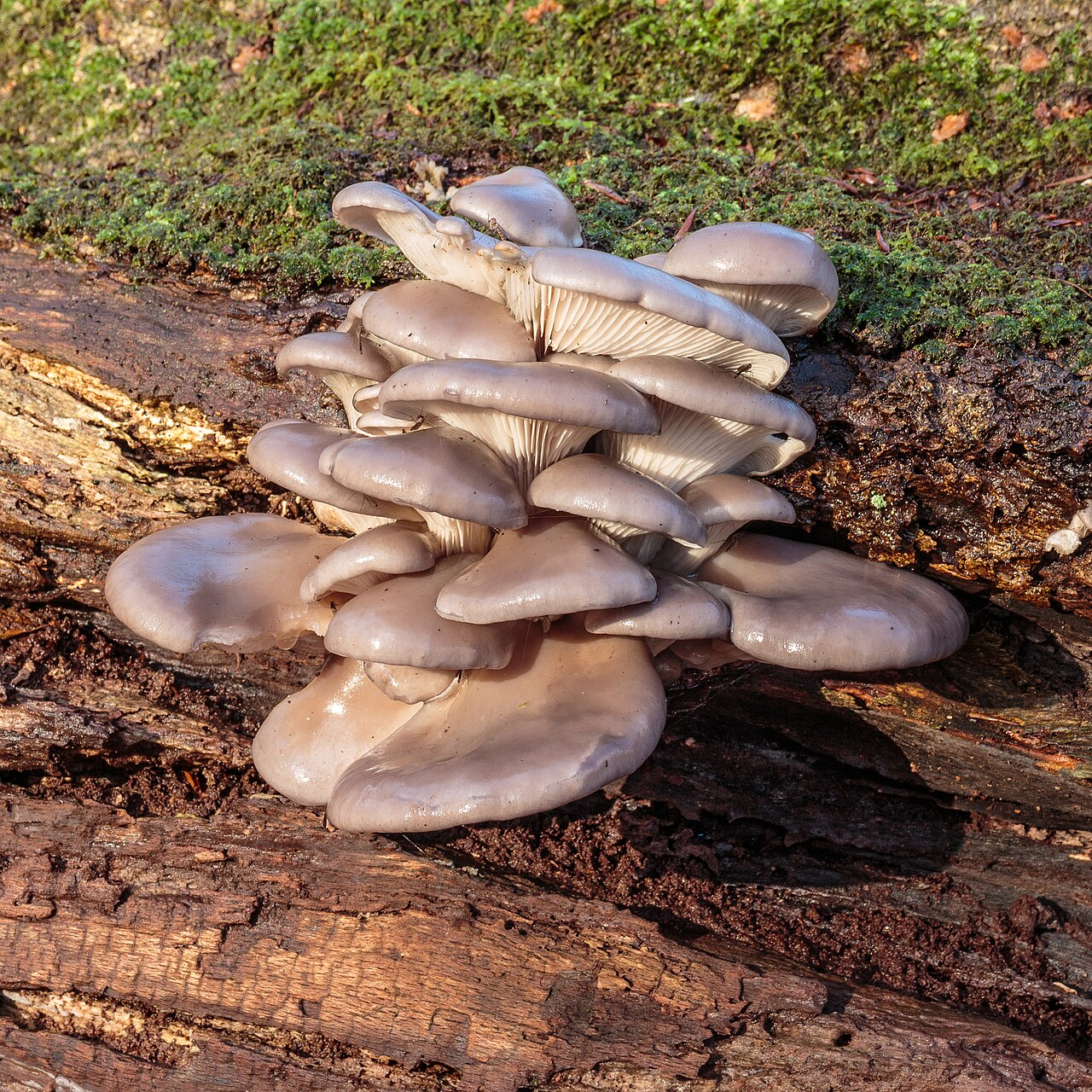
Oyster Mushroom
Pleurotus ostreatus
The beginner's best friend. Oyster mushrooms are one of the easiest wild mushrooms to identify, one of the simplest to grow at home, and one of the most delicious to eat. They fruit on dead and dying hardwood trees across six continents — and if you've never foraged before, this is a fantastic place to start.
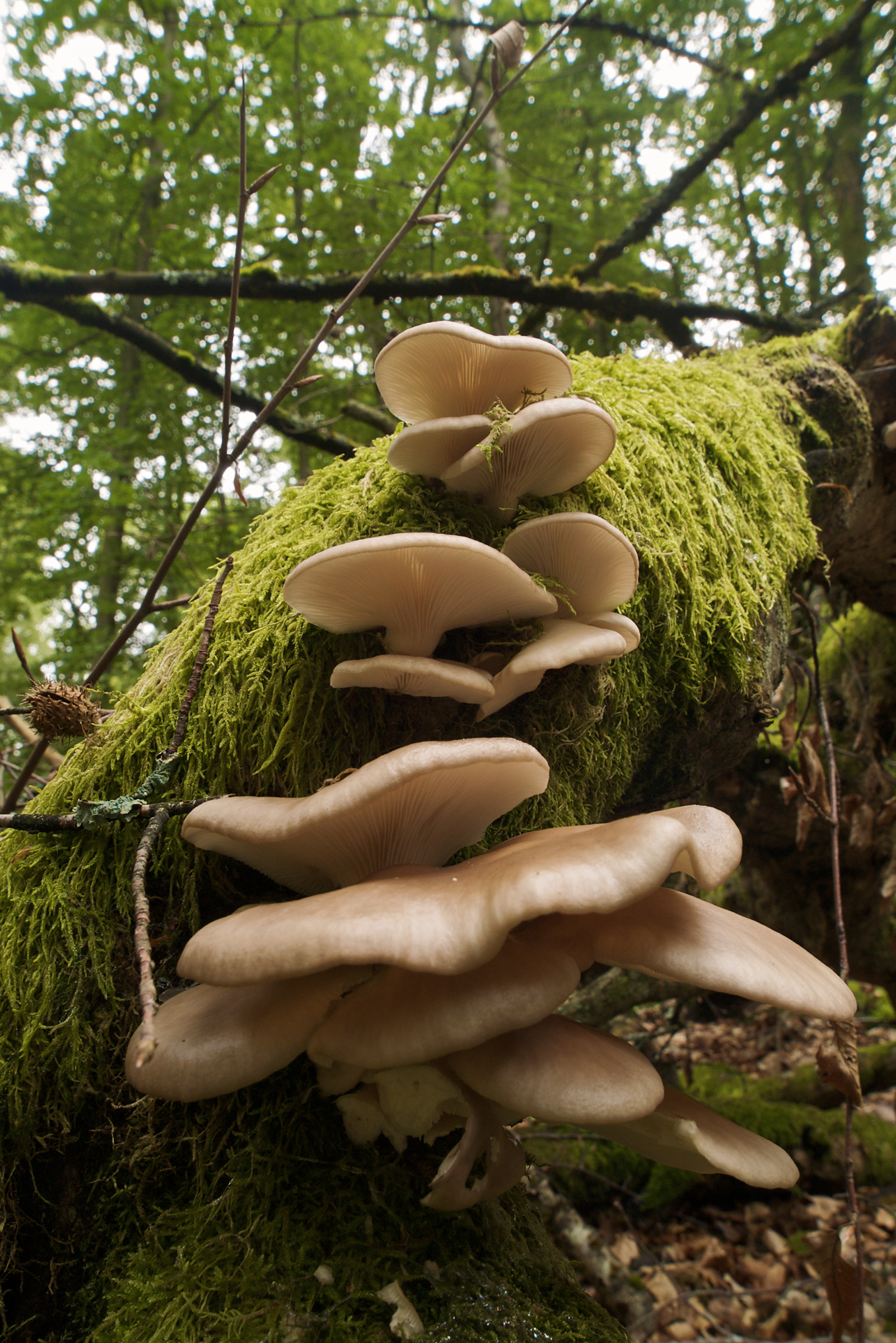
Summer Oyster
Pleurotus pulmonarius
The warm-weather cousin of the common oyster mushroom. Lighter, thinner, and more delicate than Pleurotus ostreatus, the Summer Oyster fruits when it's too hot for its famous relative — filling the gap from late spring through early autumn on hardwood logs and stumps.
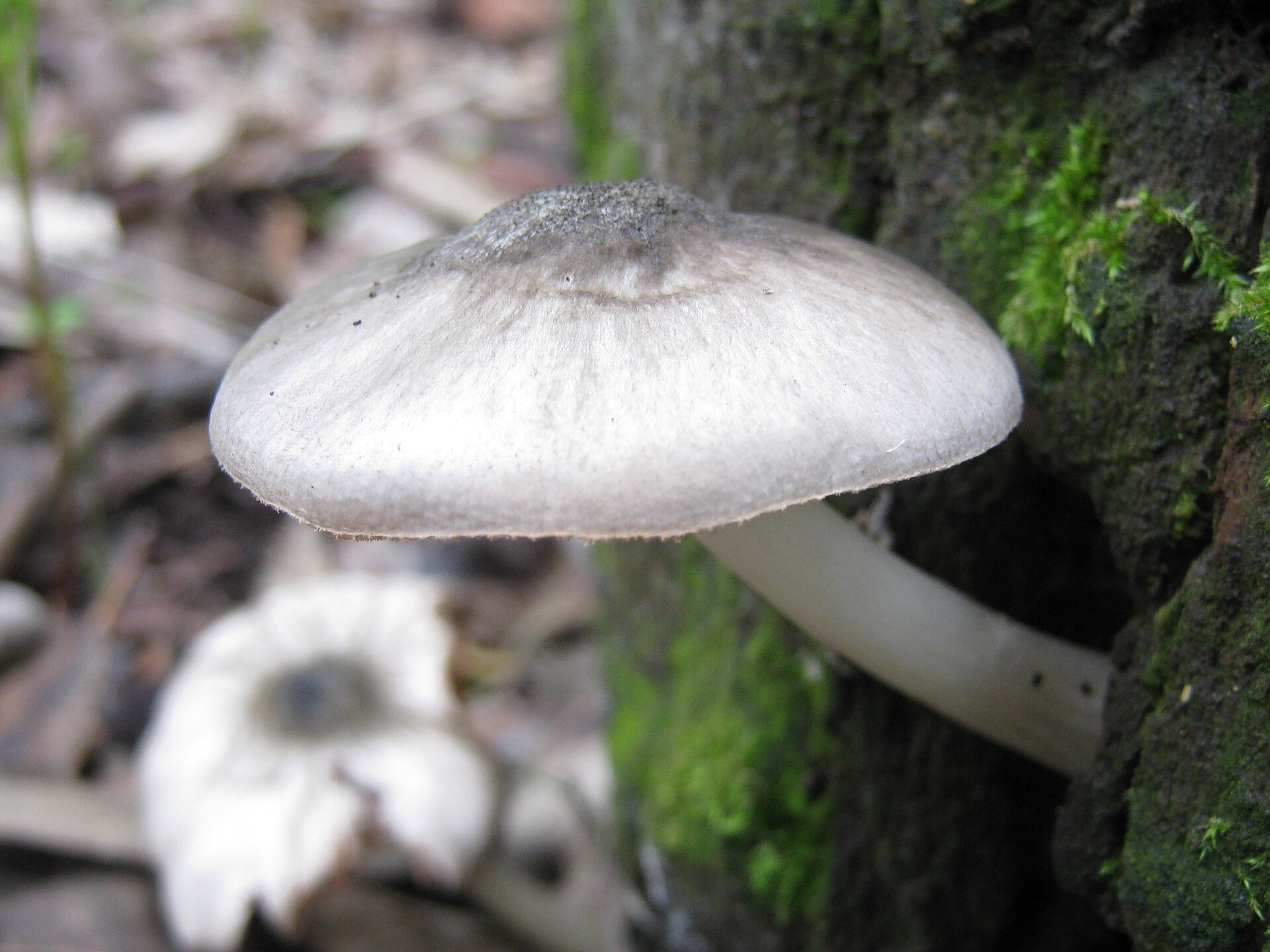
Willow Shield
Pluteus salicinus
A small, blue-gray wood-rotting mushroom found across the Northern Hemisphere that was unexpectedly discovered to contain psilocybin. One of only a handful of psilocybin-producing species outside the genus Psilocybe. Contains controlled substances; this page is for educational identification purposes only.
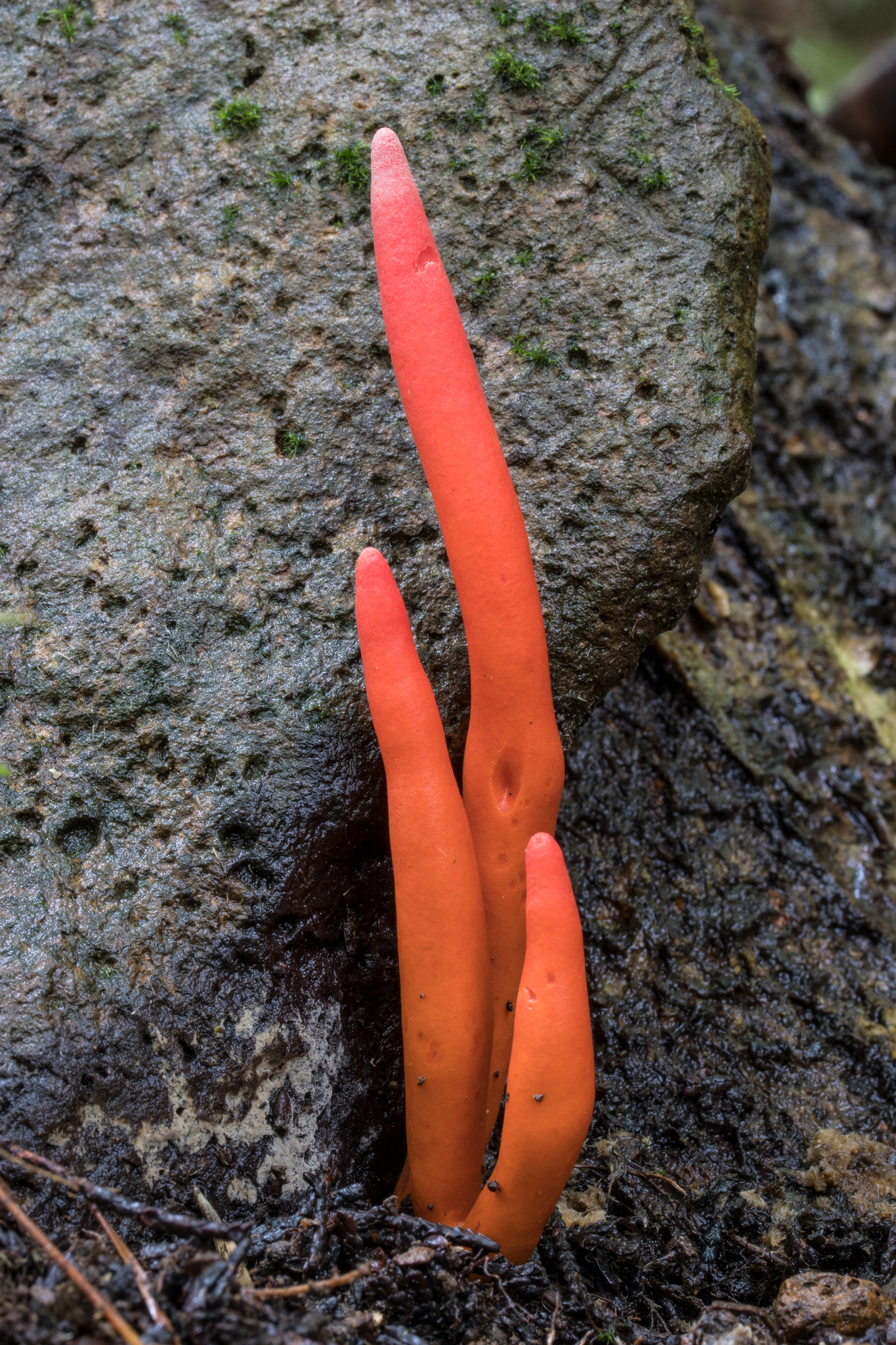
Poison Fire Coral
Podostroma cornu-damae
Poison Fire Coral is a bright red, finger-like fungus from East Asia that contains trichothecene mycotoxins, the same class of compounds used in biological weapons. It is one of very few mushrooms that can kill through skin contact alone, though most fatalities occur from ingestion.
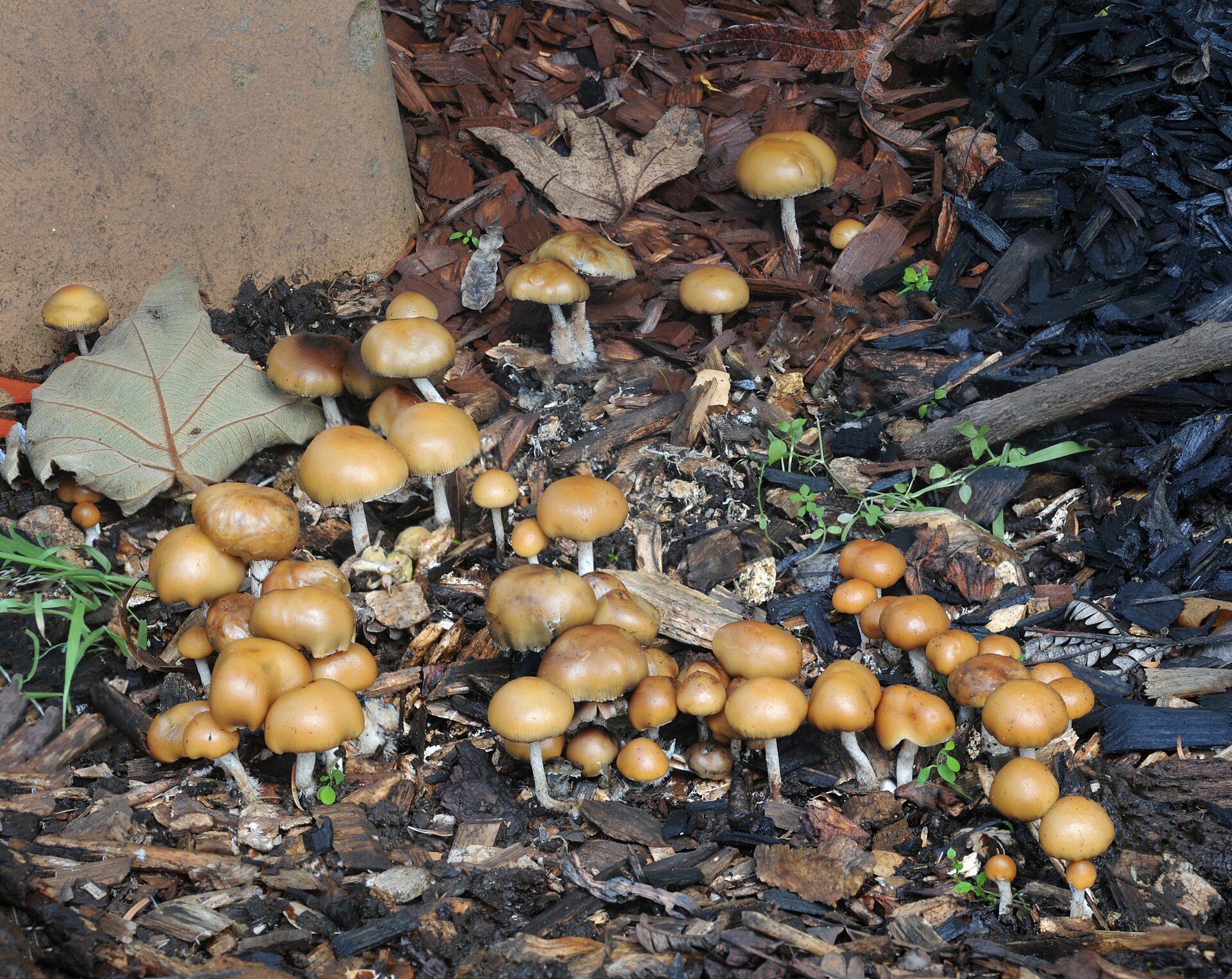
Allen's Psilocybe
Psilocybe allenii
A potent psilocybin-containing mushroom found in urban wood chip landscaping along the Pacific Coast of North America. First formally described in 2012, it is one of the most commonly encountered psychoactive species in the San Francisco Bay Area and Pacific Northwest — and was hiding in plain sight for decades before receiving its own name.
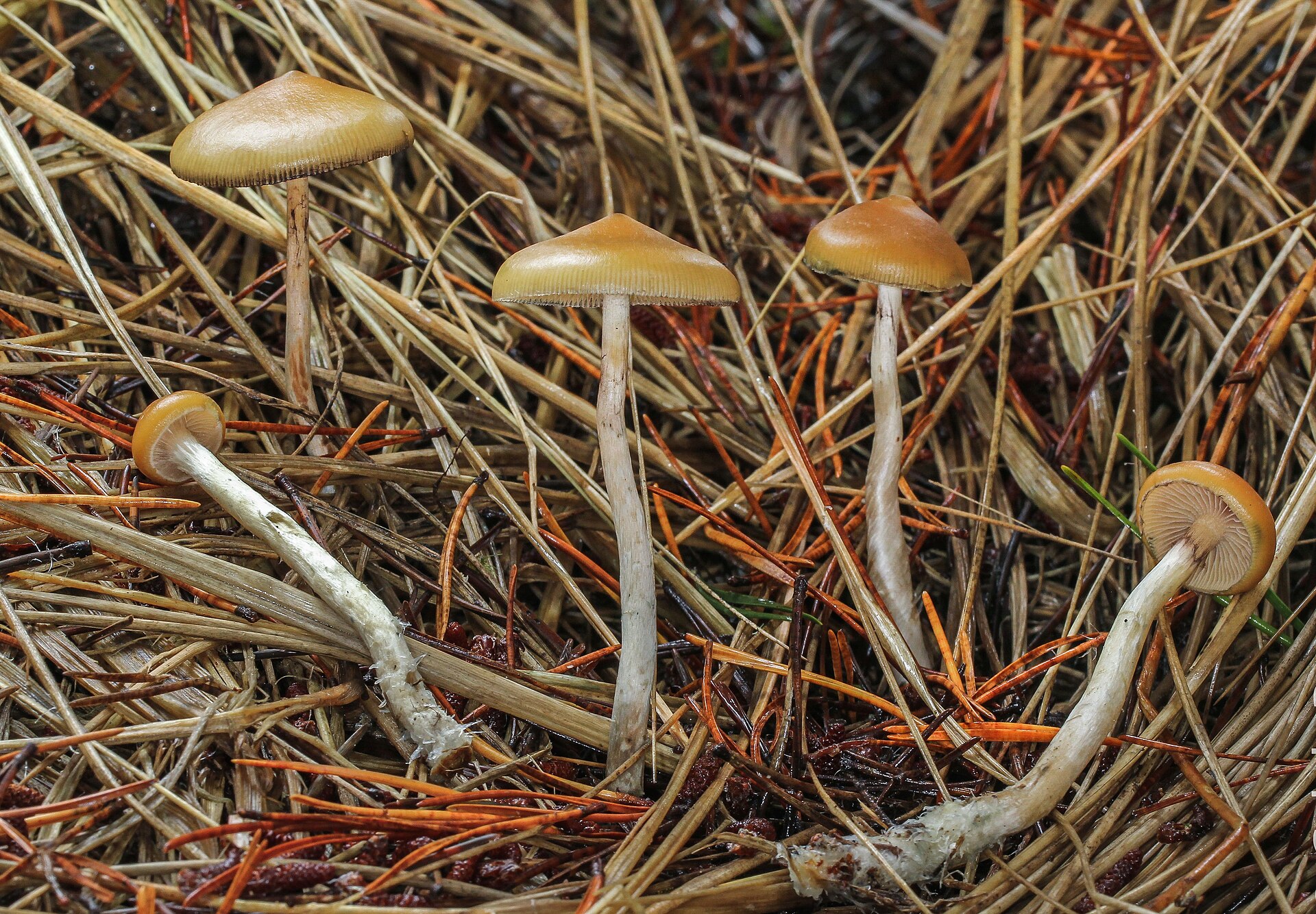
Flying Saucer
Psilocybe azurescens
The most potent psilocybin mushroom known to science. Psilocybe azurescens grows in a narrow coastal range in the Pacific Northwest, primarily on decaying wood and dune grass litter near the mouth of the Columbia River. Contains psilocybin and psilocin, which are controlled substances in most jurisdictions. This page is for educational identification purposes only.
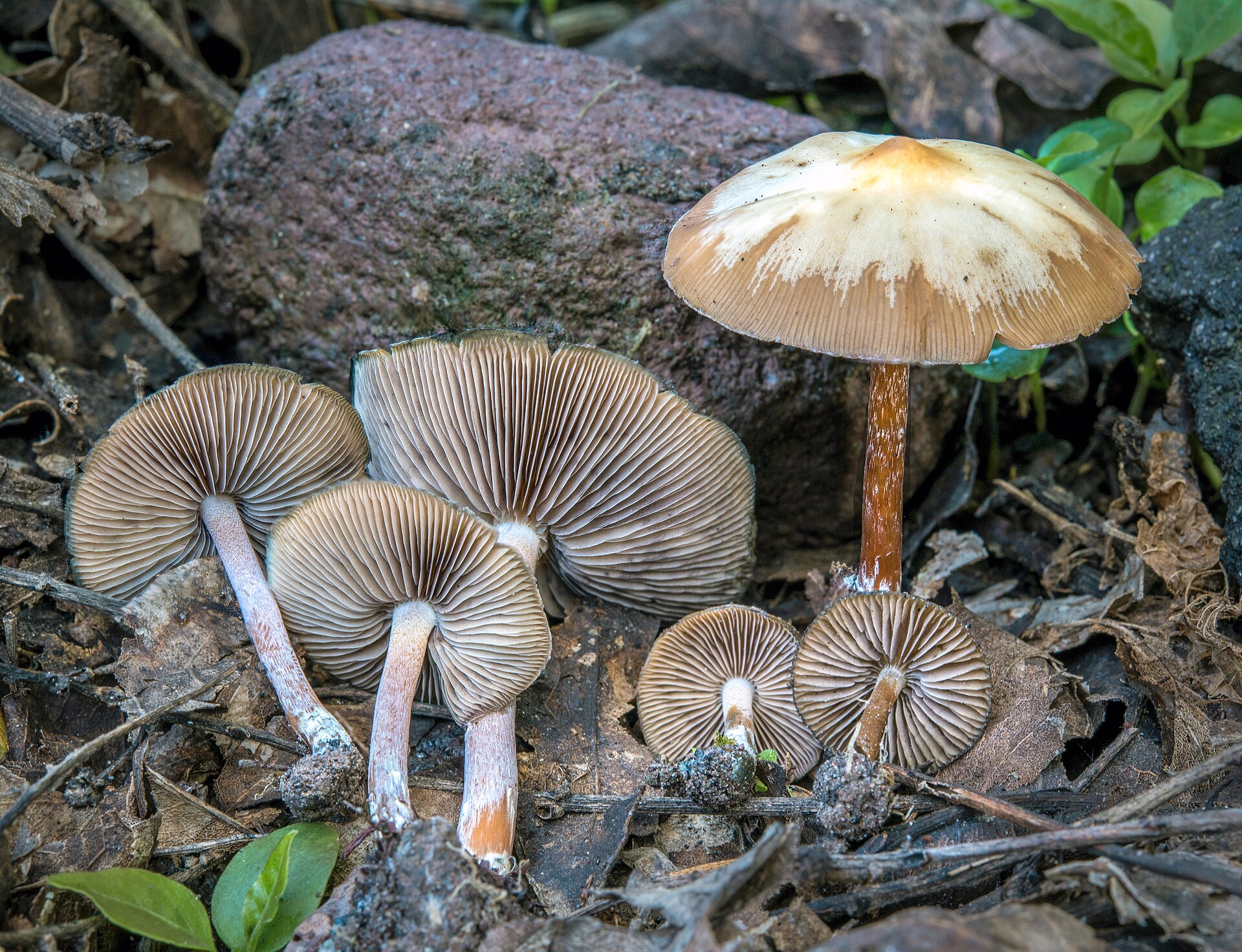
Landslide Mushroom / Derrumbe
Psilocybe caerulescens
A psychoactive mushroom used in traditional Mazatec ceremonies alongside Psilocybe mexicana. Known locally as "derrumbe" (landslide) because it often fruits on disturbed earth after landslides and road cuts. Contains psilocybin; illegal in most jurisdictions. This page is for educational identification purposes only.
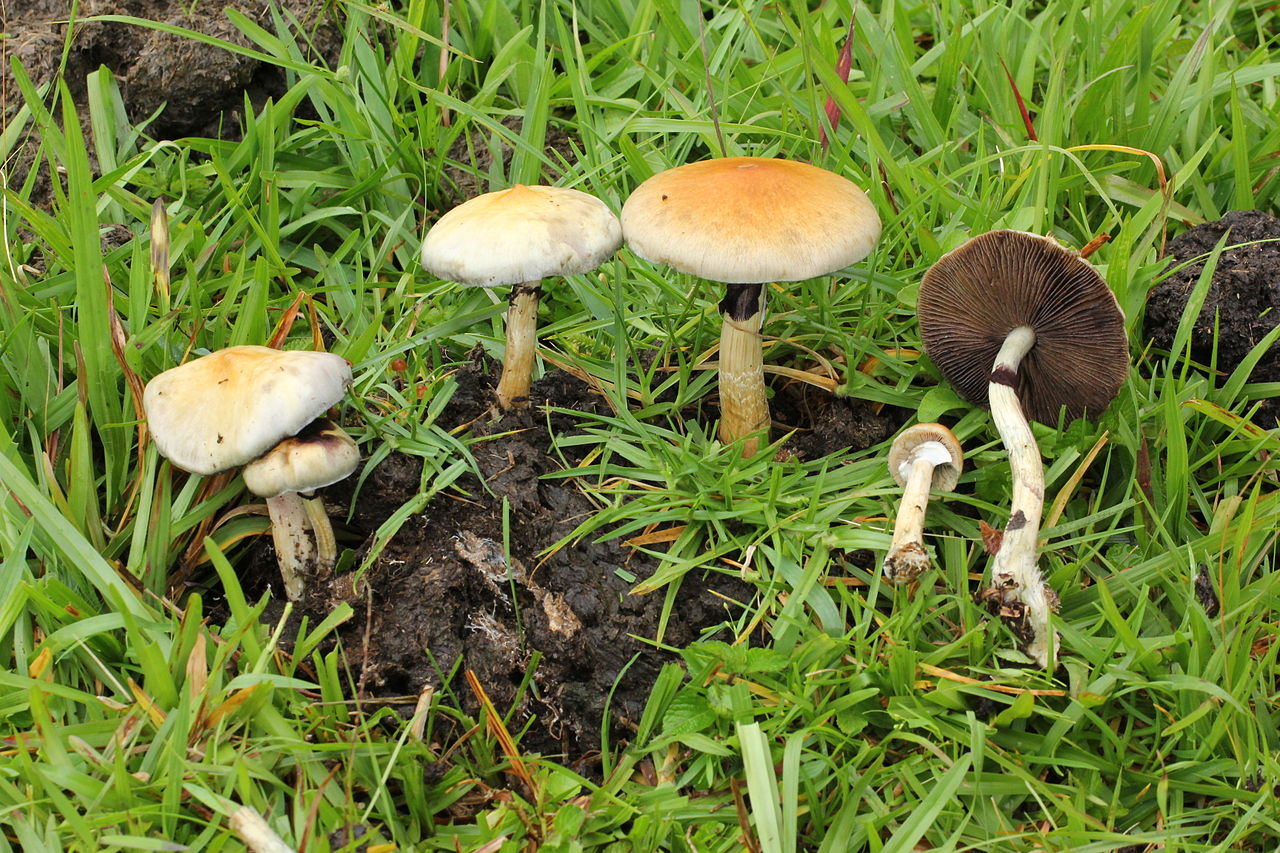
Golden Teacher / Magic Mushroom
Psilocybe cubensis
The world's most famous psychoactive mushroom. Psilocybe cubensis contains psilocybin and psilocin, which are controlled substances in most countries. Possession, cultivation, and consumption are illegal in the majority of jurisdictions. This page is for educational identification purposes only.
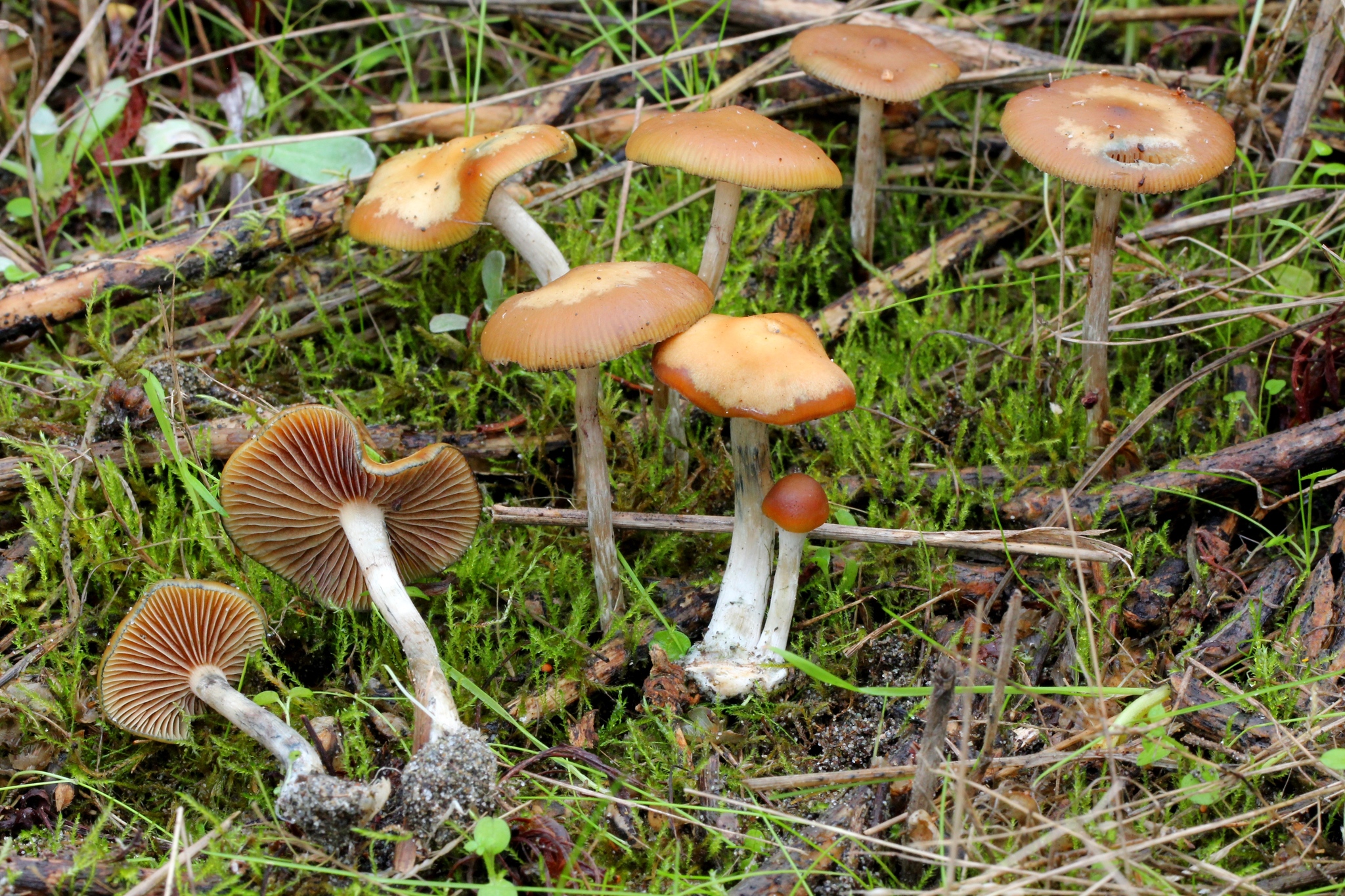
Wavy Cap
Psilocybe cyanescens
A potent psychoactive mushroom that thrives on wood chips in urban and suburban landscapes across the Pacific Northwest, the UK, and Western Europe. Contains psilocybin and psilocin, which are controlled substances in most jurisdictions. Known for its distinctive wavy cap margin and aggressive blue bruising. This page is for educational identification purposes only.
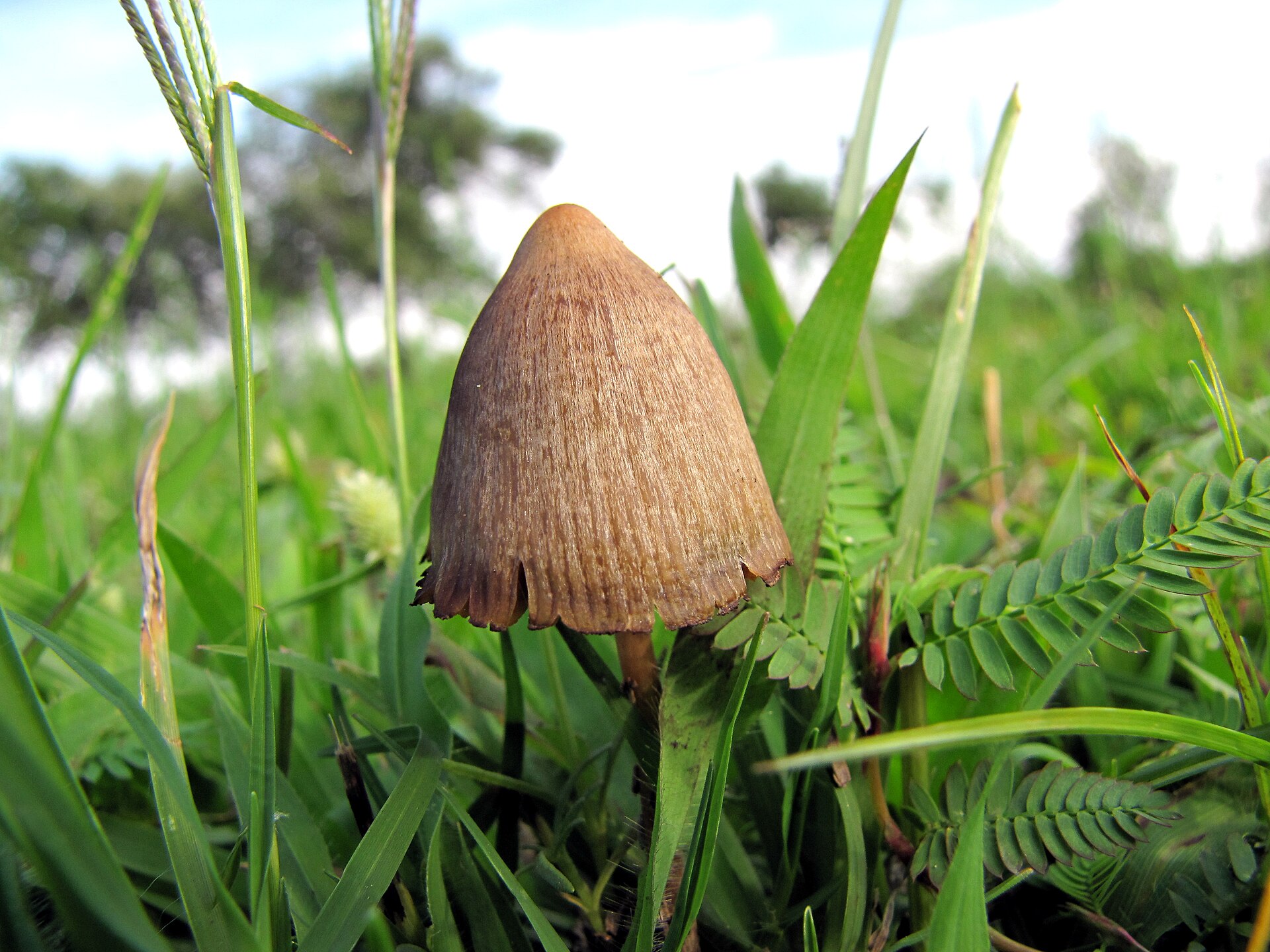
Teonanácatl / Mexican Magic Mushroom
Psilocybe mexicana
The mushroom that introduced psilocybin to Western science. Psilocybe mexicana was used in Mazatec healing ceremonies for centuries before R. Gordon Wasson brought it to the world's attention in 1957. Albert Hofmann first isolated psilocybin and psilocin from this species. It contains controlled substances and is illegal to possess in most jurisdictions. This page is for educational identification purposes only.
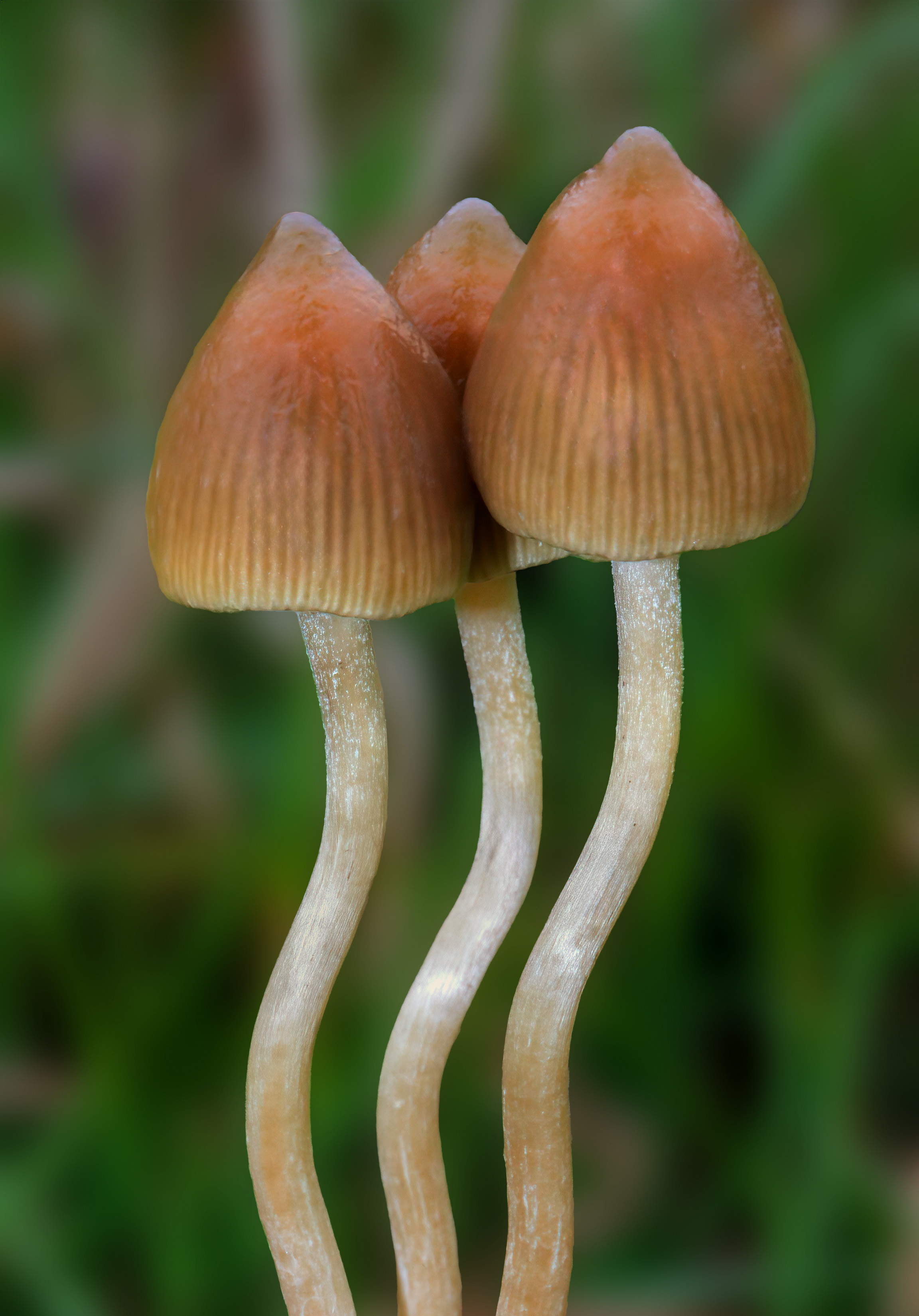
Liberty Cap
Psilocybe semilanceata
The most widespread naturally occurring psilocybin mushroom on Earth. Liberty Caps grow in wet grasslands across Europe, and they've been quietly driving autumn foraging culture in the UK and Northern Europe for decades.
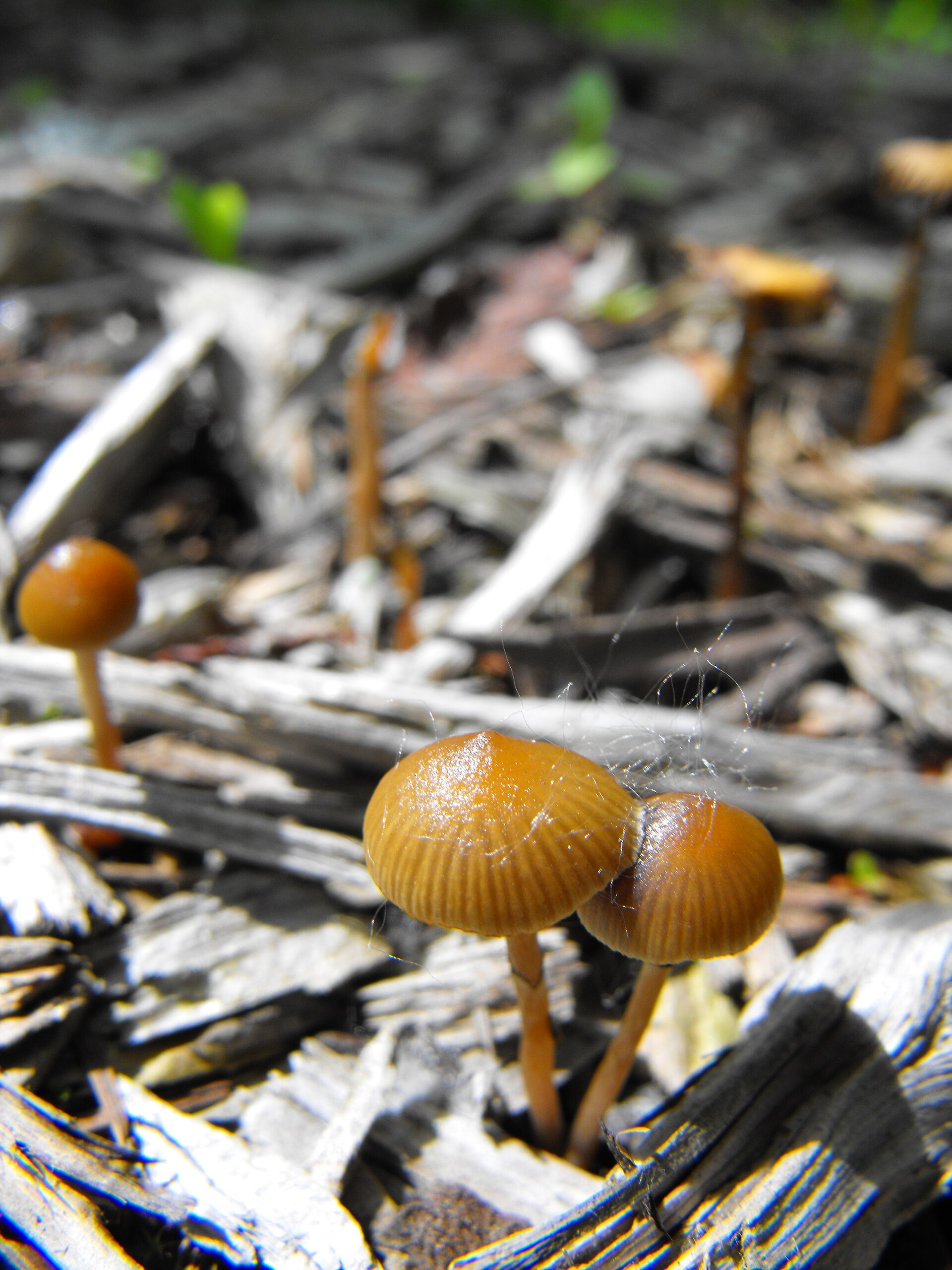
Blue Ringer / Stuntz's Blue Legs
Psilocybe stuntzii
A small psychoactive mushroom native to the Pacific Northwest, commonly found in wood chips, bark mulch, and freshly landscaped areas around Seattle and Portland. Named after mycologist Daniel Stuntz. Contains psilocybin; illegal in most jurisdictions. This page is for educational identification purposes only.
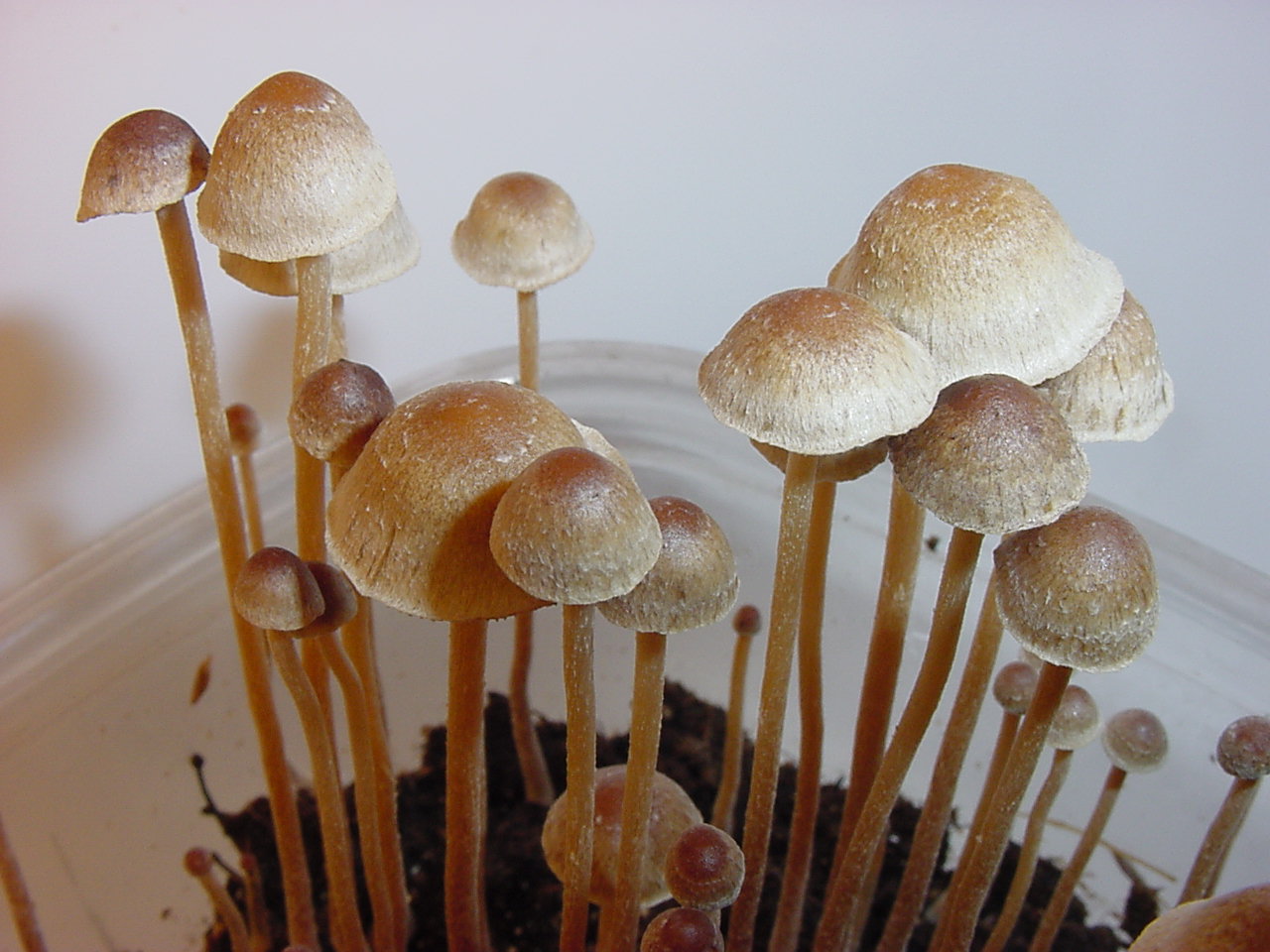
Philosopher's Stone / Magic Truffle
Psilocybe tampanensis
One of the rarest psilocybin mushrooms in the wild, found only once in nature near Tampa, Florida in 1977. Famous for producing psychoactive sclerotia ("magic truffles") that became the basis of the legal psychedelic market in the Netherlands. Contains controlled substances; illegal to possess in most countries. This page is for educational identification purposes only.
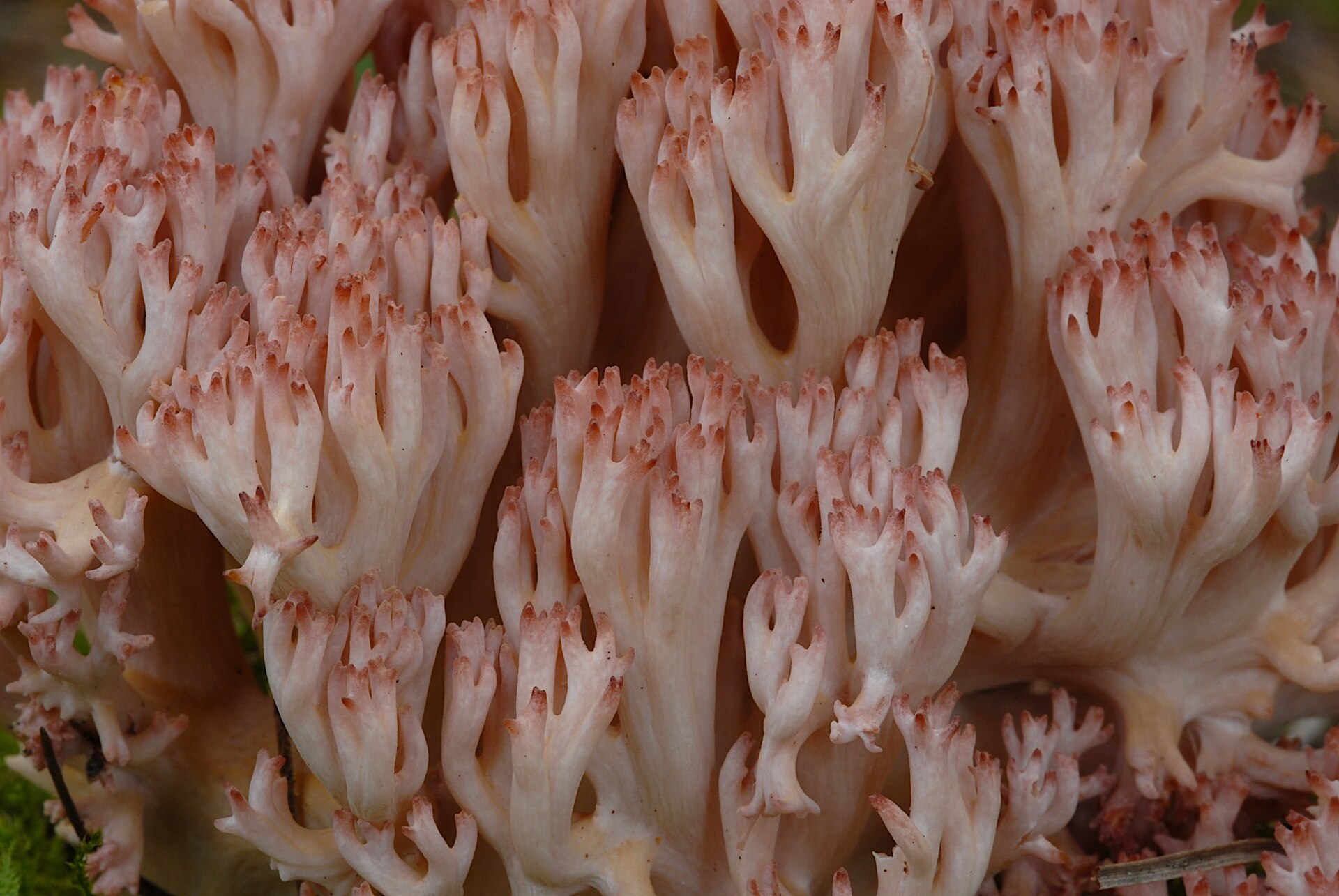
Pink-tipped Coral
Ramaria botrytis
A large, striking coral fungus that looks like a head of cauliflower dipped in pink paint. Ramaria botrytis is the most recognizable and most commonly eaten species in the notoriously difficult coral fungus genus, found in mature beech and oak forests across the Northern Hemisphere. The pink-to-purple tipped branches on a thick white base make it one of the few Ramaria species that can be identified with reasonable confidence in the field.
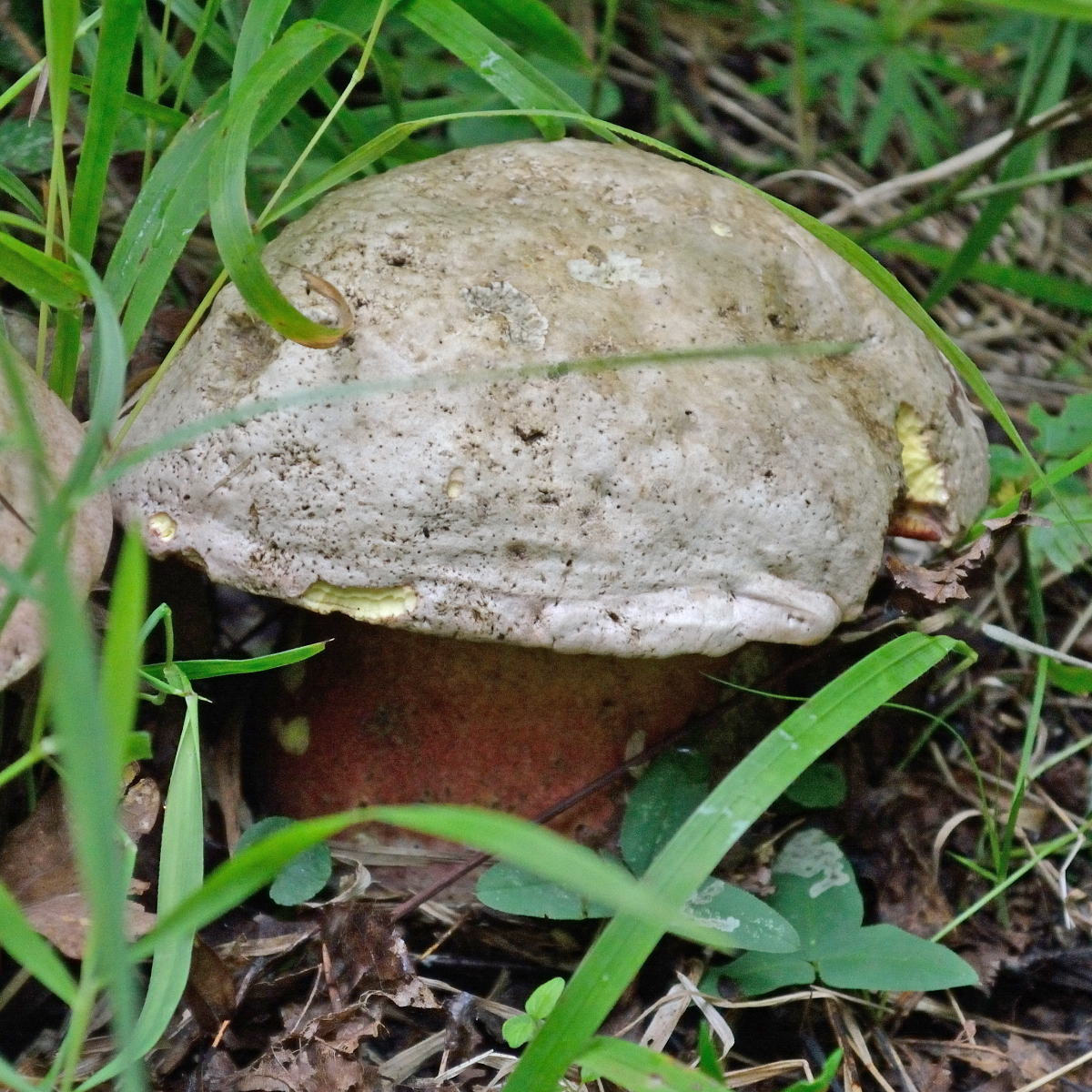
Satan's Bolete
Rubroboletus satanas
Meet the mushroom literally named after the Devil. Satan's Bolete is one of the rare toxic boletes — a chunky, pale-capped bruiser with a blood-red stem and flesh that bruises blue on contact, like something out of a horror movie prop department.
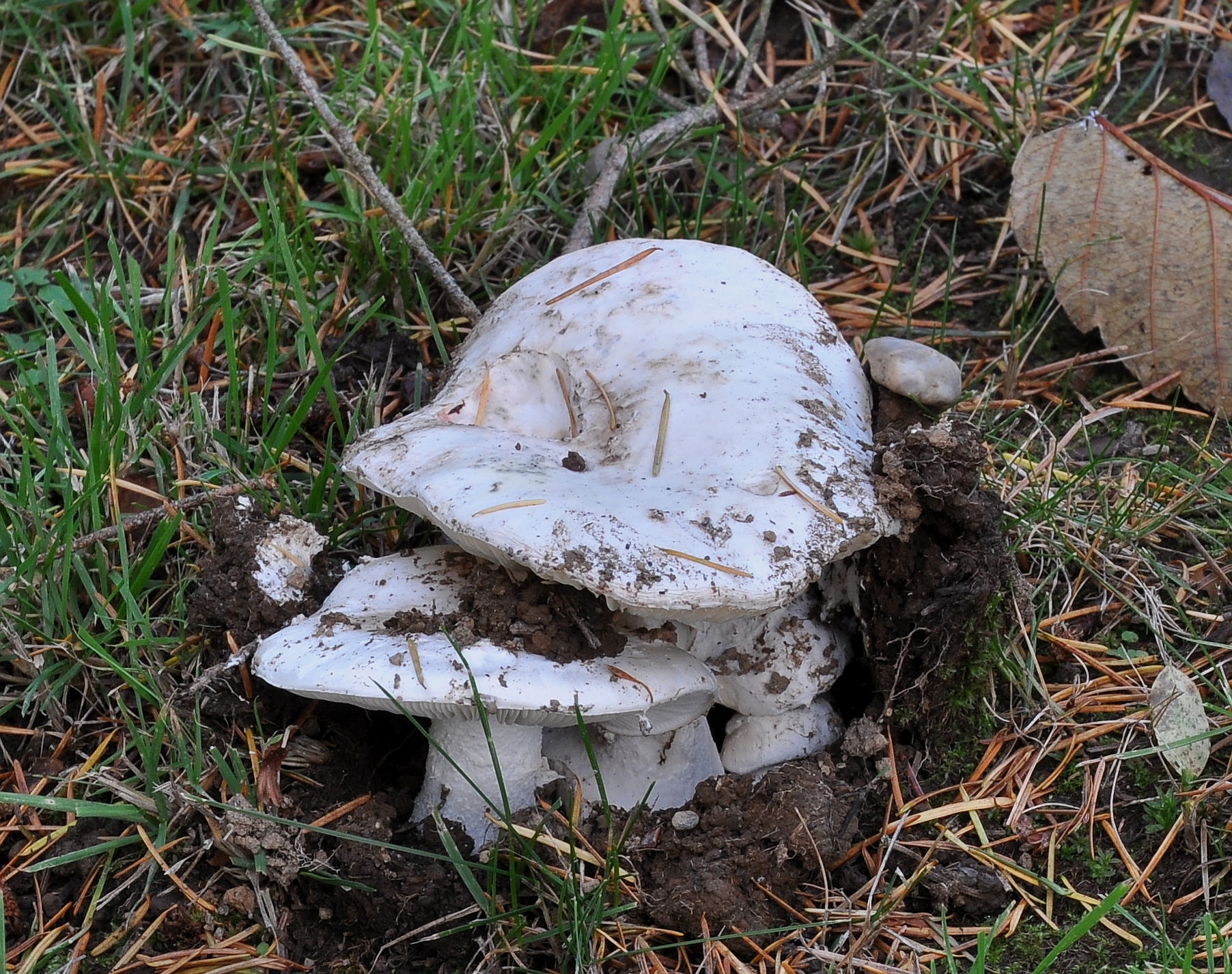
Short-stemmed Russula
Russula brevipes
A large, chalky-white mushroom with an absurdly short stem and a peppery bite that'll make you regret tasting it raw. On its own, Russula brevipes is basically inedible — but let the parasitic fungus Hypomyces lactifluorum colonize it, and it transforms into one of the most sought-after wild mushrooms in North America: the Lobster Mushroom.
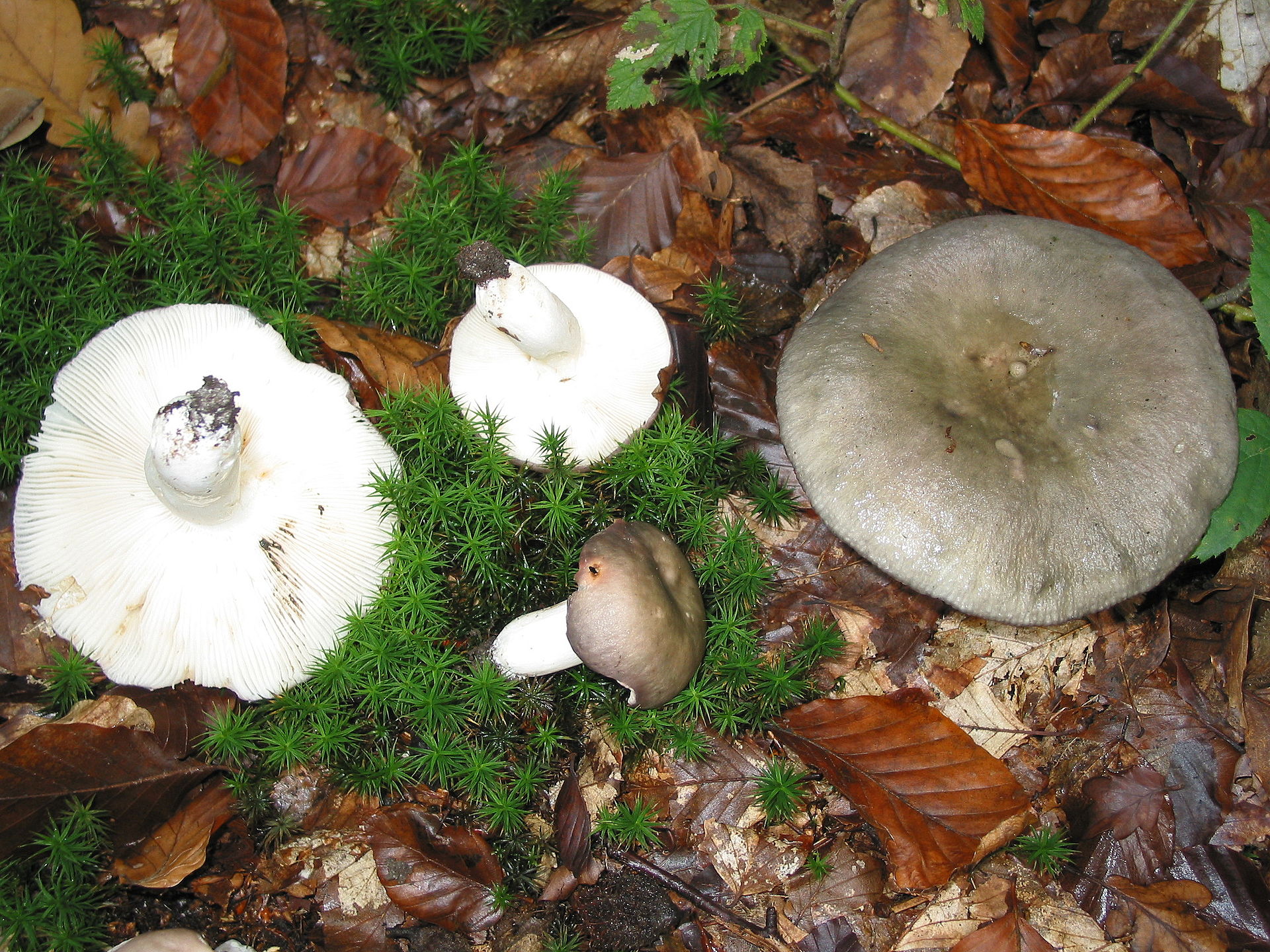
Charcoal Burner
Russula cyanoxantha
The best edible Russula and one of the easiest to identify, thanks to a single remarkable feature: its gills are flexible and greasy to the touch, while virtually every other Russula has brittle, crumbly gills.
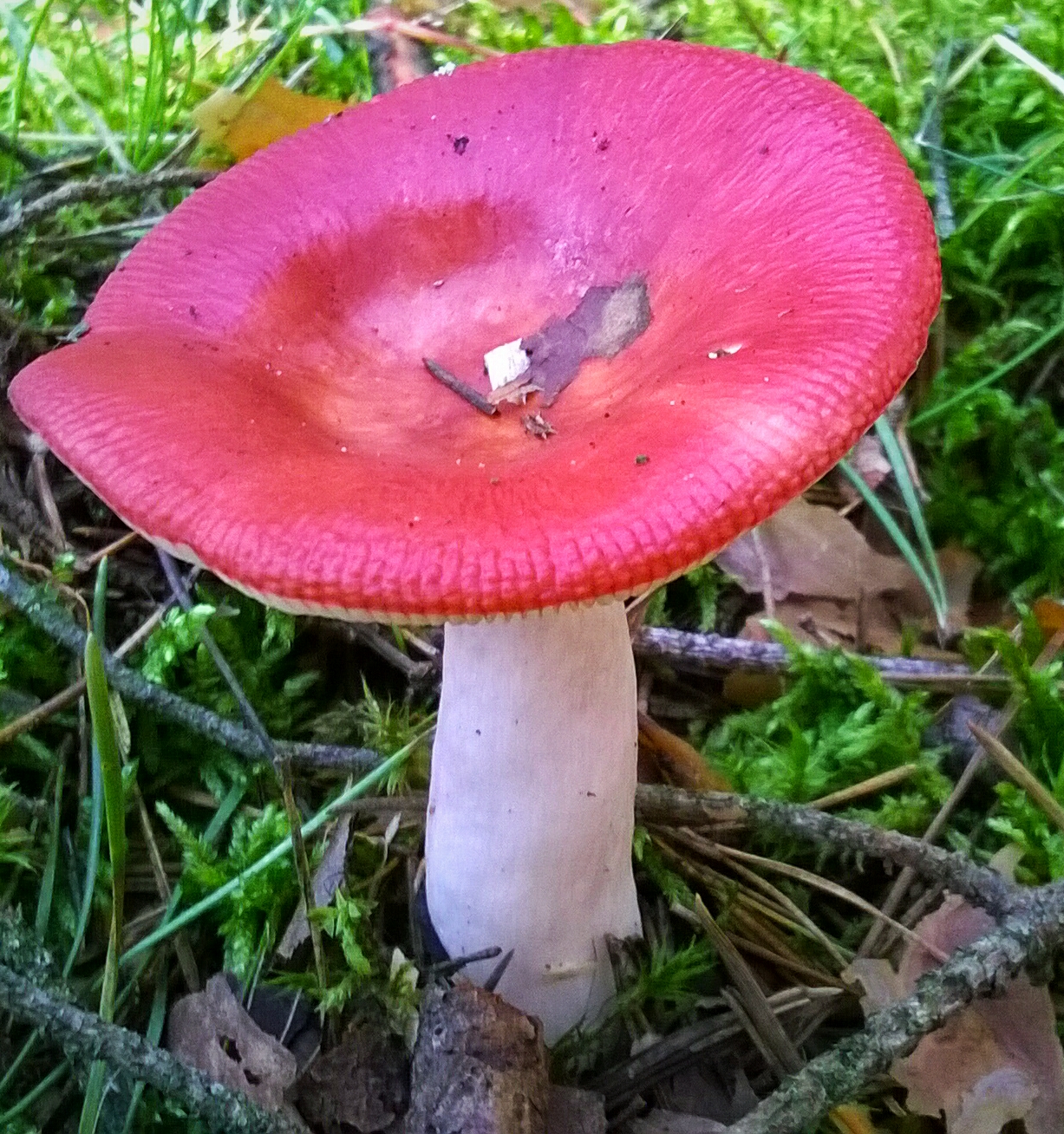
The Sickener
Russula emetica
The Sickener earns its blunt name honestly. This bright scarlet mushroom with snow-white gills will make you violently ill if eaten raw, delivering a miserable bout of vomiting and diarrhea. It is not going to kill you, but you will wish it had.
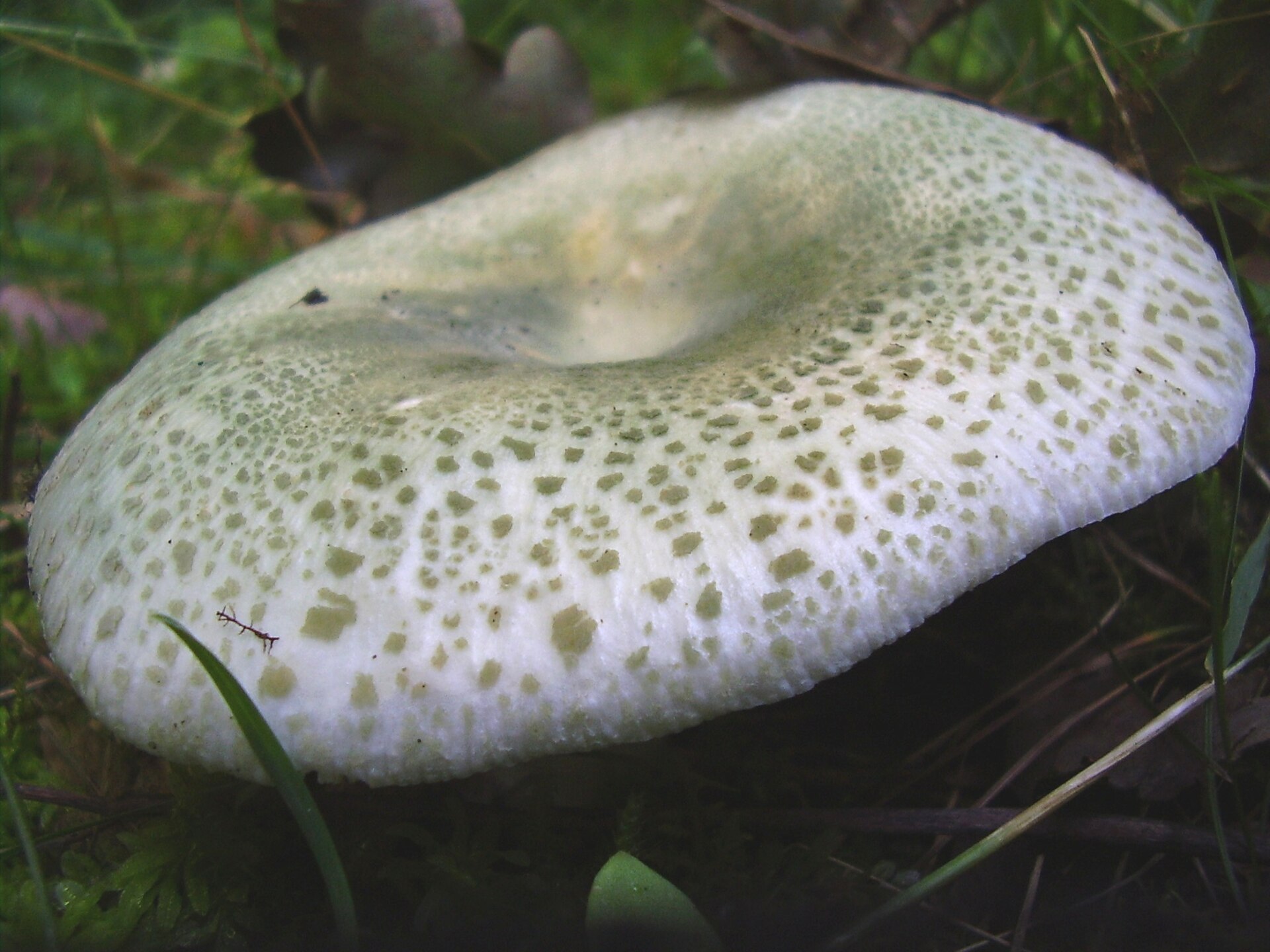
Green-cracking Russula
Russula virescens
The best-eating Russula species, and one of the few in this notoriously confusing genus that even beginners can identify with confidence. That cracked, mossy-green cap surface is unlike anything else in the forest. In southern Europe and East Asia, this mushroom commands serious market prices.
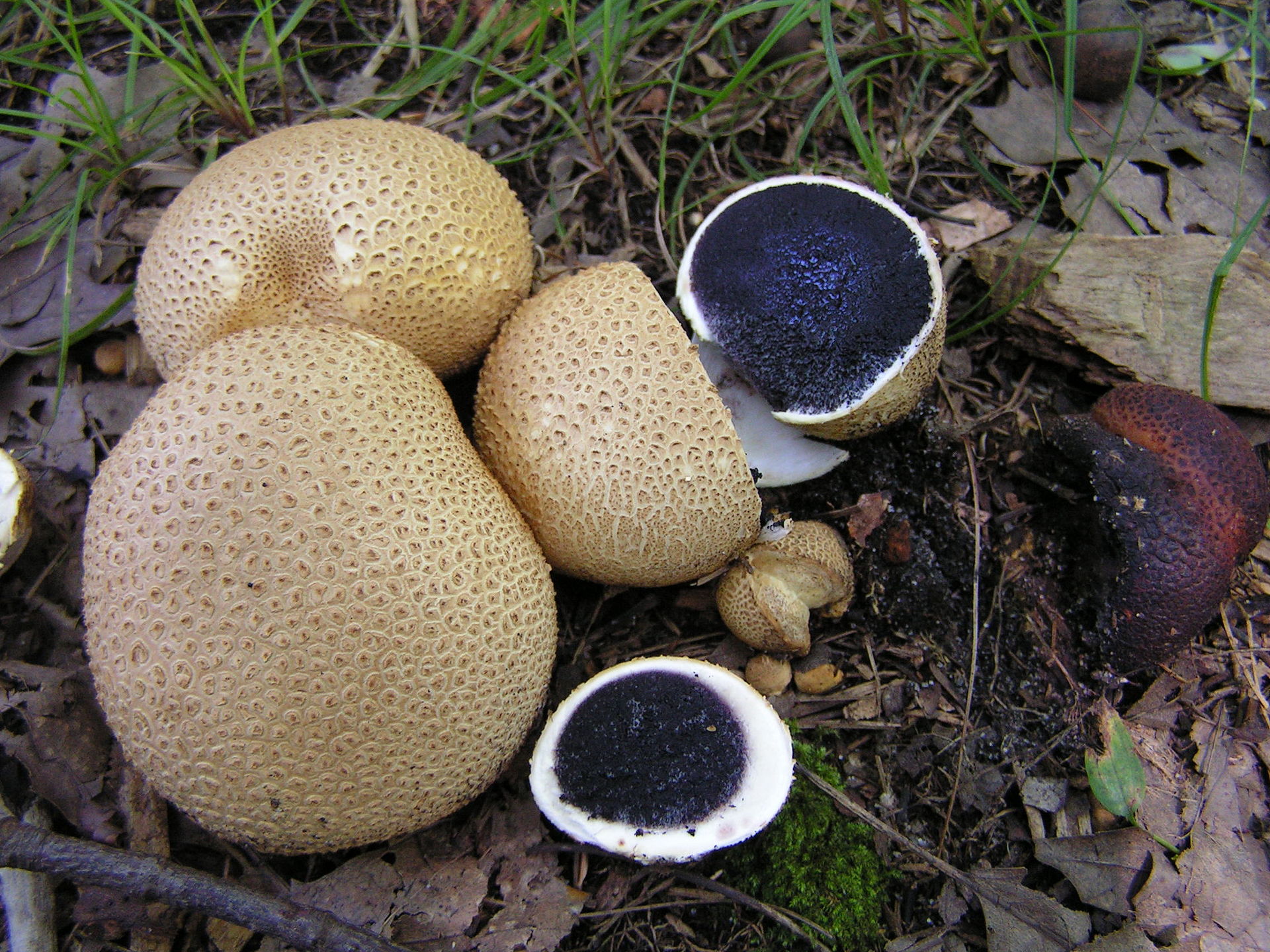
Common Earthball
Scleroderma citrinum
The Common Earthball looks like a puffball to the untrained eye, but cut one open and the dense, dark purple-black interior tells a very different story. Eating it causes nausea, vomiting, and diarrhea, and its resemblance to edible puffballs makes it one of the most frequent causes of accidental mushroom poisoning.
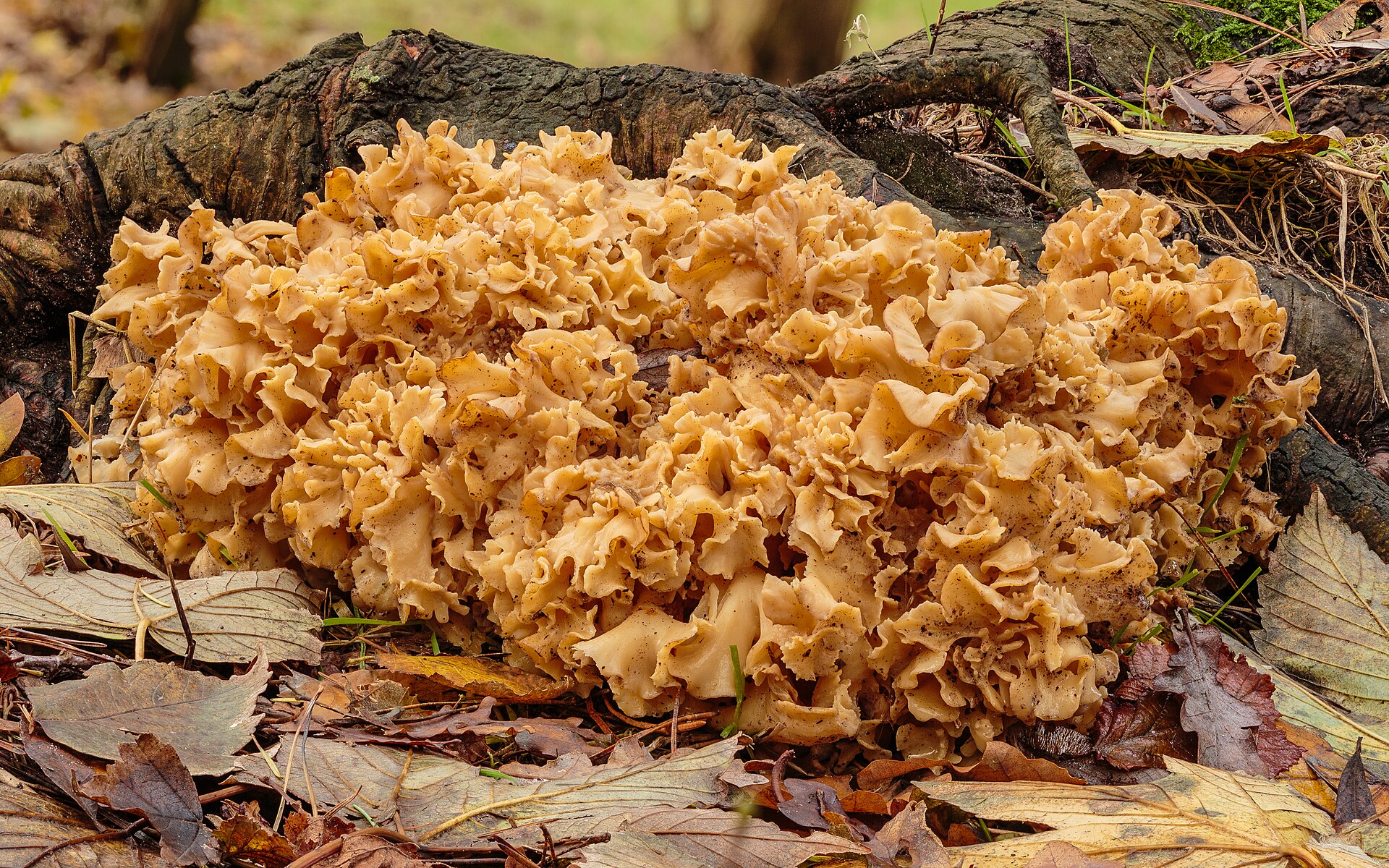
Cauliflower Mushroom
Sparassis crispa
A massive, ruffled, cream-colored fungus that looks exactly like a head of cauliflower sitting at the base of a pine tree. Sparassis crispa can weigh 5 kg or more, feeds a family for a week, and tastes like a cross between egg noodles and hazelnuts. Finding one is the foraging equivalent of hitting the jackpot.
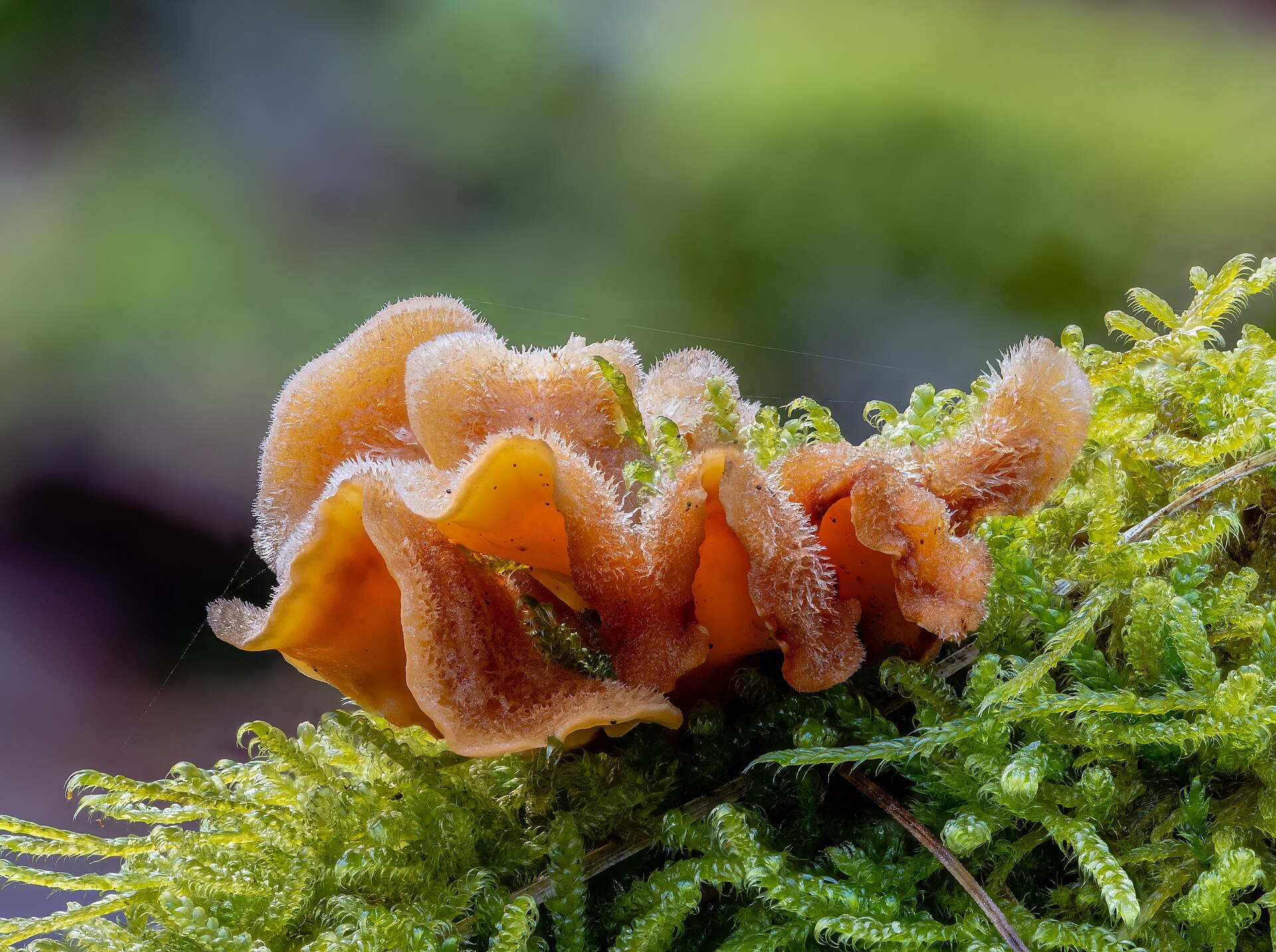
Hairy Curtain Crust
Stereum hirsutum
A very common bracket-like crust fungus that forms wavy, overlapping shelves on dead hardwood branches, stumps, and logs. Bright golden-yellow to orange when fresh, fading to grayish with age. Found year-round across the temperate world. Not edible due to its tough, leathery texture, but ecologically important as one of the primary decomposers of dead hardwood.
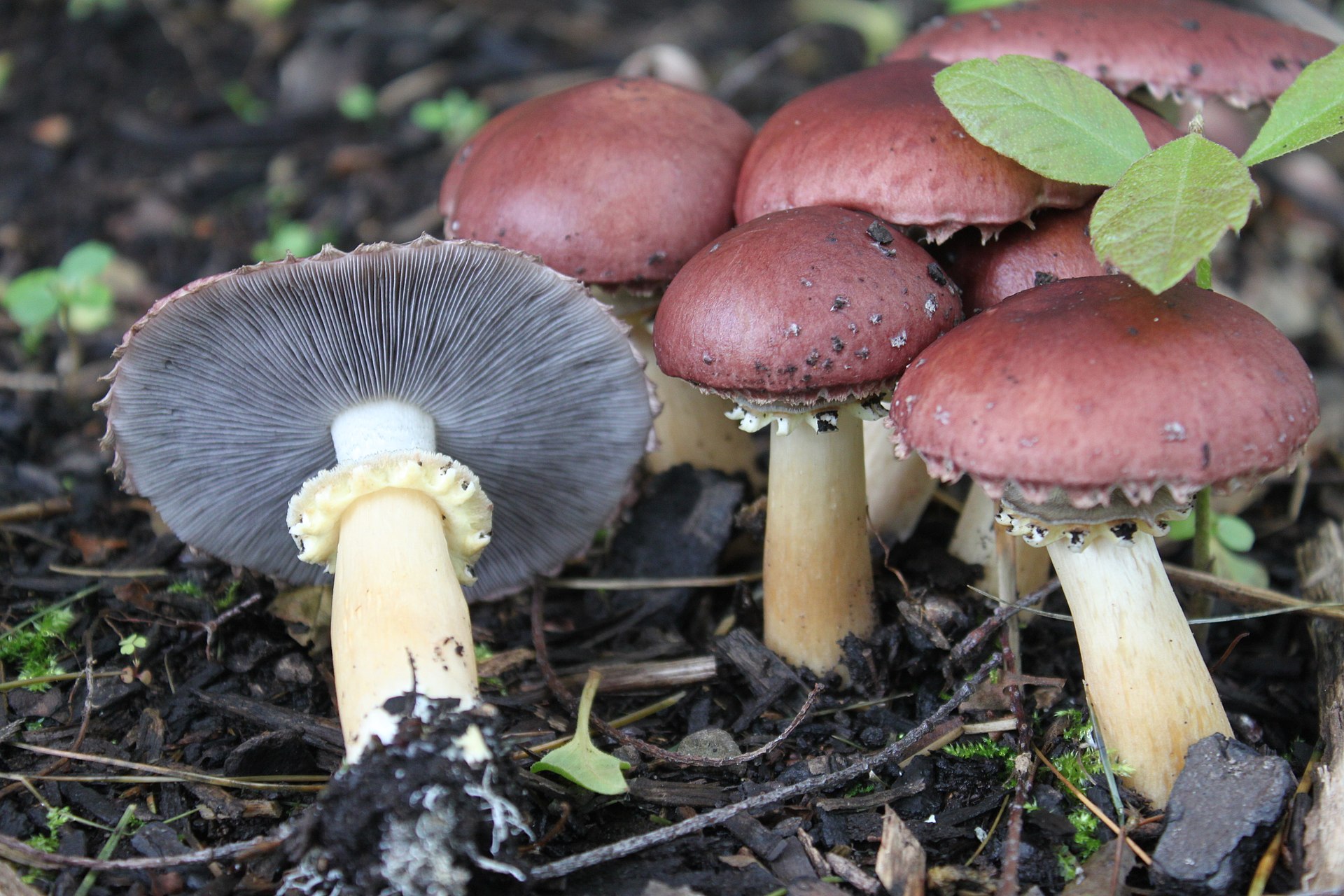
Wine Cap / King Stropharia
Stropharia rugosoannulata
A large, robust, burgundy-capped mushroom that is one of the easiest wild mushrooms to cultivate. Widely grown by permaculture enthusiasts and market gardeners in wood chip and straw beds. Excellent edible with a mild, potato-like flavor and a meaty texture that has earned it comparisons to portobello.
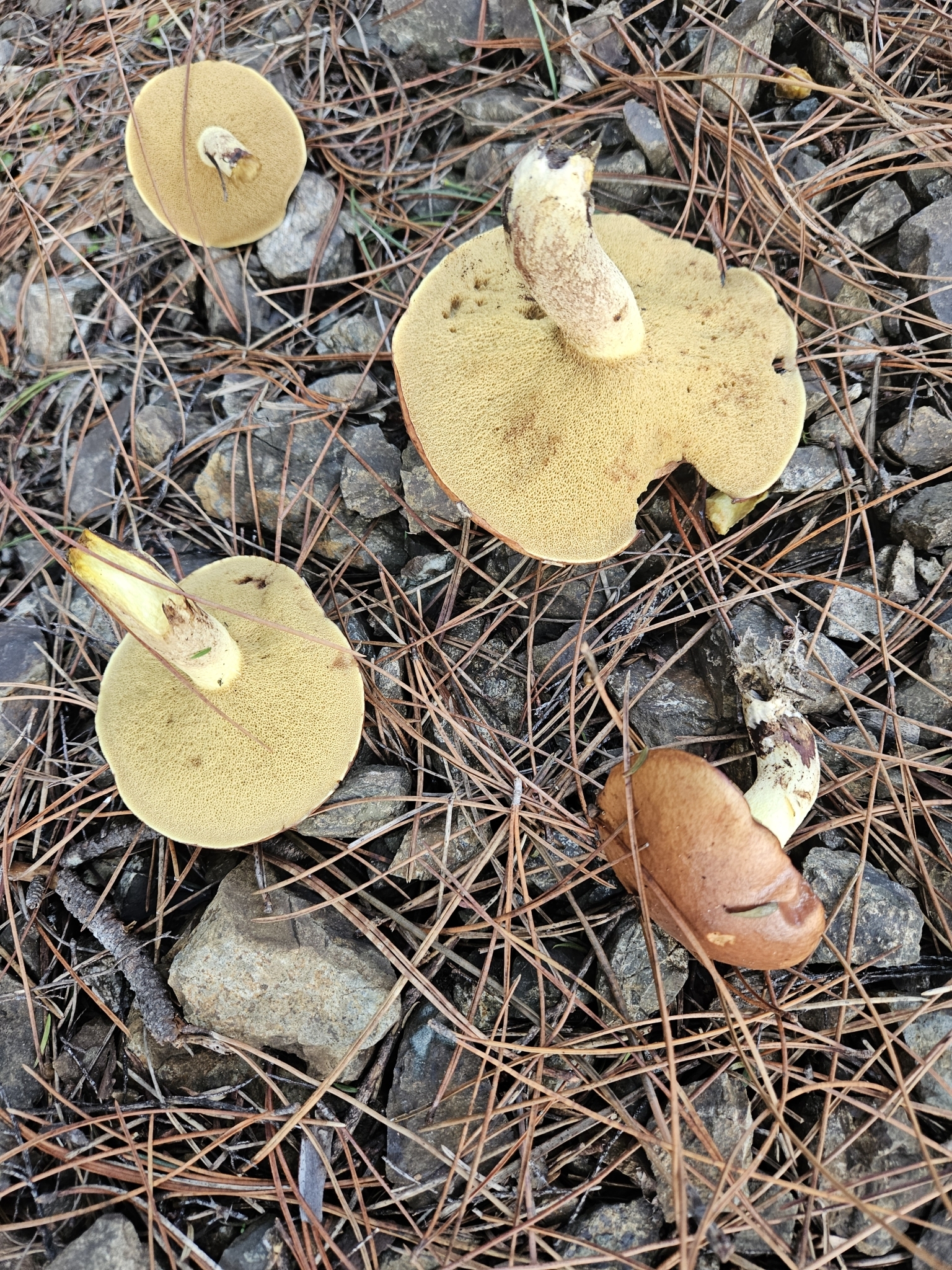
Weeping Bolete
Suillus granulatus
A slimy-capped pine bolete that 'weeps' milky droplets from its pore surface when young. Common, reliable, and perfectly edible once you peel the sticky cap skin, though it will never win a beauty contest.
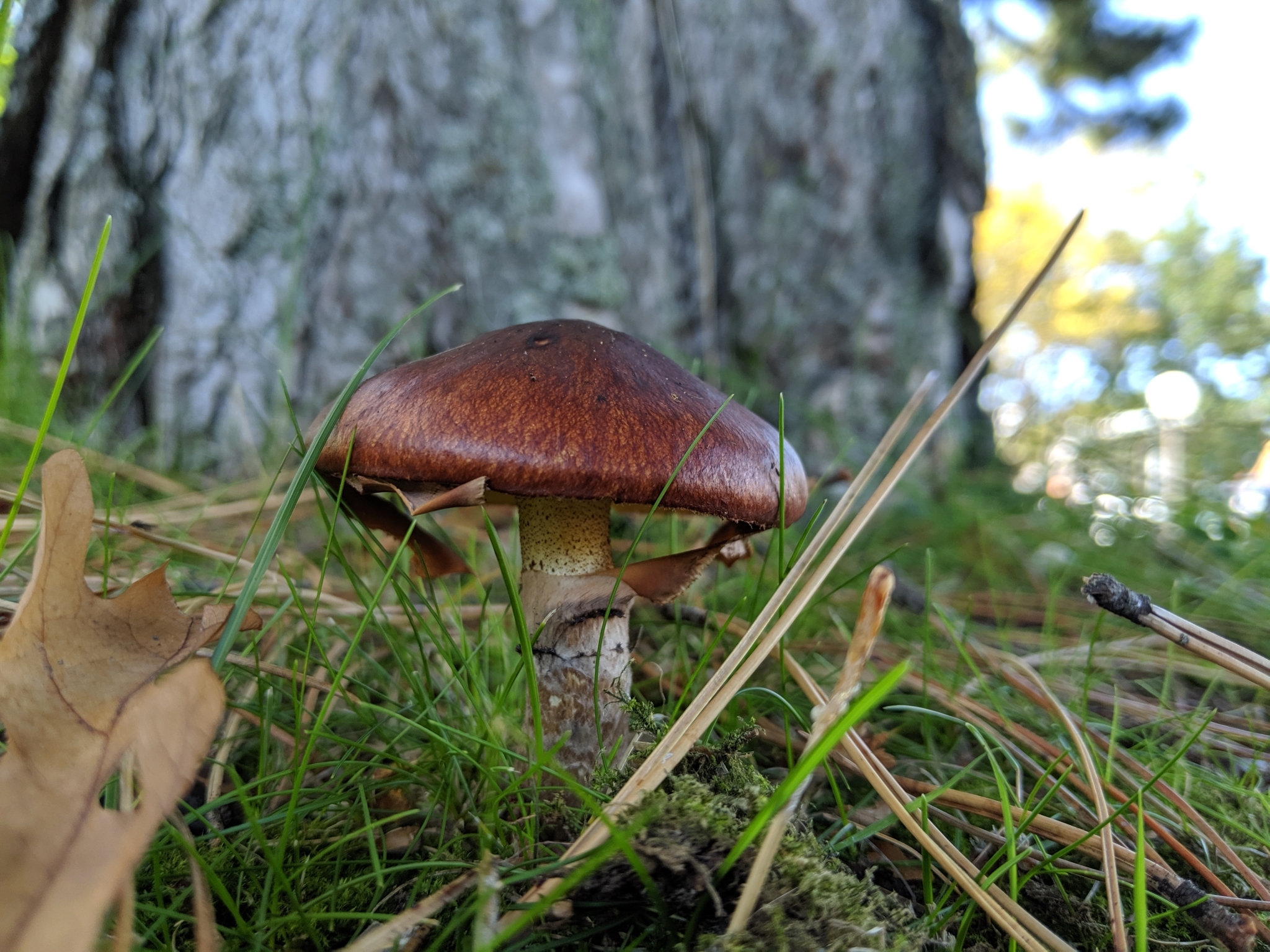
Slippery Jack
Suillus luteus
The most common bolete in pine plantations worldwide, and the mushroom that divides foragers into two camps: those who peel the slimy cap skin and enjoy a decent meal, and those who refuse to touch anything that viscous. Suillus luteus is not glamorous, but it is abundant, easy to identify, and free.
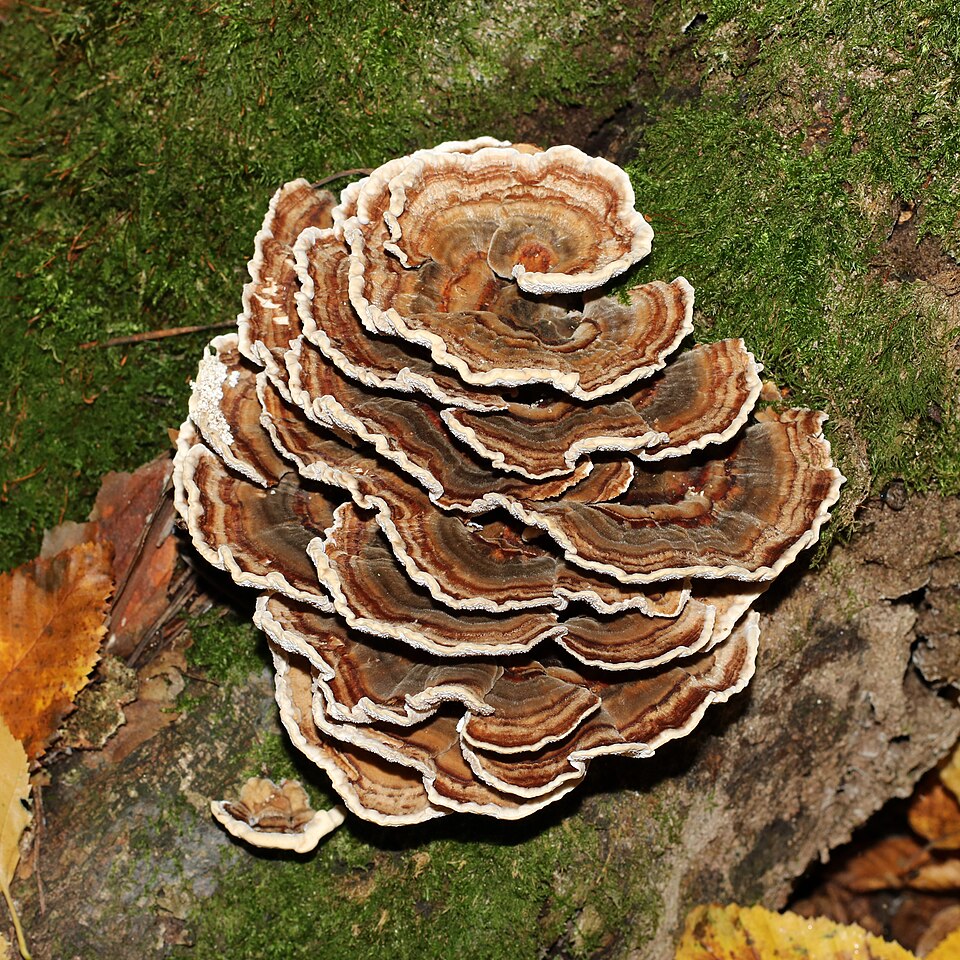
Turkey Tail
Trametes versicolor
You can't eat it (it's basically leather), but Turkey Tail might be the most important medicinal mushroom on Earth. It contains PSK, an anti-cancer compound that's been an approved prescription drug in Japan since the 1970s. It's also quite possibly the most common mushroom in the world — if you've walked through any forest with dead wood, you've walked past it.
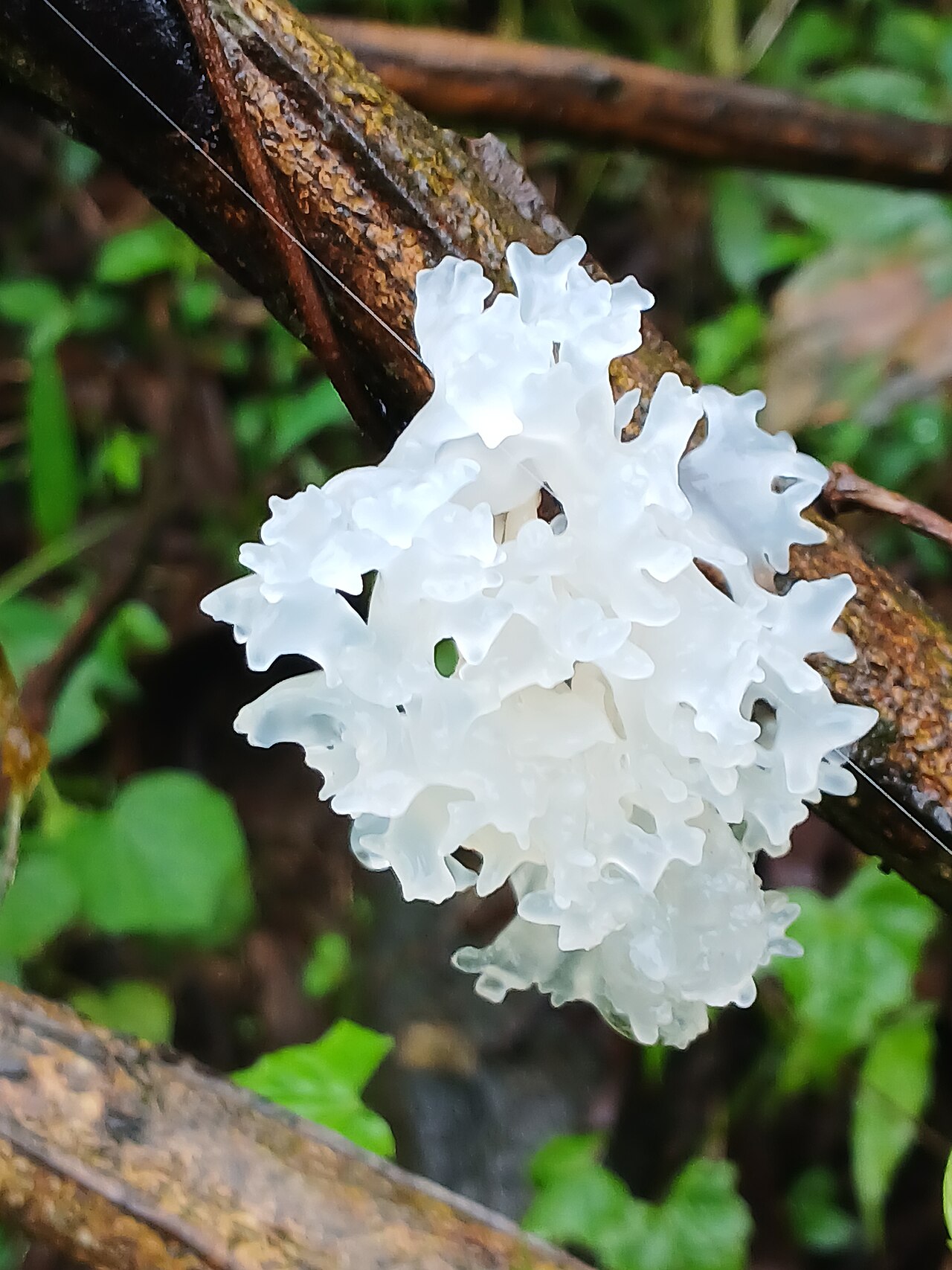
Snow Fungus
Tremella fuciformis
A stunning white, translucent, frilly jelly fungus that looks like underwater coral growing on dead wood. Snow Fungus is a $1 billion+ industry in China, where it's a staple ingredient in sweet dessert soups and a rising star in skincare products. Like its cousin Witch's Butter, it's actually a mycoparasite — feeding on Annulohypoxylon fungi, not wood.
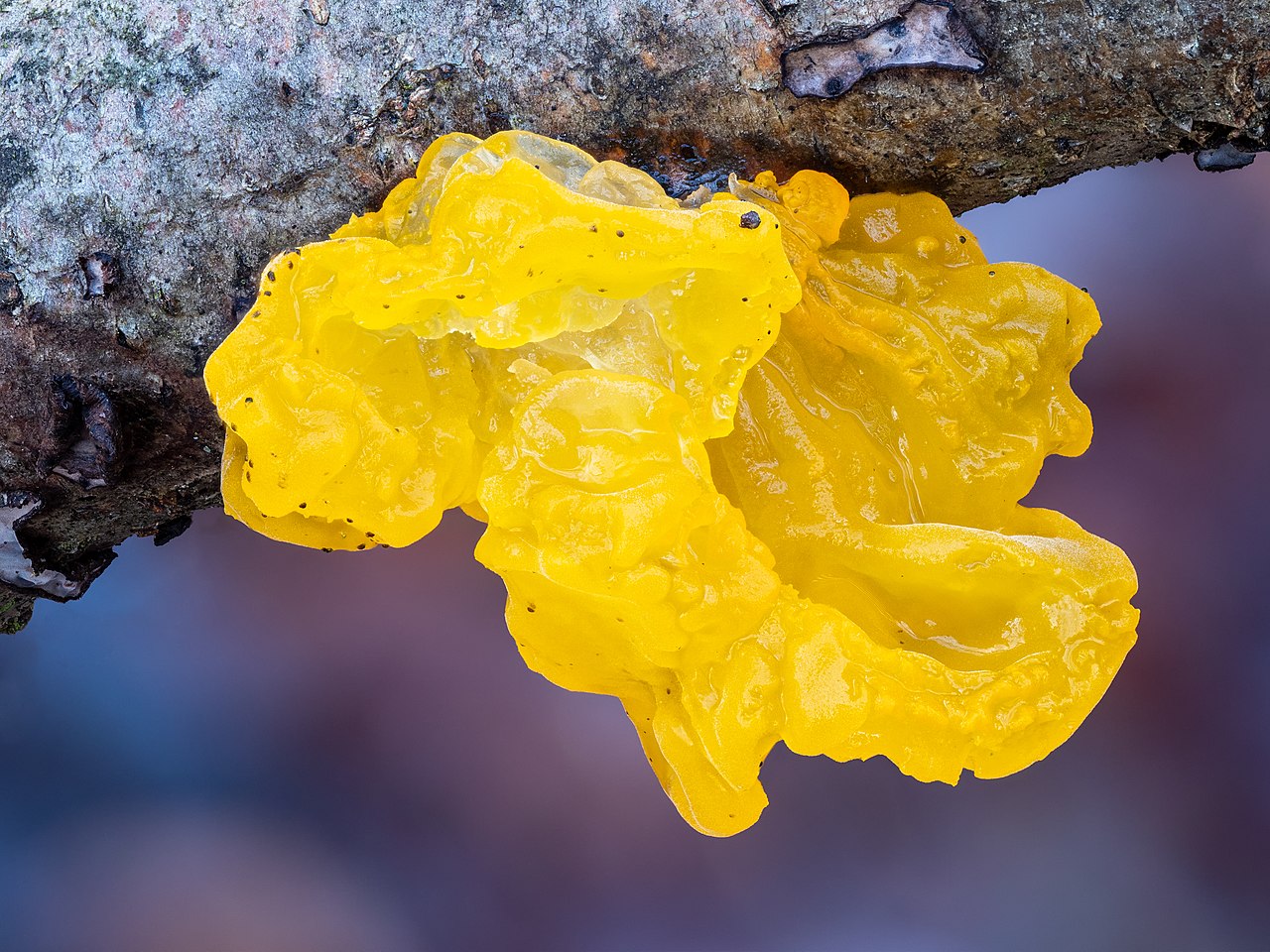
Witch's Butter
Tremella mesenterica
A bright yellow-orange, gelatinous, brain-like fungus that appears on dead hardwood branches after rain. Witch's Butter is technically not even eating the wood — it's parasitizing another fungus (Peniophora) that's eating the wood. Edible but essentially flavorless, used more as a texture ingredient.
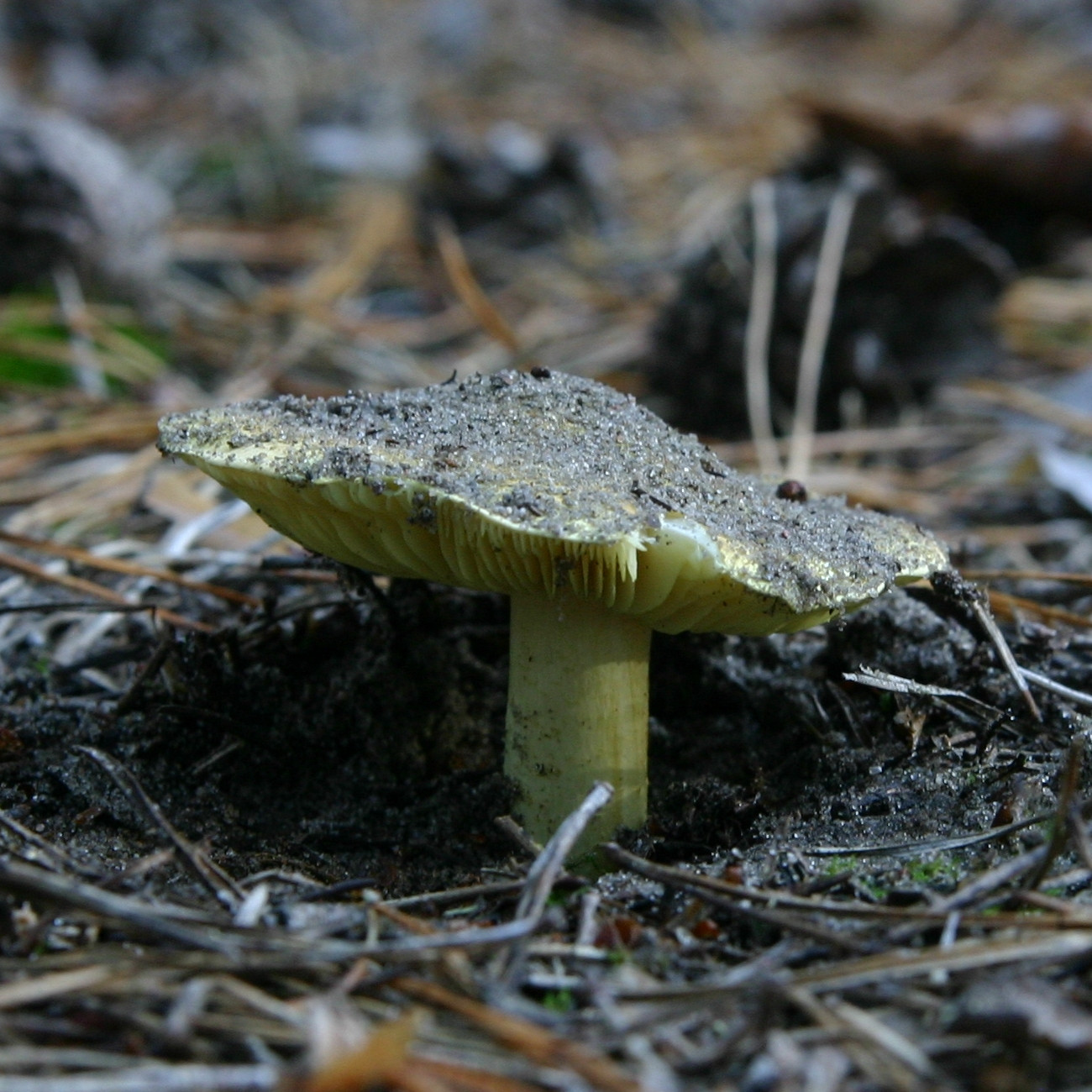
Yellow Knight
Tricholoma equestre
The Yellow Knight was considered a fine edible mushroom for centuries until a cluster of deaths in France revealed that repeated consumption can cause fatal rhabdomyolysis, the destruction of skeletal muscle tissue. Its fall from grace is one of mycology's most dramatic reversals.
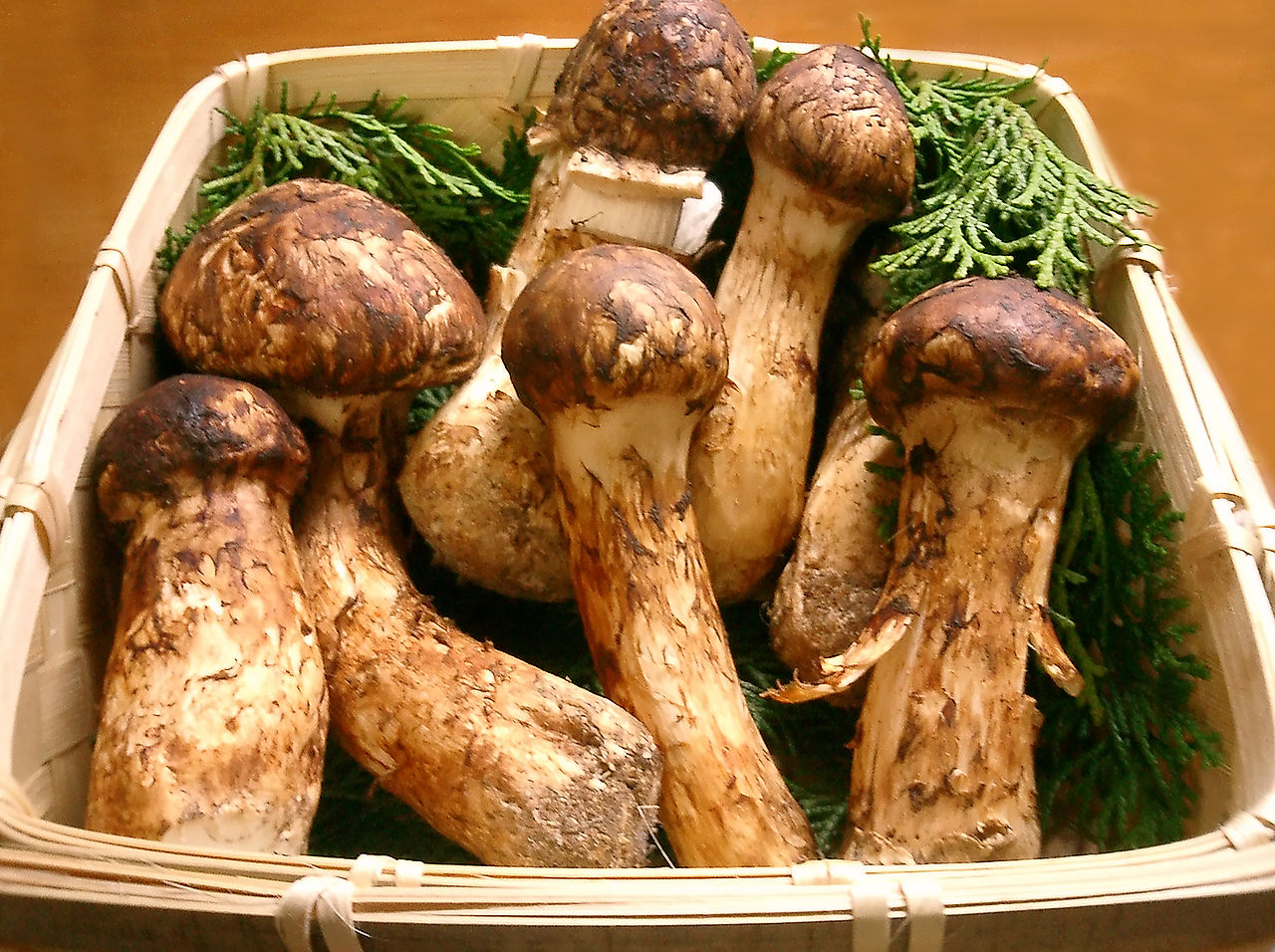
Matsutake
Tricholoma matsutake
The matsutake is one of the most expensive mushrooms on Earth — fetching over $1,000 per kilogram in Japan — and nobody has figured out how to farm it. Its intoxicating spicy-cinnamon aroma has made it a cultural obsession in Japan for over a thousand years.
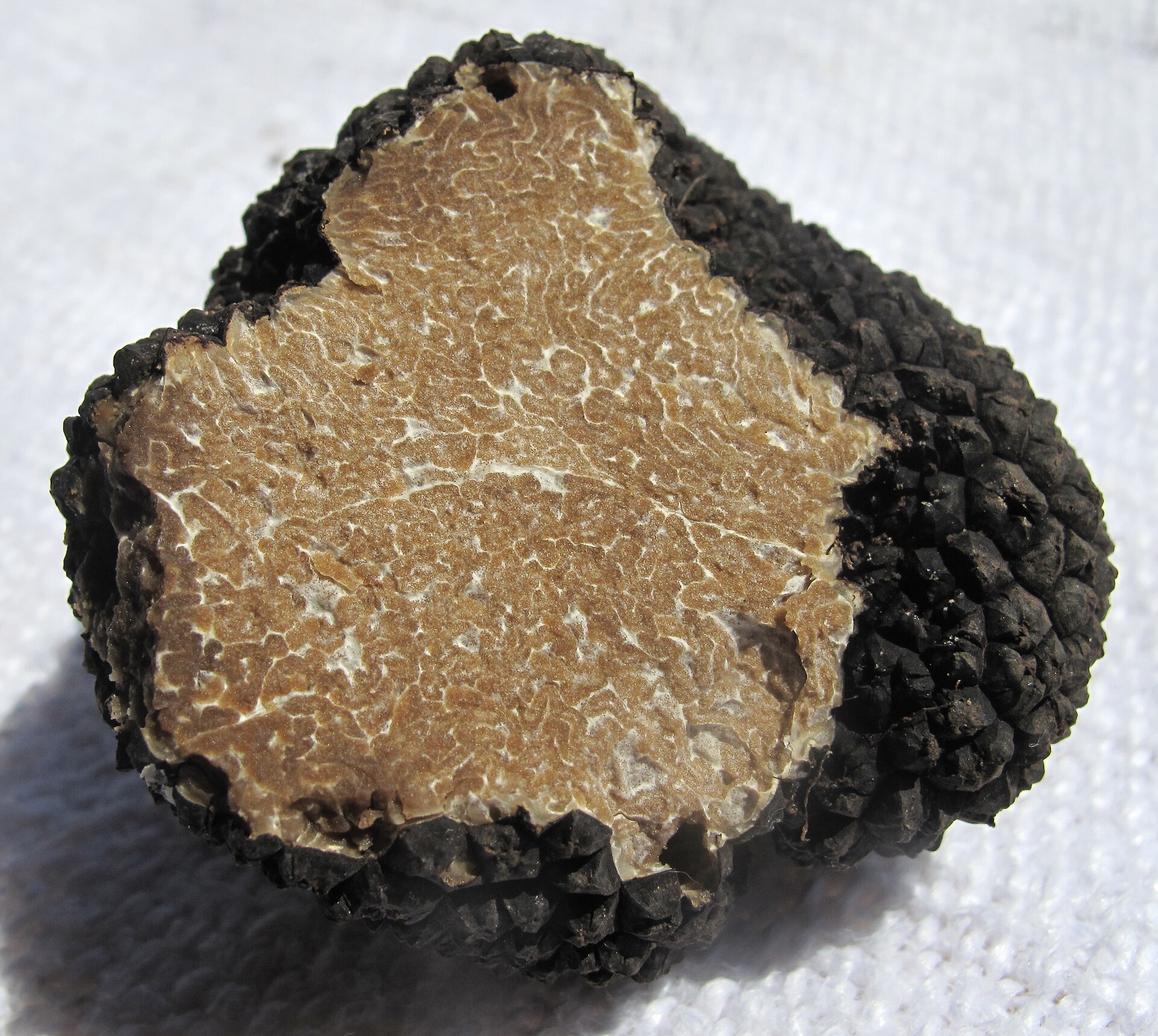
Summer Truffle
Tuber aestivum
The most accessible and affordable of the true truffles, fruiting underground near oaks, hazels, and beeches across Europe from late spring through autumn. Tuber aestivum lacks the knockout intensity of white or black Perigord truffles, but it offers a genuine truffle experience at a fraction of the cost and is the species driving the rapid expansion of truffle cultivation worldwide.
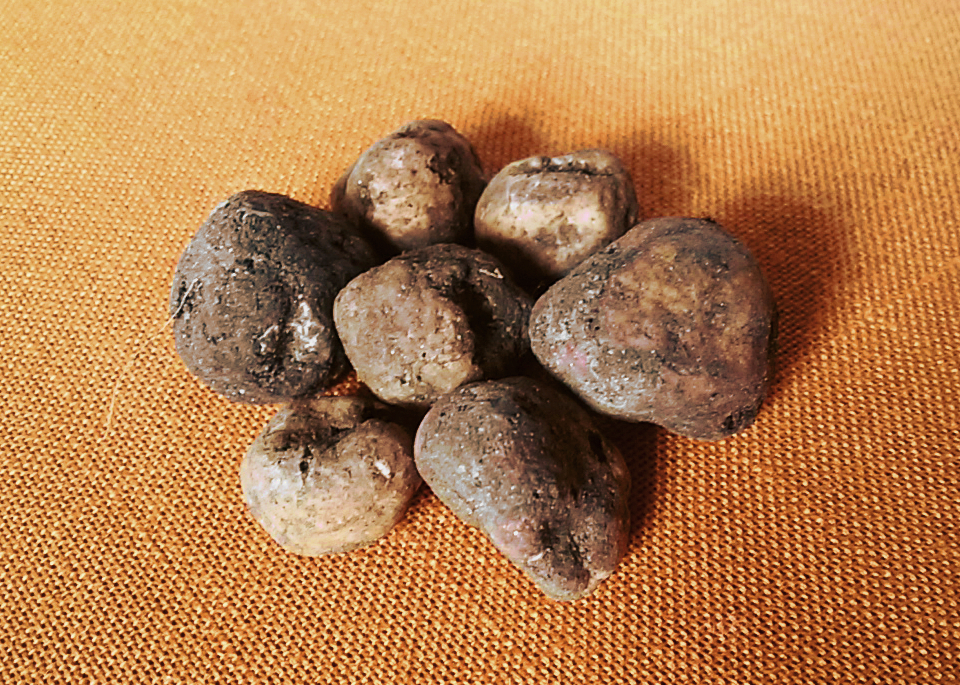
Bianchetto Truffle
Tuber borchii
A prized edible truffle native to Europe and now cultivated on four continents. Smaller and more affordable than the legendary white truffle (Tuber magnatum), it fruits from January through April and is valued for its intense garlicky-musky aroma. Also called tartufo marzuolo — the March truffle.
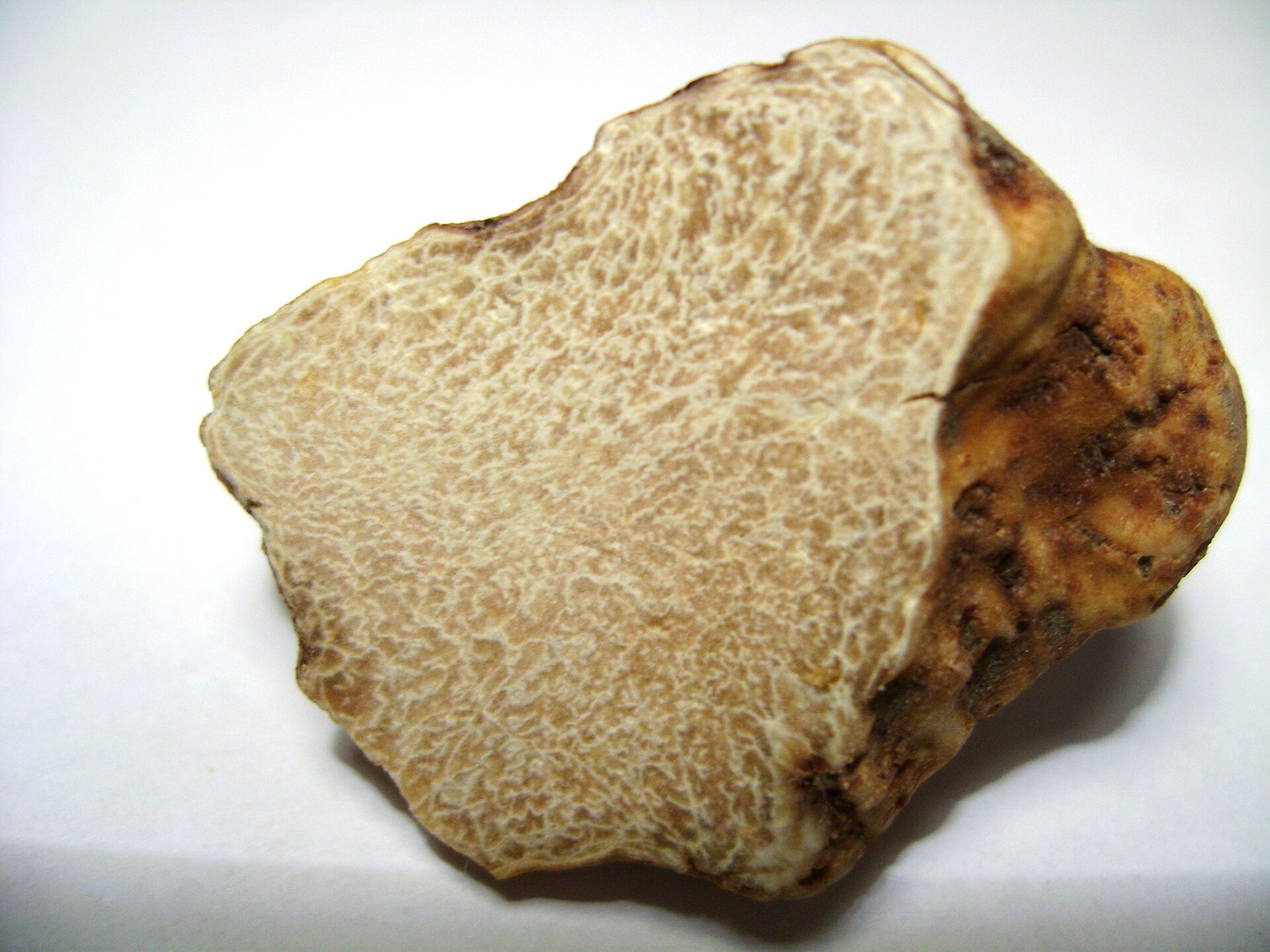
White Truffle
Tuber magnatum
The most expensive food on Earth by weight, and it cannot be cultivated. Tuber magnatum grows only in specific limestone soils of Italy and the Balkans, found by trained dogs who catch its intense garlicky aroma through the earth. If someone offers you a cheap white truffle, it is not a white truffle.
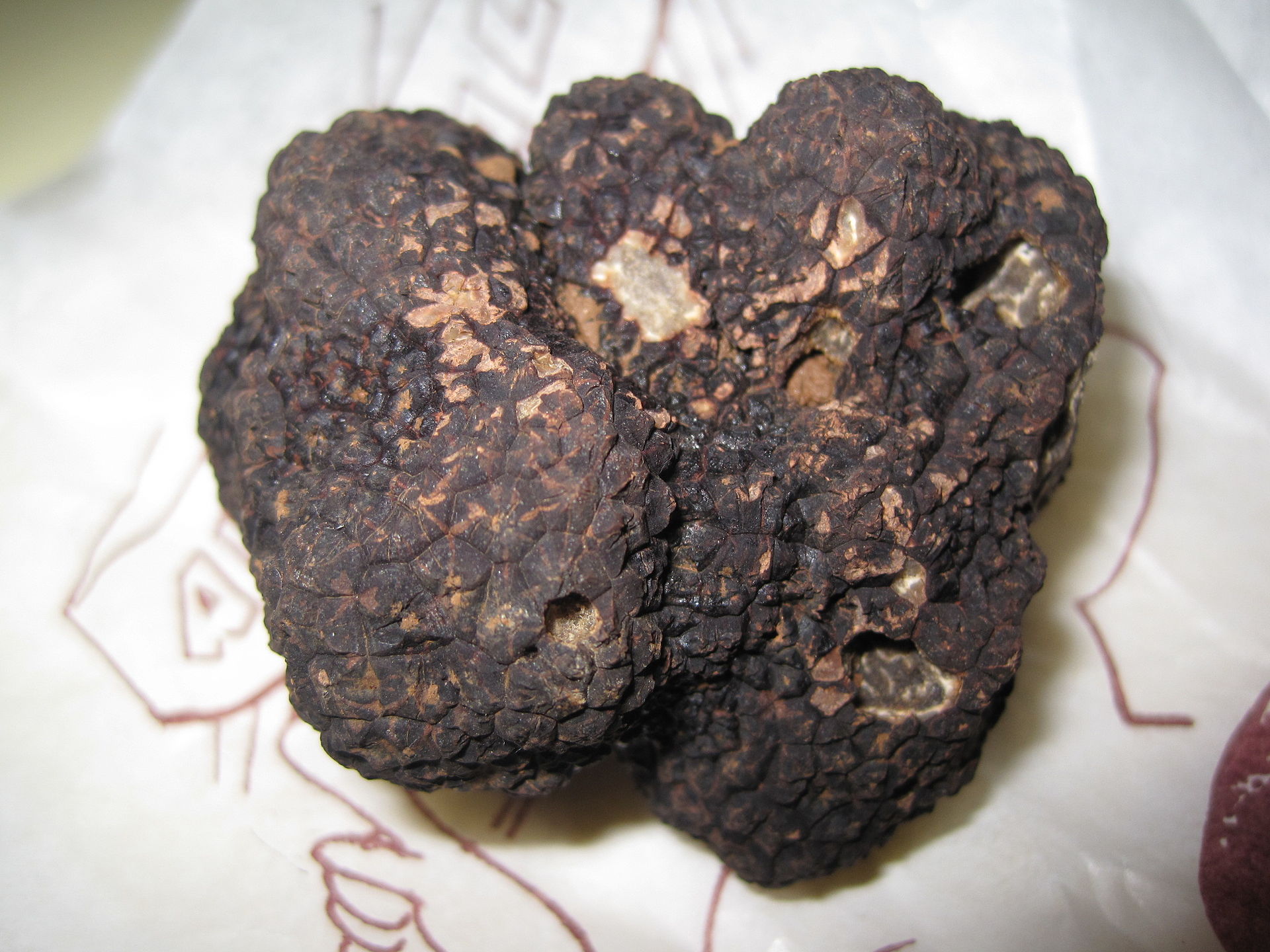
Black Truffle
Tuber melanosporum
The Perigord black truffle is the only truffle that humans have successfully learned to cultivate, and it changed an entire agricultural economy. Its earthy, chocolatey aroma defines French haute cuisine. Less flashy than its white cousin, but arguably more versatile in the kitchen because it survives cooking.
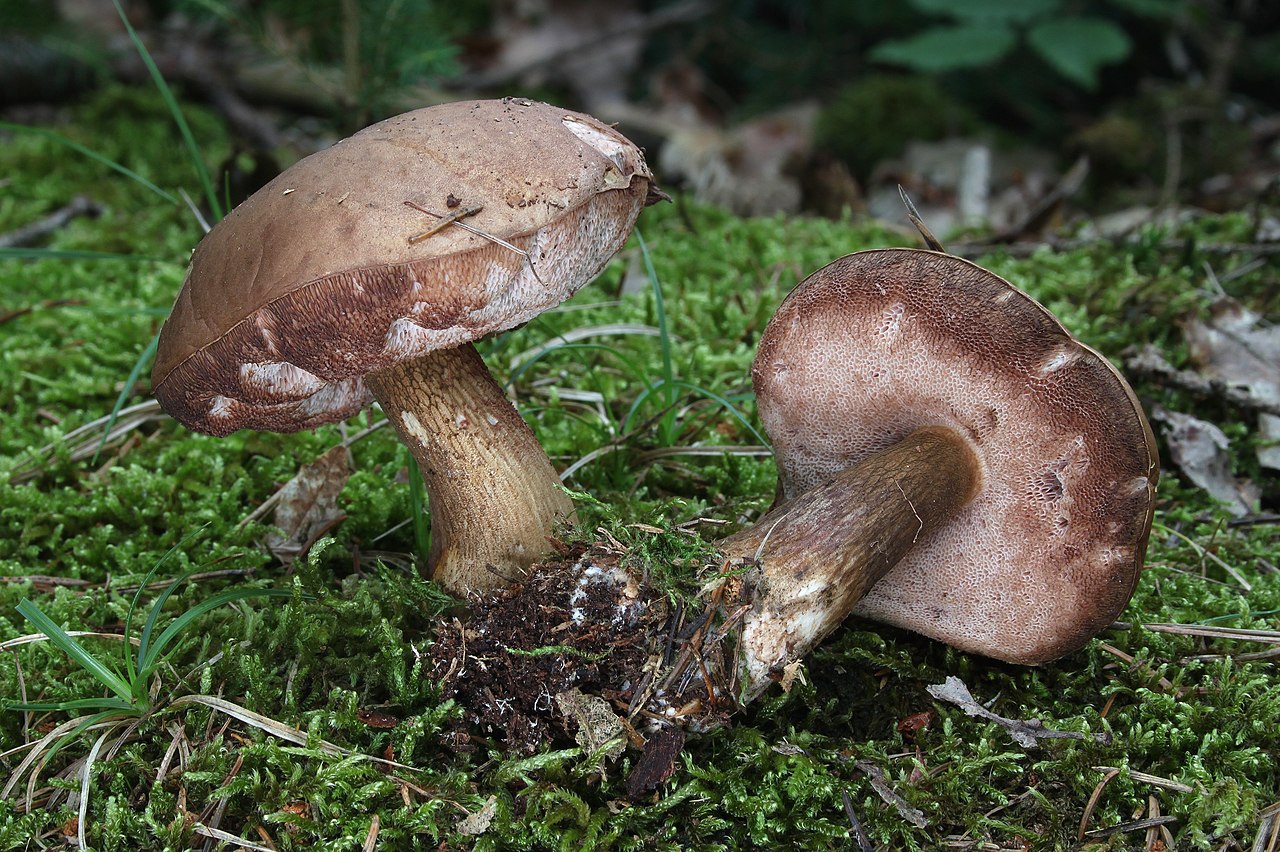
Bitter Bolete
Tylopilus felleus
The mushroom that ruins dinners. The Bitter Bolete is the single most common porcini lookalike — it looks almost identical to a choice edible bolete but tastes so intensely bitter that a single piece can make an entire pot of soup inedible.
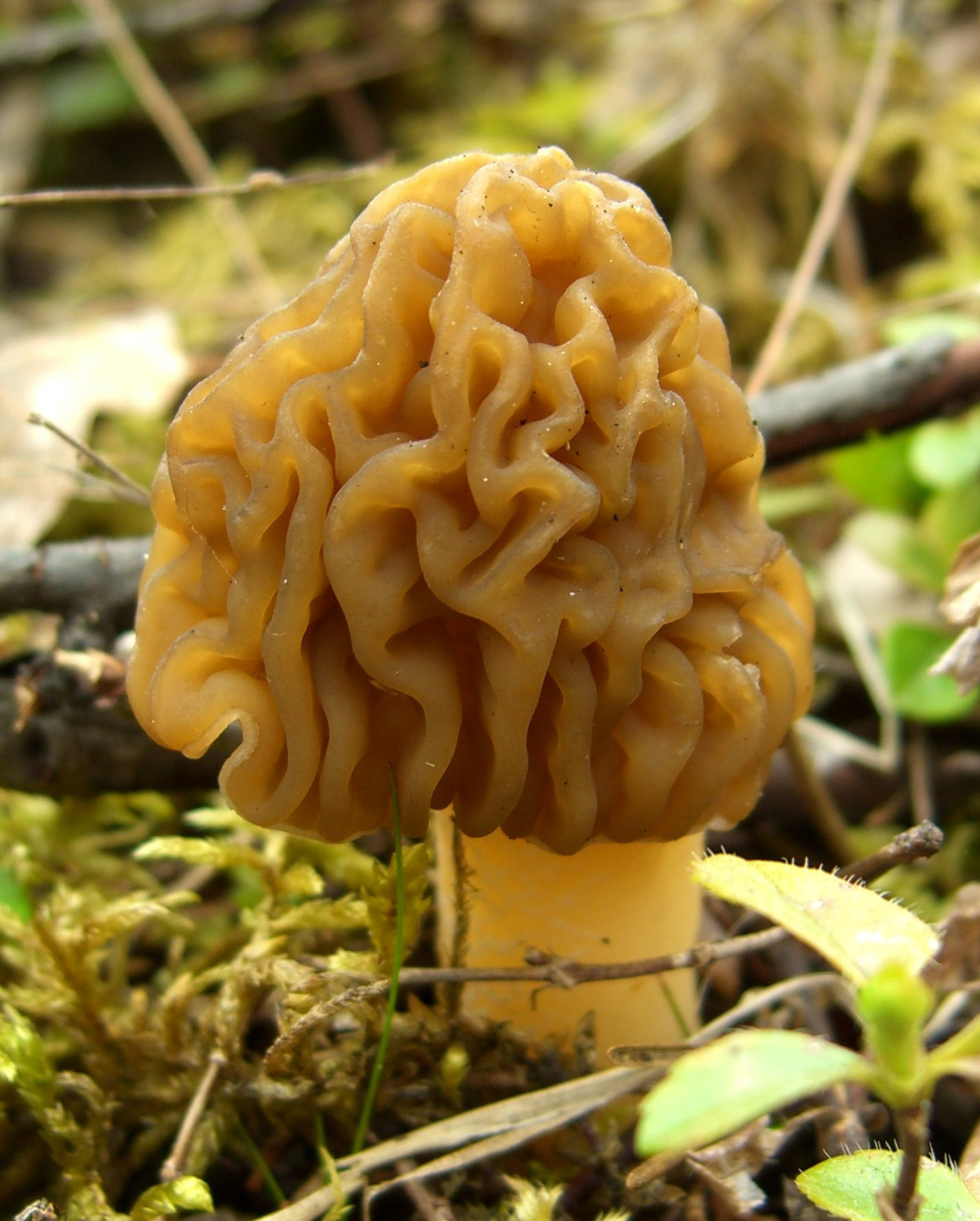
Early Morel
Verpa bohemica
The impatient forager's morel. Verpa bohemica fruits weeks before true morels appear, teasing mushroom hunters with its morel-like silhouette. Edible with caution, it has a complicated reputation that divides the foraging community.
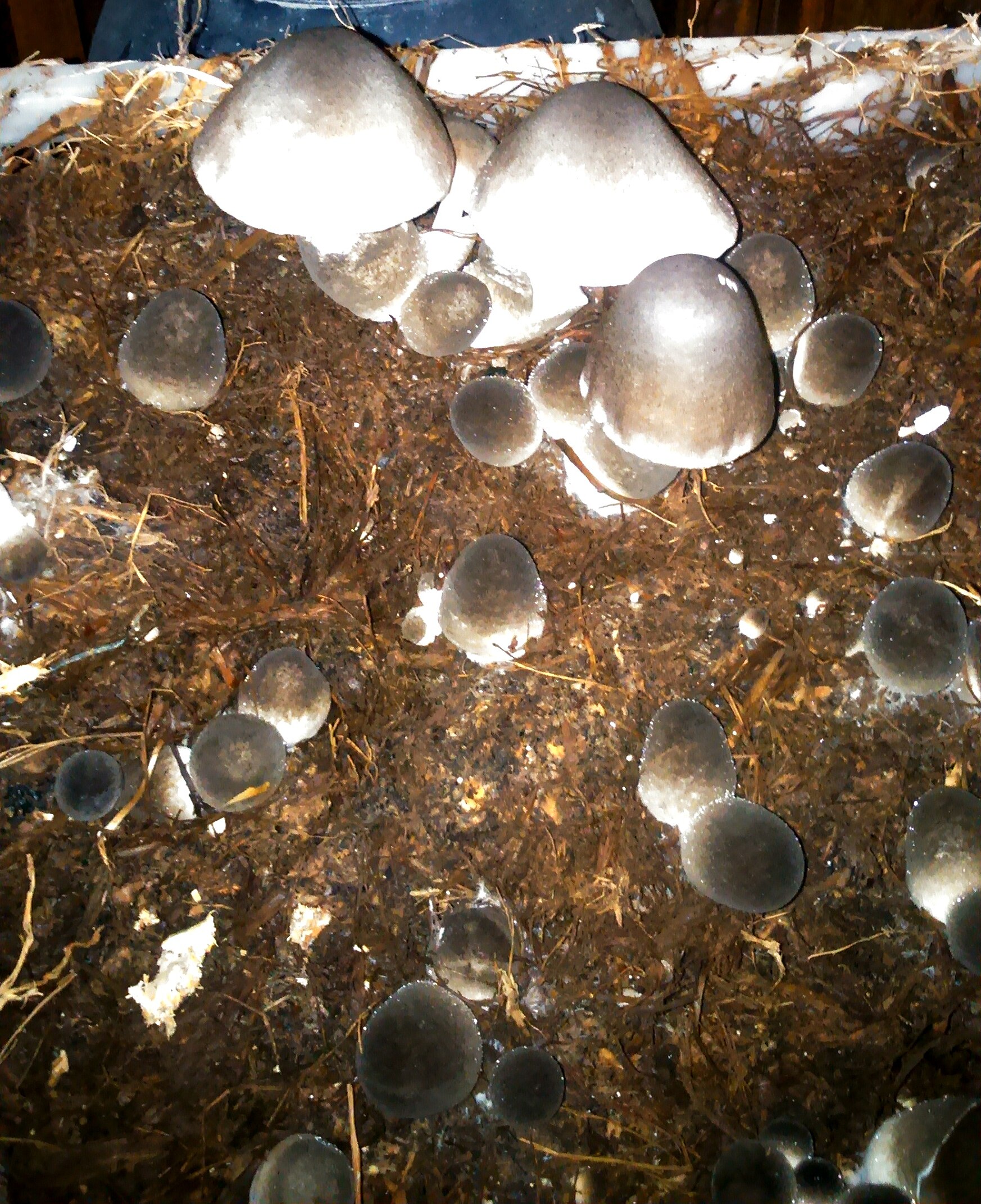
Paddy Straw Mushroom
Volvariella volvacea
The tropical world's button mushroom, cultivated on rice straw across Southeast Asia for centuries. Volvariella volvacea is the mushroom in your Thai tom yum and your Chinese stir-fry, sold in cans worldwide but best eaten fresh within hours of harvest. The catch: it has a volva at the base, just like a Death Cap.
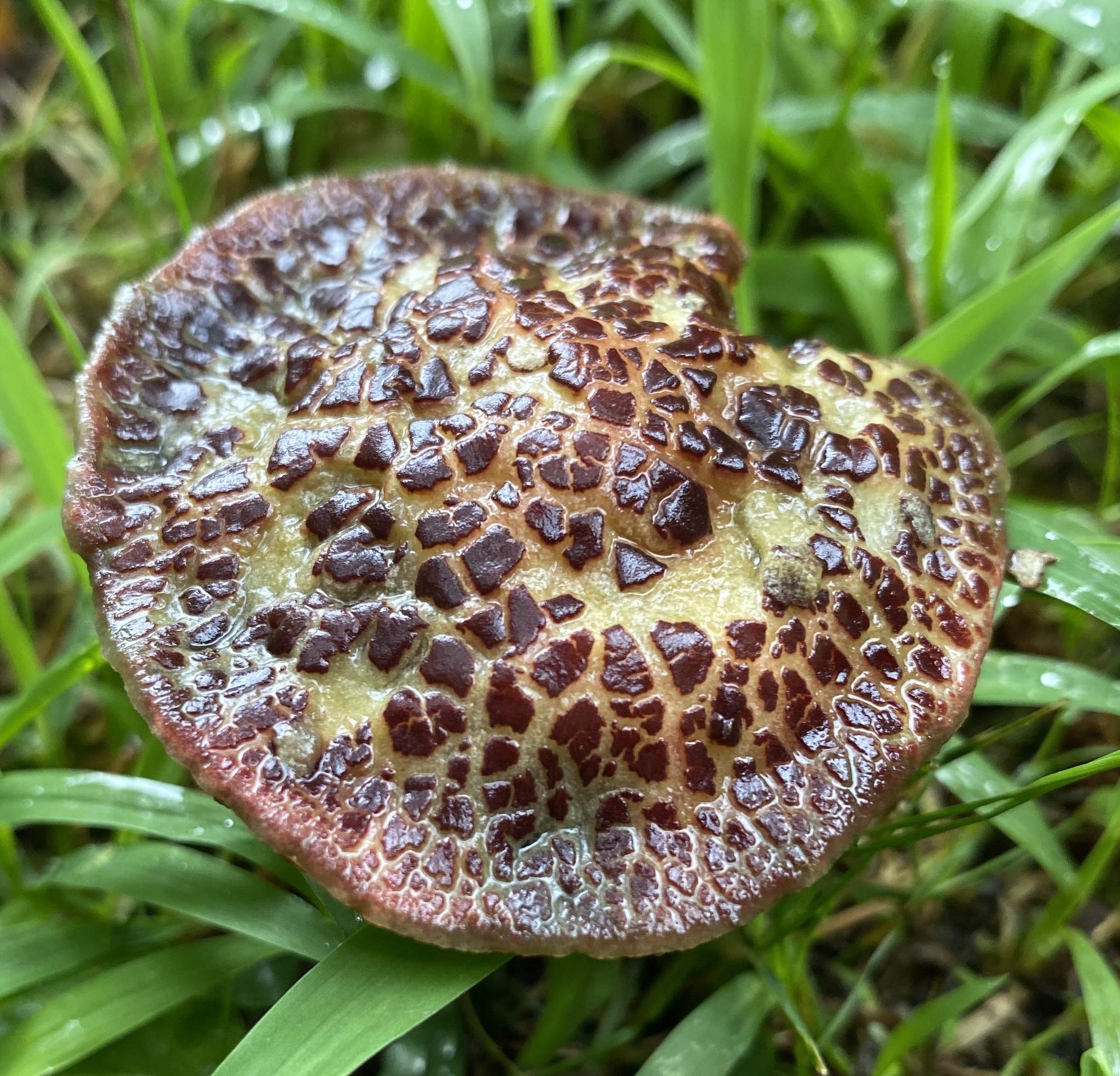
Red-cracking Bolete
Xerocomellus chrysenteron
The most common bolete in European woodlands, and probably the first bolete every beginner encounters. The cracking olive-brown cap revealing red flesh beneath is distinctive, but the eating quality is mediocre at best. It is edible, but calling it 'choice' would be generous. Think of it as bolete practice.
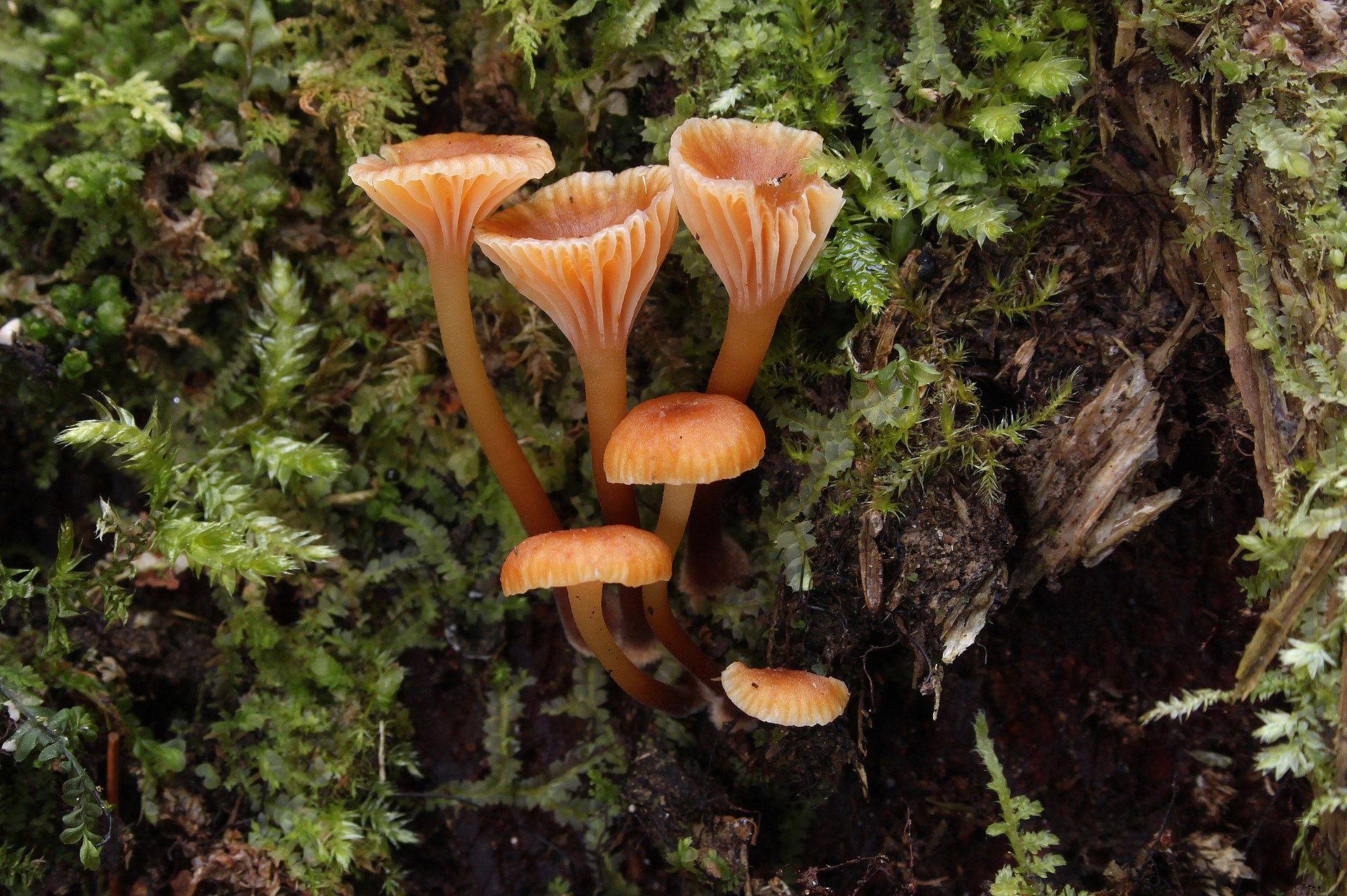
Golden Trumpet
Xeromphalina campanella
Tiny golden-orange mushrooms that carpet rotting conifer logs in dense, photogenic clusters. Too small and tough to eat, but one of the most charming sights in the northern forest and a favorite subject for mushroom photographers.
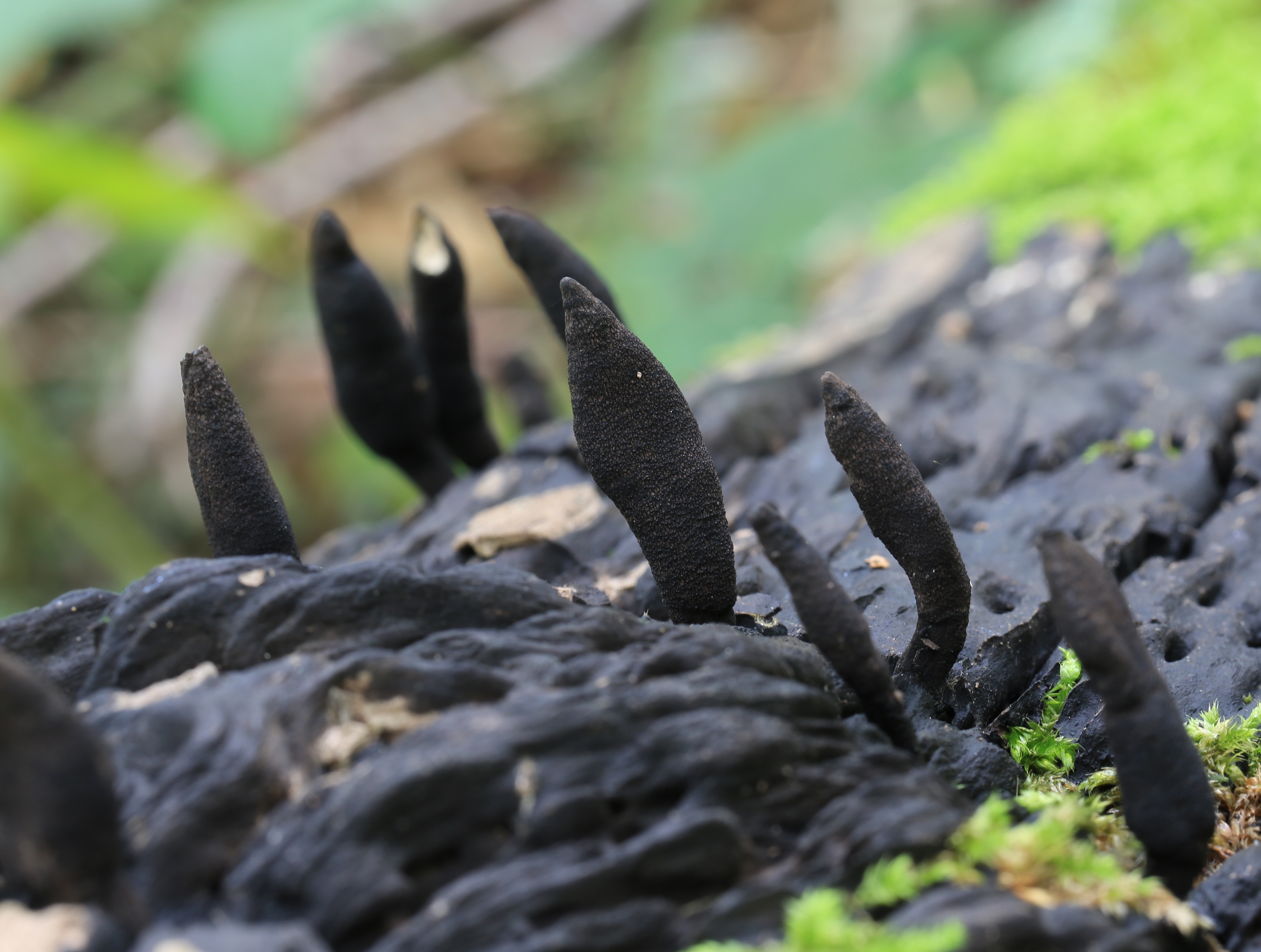
Dead Man's Fingers
Xylaria polymorpha
Black, club-shaped fruiting bodies that look disturbingly like charred fingers reaching out of the ground. Dead Man's Fingers is one of the most startling fungi you'll stumble across — and one of the most common, fruiting year-round on dead hardwood stumps and buried roots across the Northern Hemisphere.