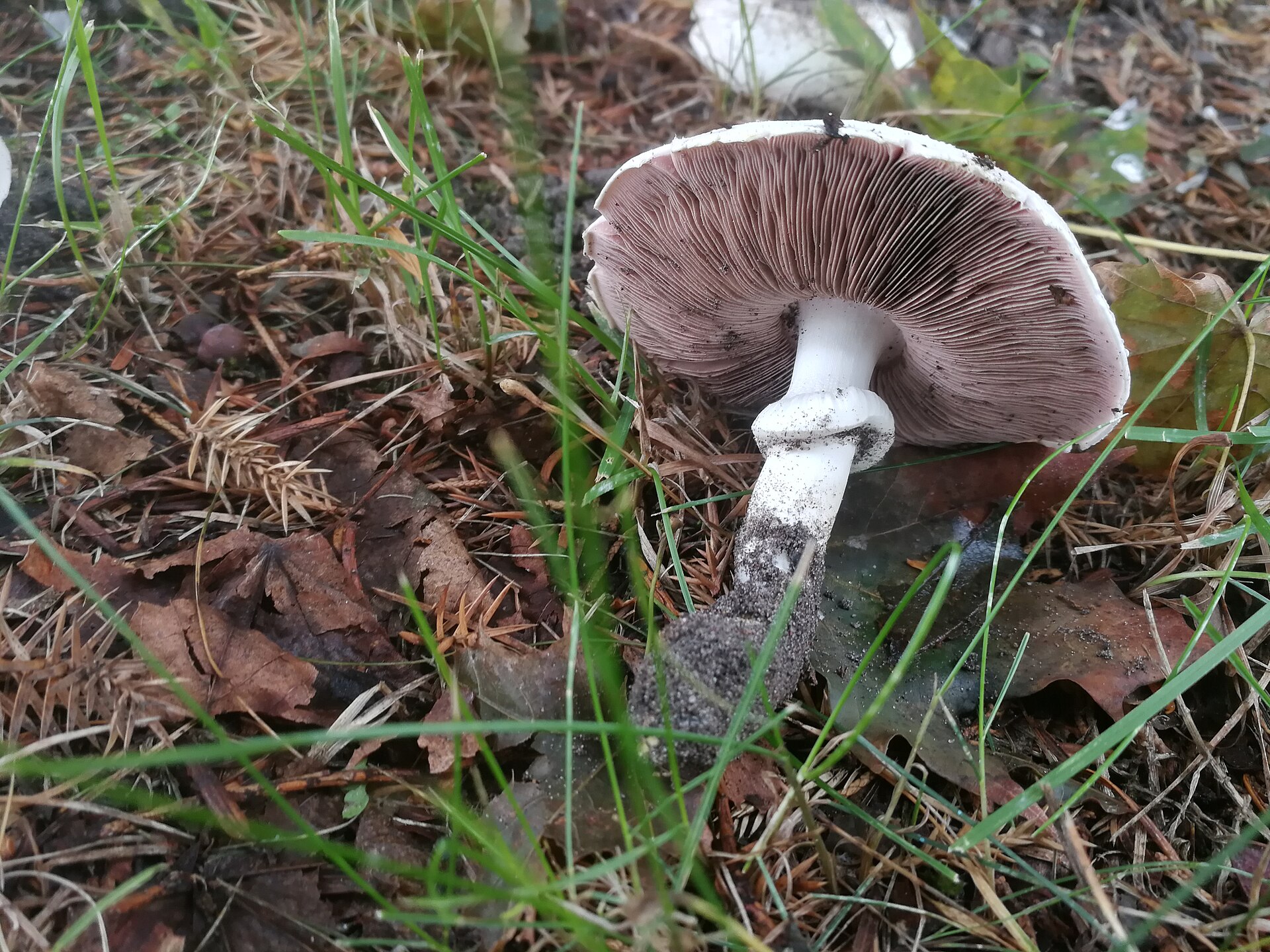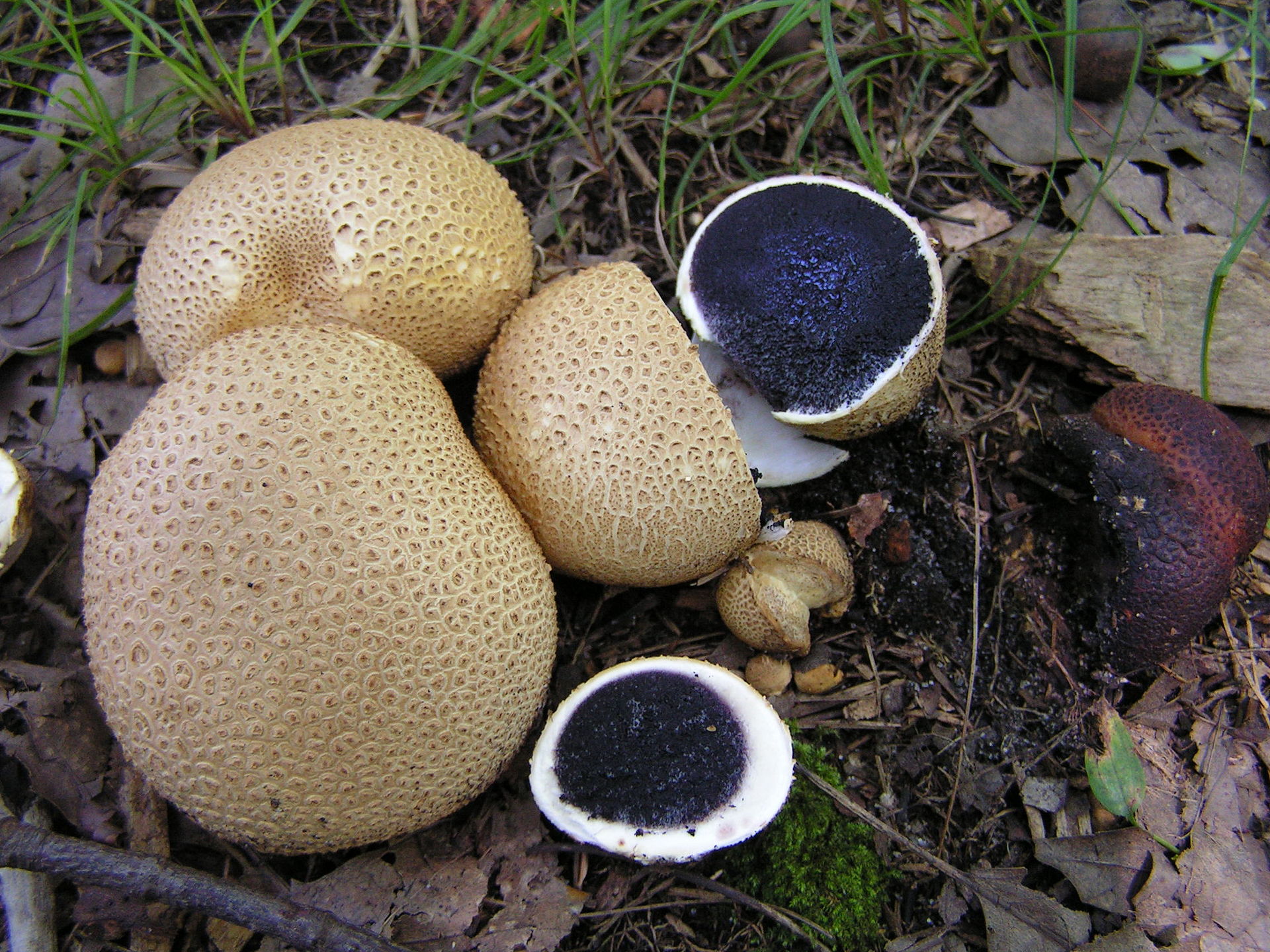
Photo by This image was created by user Herbert Baker (Herbert Baker) at Mushroom Observer, a source for mycological images.You c · Wikimedia Commons · CC BY-SA 3.0
The Common Earthball looks like a puffball to the untrained eye, but cut one open and the dense, dark purple-black interior tells a very different story. Eating it causes nausea, vomiting, and diarrhea, and its resemblance to edible puffballs makes it one of the most frequent causes of accidental mushroom poisoning.
Scleroderma citrinum is the forager's puffball trap. From the outside, it looks like a rough, warty ball sitting on the ground, not unlike a Common Puffball or Giant Puffball in its early stages. But slice it open and the difference is immediately obvious: where edible puffballs have pure white, marshmallow-like flesh inside, the Common Earthball reveals a dense, hard, marbled interior that is dark purple to black, often with white veining. It looks like a tiny geode filled with dark marble. It also smells unpleasant, with a rubbery, chemical odor that most people find off-putting.
The toxins in the Common Earthball are not fully characterized, but ingestion causes nausea, vomiting, diarrhea, and sometimes dizziness and visual disturbances. The symptoms are typically unpleasant rather than dangerous, but cases of more severe reactions have been reported, particularly when large quantities are consumed. There are unconfirmed reports of the Common Earthball being used historically as a cheap substitute for truffles in sausages and pates; the dark interior does look vaguely truffle-like, though the taste is nothing alike.
The Common Earthball is one of the most abundant woodland fungi in temperate regions. It fruits from summer through autumn in a wide range of habitats, particularly along woodland paths, in parks, and in gardens with acid soils. It forms mycorrhizal relationships with birch, oak, and pine, and often appears in large groups.
Common Earthball Facts
- ●The Common Earthball has historically been used as a cheap truffle substitute, sliced thinly and mixed into sausages and pates. This practice is now illegal in most European countries due to the mushroom's toxicity.
- ●When mature, a Common Earthball's skin cracks open irregularly and the dark olive-brown spore mass puffs out in clouds when disturbed. A single earthball can release billions of spores.
- ●The thick, tough skin of the Common Earthball (2-3 mm thick) is one of the easiest ways to distinguish it from true puffballs, which have thin, papery skin. Just squeeze it: if it feels like a hard rubber ball, it is an earthball.
- ●Common Earthballs are sometimes parasitized by the Parasitic Bolete (Pseudoboletus parasiticus), a small brownish bolete mushroom that grows directly out of the earthball's surface.
Stories From the Field
The Puffball Soup That Wasn't
In 2018, a couple in the Lake District, England, collected what they thought were puffballs from a path near Windermere. They made soup. Within an hour both were vomiting. At the hospital, a doctor familiar with wild mushrooms asked if the interior had been white or dark. When they said dark purple, the diagnosis was immediate: Common Earthball.
Truffle Fraud at a French Market
In 2011, a vendor at a small market in the Lot region of France was caught selling thinly sliced Common Earthball as 'truffle shavings' in oil. A customer who was a trained chef noticed the rubbery texture and reported the vendor. The case was covered by local newspapers.
Dog Owner's Scare in a Portland Park
In October 2019, a dog in Forest Park, Portland, Oregon, dug up and ate several Common Earthballs. The dog vomited repeatedly that evening. The owner brought a specimen and a bag of vomit to the emergency vet, who identified the mushroom and provided supportive care. The dog recovered within 24 hours.
Where It's Been Found

Based on reported sightings worldwide
How to Identify Common Earthball
Cap
3-10 cm across, roughly spherical, with no true cap or stem structure. Surface is thick (2-3 mm), tough, and leathery, covered in coarse, irregular warts or scales. Color is dirty yellow to ochre-brown. There is no opening at the top like a true puffball; the skin simply cracks irregularly when mature.
Gills
None. Interior (gleba) is initially firm and marbled purple-black with white veins, becoming powdery dark brown-olive spore mass at maturity.
Stem
No true stem. May have a short, root-like base attaching it to the soil.
Spore Print
Dark brown to olive-brown (released as spore mass when the skin cracks).
Odor
Unpleasant; rubbery, metallic, or chemical. Distinctly different from the mild, pleasant smell of edible puffballs.
Mushrooms That Look Like Common Earthball
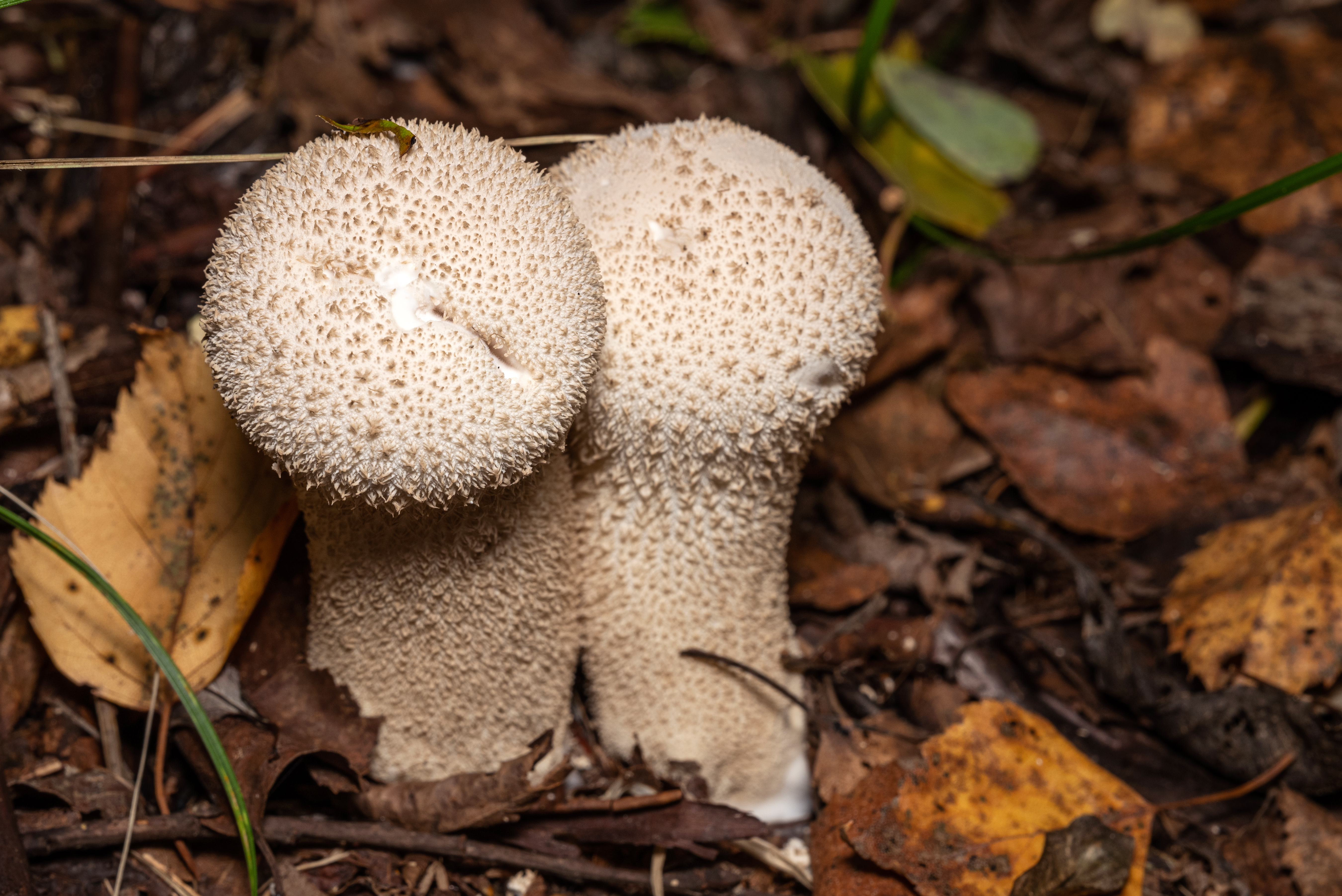
The key confusion species. Common Puffballs have thin, papery skin, a white interior that stays white until it turns to olive-brown spore dust, and a distinct pore at the top for spore release. Earthballs have thick, tough skin and a dark purple-black interior from the start. Always cut open before eating.
Side-by-side comparison →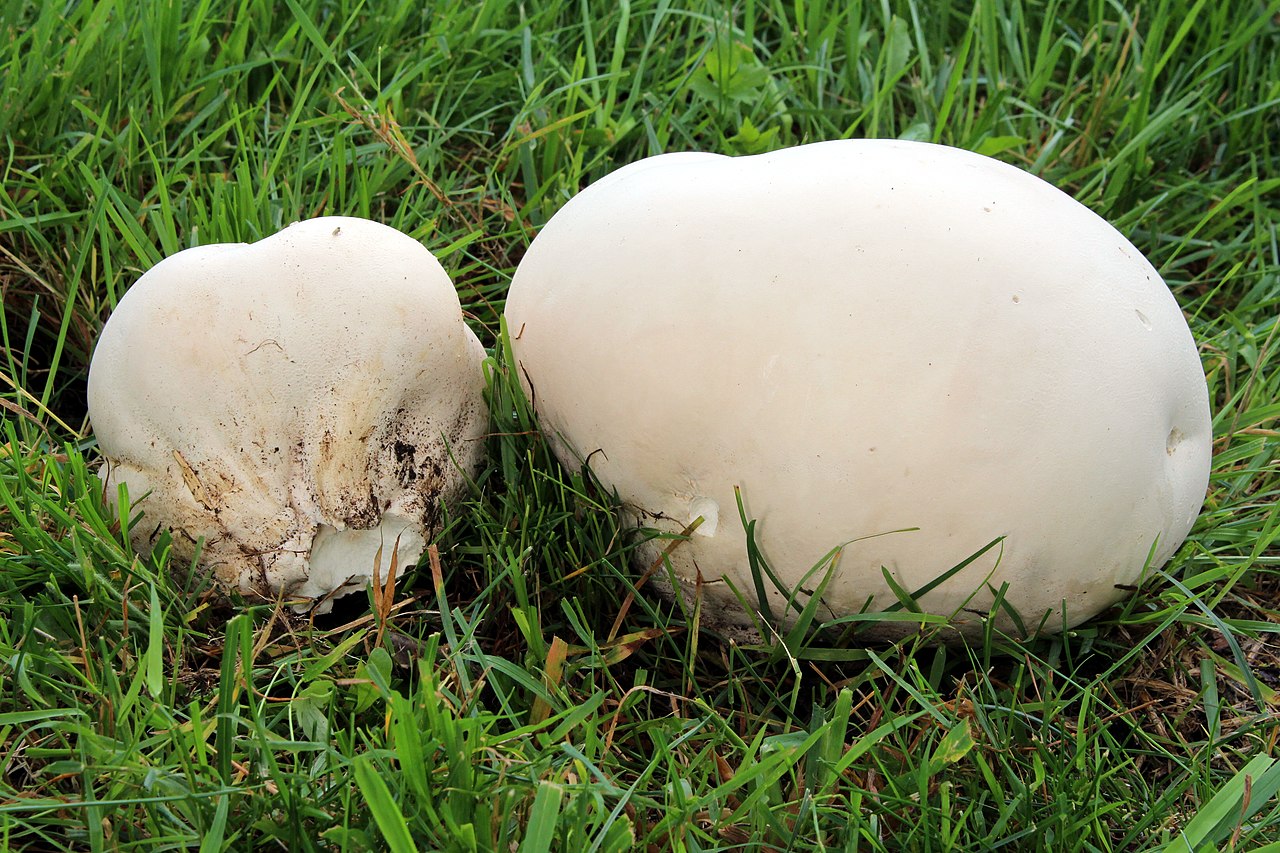
Much larger (often football-sized or bigger), with smooth white skin and pure white interior. No scales or warts on the surface. Young specimens are unmistakable, but very small Giant Puffballs could theoretically be confused with large Earthballs. The interior color is always the definitive test.
Side-by-side comparison →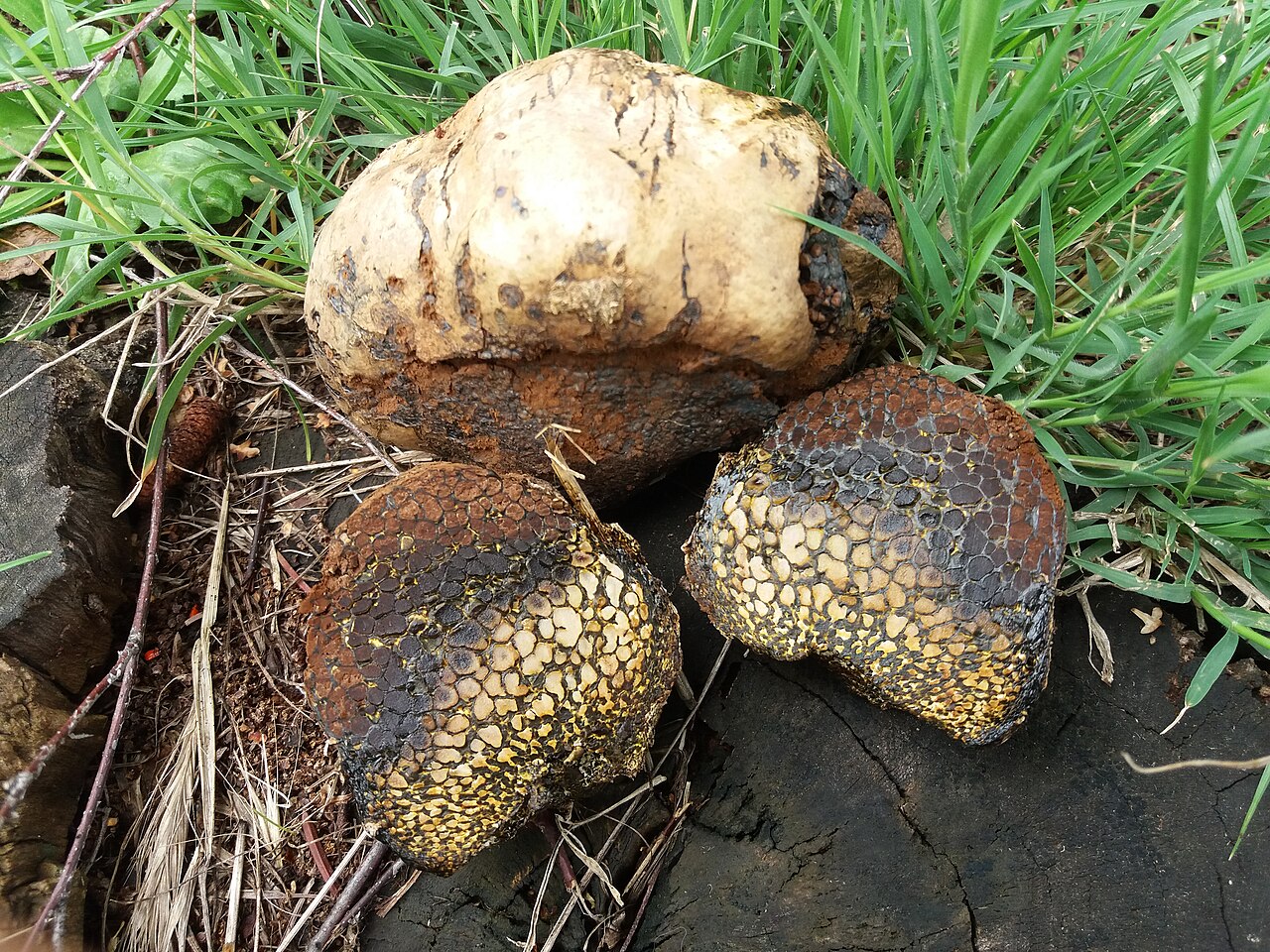
Similar round shape and tough exterior, but Dyeball is typically larger and more irregular, with an interior composed of small pea-sized compartments (peridioles) at different stages of maturity rather than the solid dark purple-black flesh of Earthball. Dyeball also has bright yellow rhizomorphs at the base and a strong chemical odor. Inedible but not toxic.
Side-by-side comparison →Read more on iNaturalist →Leopard Earthball (Scleroderma areolatum)
Smaller with a thinner skin and finer, more leopard-spot-like scales. Also toxic, so the distinction is mainly of academic interest. Similar dark interior.
Read more on iNaturalist →Is Common Earthball Safe to Eat?
Causes gastrointestinal distress including nausea, vomiting, diarrhea, and abdominal pain. Onset is typically 30 minutes to 2 hours after ingestion. Some individuals also report dizziness, headache, and visual disturbances. Symptoms are usually self-limiting but can be significant enough to require medical attention for rehydration. Not considered life-threatening but distinctly unpleasant.
Always verify with local experts before consuming wild mushrooms.
Found something that looks like this in the wild? Don't guess — identify it from a photo with Orangutany and check it against look-alikes before you touch it.