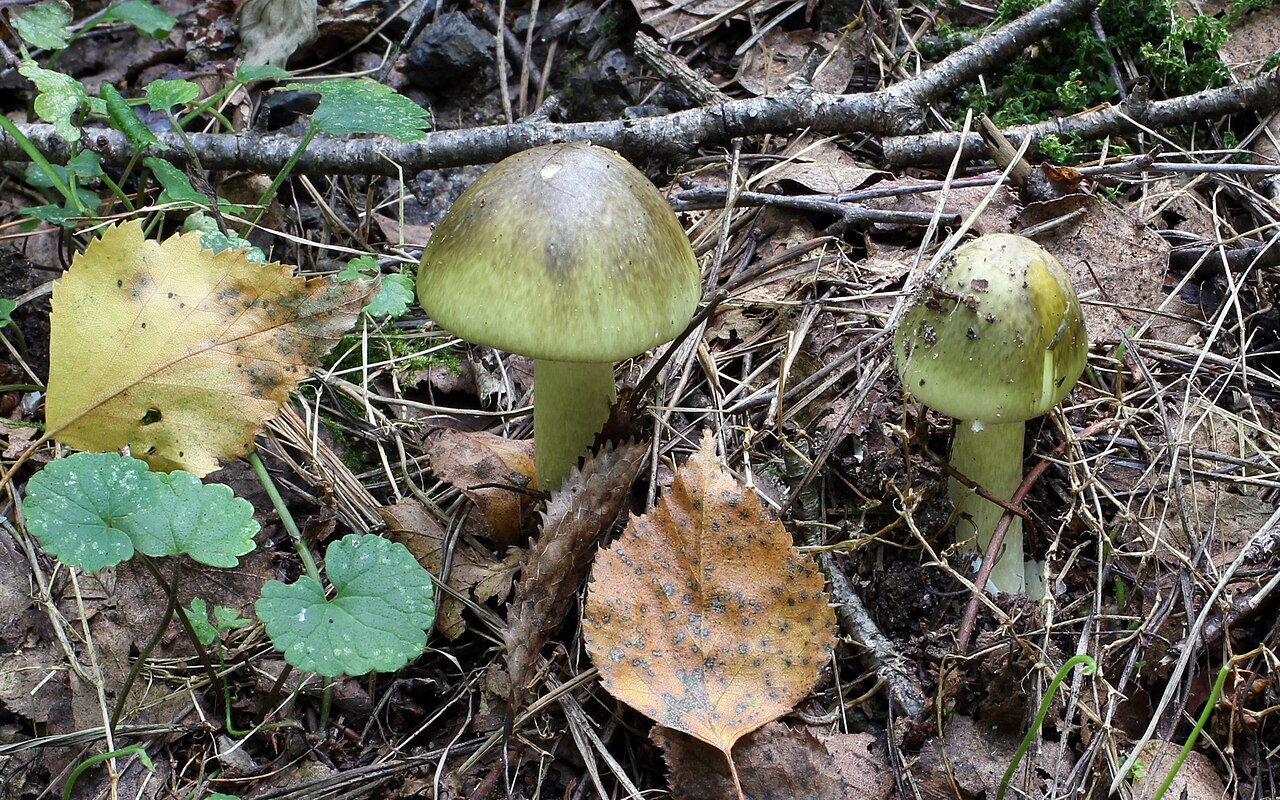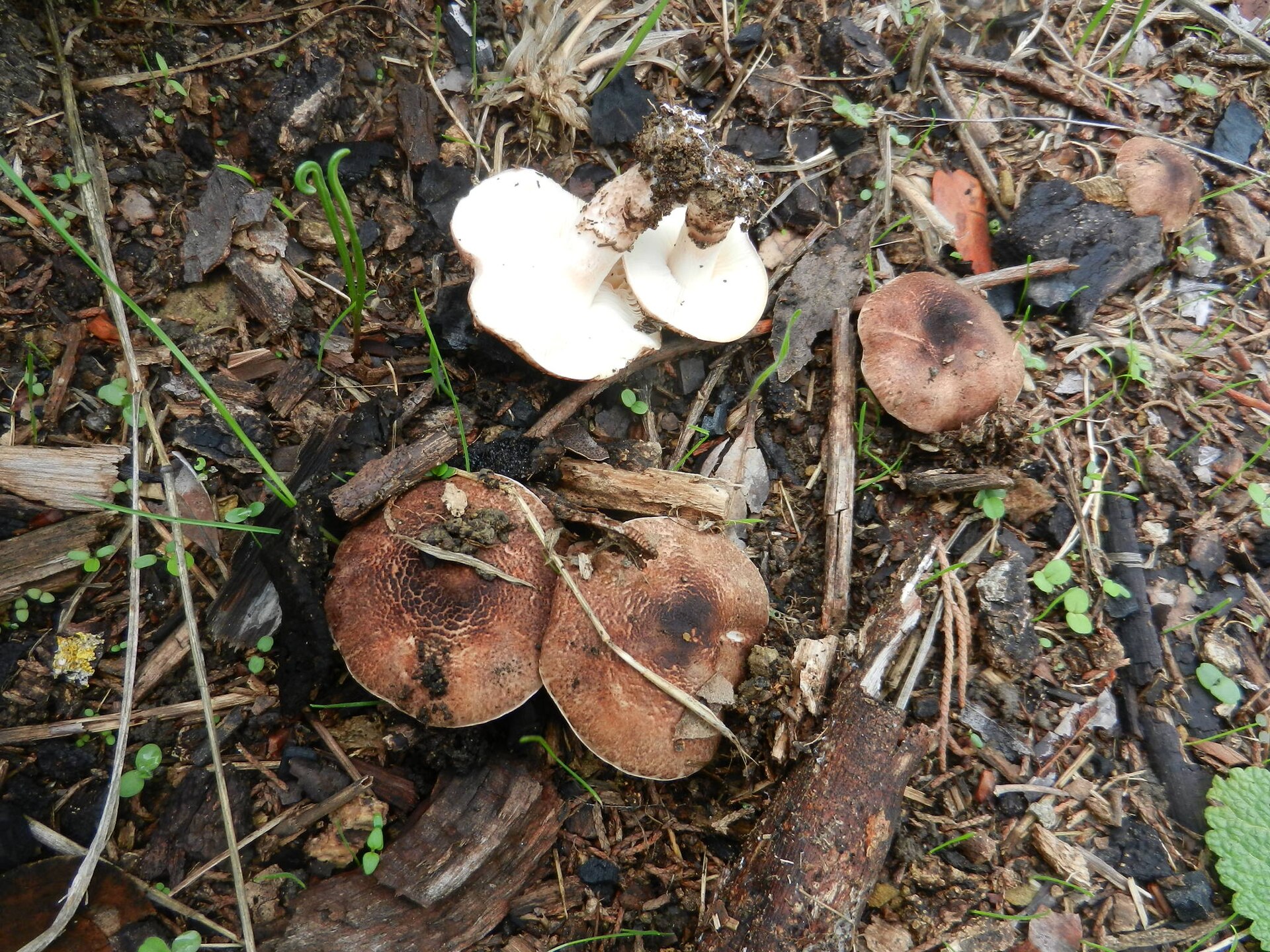
Photo by This image was created by user Murselin Guney (Beyrek) at Mushroom Observer, a source for mycological images.You can con · Wikimedia Commons · CC BY-SA 3.0
The Deadly Dapperling is a small, lethal mushroom that contains the same amatoxins as the Death Cap. It grows in parks, gardens, and urban green spaces, precisely the places where casual foragers are most likely to encounter it. Its modest size makes it easy to underestimate.
Lepiota brunneoincarnata belongs to a group of small Lepiota species that pack a lethal punch wildly disproportionate to their size. This mushroom rarely exceeds 7 cm across the cap, and it looks utterly unremarkable: a small brownish-pink dappled parasol that could be mistaken for any number of harmless lawn mushrooms. But it contains amatoxins, the same class of poisons that make the Death Cap and Destroying Angel the world's most dangerous fungi. A handful of these small caps contains enough toxin to cause fatal liver failure.
The Deadly Dapperling grows in nutrient-rich, disturbed soils: park flowerbeds, garden edges, along pathways, near compost heaps, and in urban green spaces. This preference for human-modified habitats puts it in direct contact with the people least likely to be expert mushroom identifiers. It tends to appear in Mediterranean and warm temperate climates, with most poisoning cases reported from Spain, France, Italy, Turkey, and Iran.
The critical rule with small Lepiota species is simple: never eat any small parasol-type mushroom. The genus Lepiota contains dozens of species, several of which are lethal, and distinguishing between them requires microscopy and expert knowledge. Any small mushroom with a scaly or dappled cap, free white gills, and a ring on the stem should be treated as potentially deadly until proven otherwise.
Deadly Dapperling Facts
- ●The Deadly Dapperling contains the same amatoxins as the Death Cap, but because it is so small and unremarkable, it receives far less public attention. Many experienced foragers have never heard of it.
- ●The general rule 'never eat a small Lepiota' exists because at least six species in the genus are known or suspected to contain lethal levels of amatoxins, and distinguishing between them in the field is essentially impossible.
- ●Most Deadly Dapperling fatalities occur in Mediterranean countries and the Middle East, where the mushroom is more common and where foraging traditions often focus on larger species, leaving small mushrooms unfamiliar.
- ●Despite its lethality, Lepiota brunneoincarnata is rarely mentioned in popular mushroom guides, which tend to focus on Amanita species as the primary amatoxin threat. This knowledge gap is itself a risk factor.
Stories From the Field
Spanish Family Tragedy in Valencia
In 2014, a family in Valencia, Spain, collected small mushrooms from a park near their apartment block. The mother and two children ate them in a stir-fry. All three developed severe symptoms within 12 hours. The mother died of liver failure four days later. The children survived after intensive care treatment.
Iranian Mass Poisoning Event
In 2012, eleven members of an extended family in the Fars Province of Iran were hospitalized after eating small Lepiota mushrooms collected from a garden. Four developed acute liver failure. Two died despite treatment. The mushrooms were identified as Lepiota brunneoincarnata by mycologists at Shiraz University.
Turkish Forager's Fatal Error
In 2016, a 60-year-old man in Antalya, Turkey, collected small parasol-like mushrooms from the edge of an olive grove. He cooked and ate them alone. He was found unconscious two days later and died in hospital from liver failure before the mushroom species could be formally confirmed.
French Pharmacist Catches It in Time
In 2018, a forager in Montpellier brought a basket of small dappled mushrooms to a pharmacy for identification. The pharmacist recognized them as Lepiota brunneoincarnata and advised the forager to discard them immediately. The forager had been planning to serve them that evening to dinner guests.
How to Identify Deadly Dapperling
Cap
2-7 cm across. Convex to flat. Whitish ground color covered in concentric rings of pinkish-brown to lilac-brown scales or patches, giving a dappled appearance. Center often darker, with more intact cuticle. Margin sometimes with veil remnants.
Gills
Free from the stem, white to cream, crowded. Remain pale throughout the mushroom's life.
Stem
3-6 cm tall, relatively stout for its size. White above the ring, covered in pinkish-brown to lilac-brown fibrils below. Ring is fragile, sometimes just a zone of fibers. Base does not have a volva.
Spore Print
White to cream.
Odor
Slightly fruity or rubbery. Not strongly distinctive.
Mushrooms That Look Like Deadly Dapperling
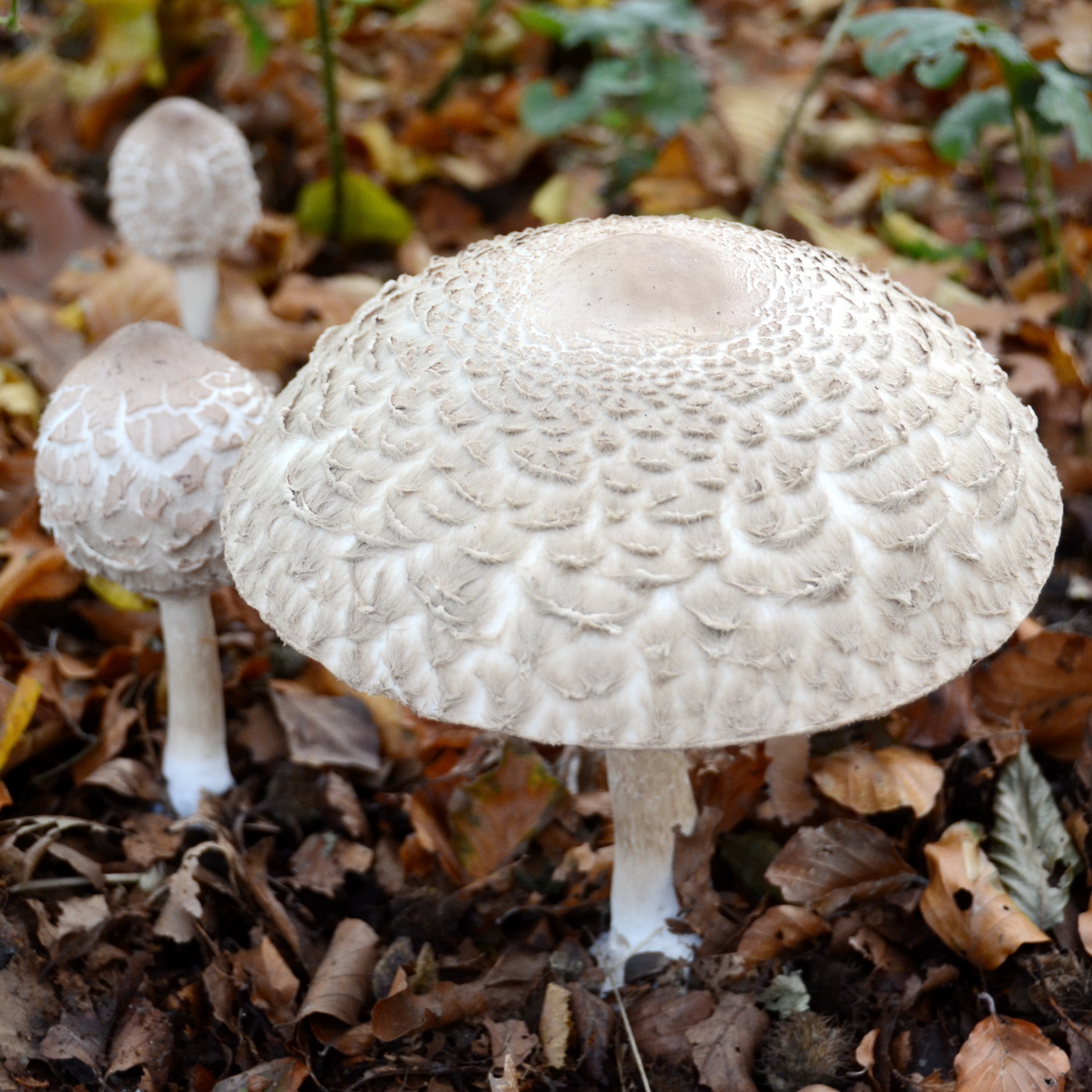
Much larger (cap 10-20 cm), with coarser shaggy scales and flesh that turns orange-red when cut. The size difference is the most obvious: Deadly Dapperlings are small mushrooms. Any parasol-type mushroom under 10 cm cap diameter should be approached with extreme caution.
Side-by-side comparison →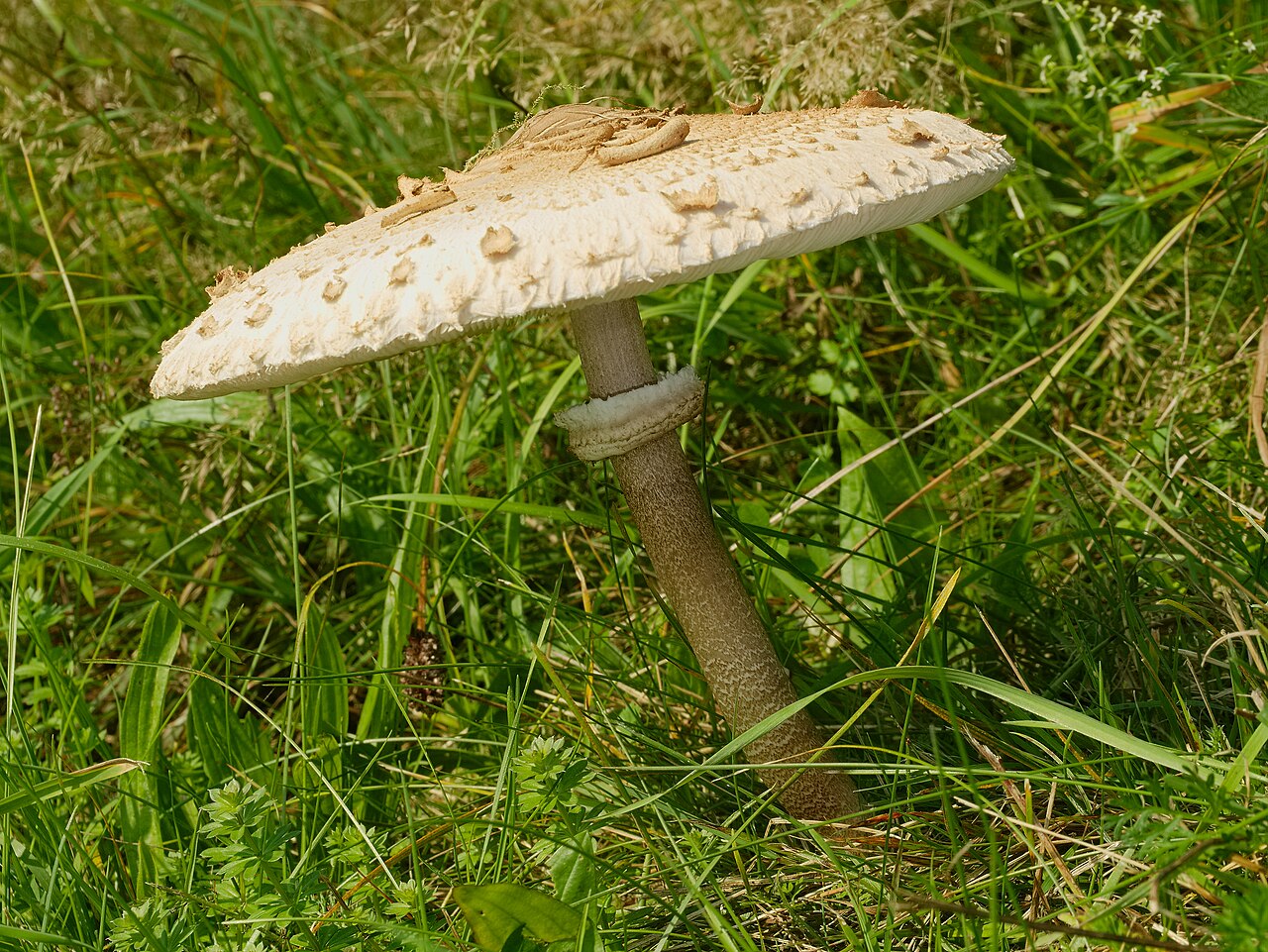
Much larger (cap 15-30 cm), with a tall stem marked by a snakeskin pattern and a movable double ring. The Parasol is one of the best edible mushrooms in Europe, but only large specimens should be collected. Small Lepiota species are where the danger lies.
Side-by-side comparison →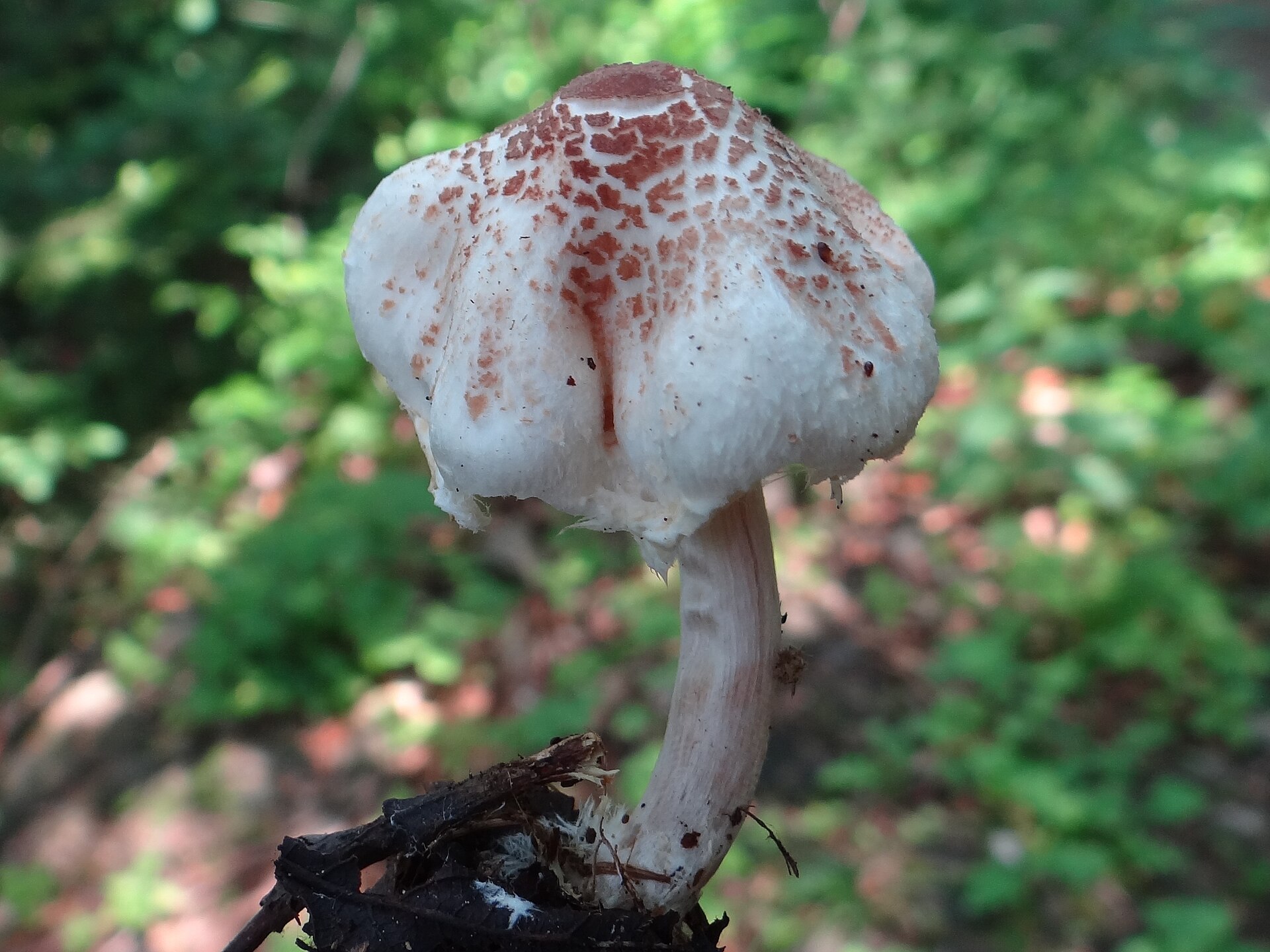
A small Lepiota with reddish-brown concentric scales and a strong, unpleasant rubber or chemical smell. Also toxic but not known to be lethal. Very difficult to distinguish from Lepiota brunneoincarnata without microscopy.
Side-by-side comparison →Why Deadly Dapperling Is Deadly
Contains amatoxins (alpha-amanitin and related compounds), the same class of toxins found in Amanita phalloides. A few small caps can contain a lethal dose. Symptoms follow the classic amatoxin pattern: delayed onset (6-12 hours) of severe gastrointestinal distress, followed by a deceptive improvement period, then rapid liver failure. Mortality rate without aggressive treatment (including potential liver transplant) is very high. Cooking does not destroy the toxins.
Always verify with local experts before consuming wild mushrooms.
Found something that looks like this in the wild? Don't guess — identify it from a photo with Orangutany and check it against look-alikes before you touch it.