Photo by Holger Krisp · Wikimedia Commons · CC BY 3.0
Tiny golden-orange mushrooms that carpet rotting conifer logs in dense, photogenic clusters. Too small and tough to eat, but one of the most charming sights in the northern forest and a favorite subject for mushroom photographers.
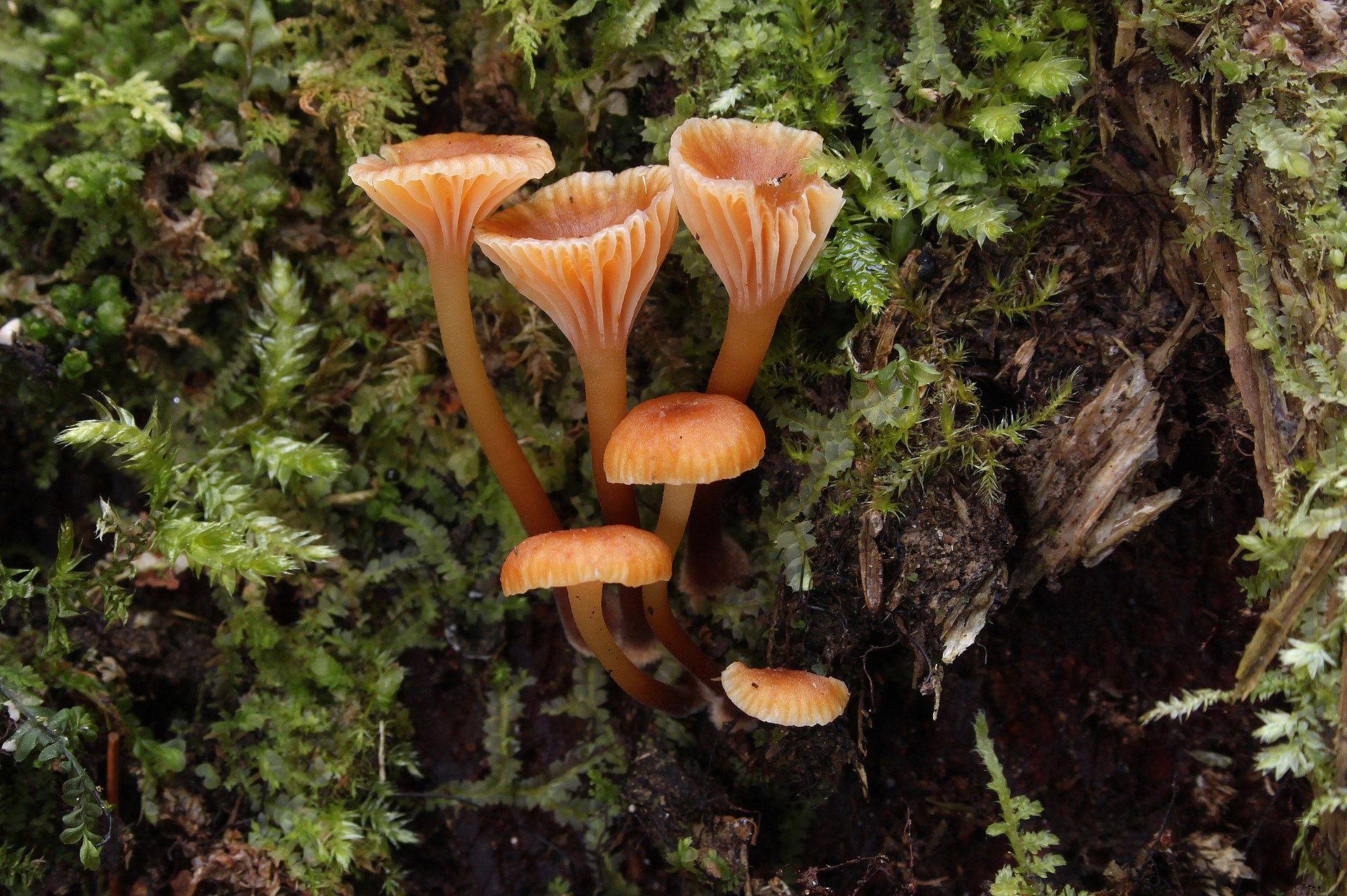
Xeromphalina campanella is one of those mushrooms that stops hikers in their tracks, not because it is rare or dramatic, but because it covers rotting logs in such perfect, dense clusters that it looks like someone decorated the forest with miniature golden flowers. Each individual mushroom is tiny, rarely more than 2 cm across, but they fruit in colonies of hundreds to thousands, transforming a single decomposing conifer stump into a golden spectacle.
The caps are bell-shaped to convex (campanella means 'little bell'), thin, and translucent enough that you can sometimes see the gill pattern through the cap tissue when backlit by the sun. The color is warm golden orange to tawny, paler at the margins. The gills are decurrent and widely spaced, connected by cross-veins that form a visible network on the underside.
Despite their beauty, golden trumpets are not a food mushroom. The fruiting bodies are too small, too thin, and too tough-textured to be worth collecting for the kitchen. They are purely a visual delight. Their ecological role is as a saprotroph, decomposing conifer wood and recycling nutrients back into the forest soil. They are a sign of a healthy, functioning forest ecosystem.
Golden Trumpet Facts
- ●A single rotting conifer log can produce thousands of Xeromphalina campanella fruiting bodies simultaneously, creating one of the most visually dense mushroom displays in the forest.
- ●The cross-veins connecting the gills are a distinctive anatomical feature that can be seen with a hand lens and help confirm identification.
- ●Golden trumpets are so tough and wiry that dried specimens can persist on logs for weeks after other mushrooms have decomposed, making them one of the longer-lasting forest fungi.
- ●The name campanella means 'little bell' in Latin, perfectly describing the bell-shaped caps of young specimens before they flatten with age.
Stories From the Field
The Photographer's Dream Log
A mushroom photographer in Minnesota documented a single spruce log that produced dense clusters of Xeromphalina campanella every summer for seven consecutive years. Each July, the log would be covered in thousands of tiny golden bells. She used it as a consistent backdrop for macro photography, noting that the clusters grew denser each year as the wood softened.
Mistaken for Edible by a Beginner
A new forager in Vermont posted photos of golden trumpets asking if they were edible chanterelles. The mycology community gently corrected him, pointing out the tiny size, the growth on wood (chanterelles grow from soil), and most importantly warned him about Galerina marginata, which also grows on wood. He later wrote that the correction 'probably saved me from a much worse mistake down the road.'
Boreal Forest Jewels in Finland
A Finnish naturalist described leading a forest walk where participants encountered a massive fallen spruce entirely colonized by golden trumpets. The warm afternoon light filtering through the canopy backlit the translucent caps, creating a glowing effect. 'It looked like the log was covered in tiny amber lamps,' she wrote. Several participants said it was the most beautiful fungal display they had ever seen.
Where It's Been Found

Based on reported sightings worldwide
How to Identify Golden Trumpet
Cap
0.5-2.5 cm across. Bell-shaped to convex, becoming flatter with age. Thin and somewhat translucent. Golden orange to tawny, sometimes yellowish, paler and more striate (showing radiating lines) toward the margins. Surface is smooth and dry.
Gills
Decurrent (running down the stem). Widely spaced, yellowish to pale orange. Connected by cross-veins that form a visible network between the main gills. This cross-vein feature is a useful identification aid under a hand lens.
Stem
1-3 cm tall, very thin (1-2 mm). Wiry, tough, and curved. Dark brown to blackish at the base, becoming yellowish toward the cap. Covered in fine hairs at the base. Grows directly from rotting wood.
Spore Print
White to pale buff.
Odor
Mild, not distinctive.
Mushrooms That Look Like Golden Trumpet
Chrysomphalina chrysophylla
Similar tiny golden mushrooms on conifer wood, but typically more yellow than orange, with gills that lack the distinctive cross-veins of Xeromphalina. Less densely clustered. Also inedible due to small size.
Read more on MushroomExpert →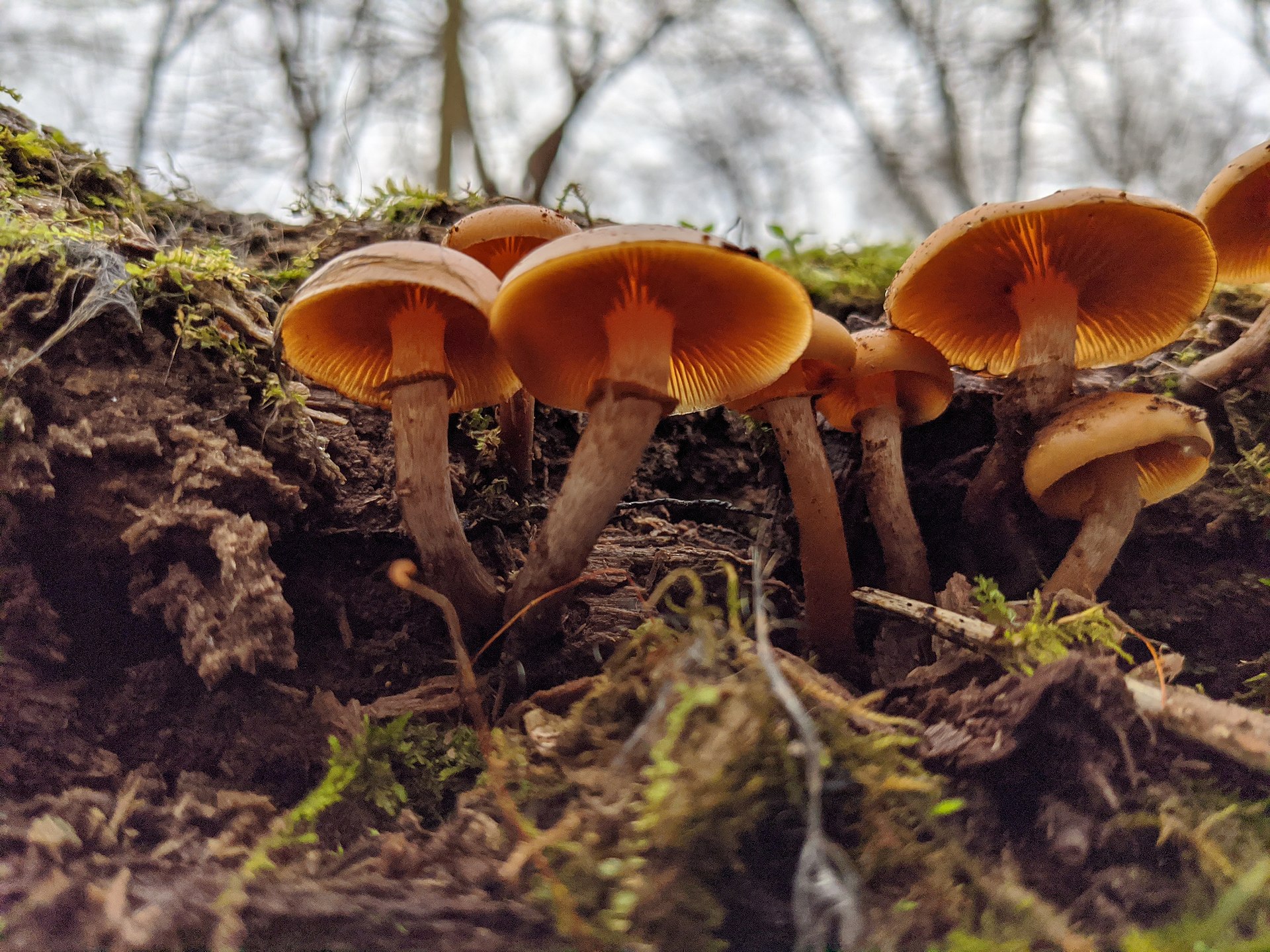
A critical distinction. Galerina marginata also grows on rotting wood in clusters and has a brownish cap, but it has a ring on the stem, brown spores (not white), and a more brown rather than golden-orange color. Contains deadly amatoxins. If in doubt, check for a ring and take a spore print. This is why golden trumpets should never be eaten even if you think you have identified them correctly.
Side-by-side comparison →Golden Trumpet Edibility
Not toxic, but too small, thin, and tough to have any culinary value. Not worth attempting to eat. More importantly, small brown mushrooms on wood should always be treated with extreme caution due to the possibility of confusion with Galerina marginata, which is deadly. Enjoy golden trumpets with your eyes and camera, not your stomach.
Always verify with local experts before consuming wild mushrooms.
Found something that looks like this in the wild? Don't guess — identify it from a photo with Orangutany and check it against look-alikes before you touch it.