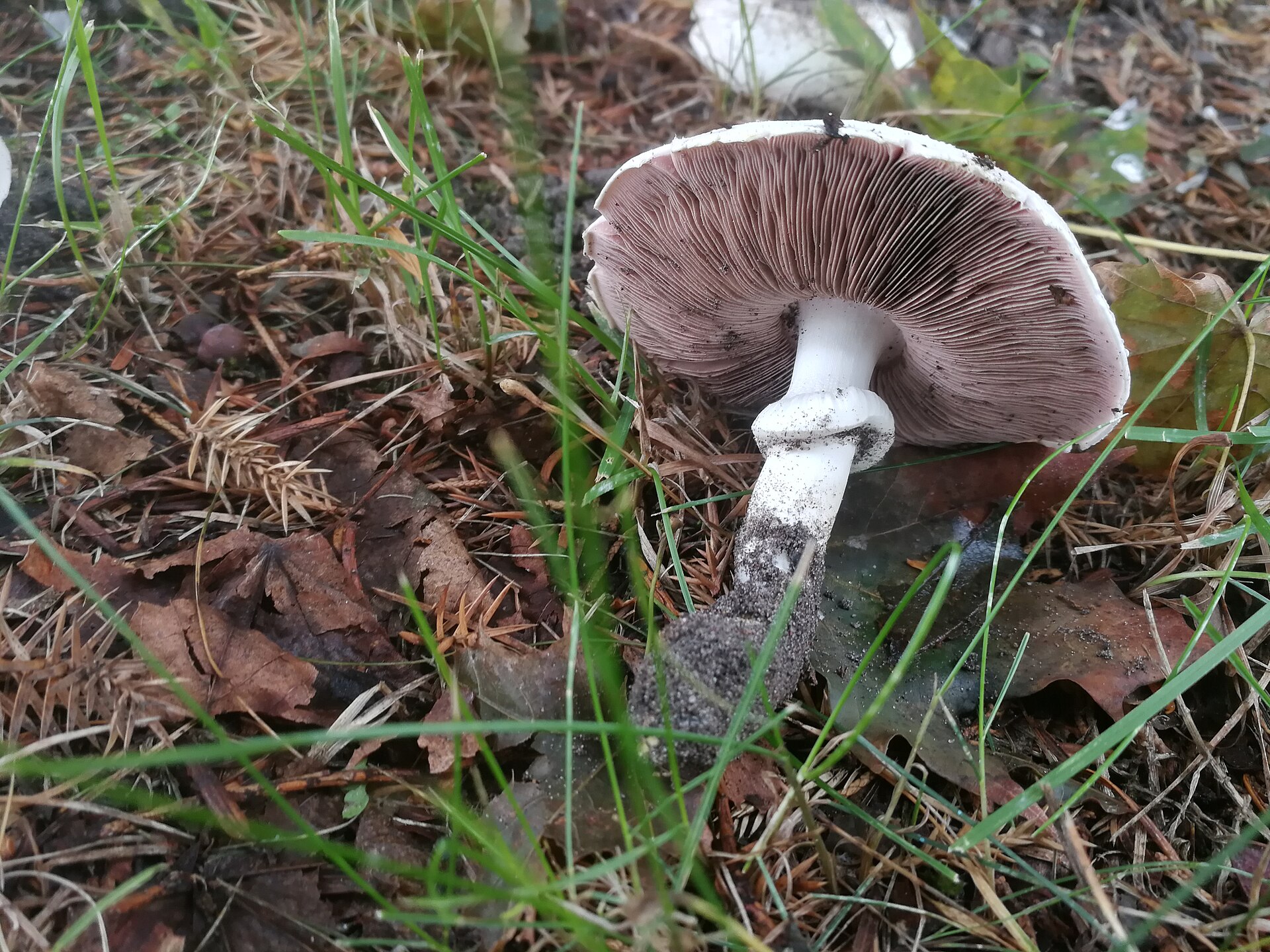
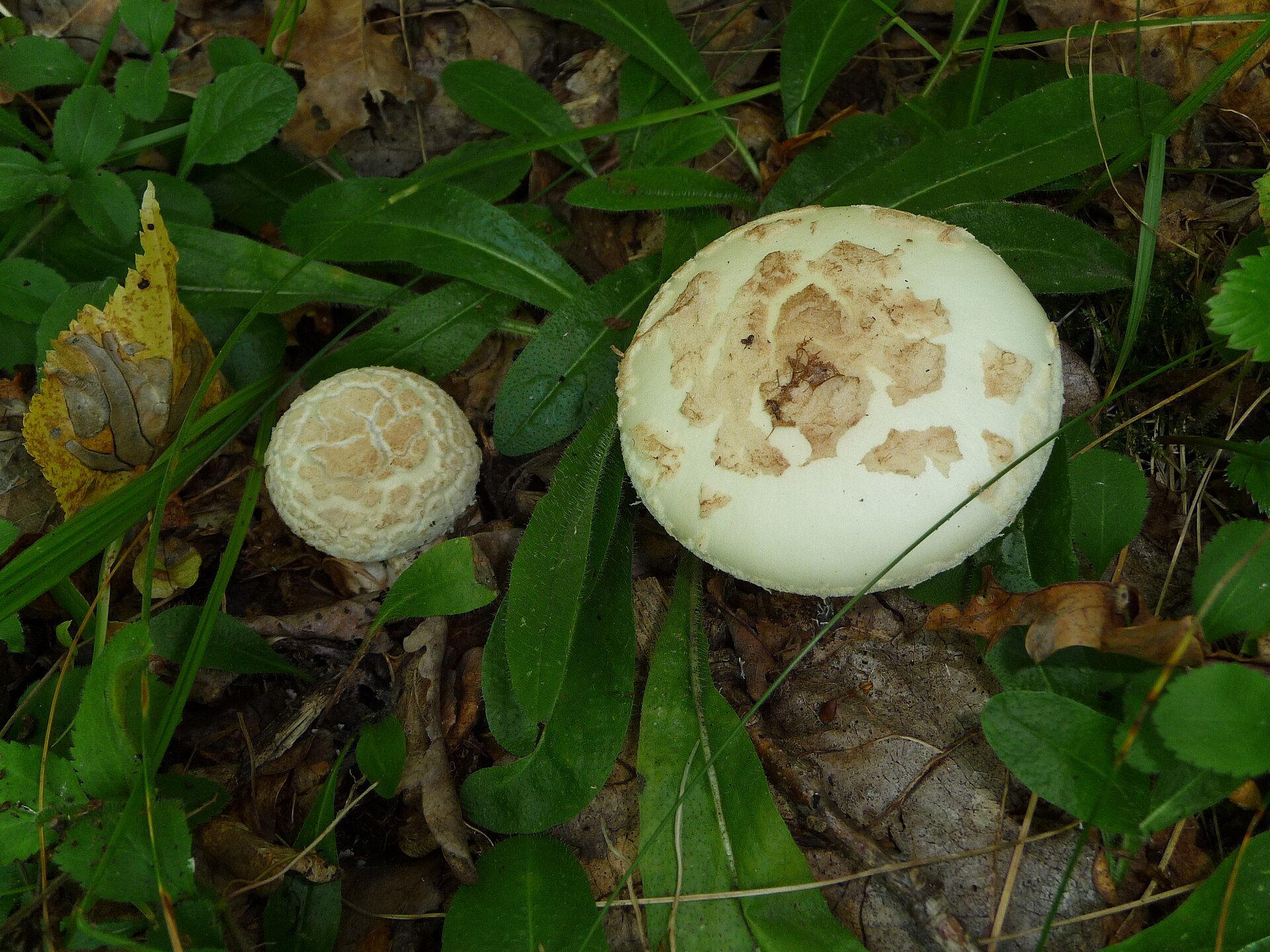
Green-Staining Inocybe
Inocybe aeruginascens
By Varun Vaid · Orangutany
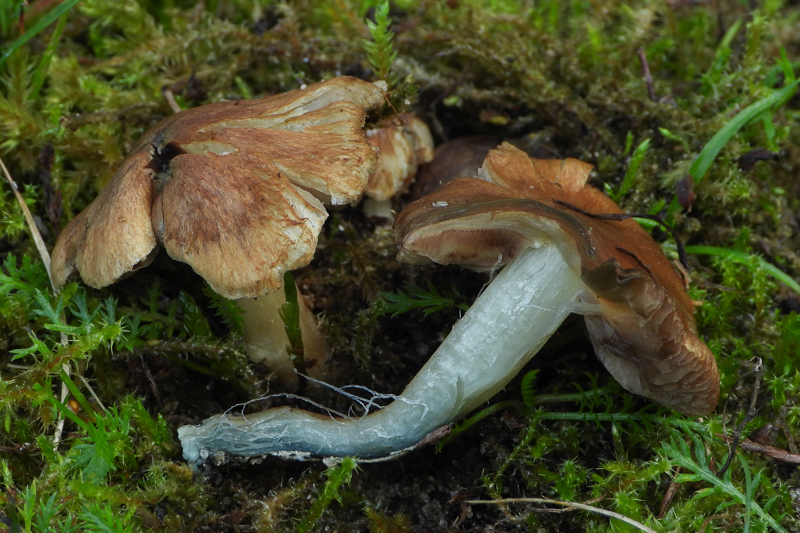
Photo by Youp van den Heuvel · Wikimedia Commons · CC BY 4.0
An unusual psilocybin-containing mushroom from a genus better known for producing muscarine poison. Found in parks and gardens across Central Europe, it caused accidental mass intoxications in East Germany when foragers mistook it for edible species. Contains psilocybin; illegal in most jurisdictions. This page is for educational identification purposes only.
Inocybe aeruginascens is the psychedelic black sheep of its genus. While the Inocybe genus is famous for muscarine-containing poisonous species — several of which have caused serious poisonings and deaths — I. aeruginascens took a completely different biochemical path, producing psilocybin, psilocin, and baeocystin instead. It's one of very few non-Psilocybe species reliably confirmed to contain significant amounts of psilocybin, making it a genuine oddity in the world of psychoactive fungi.
The species came to scientific attention through a series of accidental intoxications in East Germany during the 1970s and 1980s. Foragers collecting mushrooms in parks and gardens — particularly in areas with linden trees (Tilia) — would occasionally gather Inocybe aeruginascens, mistaking it for edible species. Instead of muscarine poisoning (which they might have expected from an Inocybe), the victims experienced unexpected psychedelic effects: visual disturbances, euphoria, disorientation, and perceptual changes that lasted several hours. These "accidents" were extensively documented by German mycologist Jochen Gartz, who became the leading researcher on this species.
The common name "Green-Staining Inocybe" refers to the distinctive blue-green discoloration that develops on the flesh when it is damaged — the same psilocybin oxidation reaction seen in Psilocybe species. This bruising is unusual in Inocybe and serves as a field clue, though it's not always obvious. The mushroom itself is small to medium-sized with a typical fibrous Inocybe cap — conical to bell-shaped, with radiating fibers and a pale to ochre-brown color.
I. aeruginascens grows in association with deciduous trees, particularly lindens and poplars, in parks, gardens, roadsides, and other managed landscapes. It appears to prefer the amended, nutrient-rich soils common in Central European urban settings — bark mulch, composted wood chips, and the disturbed ground around planted trees.
Green-Staining Inocybe Facts
- ●It's one of the very few non-Psilocybe mushrooms confirmed to contain significant amounts of psilocybin — a biochemical outlier in a genus known for muscarine poison.
- ●Multiple accidental mass intoxications in East Germany occurred when foragers unknowingly consumed this species and experienced unexpected psychedelic effects instead of muscarine poisoning.
- ●German mycologist Jochen Gartz extensively documented the species and its chemistry after investigating the East German poisoning cases.
- ●The blue-green bruising reaction is the same psilocybin oxidation seen in Psilocybe species — highly unusual for an Inocybe.
Stories From the Field
The Accidental Trips of East Germany
During the 1970s and 1980s, multiple incidents of unexpected psychedelic intoxication were reported in East German cities, particularly around Berlin and Leipzig. Foragers collecting mushrooms in parks would gather what they thought were edible species from under linden trees. Instead of a meal, they got visual hallucinations, euphoria, and hours of disorientation. Mycologist Jochen Gartz investigated these cases and identified the culprit as Inocybe aeruginascens — an astonishing finding, since Inocybe species were known for muscarine, not psilocybin.
Where It's Been Found

Based on reported sightings worldwide
How to Identify Green-Staining Inocybe
Cap
2-5 cm across. Conical to campanulate, expanding to convex with a prominent umbo. Pale ochraceous to straw-brown, with distinctive radiating silky fibers typical of Inocybe. Surface dry, fibrillose. Margin often slightly splitting with age.
Gills
Adnate to narrowly attached, crowded. Pale at first, becoming brownish with cigar-brown spore maturity. Edges may appear finely fringed (cystidia).
Stem
3-7 cm tall, 3-6 mm thick. Whitish to pale brownish, fibrous-silky. Equal or slightly bulbous at the base. No ring. Bruises blue-green when damaged.
Spore Print
Cigar-brown to tobacco-brown (typical Inocybe — NOT purple-brown like Psilocybe).
Odor
Mild, slightly spermatic — the characteristic Inocybe odor, though less pronounced than in many species of the genus.
Mushrooms That Look Like Green-Staining Inocybe
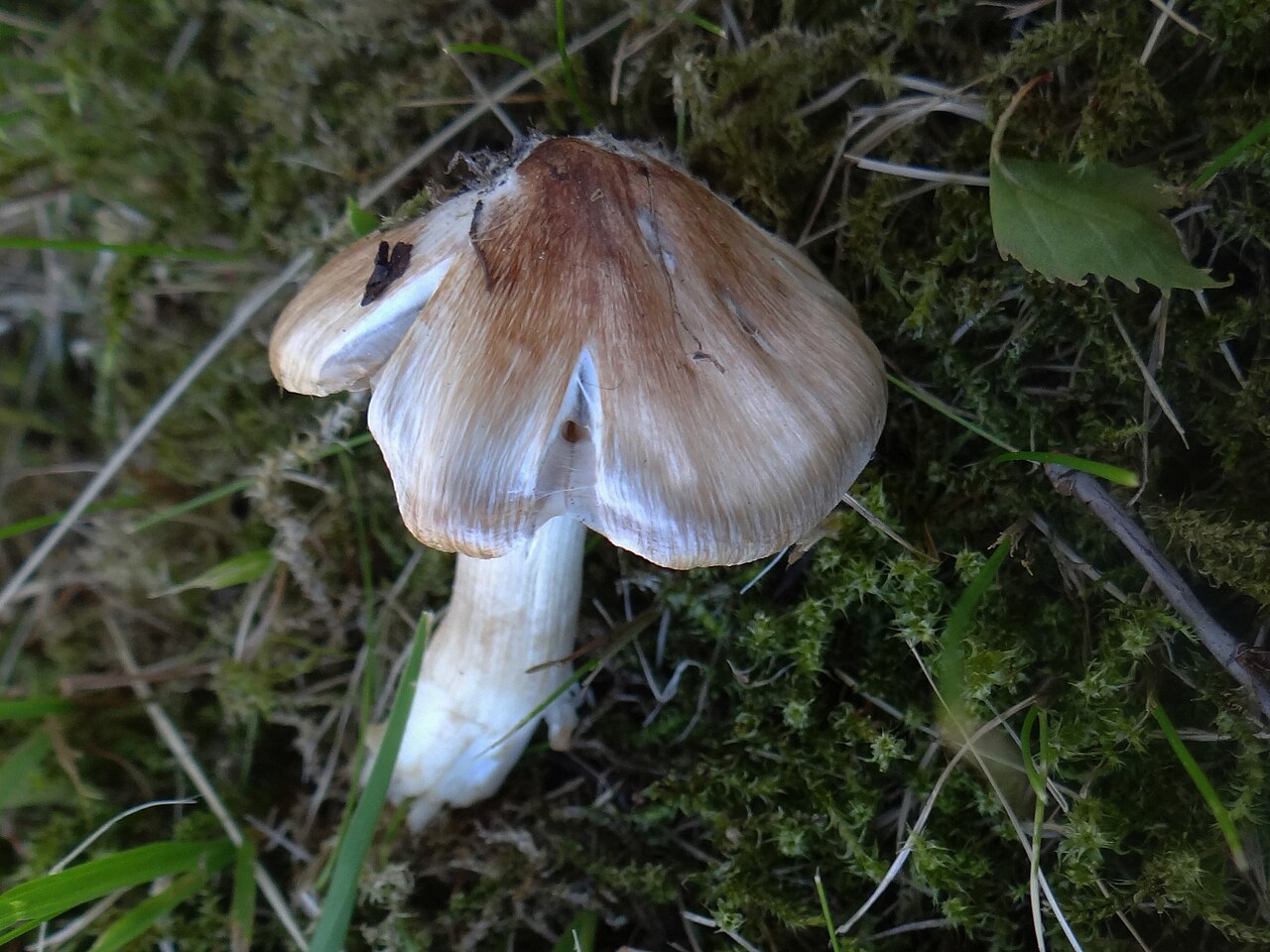
DEADLY POISONOUS — contains high levels of muscarine. Stains reddish (not blue-green) when bruised. Larger and more robust. Has a distinctive red-flushed cap and stem. The muscarine in I. erubescens causes SLUDGE syndrome (salivation, lacrimation, urination, diarrhea, GI distress, emesis).
Side-by-side comparison →Inocybe geophylla
Contains muscarine — poisonous. White to lilac-colored, smaller, and does not show blue-green bruising. Common in similar habitats across Europe.
Read more on Wikipedia →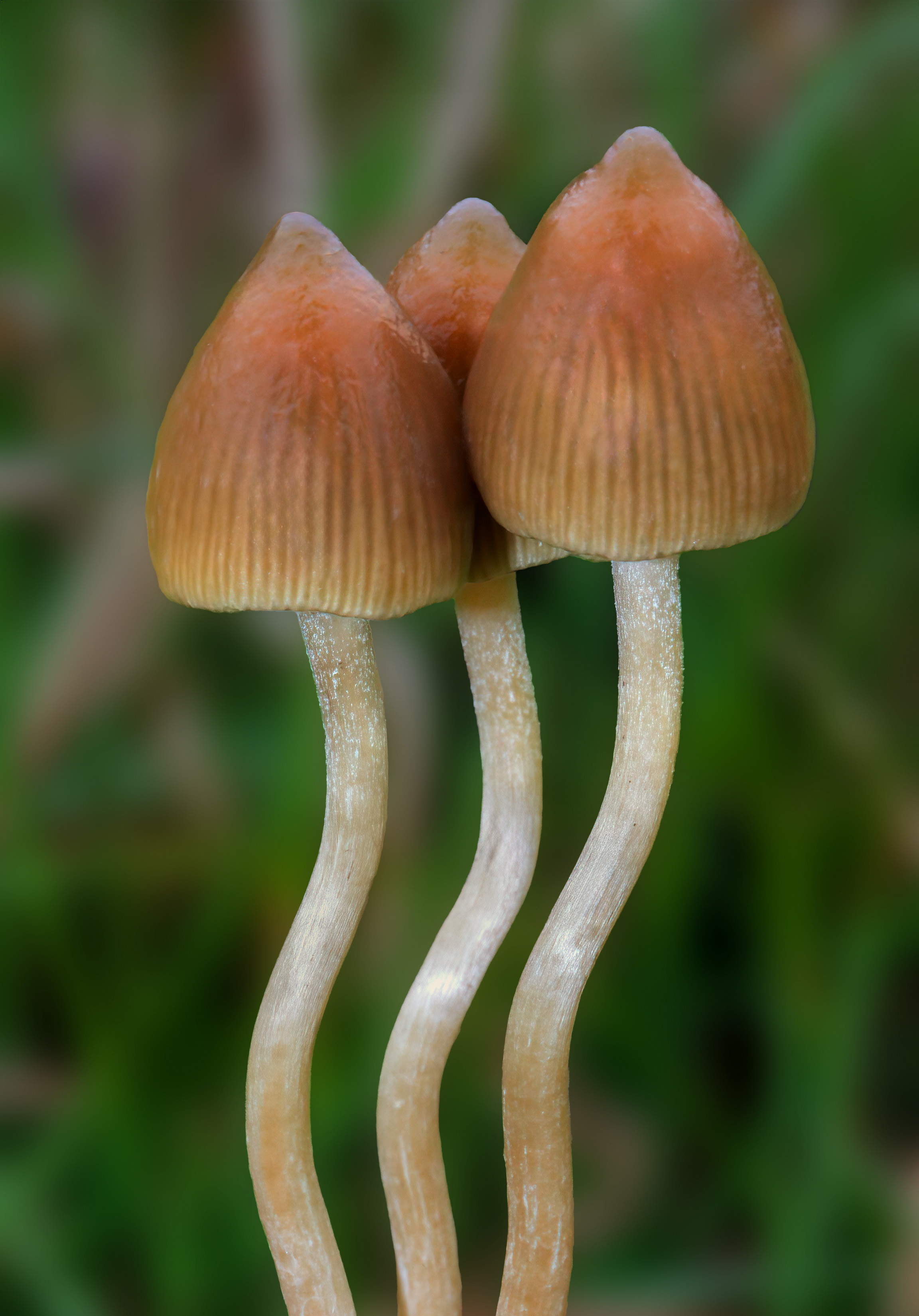
Also psilocybin-containing but very different habitat (grasslands, not under trees). Has a pointed nipple-like cap, gelatinous pellicle, and purple-brown spore print (not cigar-brown).
Side-by-side comparison →Is Green-Staining Inocybe Safe to Eat?
Contains psilocybin, psilocin, and baeocystin — controlled substances in most countries. Despite being psychoactive rather than muscarine-toxic like most Inocybe species, it should never be consumed. The genus Inocybe contains many dangerously poisonous species that are easily confused. Documented for educational identification purposes only.
Always verify with local experts before consuming wild mushrooms.
Found something that looks like this in the wild? Don't guess — identify it from a photo with Orangutany and check it against look-alikes before you touch it.