Photo by Bishopcp · Wikimedia Commons · CC BY-SA 4.0
The New World counterpart of the legendary Caesar's mushroom. A stunningly beautiful orange-red Amanita that is genuinely edible, sitting in a genus otherwise famous for producing the deadliest mushrooms on the planet.
Amanita jacksonii is one of the most visually striking mushrooms in North American forests, and it carries a paradox that makes experienced foragers both excited and nervous. It is a genuinely excellent edible mushroom in a genus that contains the death cap, the destroying angel, and other notorious killers. Eating an Amanita on purpose requires either deep knowledge or reckless confidence, and the line between the two can be uncomfortably thin.
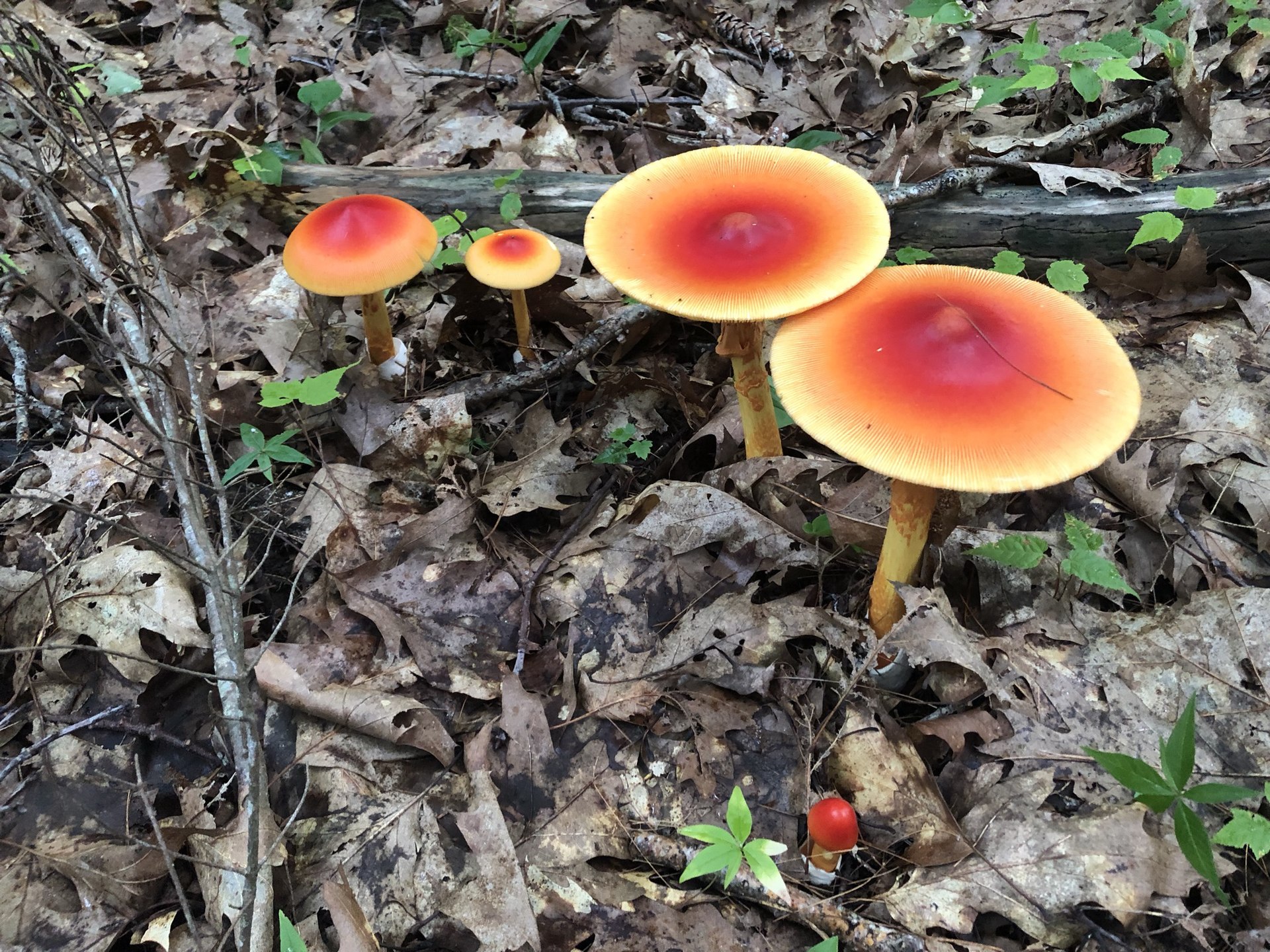
The mushroom emerges from a thick white universal veil (volva) that splits open to reveal a brilliant scarlet to orange-red cap. As it matures, the cap expands and the color can fade slightly toward orange. The gills and stem are yellow to orange-yellow, a critical feature that separates it from deadly species with white gills. The volva remains as a prominent white sac at the base of the stem.
In the Appalachian region and southeastern United States, Amanita jacksonii is well known to experienced foragers who prize it for its firm texture and mild, nutty flavor. It is closely related to the European Amanita caesarea, which was reportedly the favorite mushroom of Roman emperors. The American species was long lumped with its European cousin until DNA analysis confirmed it as a distinct species, named for the great American mycologist Herbert Spencer Jackson.
American Caesar's Mushroom Facts
- ●Amanita jacksonii was only formally described as a distinct species from the European Amanita caesarea in 1984, despite being collected in North America for over a century.
- ●The yellow gills and yellow stem are the single most important safety feature. No deadly Amanita in North America has yellow gills; the killers all have white.
- ●Roman emperors prized Amanita caesarea so highly that they had special dishes called 'boletaria' specifically designed for serving them. Amanita jacksonii is its closest New World relative.
- ●The thick white volva at the base can be left behind in the soil if you are not careful when harvesting. Always dig around the base to expose it, as the volva is a critical identification feature.
Stories From the Field
Caesar's Mushroom in the Blue Ridge
A veteran forager in western North Carolina described finding a cluster of Amanita jacksonii emerging from their volvas along a ridgetop trail in the Pisgah National Forest. 'Watching them push out of those white eggs with that brilliant red cap is like watching a magic trick,' she wrote. She sauteed them simply in olive oil with salt and described the flavor as 'clean, nutty, and surprisingly meaty.'
The Nervous First Bite
A mycologist in Virginia wrote about his first time eating Amanita jacksonii after years of studying the genus. Despite being completely confident in his identification, he described a moment of genuine anxiety before taking the first bite. 'Your brain screams at you: you are eating an Amanita,' he wrote. 'But the rational part knows exactly what you have. The flavor was worth the brief existential crisis.'
A Roman Emperor's Mushroom in Georgia
During a foray in northern Georgia, a group found several perfect Amanita jacksonii specimens and discussed the history of Amanita caesarea in ancient Rome. The trip leader noted that Emperor Claudius was supposedly murdered with a dish of poisoned Amanitas, served by his wife Agrippina. 'The irony,' she said, 'is that the mushroom itself was probably delicious. It was the added ingredient that was the problem.'
Where It's Been Found
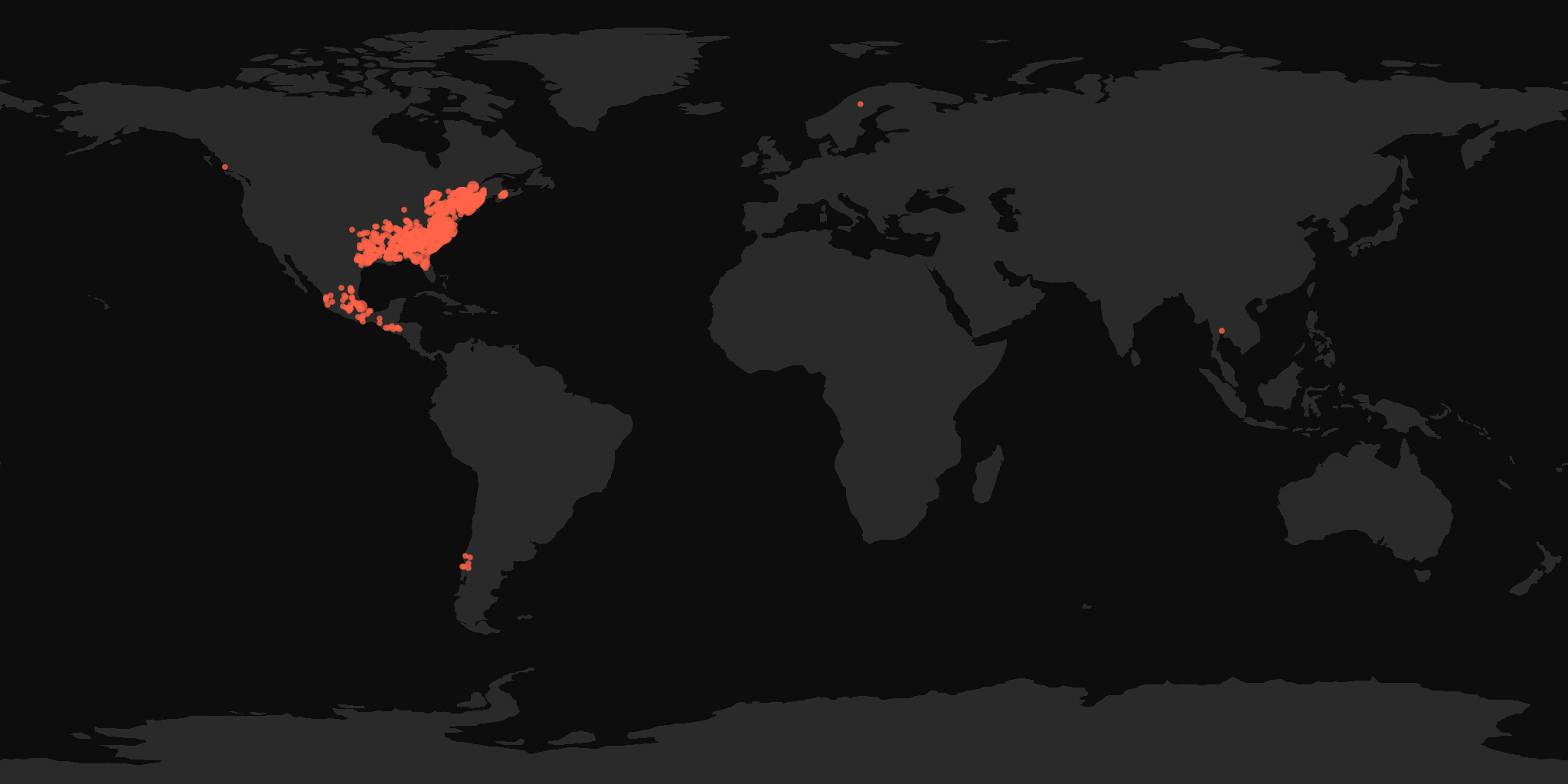
Based on reported sightings worldwide
How to Identify American Caesar's Mushroom
Cap
5-15 cm across. Initially egg-shaped and enclosed in a white volva, then expanding to convex and finally flat. Color is vivid scarlet red to orange-red, sometimes fading to orange with age. Surface is smooth, slightly sticky when wet. Usually lacks the white wart-like patches seen on many other Amanitas (the universal veil tends to remain as a basal sac rather than breaking into cap patches).
Gills
Free (not attached to the stem). Yellow to orange-yellow. Crowded and broad. This yellow gill color is a critical identification feature that separates it from white-gilled deadly Amanitas.
Stem
8-18 cm tall, 1-2.5 cm thick. Yellow to orange-yellow, often with faint zigzag banding or patterning. Base is enclosed in a large, thick, persistent white volva (sac). No ring (annulus) on the stem, which is another important distinction from many deadly Amanitas.
Spore Print
White to pale cream.
Odor
Mild, pleasant, slightly nutty. Not distinctive.
Mushrooms That Look Like American Caesar's Mushroom
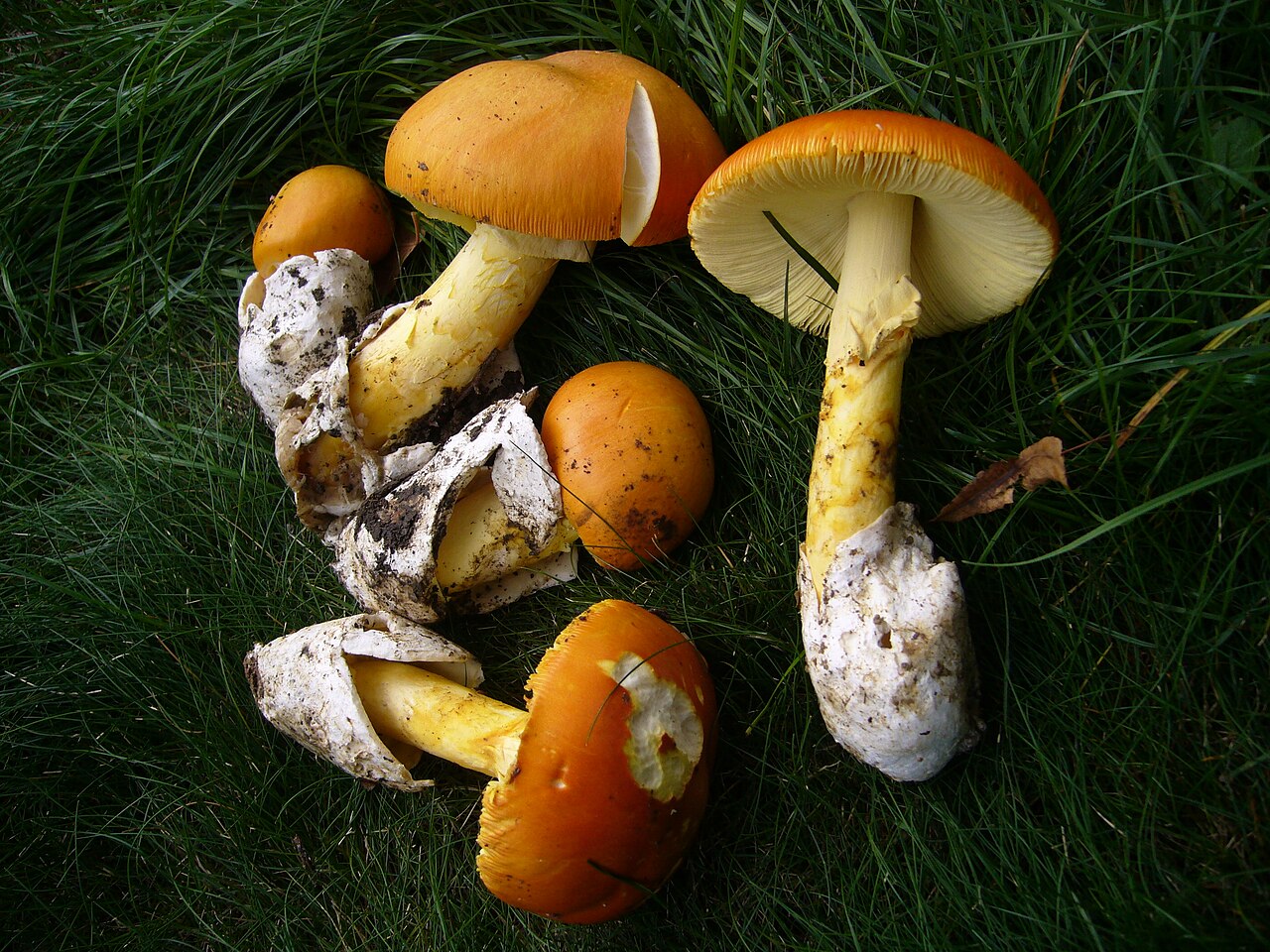
The European counterpart. Very similar in appearance with red-orange cap, yellow gills, and white volva. Distinguished primarily by geography (A. caesarea is European, A. jacksonii is North American) and subtle spore differences. Both are excellent edibles.
Side-by-side comparison →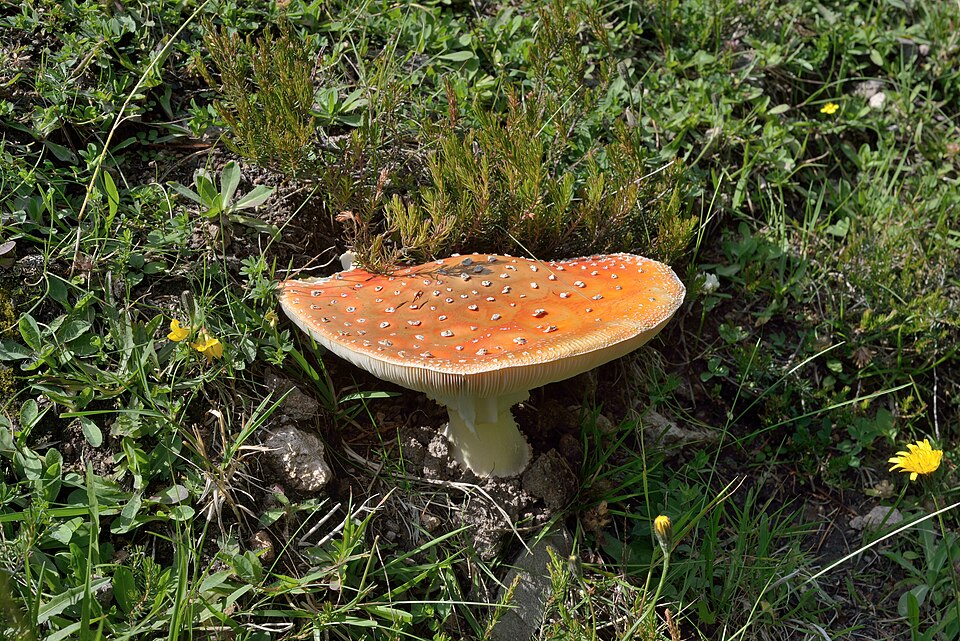
Also has a red cap but is covered in white wart-like patches (remnants of universal veil). Has WHITE gills, not yellow. Has a prominent ring (annulus) on the stem. Stem is white, not yellow. Toxic. The white gills and white stem versus yellow gills and yellow stem is the most reliable field distinction.
Side-by-side comparison →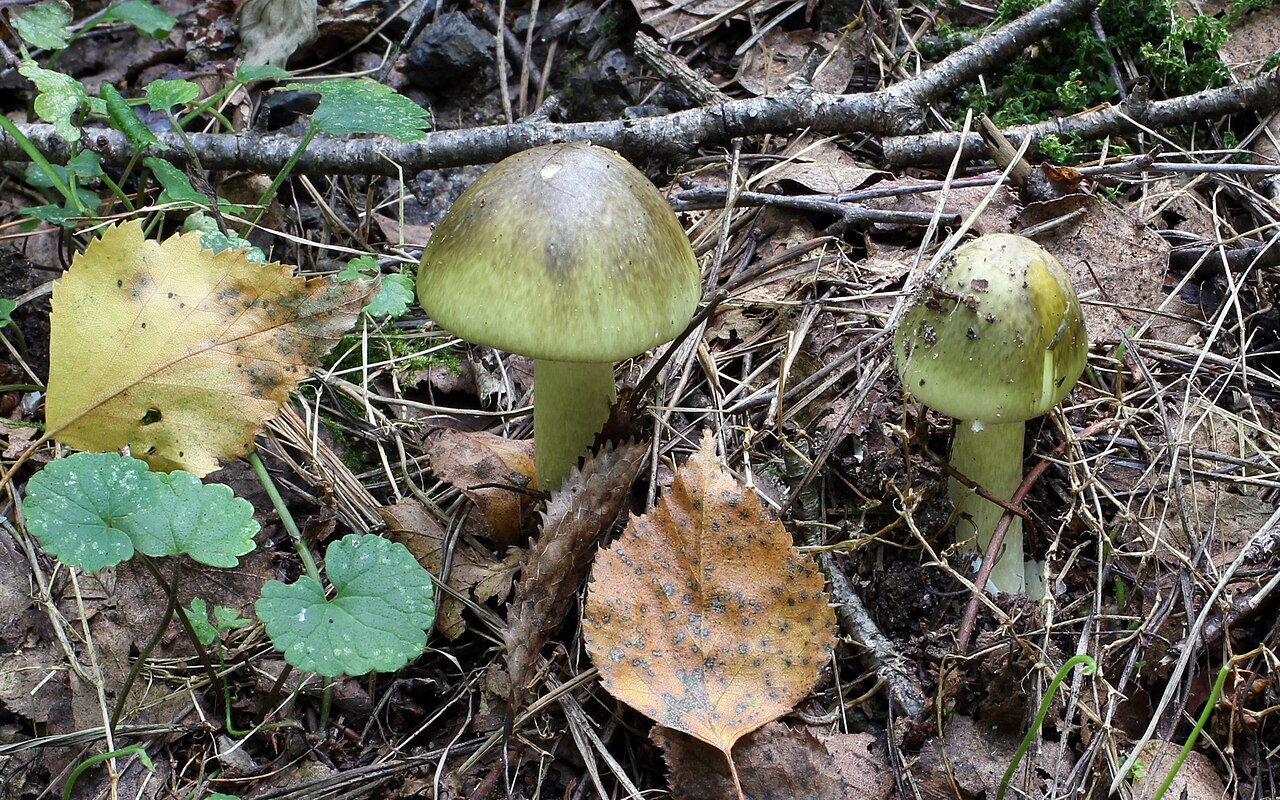
Greenish to yellowish cap (not red). White gills, white stem, white ring. Contains deadly amatoxins. The color differences are significant, but the key safety rule is: if the gills are white, do not eat it as a presumed Caesar's mushroom.
Side-by-side comparison →Is American Caesar's Mushroom Edible?
A choice edible mushroom with mild, nutty flavor and firm texture. However, this is an Amanita, and misidentification in this genus can be fatal. Only experienced foragers who can confidently verify the combination of red-orange cap, yellow gills, yellow stem, white volva, and absence of a ring should attempt to eat this species. When in doubt, leave it. The stakes are too high for guessing.
Always verify with local experts before consuming wild mushrooms.
Found something that looks like this in the wild? Don't guess — identify it from a photo with Orangutany and check it against look-alikes before you touch it.