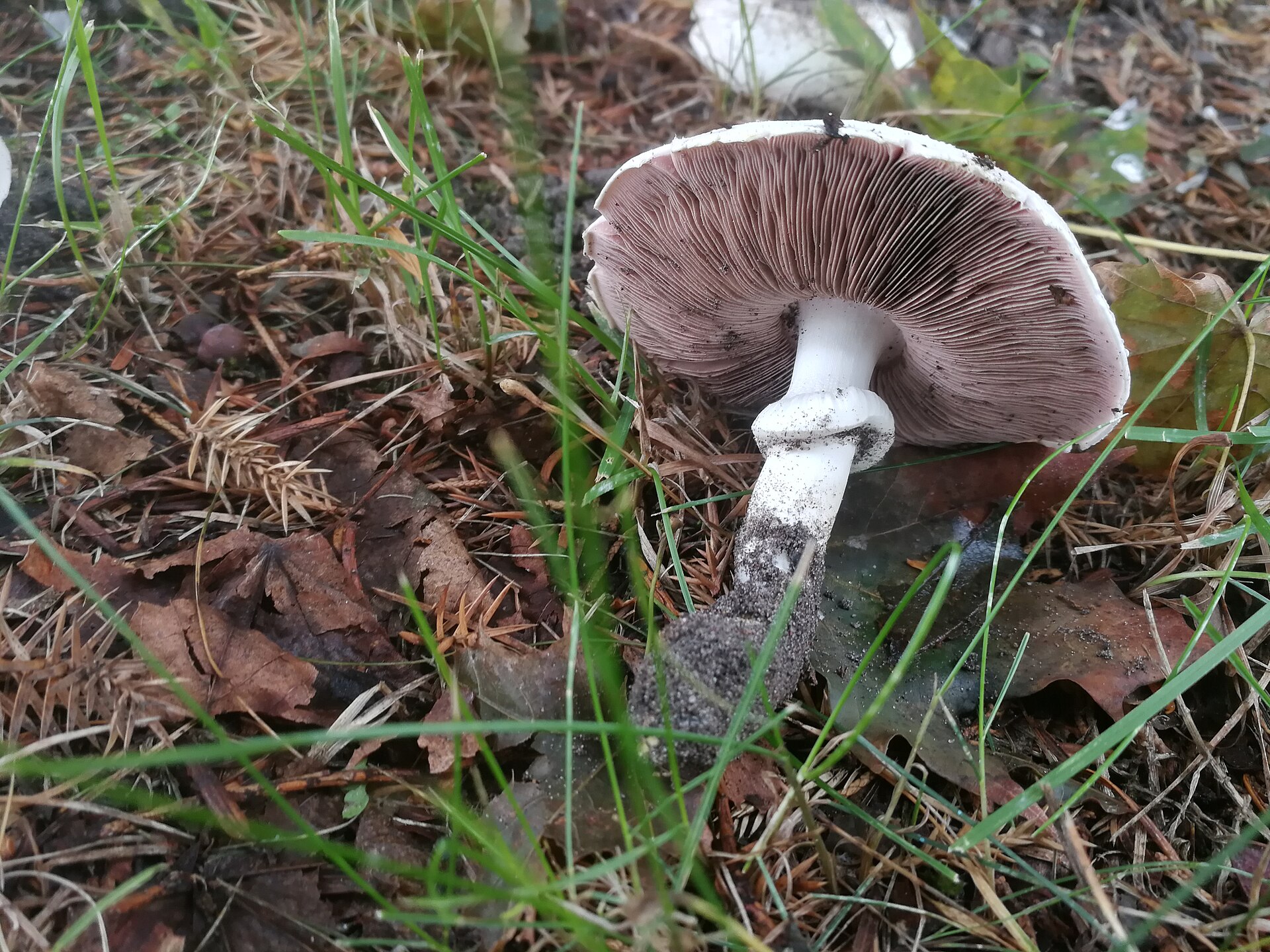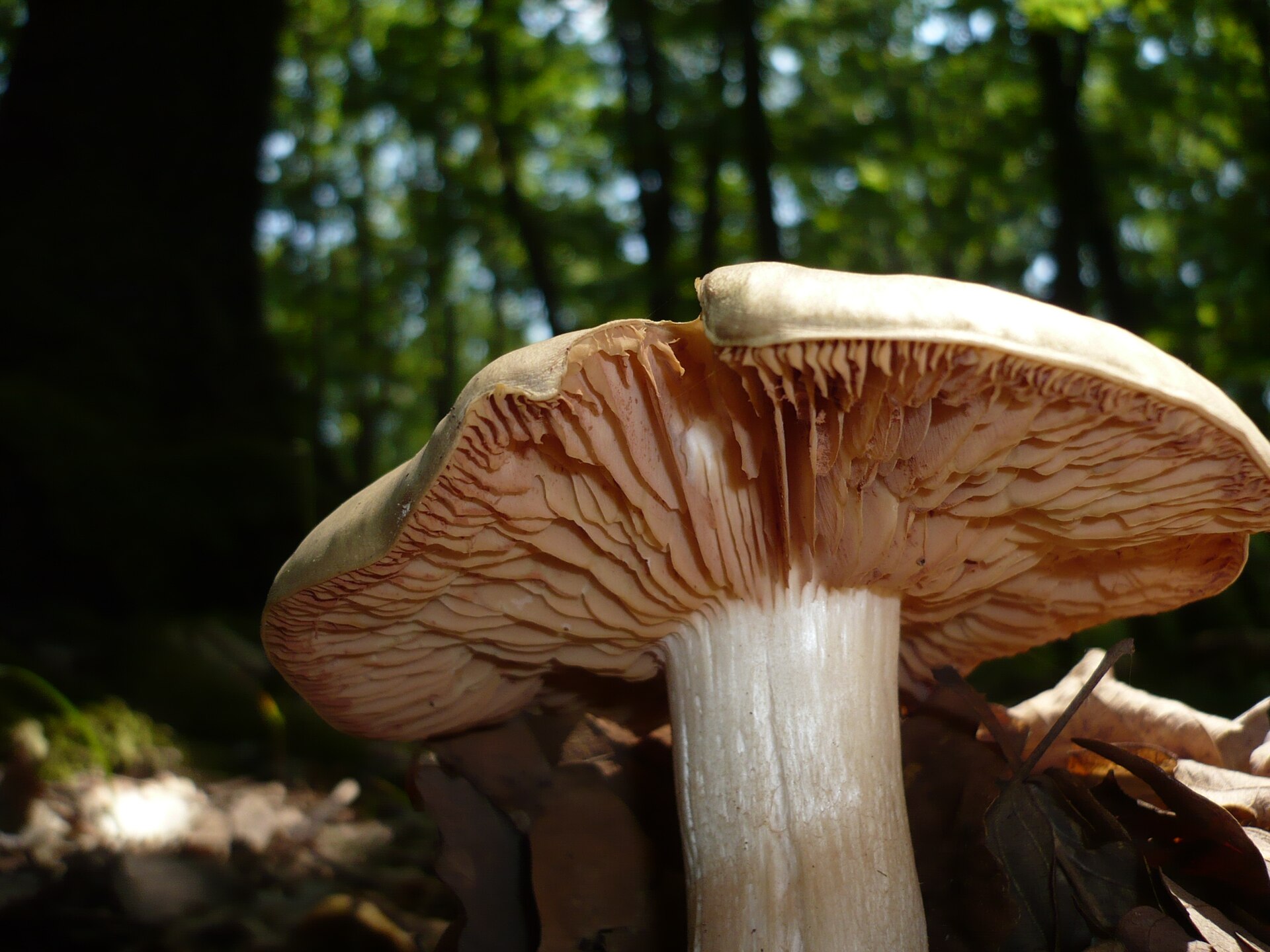
Photo by Gerhard Koller · Wikimedia Commons · CC BY-SA 3.0
The Livid Pinkgill is Europe's most dangerous Entoloma, a large and deceptively edible-looking mushroom that causes violent, sometimes life-threatening gastrointestinal poisoning. It has been mistaken for St. George's Mushroom, field mushrooms, and even clouded funnels.
Entoloma sinuatum is the kind of mushroom that makes experienced foragers nervous about beginners. It is big, fleshy, and handsome, with a smooth ivory to grayish cap that could easily pass for several popular edible species. It grows in parklands and woodland edges, often in the same habitats where people go looking for field mushrooms and other safe picks. And it will make you violently, memorably ill.
The poisoning caused by the Livid Pinkgill is not subtle. Within 30 minutes to 2 hours of eating it, victims experience severe nausea, vomiting, abdominal cramps, and diarrhea that can last for days. In serious cases, particularly among the elderly or those with compromised health, the dehydration and electrolyte imbalance can be life-threatening. There have been confirmed fatalities in Europe, though most healthy adults survive with hospital treatment.
The key identification feature that separates this mushroom from its edible look-alikes is the spore print. Entoloma sinuatum produces a distinctive salmon-pink spore print, and mature specimens show gills that gradually turn pink as the spores develop. If you find a large, pale, fleshy mushroom in a European woodland and the gills have any hint of pink, put it down immediately. The Livid Pinkgill is one of the most commonly confused poisonous mushrooms on the continent.
Livid Pinkgill Facts
- ●The Livid Pinkgill is one of the largest toxic mushrooms in Europe. Specimens with caps over 20 cm across have been recorded, making them hard to miss but easy to mistake for something edible.
- ●In France, pharmacists are trained to identify common poisonous mushrooms. Foragers routinely bring their finds to the local pharmacy for verification, a practice that has prevented countless Livid Pinkgill poisonings.
- ●The species name 'sinuatum' refers to the sinuate (notched) gill attachment, which is one of the key identification features but requires close inspection to appreciate.
- ●Despite being well-known to European mycologists, the Livid Pinkgill is responsible for more mushroom poisoning incidents in some regions of Europe than any species other than Amanita phalloides.
Stories From the Field
The Surrey Dinner Party Disaster
In 2016, a hobby forager near Guildford, Surrey, collected large pale mushrooms from a park and served them at a dinner party for six. All six guests became violently ill within two hours. Three required overnight hospitalization for IV rehydration. The mushrooms were later identified as Livid Pinkgills.
French Market Incident
In 2012, a pharmacist in Bordeaux identified Livid Pinkgills in a basket brought in by a forager who had planned to sell them at a local market as 'white meadow mushrooms.' The pharmacist's intervention likely prevented a mass poisoning event.
Italian Family Hospitalized on Holiday
A German family vacationing near Lake Garda in 2018 collected mushrooms from a park near their rental house. The mother and two children were hospitalized after eating what turned out to be Entoloma sinuatum. All recovered after two days of treatment.
Mycologist's Teaching Moment in the Cotswolds
During an autumn foray in the Cotswolds in 2019, a group found a magnificent specimen of Livid Pinkgill under an old beech tree. The foray leader used it to demonstrate the salmon-pink spore print technique, making every participant press the gills onto white paper. The visible pink deposit became the most-photographed moment of the walk.
Where It's Been Found
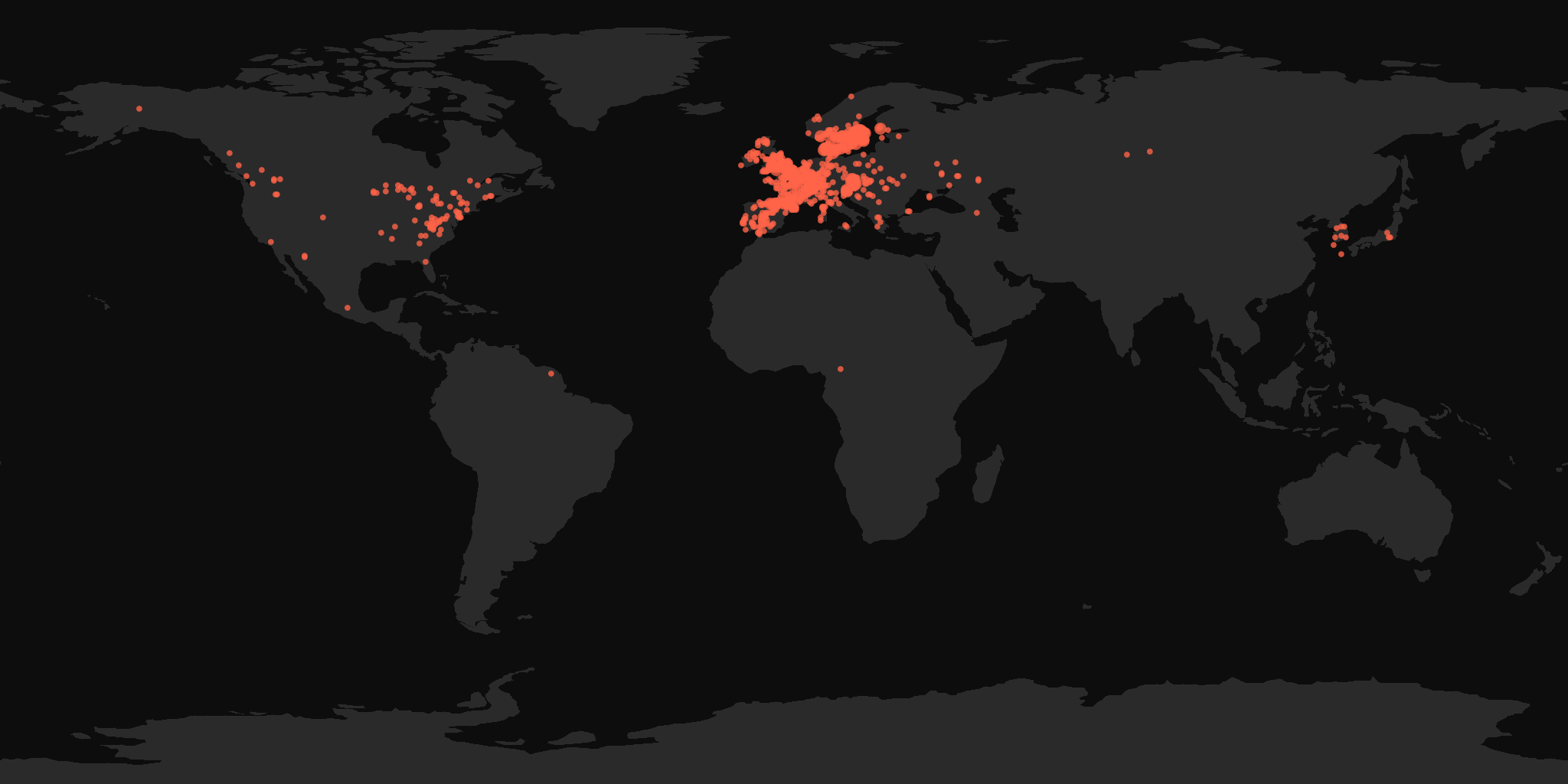
Based on reported sightings worldwide
How to Identify Livid Pinkgill
Cap
6-20 cm across, making it one of the larger toxic mushrooms. Convex at first, becoming broadly convex to irregular with wavy edges. Ivory white to pale grayish or slightly yellowish. Surface smooth and slightly greasy when wet.
Gills
Sinuate (notched where they meet the stem). Initially pale yellow, gradually turning salmon-pink as spores mature. This pink tinge is the critical warning sign.
Stem
6-15 cm tall, stout and solid, white to pale gray. No ring. Often slightly off-center. Firm and fibrous.
Spore Print
Salmon pink. This is the definitive identification feature.
Odor
Mealy or cucumber-like, described as similar to fresh flour. Can be pleasant, which adds to the deception.
Mushrooms That Look Like Livid Pinkgill
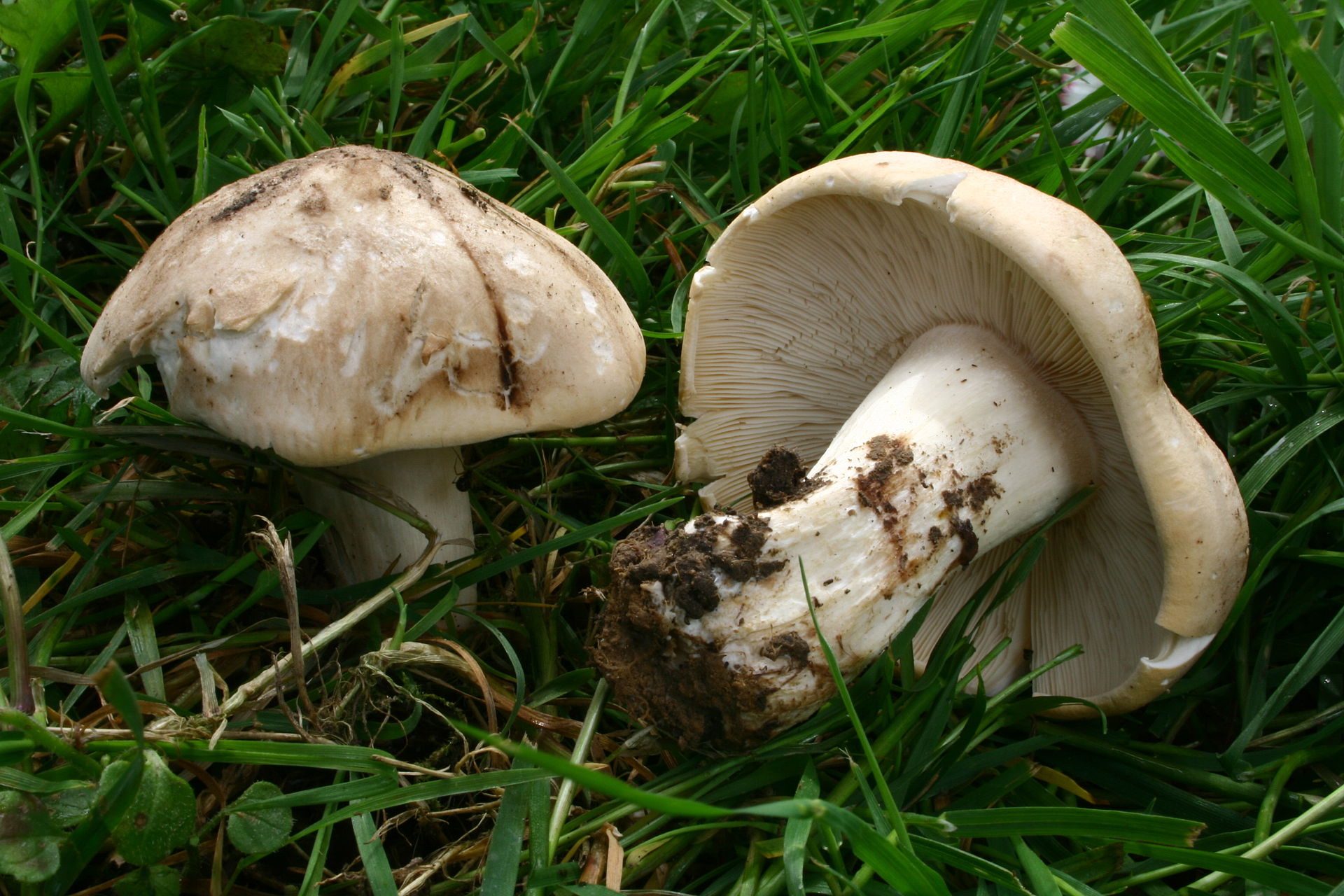
Fruits in spring (April-May), not autumn. Has a white spore print and gills that remain white. Strong mealy smell. If you find something similar in autumn, it is not St. George's.
Side-by-side comparison →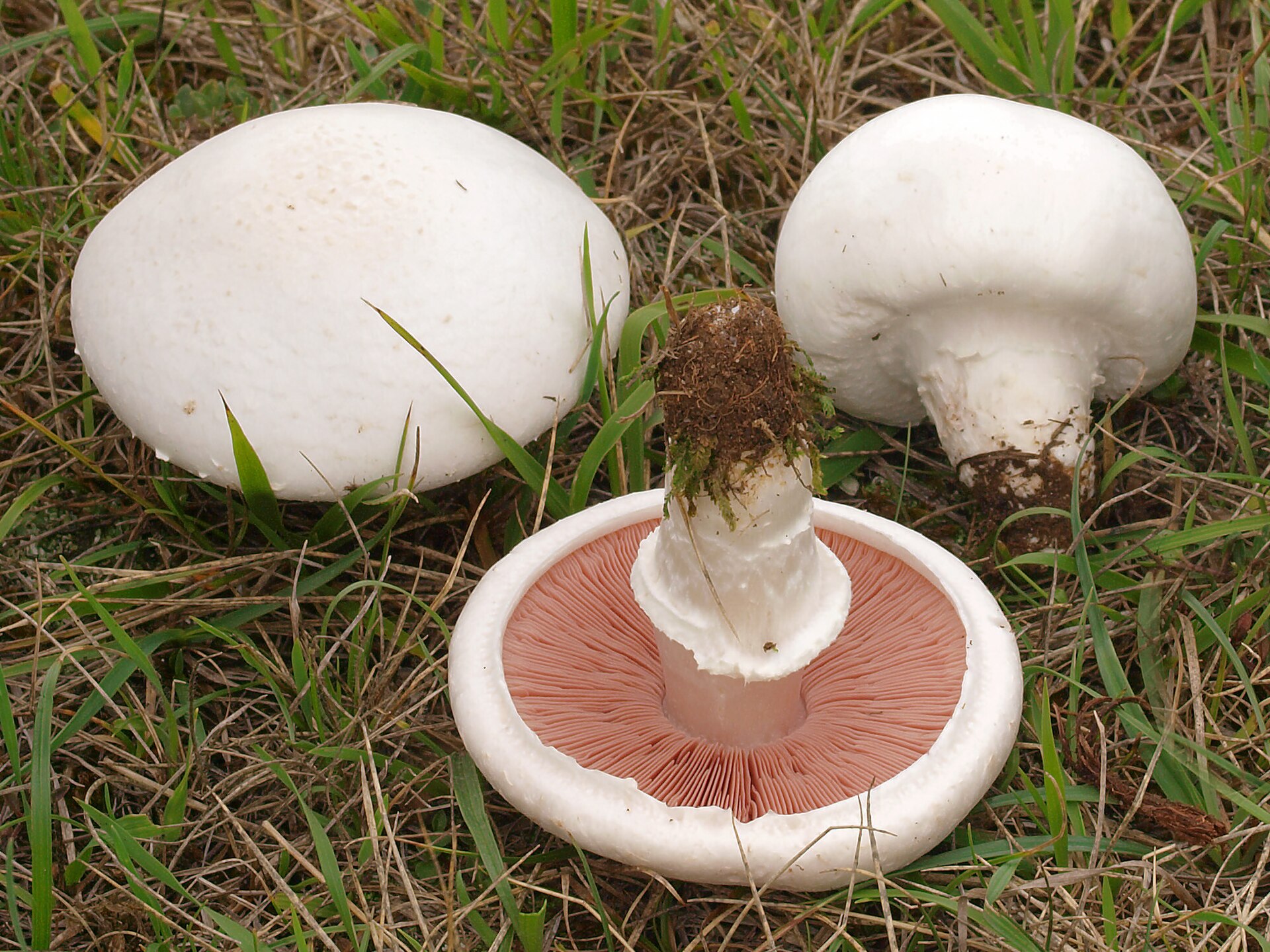
Field Mushrooms have chocolate-brown to dark brown spore prints and gills that start pink and darken to brown-black. The Livid Pinkgill has salmon-pink spores and gills that start pale and turn pink. Field Mushrooms also grow in open grassland, not near trees.
Side-by-side comparison →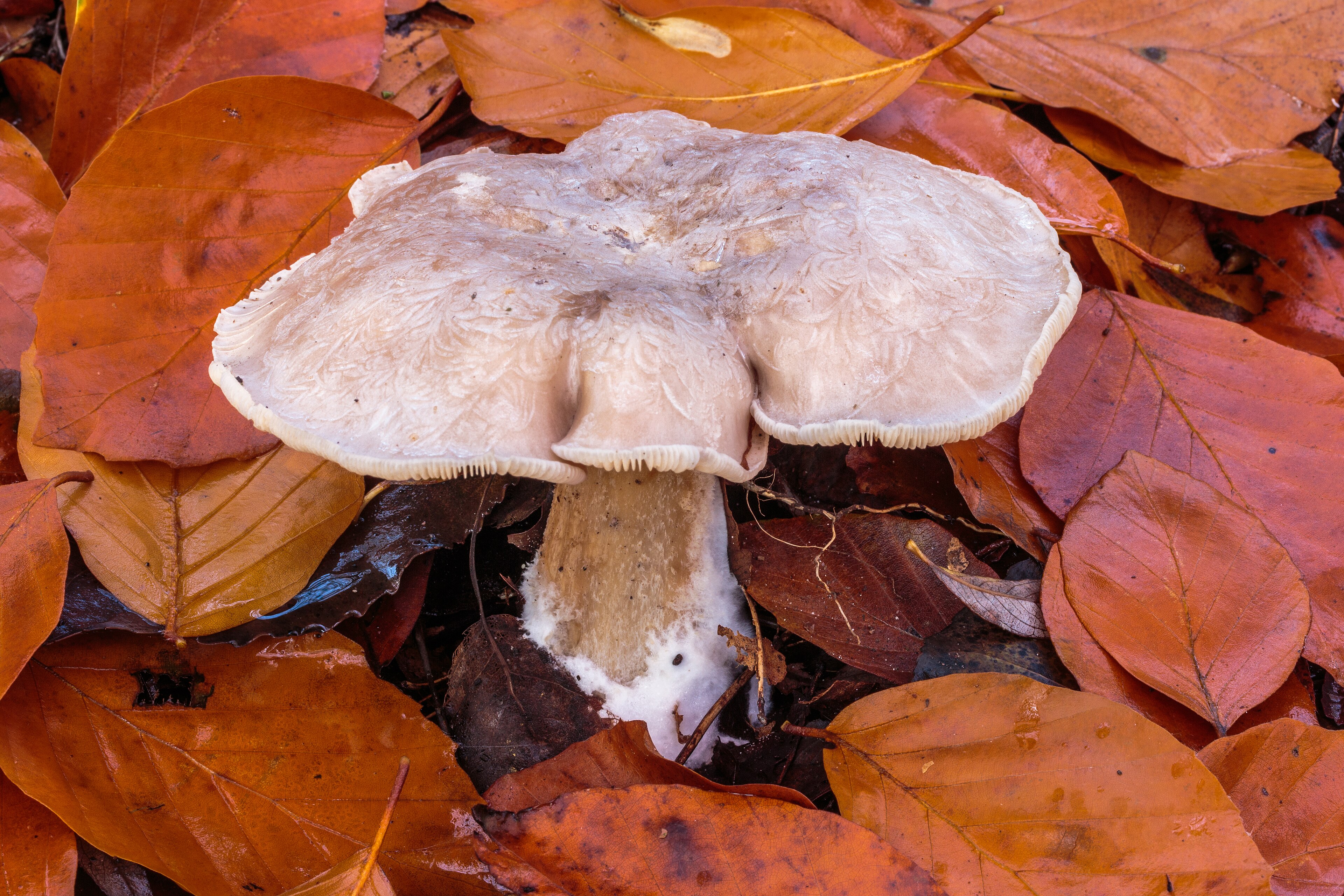
Similar size and grayish-white color, but the Clouded Funnel has decurrent gills (running down the stem), a white spore print, and a distinctly funnel-shaped mature cap. The Livid Pinkgill has sinuate gills and a salmon-pink spore print.
Side-by-side comparison →Is Livid Pinkgill Safe to Eat?
Causes severe gastrointestinal poisoning with onset 30 minutes to 2 hours after ingestion. Symptoms include violent vomiting, watery diarrhea, and intense abdominal cramping lasting 1 to 3 days. Severe dehydration can be life-threatening, especially for the elderly, young children, or immunocompromised individuals. Deaths have been recorded in Europe. Hospital treatment for rehydration is often necessary.
Always verify with local experts before consuming wild mushrooms.
Found something that looks like this in the wild? Don't guess — identify it from a photo with Orangutany and check it against look-alikes before you touch it.