Photo by User:Strobilomyces · Wikimedia Commons · CC BY-SA 4.0
The first great edible mushroom of spring, traditionally appearing around St. George's Day (April 23rd) in the UK and Europe. Calocybe gambosa is a chunky, all-white mushroom with a powerful mealy smell that fruits on chalk grasslands and woodland edges weeks before most other edible species show up.
When the rest of the mushroom world is still sleeping off winter, St. George's Mushroom is already pushing through the April grass. This timing is its greatest feature. After months with nothing to forage, finding a ring of plump white Calocybe gambosa on a chalk downland is like the first warm day of the year: a sign that the season has turned.
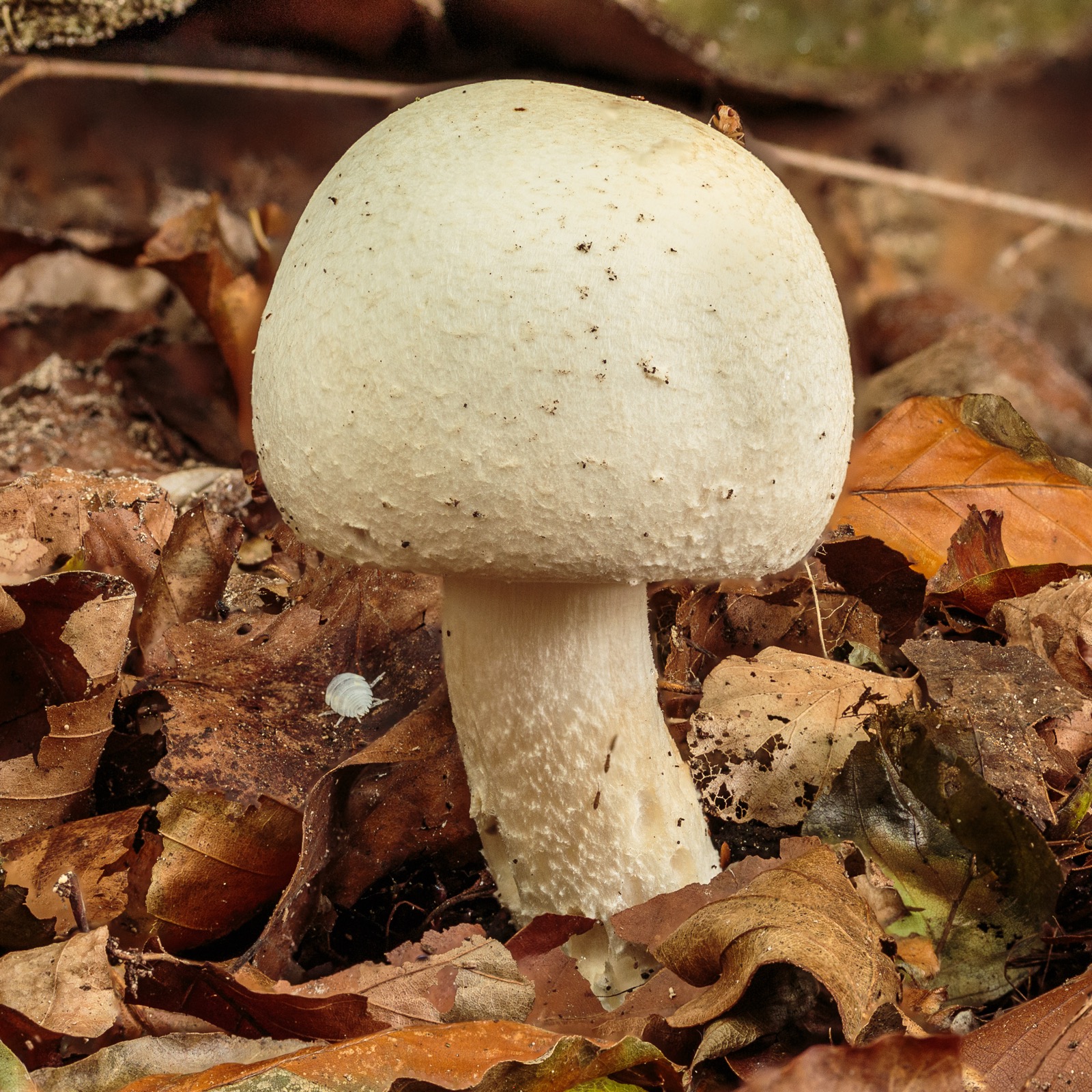
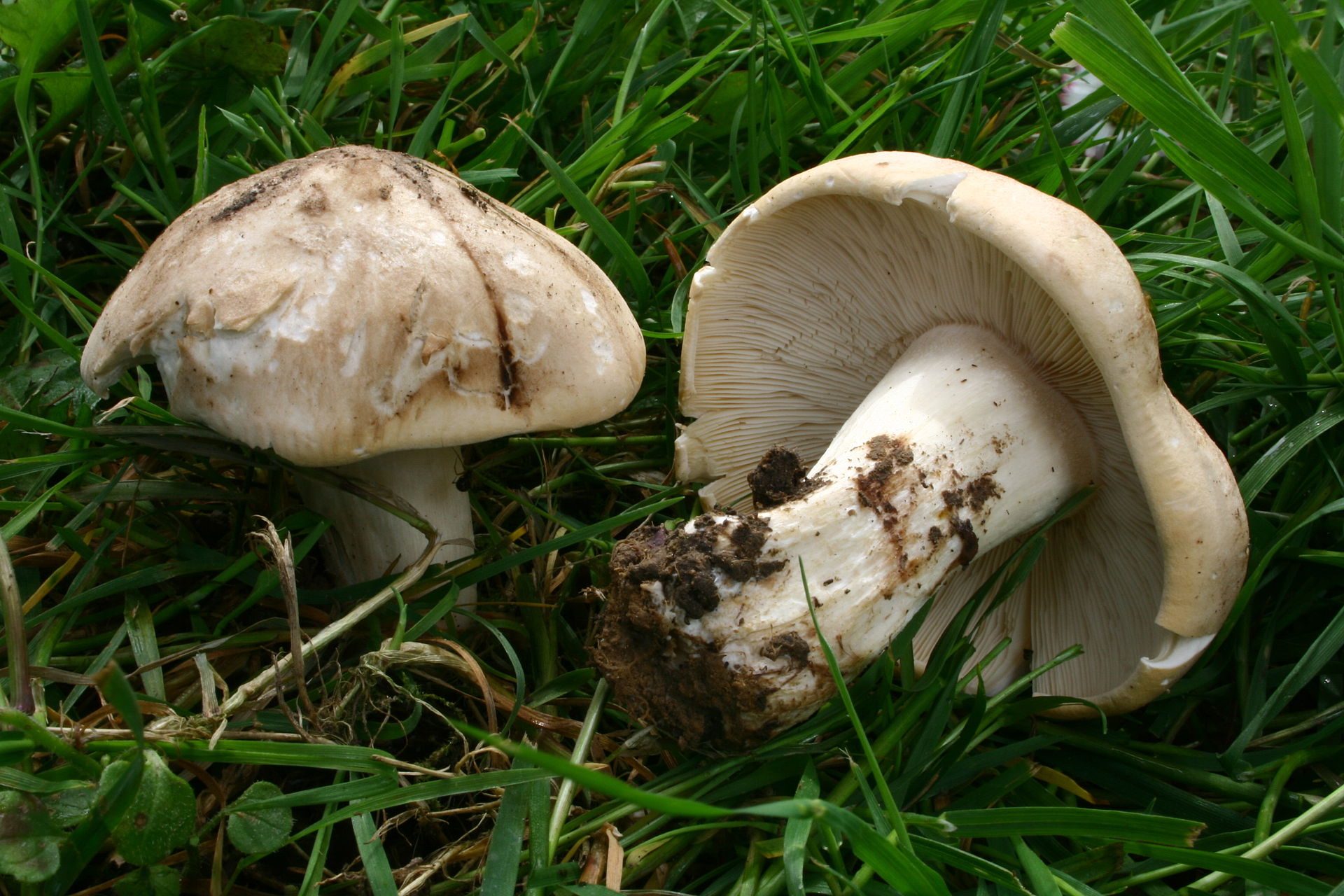
The mushroom is stocky, solid, and entirely white to cream-colored, with a thick cap, crowded gills, and a sturdy stem. The most distinctive characteristic is the smell, which is strong, mealy, almost like wet flour or fresh bread dough. Some people love it, others find it overpowering. Either way, once you have smelled a St. George's Mushroom, you will never forget it.
In the UK, this species has been collected for centuries. Its association with St. George's Day is so embedded in British foraging culture that the common name appears in field guides going back to the 18th century. In Spain, it is called perrechico and is highly prized in Basque cuisine, where it commands high prices in spring markets. In France, it is the mousseron (not to be confused with other species also called mousseron).
Calocybe gambosa often forms fairy rings or arcs in grasslands, sometimes reappearing in the same spot for decades. Experienced UK foragers mark their spots and return every April. The species prefers calcareous (chalky) soils and is often found along hedgerows, on road verges, and at woodland edges rather than deep in the forest.
St. George's Mushroom Facts
- ●St. George's Mushroom is so reliably timed that its fruiting has been used as a phenological marker in ecological studies, tracking how climate change is shifting spring events earlier in the year.
- ●In the Basque Country, wild perrechicos can sell for more per kilogram than most cuts of beef, making them one of the most economically valuable spring wild foods in Europe.
- ●The species name 'gambosa' comes from the Greek 'gambos' meaning 'swollen,' referring to the mushroom's characteristically thick, chunky build.
- ●Despite being one of the most recognizable spring mushrooms in Europe, Calocybe gambosa has never been commercially cultivated at scale. All market specimens are wild-foraged.
Stories From the Field
The Basque Perrechico Tradition
In the Basque Country, perrechicos (St. George's Mushrooms) are a spring delicacy that can fetch 40-80 euros per kilogram in markets. Basque foragers head to mountain meadows in late April and guard their collecting spots fiercely. The mushrooms appear in traditional Basque recipes with scrambled eggs, in revueltos, and alongside spring lamb.
A Chalk Downland Ring That Returned for 30 Years
A member of the Hampshire Fungus Recording Group documented a St. George's Mushroom ring on the South Downs that she had been visiting every April since the early 1990s. The ring expanded slowly each year, and she estimated it was already decades old when she first found it. By 2020, it measured roughly 12 meters across.
The Spring Forager's Calendar Marker
British foragers use St. George's Mushroom as a calendar event: its appearance signals the start of the foraging year. A popular UK foraging blog described it as 'the mushroom equivalent of the first cuckoo call: proof that winter is actually over and the good months are ahead.'
Where It's Been Found

Based on reported sightings worldwide
How to Identify St. George's Mushroom
Cap
5-15 cm across. Thick, fleshy, convex becoming wavy and irregular with age. White to cream, sometimes with a slight buff or yellowish tint. Surface smooth, dry, sometimes cracking at the margin in dry weather.
Gills
Crowded, narrow, sinuate (notched where they meet the stem). White to cream. Do not change color significantly with age.
Stem
3-7 cm tall, 2-4 cm thick. Stout, solid, white to cream. Smooth, fibrous, sometimes slightly swollen at the base. No ring, no volva.
Spore Print
White.
Odor
Very strong, mealy, floury, like wet bread dough or fresh pasta. This smell is one of the most reliable identification features.
Mushrooms That Look Like St. George's Mushroom
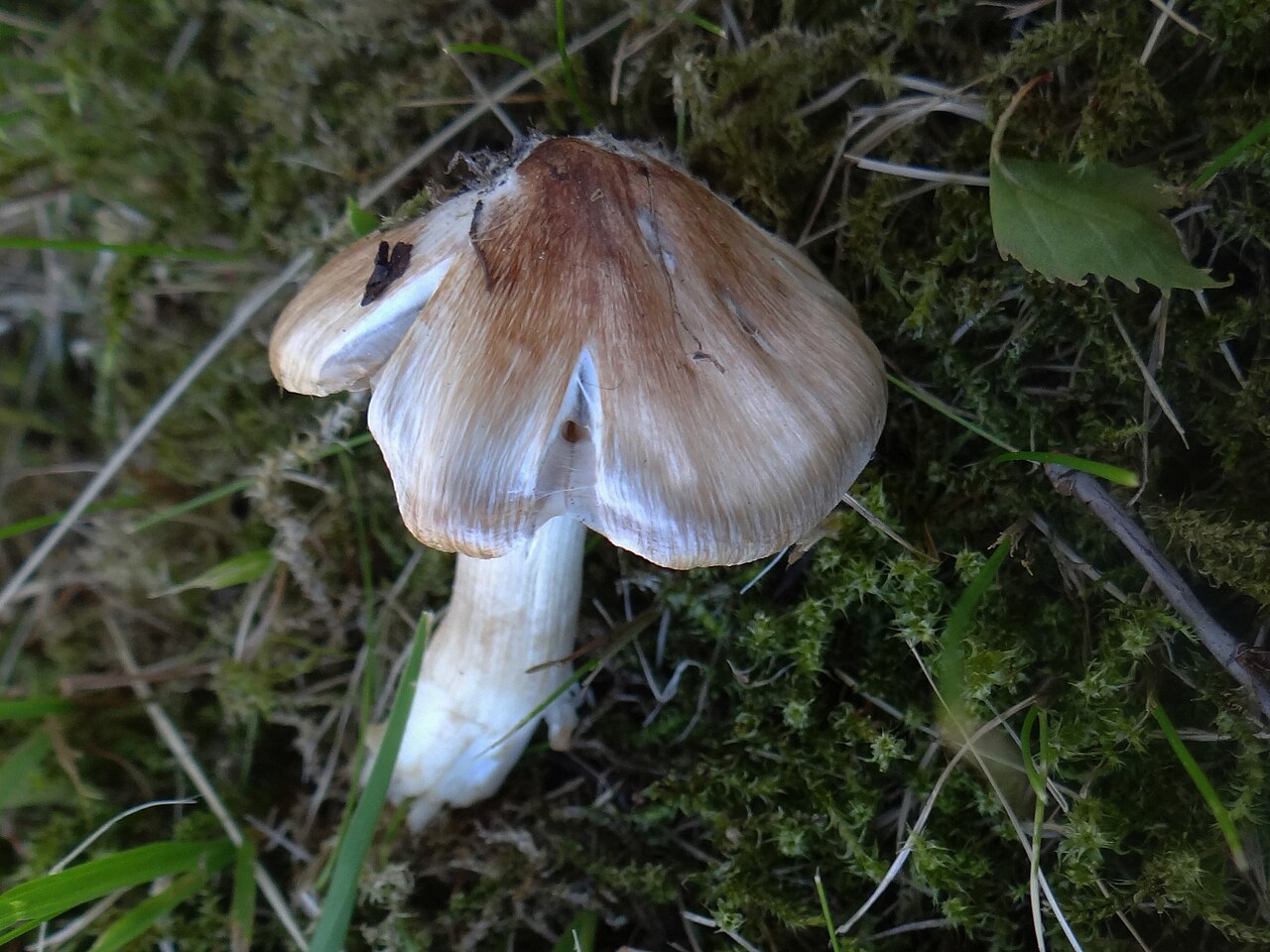
TOXIC. Fruits at a similar time in spring and can grow in similar habitats. Key differences: Inocybe erubescens has a fibrous, radially cracked cap (not smooth), gills that start white but turn olive-brown, a spermatic rather than mealy smell, and flesh that stains reddish. Contains muscarine.
Side-by-side comparison →Read more on First Nature →Sweetbread Mushroom (Clitopilus prunulus)
Also white with a strong mealy smell, making confusion possible. Key differences: Clitopilus has decurrent (running down the stem) gills that turn pinkish with spore maturity, and a pink spore print rather than white. Actually edible but the resemblance to toxic white species makes it risky for beginners.
Read more on MushroomExpert →Is St. George's Mushroom Edible?
A good edible mushroom, highly prized in parts of Europe, especially the Basque Country and the UK. The strong mealy flavor divides opinion; some find it delicious, others overwhelming. Best sauteed in butter or olive oil, used in omelets, or combined with spring vegetables. Cook thoroughly. Be absolutely certain of identification, as the deadly Inocybe erubescens fruits at the same time and in similar habitats.
Always verify with local experts before consuming wild mushrooms.
Found something that looks like this in the wild? Don't guess — identify it from a photo with Orangutany and check it against look-alikes before you touch it.