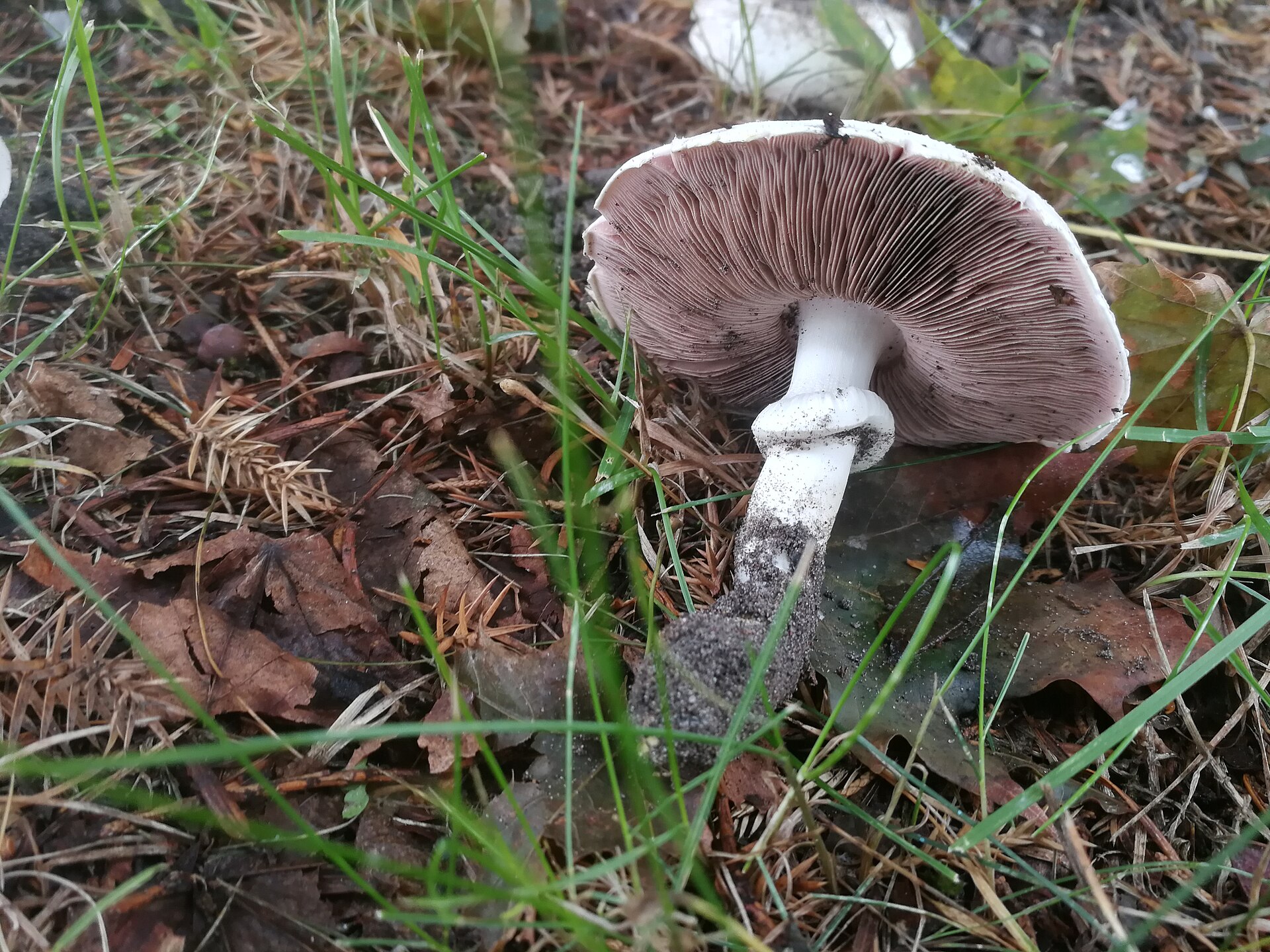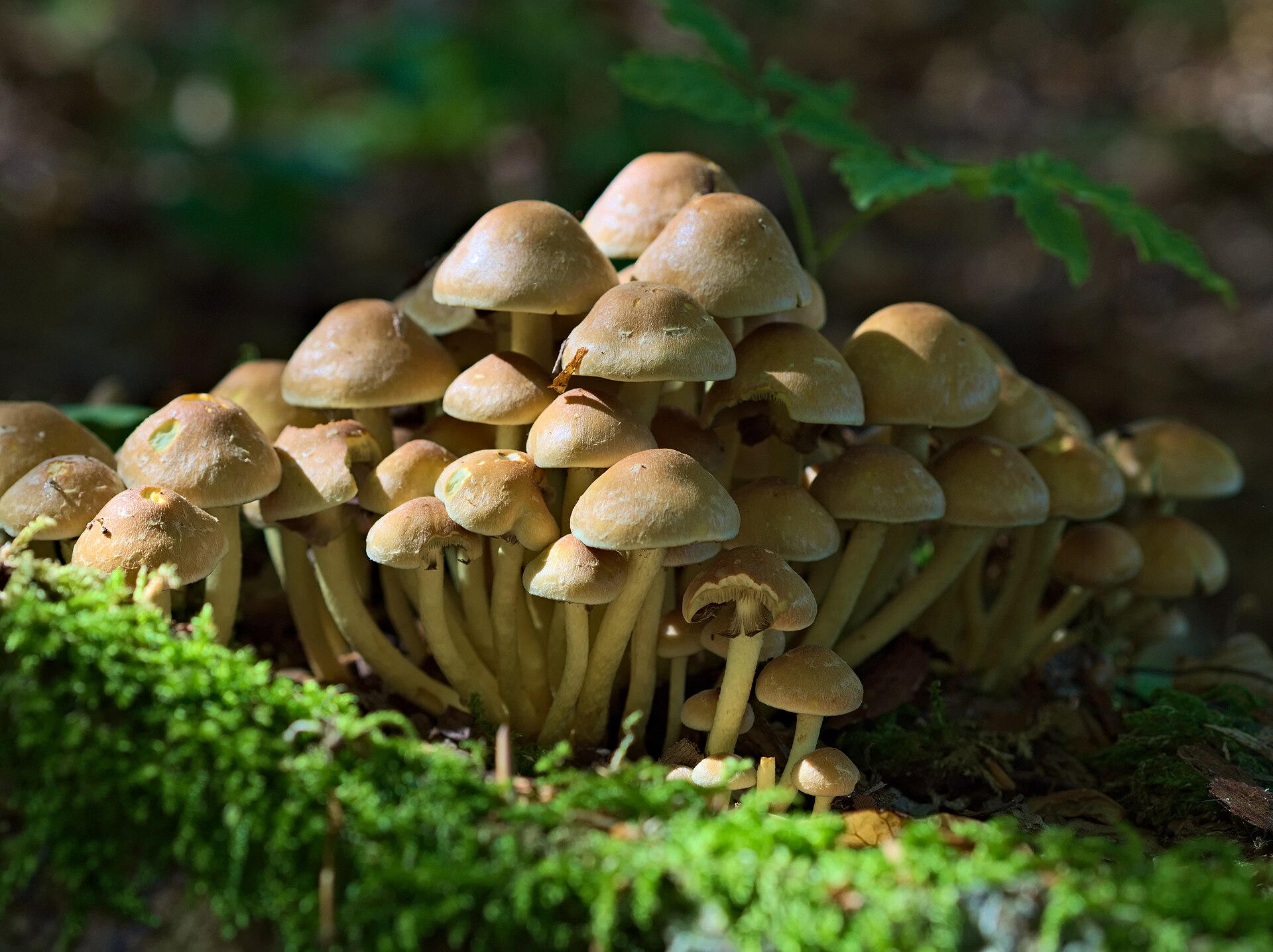
Photo by Kreuzschnabel · Wikimedia Commons · CC BY-SA 3.0
Sulphur Tuft is one of the most common woodland mushrooms on Earth, forming dense yellow-green clusters on dead stumps year-round. Its bitter taste should stop anyone from swallowing it, but those who persist face liver and kidney damage that can take days to manifest.
Hypholoma fasciculare is everywhere. If you have ever walked through a temperate woodland and noticed clusters of bright sulfur-yellow mushrooms erupting from dead stumps and fallen logs, you have almost certainly seen Sulphur Tuft. It is one of the most prolific wood-decay fungi in the Northern Hemisphere, fruiting from spring through winter, sometimes even in mild January weather. Its abundance makes it one of the first mushrooms most beginners encounter, which is unfortunate because it is genuinely toxic.
The bitterness of Sulphur Tuft is its first line of defense against being eaten. A tiny taste of the cap flesh produces an intensely bitter, unpleasant flavor that most people immediately spit out. Those who push past the bitterness and consume a full meal face a more serious problem. The mushroom contains fasciculol E and other sesquiterpenes that cause initial gastrointestinal symptoms (nausea, vomiting, diarrhea) followed by delayed liver and kidney damage. Fatal cases have been reported in Japan and Europe.
Sulphur Tuft grows in dense clusters of dozens or even hundreds of fruiting bodies, all connected to the same network of mycelium decomposing dead wood. The caps are bright sulfur-yellow at the margin, darkening to orange-brown at the center. The gills start yellow and pass through green to dark purple-brown as the spores mature. That greenish tinge to the gills is a useful field mark that separates it from edible cluster-growing species.
Sulphur Tuft Facts
- ●Sulphur Tuft may be the most common mushroom in temperate forests worldwide. On a single autumn walk through any European woodland, you are almost guaranteed to see it.
- ●The intensely bitter taste of Sulphur Tuft is actually a useful safety feature. Most accidental poisonings involve people who ignored the bitterness or masked it with strong flavors.
- ●A single dead tree stump can produce Sulphur Tuft clusters for 5 to 10 years as the mycelium slowly decomposes the wood. The same stump may produce hundreds of fruiting bodies per season.
- ●Sulphur Tuft mycelium produces compounds that inhibit the growth of other fungi, helping it dominate the dead wood it colonizes. This antifungal activity has attracted interest from pharmaceutical researchers.
Stories From the Field
Japanese Family Hospitalized After Stump Harvest
In 2004, a family of four in Nagano Prefecture, Japan, collected Sulphur Tuft from a cedar stump, mistaking them for the prized nameko mushroom. Despite the bitter taste, they ate a full meal. All four developed liver enzyme elevations within three days. One family member, an 80-year-old grandmother, died from liver failure.
Confusion with Sheathed Woodtuft in Bavaria
In 2015, a German forager near Berchtesgaden collected clusters of mushrooms from beech stumps. He thought he had found Sheathed Woodtuft (Kuehneromyces mutabilis) and cooked a large batch. The bitter taste should have been a warning, but he attributed it to the cooking method. He spent two nights in hospital with liver damage.
London Parks Warning Sign
In 2017, the Royal Parks organization in London installed small information signs near several dead tree stumps in Richmond Park where Sulphur Tuft fruited prolifically every autumn. The signs warned visitors not to pick or eat any mushrooms growing on dead wood without expert identification.
Where It's Been Found

Based on reported sightings worldwide
How to Identify Sulphur Tuft
Cap
2-7 cm across. Convex, becoming broadly convex to flat. Sulfur-yellow at the margin, deepening to orange or tawny-brown at the center. Surface smooth, sometimes with faint veil remnants at the margin when young.
Gills
Adnate (broadly attached to the stem). Start sulfur-yellow, then turn greenish-yellow, and finally darken to purple-brown as spores mature. The green tinge in mid-development is distinctive.
Stem
5-10 cm tall, slender, curved, sulfur-yellow above and brownish below. Fibrous, often with faint ring zone from the veil. Hollow or stuffed. Grows in dense clusters with stems fused at the base.
Spore Print
Purple-brown to dark violet-brown.
Odor
Mushroomy but not distinctive. The intensely bitter taste is a more useful identification feature than the smell.
Mushrooms That Look Like Sulphur Tuft
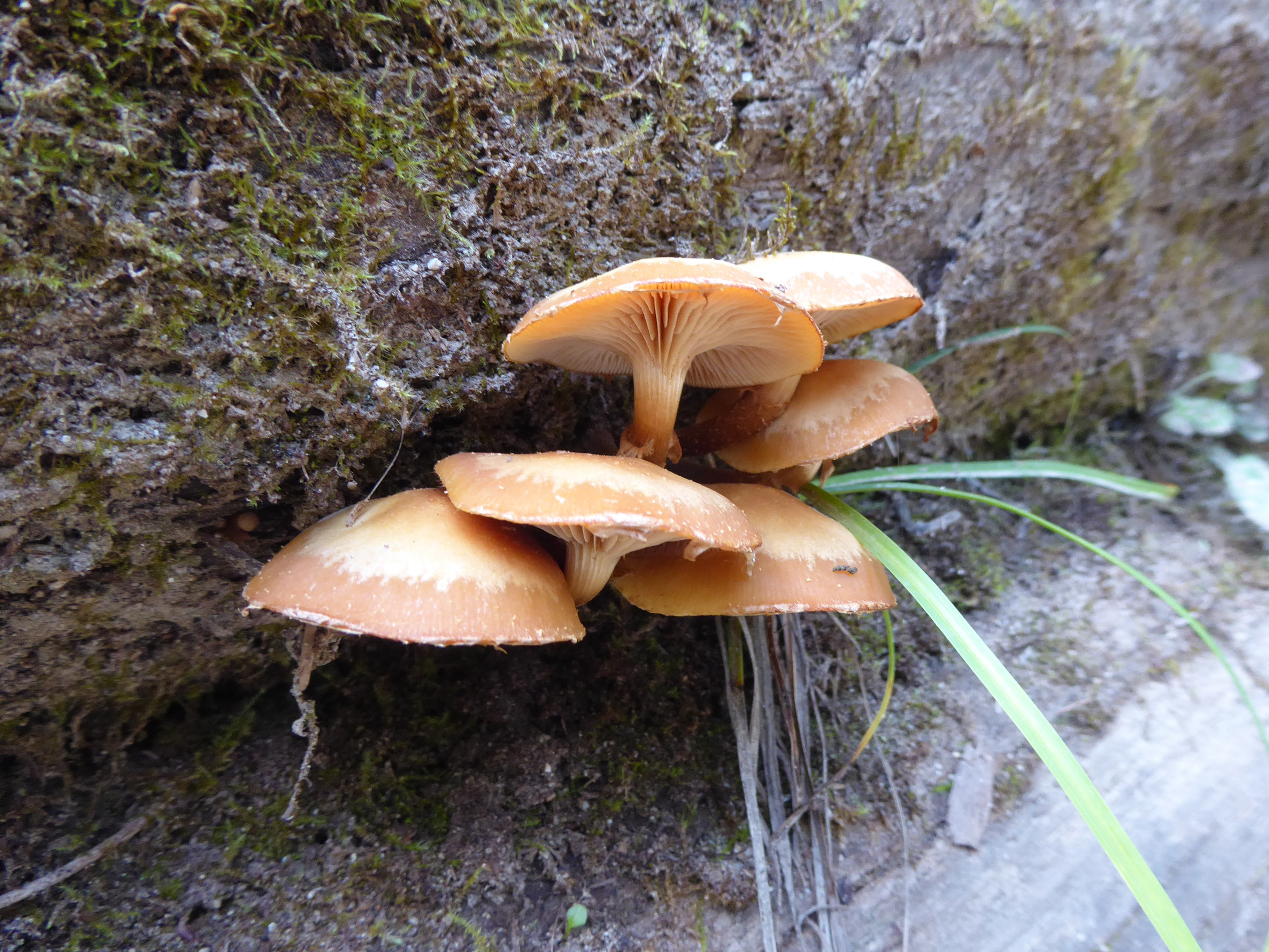
An edible species that also grows in clusters on dead wood. Sheathed Woodtuft has a distinctive ring on the stem, a two-toned cap (dark when wet, pale when dry), and brown (not purple-brown) spore print. Gills never have the greenish tinge. The ring is the key feature.
Side-by-side comparison →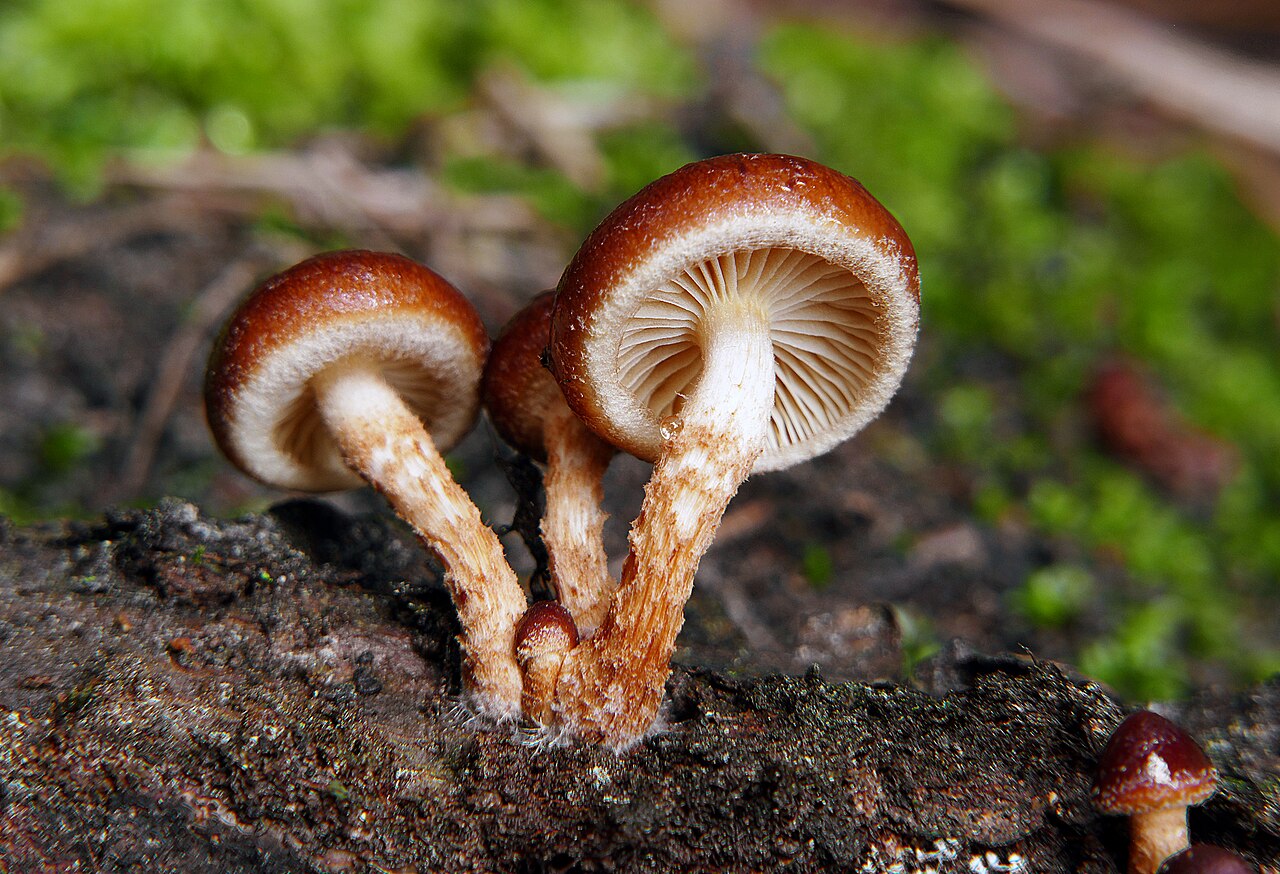
A related species considered edible in some regions. Brick Cap has a brick-red to reddish-brown cap center (not orange-brown), lacks the greenish gill tinge, and has a milder (not intensely bitter) taste. Also grows in clusters on dead wood.
Side-by-side comparison →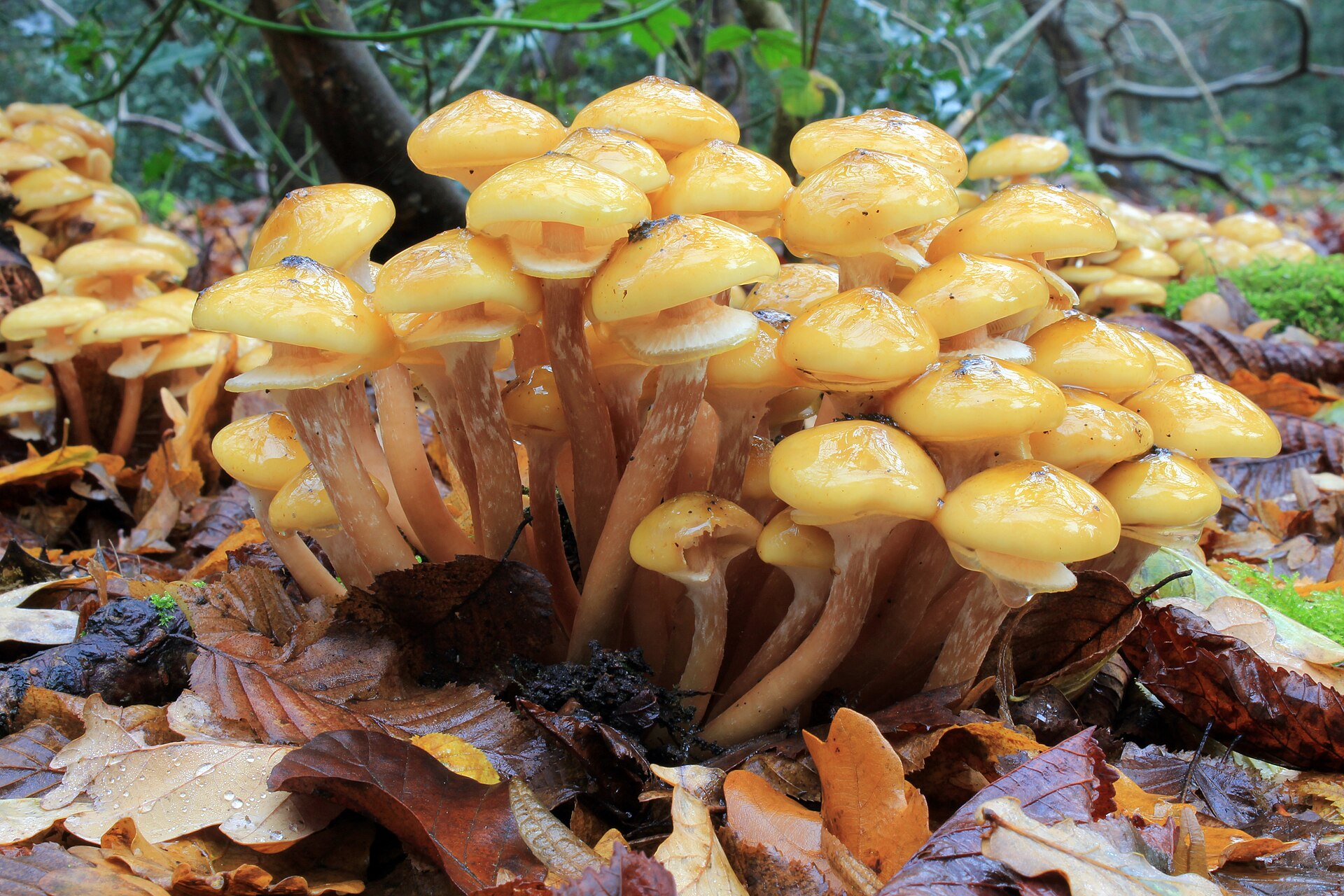
Also grows in clusters on wood, but has a white spore print, a prominent ring on the stem, and honey-brown coloring. No greenish gill tinge. Honey Fungus is a parasite of living trees, while Sulphur Tuft prefers dead wood.
Side-by-side comparison →Is Sulphur Tuft Safe to Eat?
Contains fasciculol E and other toxic sesquiterpenes. Extremely bitter taste usually deters consumption, but ingestion of significant quantities causes nausea, vomiting, and diarrhea, followed by delayed liver and kidney damage over 2 to 6 days. Fatal cases have been reported. Cooking does not eliminate the bitterness or the toxins. Even small quantities can cause gastrointestinal distress.
Always verify with local experts before consuming wild mushrooms.
Found something that looks like this in the wild? Don't guess — identify it from a photo with Orangutany and check it against look-alikes before you touch it.