Yellow Houseplant Mushroom
Leucocoprinus birnbaumii
By Sofia Andersson · Orangutany
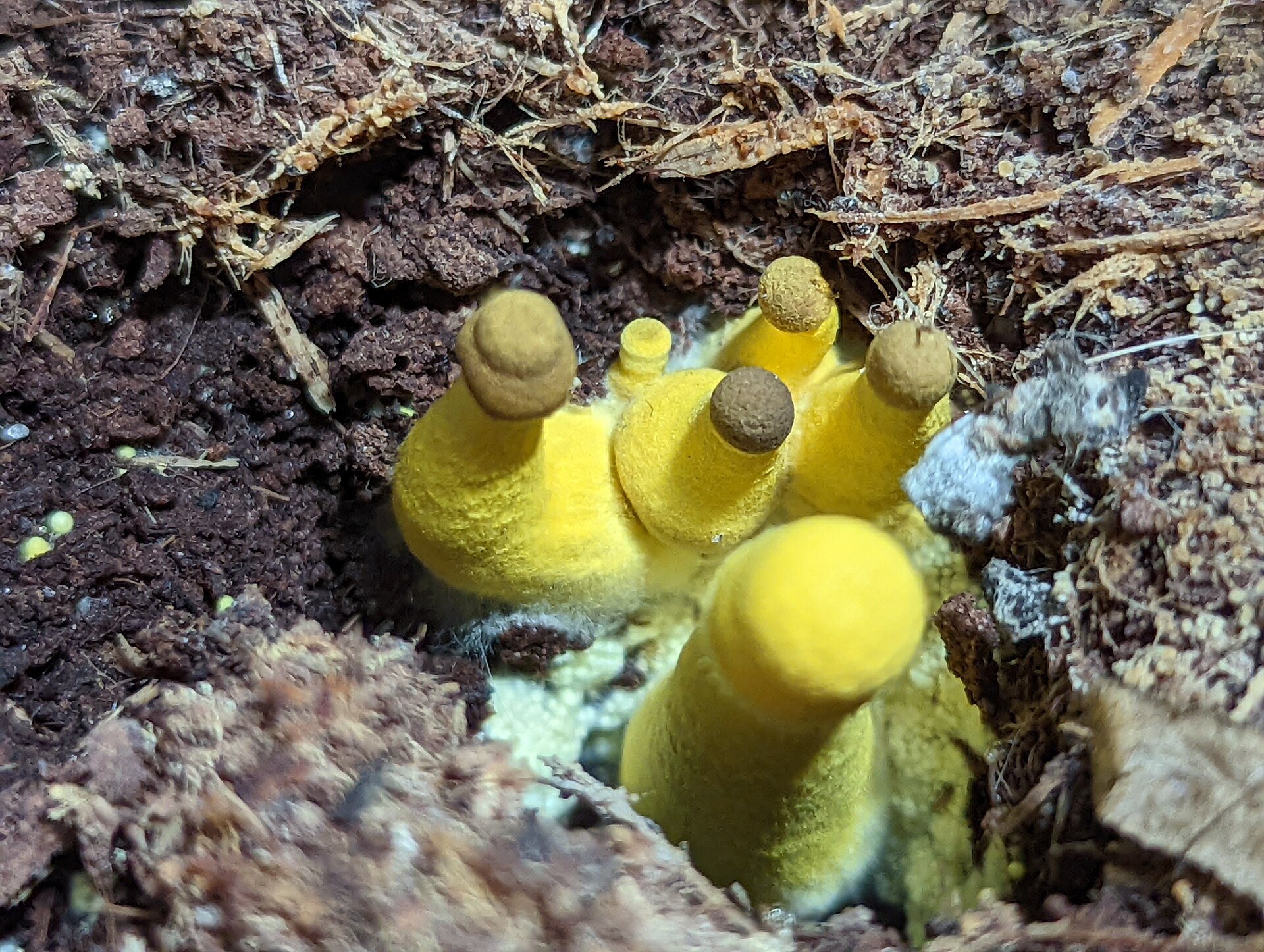
Photo by Axelradical · Wikimedia Commons · CC BY-SA 4.0
A bright lemon-yellow mushroom that appears uninvited in potted houseplants, greenhouses, and tropical garden soil worldwide. Considered mildly toxic and not edible. One of the most commonly asked-about mushrooms on plant forums, typically triggering panic in houseplant owners who have never seen a mushroom grow indoors.
You wake up one morning, walk over to water your fiddle-leaf fig, and discover a cluster of brilliant yellow mushrooms has appeared overnight in the pot. Welcome to your introduction to Leucocoprinus birnbaumii, the uninvited guest that has launched a thousand panicked posts on Reddit's r/houseplants and r/mycology.
The Yellow Houseplant Mushroom is a tropical and subtropical species that has colonized the global potting soil supply chain. Its spores are present in commercial potting mixes, particularly those containing coconut coir, peat, or composted bark. When conditions are right (warm, humid, and organic-rich), the mycelium that has been quietly growing unseen in the soil sends up fruiting bodies seemingly from nowhere. The mushrooms are startlingly bright: pure lemon-yellow, sometimes almost neon, with a pleated cap that looks like a tiny parasol.
The first question everyone asks is whether the mushroom will harm their plant. The answer is no. Leucocoprinus birnbaumii is saprotrophic, feeding on dead organic matter in the soil, not on the plant's roots. If anything, it is a sign that your soil is healthy and biologically active. The mycelium helps break down organic material, releasing nutrients the plant can use.
The second question is whether it is poisonous. The answer is yes, at least mildly. The specific toxins have not been well characterized, but ingestion causes gastrointestinal distress. The primary concern is children and pets, who may be attracted to the bright color. While fatalities have not been documented, the mushroom should not be eaten. If you have curious toddlers or cats, simply pluck the fruiting bodies as they appear. You will not eliminate the mycelium without replacing the soil entirely, and there is really no reason to do so.
Yellow Houseplant Mushroom Facts
- ●Leucocoprinus birnbaumii spores are so widespread in commercial potting soils that eliminating them is essentially impossible without sterilizing the soil, which would also kill all the beneficial microorganisms your plant needs.
- ●The species was first described in 1855 from specimens found growing in a greenhouse in Prague. It has since spread to every continent except Antarctica through the global trade in potting materials.
- ●Despite causing panic in houseplant owners, Leucocoprinus birnbaumii is actually beneficial to potted plants. The mycelium breaks down dead organic matter in the soil, releasing nutrients and improving soil structure.
- ●The bright yellow color fades significantly as the mushroom ages. Old specimens can look grayish-yellow or dingy cream, making them harder to identify and less likely to trigger the characteristic alarm in plant owners.
Stories From the Field
The r/houseplants Panic Thread
In 2022, a post on r/houseplants showing bright yellow mushrooms in a monstera pot received over 4,000 upvotes and hundreds of comments. The poster was convinced their plant was diseased. Mycology enthusiasts flooded in to explain that the mushroom was harmless to the plant. The thread became a recurring reference point, and "it's just Leucocoprinus birnbaumii" became a meme in the houseplant community.
The Greenhouse Infestation
A commercial orchid grower in Florida reported in 2019 that Leucocoprinus birnbaumii had colonized hundreds of pots in their greenhouse after switching to a new coconut coir-based potting medium. The mushrooms were not harming the orchids, but customers were refusing to buy plants with mushrooms growing in the pots. The grower eventually learned to market them as a sign of healthy, biologically active soil.
The Toddler Scare in London
A mother in south London called NHS 111 in 2020 after her two-year-old broke off a Leucocoprinus birnbaumii from a houseplant pot and put it in his mouth. The child was observed in the hospital for four hours. No symptoms developed beyond mild stomach upset, but the incident prompted the family to move all houseplants to high shelves. The pediatrician noted it was the third such call from their practice that year.
Where It's Been Found

Based on reported sightings worldwide
How to Identify Yellow Houseplant Mushroom
Cap
2-5 cm across. Ovoid when young, expanding to bell-shaped or convex. Bright lemon-yellow throughout, fading slightly with age. Surface is covered in fine powdery granules or small scales, especially on top. Margin is distinctly pleated or striate, showing the gill pattern through the thin cap flesh.
Gills
Free (not attached to stem). Pale yellow to bright yellow. Crowded and thin. Not a useful feature for most observers since the cap shape and color are so distinctive.
Stem
3-8 cm tall, 2-5 mm thick. Slender, yellow, with a small ring (annulus) that is often fragile and may disappear with age. Base is slightly enlarged. Surface has the same powdery-granular texture as the cap.
Spore Print
White to very pale cream.
Odor
Not distinctive. Mild, earthy.
Mushrooms That Look Like Yellow Houseplant Mushroom
Leucocoprinus cretaceus (White Houseplant Mushroom)
Very similar in size, shape, and habitat (also appears in potted plants), but entirely white rather than yellow. Same genus, same ecological role. Also considered mildly toxic.
Read more on iNaturalist →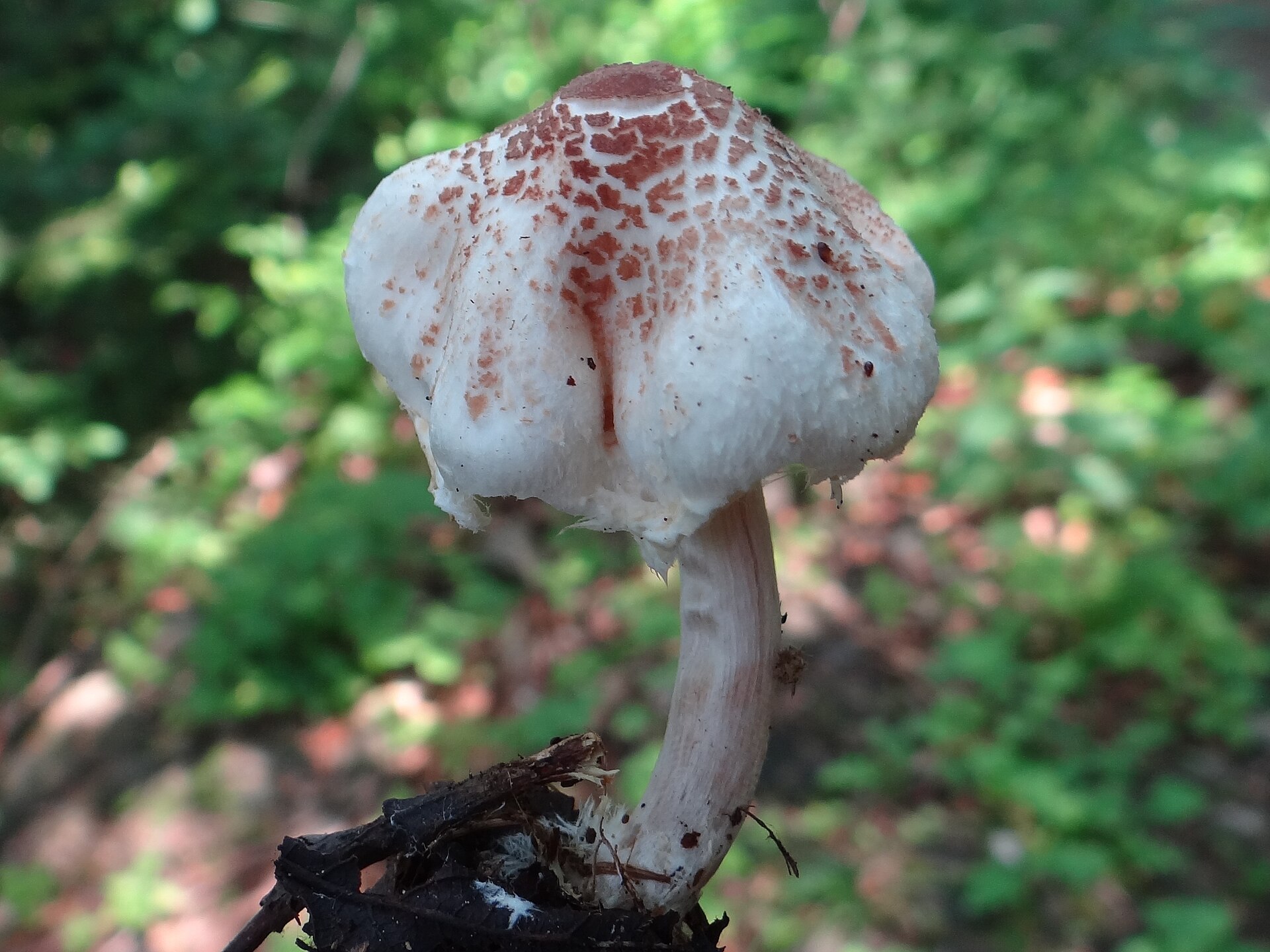
Much more dangerous (potentially deadly). Found outdoors in garden soils. Smaller, white to cream with reddish-brown scales on the cap center. Has a distinctive unpleasant chemical odor. Not yellow. Not found in houseplants.
Side-by-side comparison →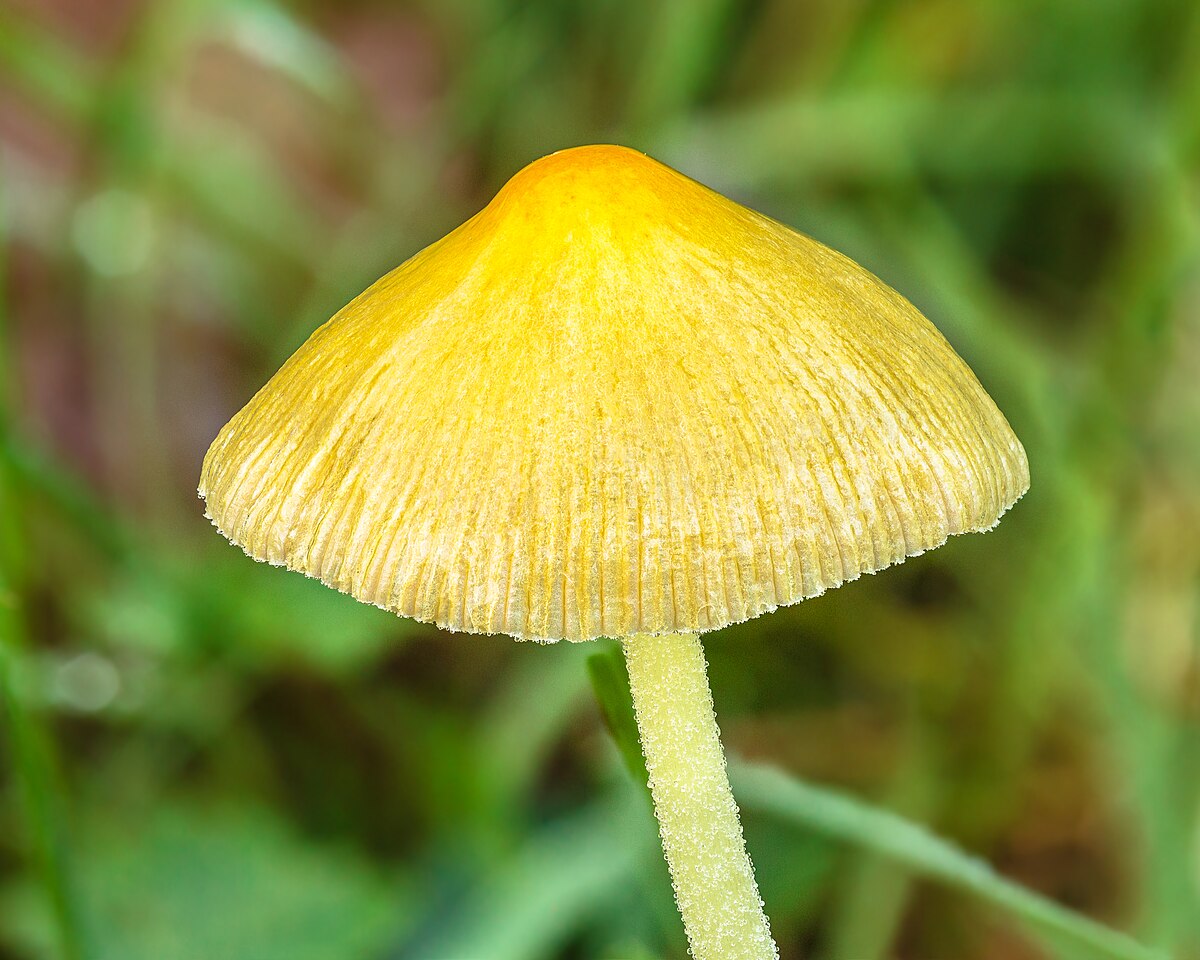
Also bright yellow, but found outdoors on grass, dung, or straw, not in houseplants. Has a slimy, viscid cap that dissolves quickly (deliquescent). Spore print is rusty brown, not white. Much more fragile.
Side-by-side comparison →Is Yellow Houseplant Mushroom Safe to Eat?
Mildly toxic. Ingestion causes gastrointestinal symptoms including nausea, vomiting, and diarrhea. The specific toxins are not fully characterized. Fatalities have not been documented, but the mushroom should not be eaten. The primary concern is accidental ingestion by children or pets attracted to the bright yellow color. Simply remove fruiting bodies as they appear if household members are at risk.
Always verify with local experts before consuming wild mushrooms.
Found something that looks like this in the wild? Don't guess — identify it from a photo with Orangutany and check it against look-alikes before you touch it.