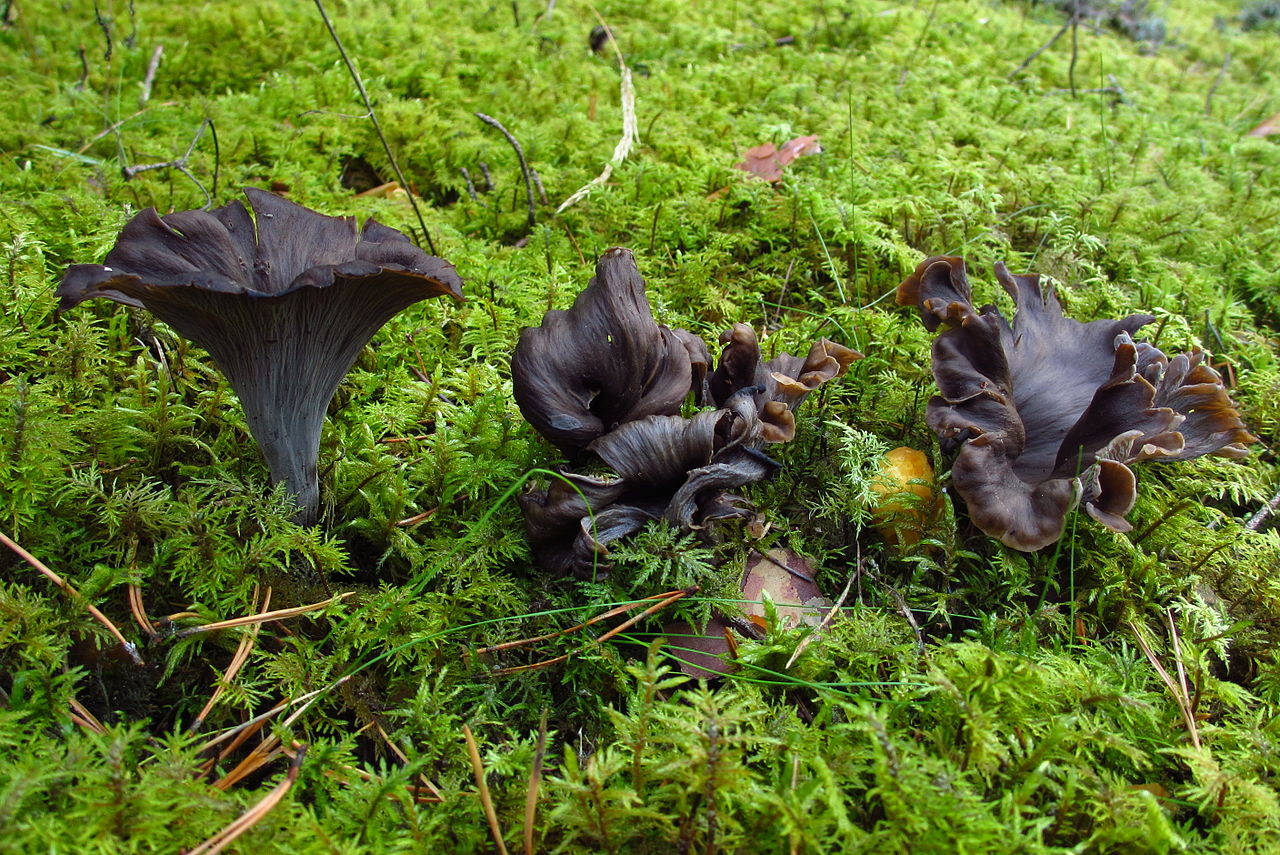
Photo by Marko Vainu · Wikimedia Commons · CC BY-SA 3.0
It looks like something that crawled out of a Tim Burton movie, but the Black Trumpet is one of the most sought-after wild mushrooms on Earth — nicknamed "black gold" by foragers who spend hours squinting at leaf litter trying to spot them.
Here's the cruel joke nature plays on mushroom hunters: one of the most delicious wild mushrooms in existence is also one of the hardest to find. The Black Trumpet is jet black to dark gray, shaped like a funnel or a tiny vase, and grows directly out of the forest floor in clusters that blend perfectly into dead leaves. Experienced foragers talk about "getting your eye in" — once you spot the first one, suddenly you realize you're standing in a patch of dozens. Until that moment, they're basically invisible.
French cooks call it "trompette de la mort" (trumpet of death), which sounds terrifying but refers only to its grim appearance. In the kitchen, it's anything but deadly — the flavor is rich, smoky, almost truffle-like, with an intensity that punches way above its weight. Dried Black Trumpets are even more concentrated and can be ground into a powder that turns any dish into something special. High-end restaurants charge a fortune for them, and foragers guard their patches like state secrets.
Black Trumpets are mycorrhizal, forming partnerships with hardwood trees — especially oaks and beeches. They love mossy, damp spots along paths and stream banks. In a good year with steady summer rain, you might fill a basket in an hour. In a dry year, you might walk for miles and find nothing. That unpredictability is part of what makes finding them feel like winning a small lottery.
Black Trumpet Facts
- ●Black Trumpets are so hard to spot that experienced foragers call finding the first one "the click" — once your brain recognizes the pattern, you suddenly see them everywhere around you.
- ●The French name "trompette de la mort" (trumpet of death) has nothing to do with toxicity — it refers to their jet-black funeral appearance and their habit of fruiting around All Saints' Day in November.
- ●Dried Black Trumpet powder is sometimes called "poor man's truffle" because it adds a similar deep, earthy, umami richness to dishes at a fraction of the cost.
- ●Unlike most prized wild mushrooms, Black Trumpets have virtually no dangerous look-alikes — everything in their genus is edible, making them one of the safest mushrooms for beginner foragers to learn.
- ●Black Trumpets are hollow all the way through from cap to base, like a tiny megaphone. Slugs love hiding inside them, so a quick soak in salt water before cooking is a forager's pro tip.
Stories From the Field
A Forager's $800 Afternoon in Vermont
A poster on r/foraging described finding over 5 pounds of Black Trumpets along a stream bank in the Green Mountains in August 2021. They dried most of them and calculated the haul was worth over $800 at market price — from a single afternoon walk.
France's Trumpet of Death Tradition
In rural France, Black Trumpets have been gathered for centuries and are called "trompette de la mort" — not because they're dangerous, but because they emerge around All Saints' Day and look like tiny black funeral horns rising from the ground.
The Mushroom That Hides in Plain Sight
Mycologist Gary Lincoff famously described leading a group through Central Park's North Woods and pointing at the ground where 30+ Black Trumpets were growing. Not a single participant had noticed them until he literally touched one.
Michelin-Star Secret Ingredient
Chef Magnus Nilsson at the two-Michelin-star Faviken in Sweden used dried Black Trumpet powder as a seasoning across multiple dishes, calling it one of the most versatile wild ingredients available in Scandinavian forests.
A Dog Trained to Sniff Them Out
An Oregon forager trained her Labrador retriever to locate Black Trumpets by scent in the Coast Range forests. She reported the dog could find patches she walked right past, cutting her foraging time in half during the 2022 season.
Where It's Been Found
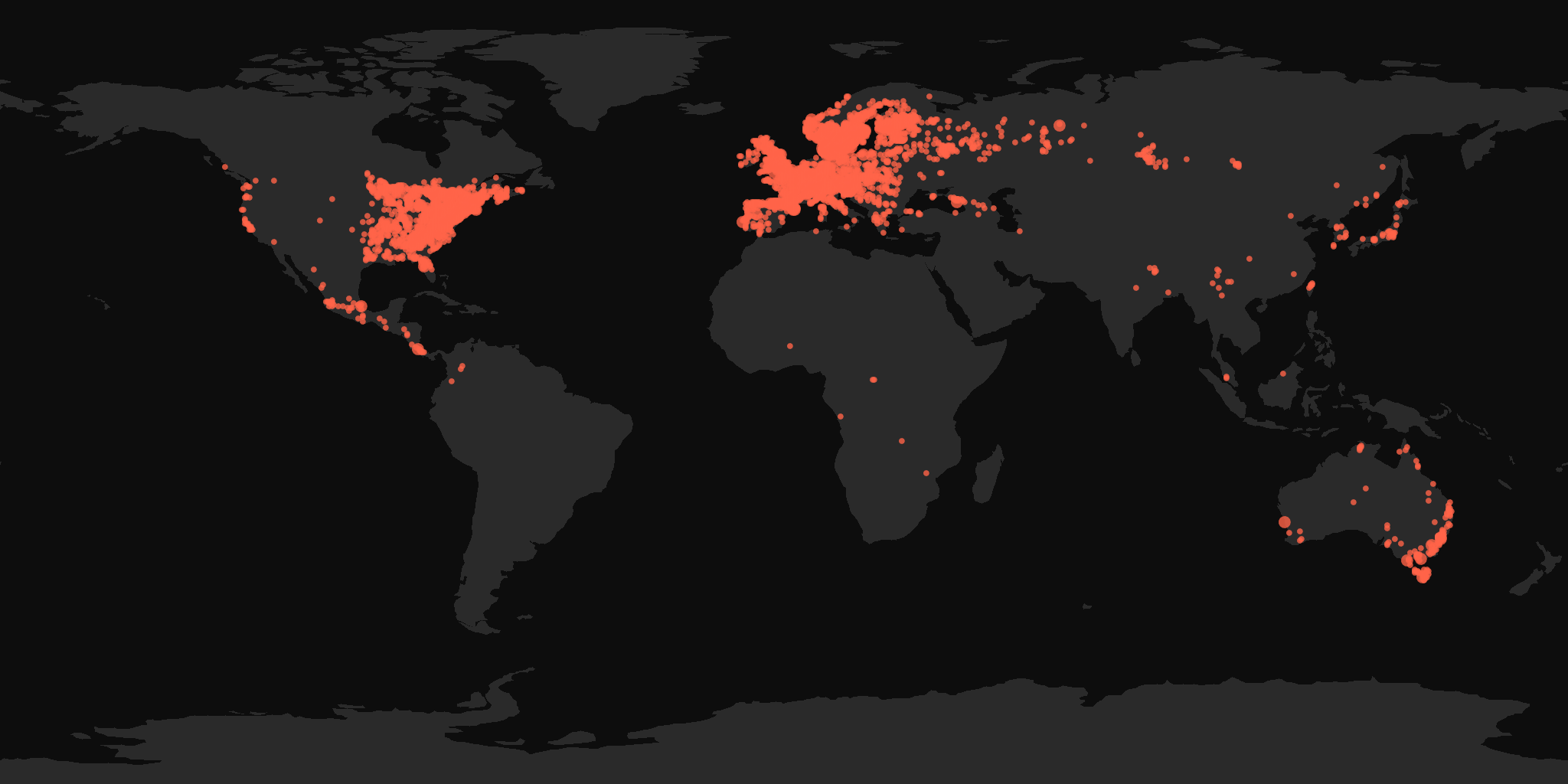
Based on reported sightings worldwide
How to Identify Black Trumpet
Cap
No traditional cap — the whole mushroom is a hollow, funnel-shaped trumpet, 2–8 cm across at the top. Thin and wavy-edged, almost papery. Color ranges from jet black when wet to dark gray or brownish-gray when dry. The inner surface is slightly rough or scaly.
Gills
No gills. The outer (lower) surface is smooth to slightly wrinkled, pale gray to grayish-buff. This is where the spores are produced — it's one of the features that distinguishes it from look-alikes.
Stem
Not a true stem — the trumpet tapers into a hollow, tube-like base, 3–8 cm tall. Same dark color as the rest of the mushroom. Very thin-walled and fragile.
Spore Print
White to pale cream.
Odor
Pleasant, sweet, fruity — sometimes described as apricot-like. Intensifies when dried.
Mushrooms That Look Like Black Trumpet

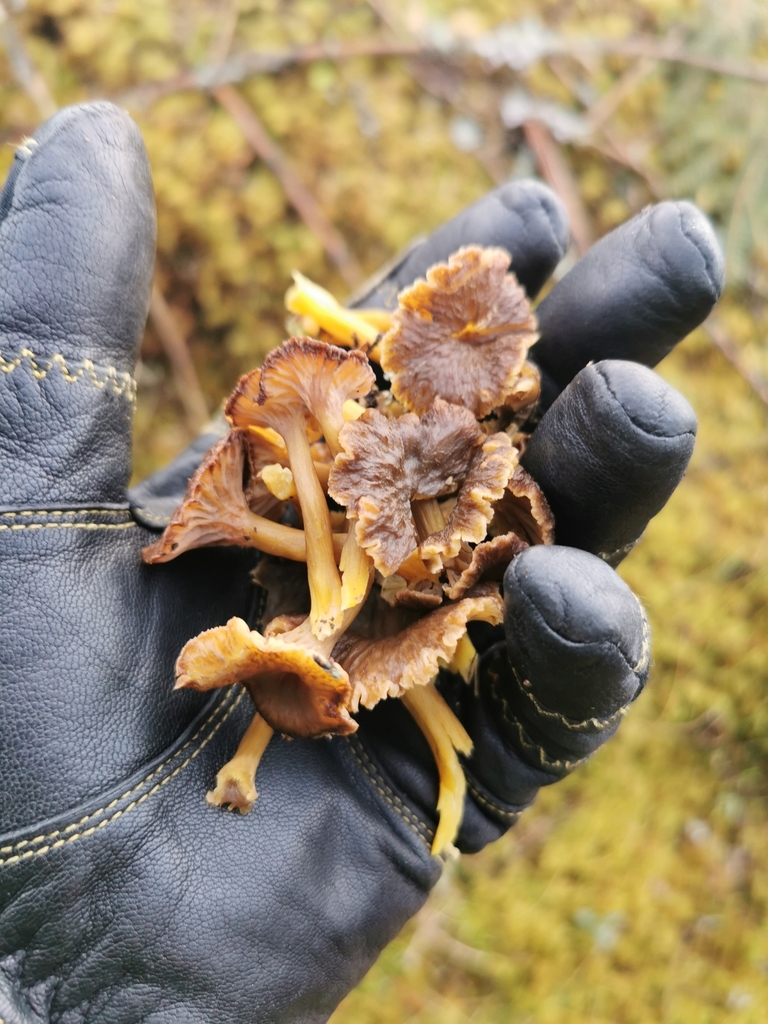
Yellowfoot Chanterelle (Craterellus tubaeformis)
Similar trumpet shape but yellowish-brown cap and distinctive yellow-orange stem. Has visible veins or ridges on the underside rather than the smooth surface of the Black Trumpet. Also edible and delicious — no danger in mixing these up.
Read more on iNaturalist →
Devil's Urn (Urnula craterium)
Cup-shaped rather than trumpet-shaped, with a leathery, dark brown to black exterior. Grows on dead hardwood sticks in spring, not from soil. Interior is smooth and black. Not edible. Appears earlier in the season (March–May) than Black Trumpets.
Read more on Wikipedia →
Sinuous Chanterelle (Craterellus cinereus)
Very similar dark gray-brown color but has well-defined gill-like ridges on the outer surface rather than a smooth or slightly wrinkled exterior. Cap surface is more scaly. Also edible — sometimes considered the same species complex in older field guides.
Read more on MushroomExpert →Is Black Trumpet Edible?
One of the finest wild edible mushrooms. Rich, smoky, almost truffle-like flavor that intensifies when dried. No special preparation needed — just clean off debris and cook. Excellent sauteed in butter, in cream sauces, with pasta, or dried and ground into powder. Called "black gold" and "poor man's truffle" by foragers. No known toxic look-alikes in the Craterellus genus.
Always verify with local experts before consuming wild mushrooms.
Found something that looks like this in the wild? Don't guess — identify it from a photo with Orangutany and check it against look-alikes before you touch it.