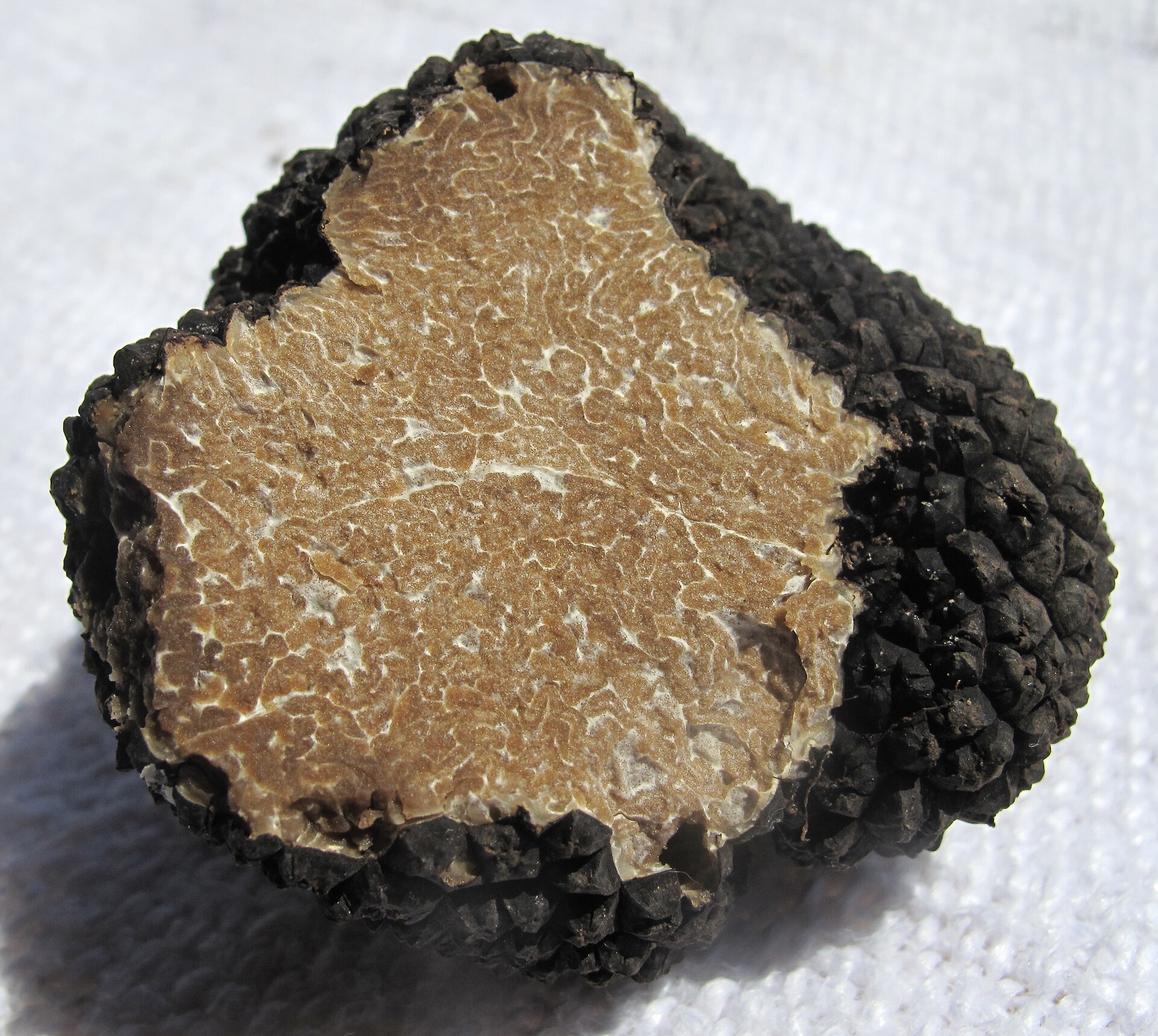
Photo by Rippitippi · Wikimedia Commons · Public domain
The most accessible and affordable of the true truffles, fruiting underground near oaks, hazels, and beeches across Europe from late spring through autumn. Tuber aestivum lacks the knockout intensity of white or black Perigord truffles, but it offers a genuine truffle experience at a fraction of the cost and is the species driving the rapid expansion of truffle cultivation worldwide.
If the white truffle of Alba is a Rolls-Royce and the Perigord black truffle is a Mercedes, the Summer Truffle is a solid Volvo: not flashy, not cheap, but reliable, widely available, and perfectly good at its job. Tuber aestivum is by far the most common truffle species in Europe, found from England to Turkey, from Sweden to Sicily. It is the truffle that most people actually encounter in restaurants and markets, often without realizing it.
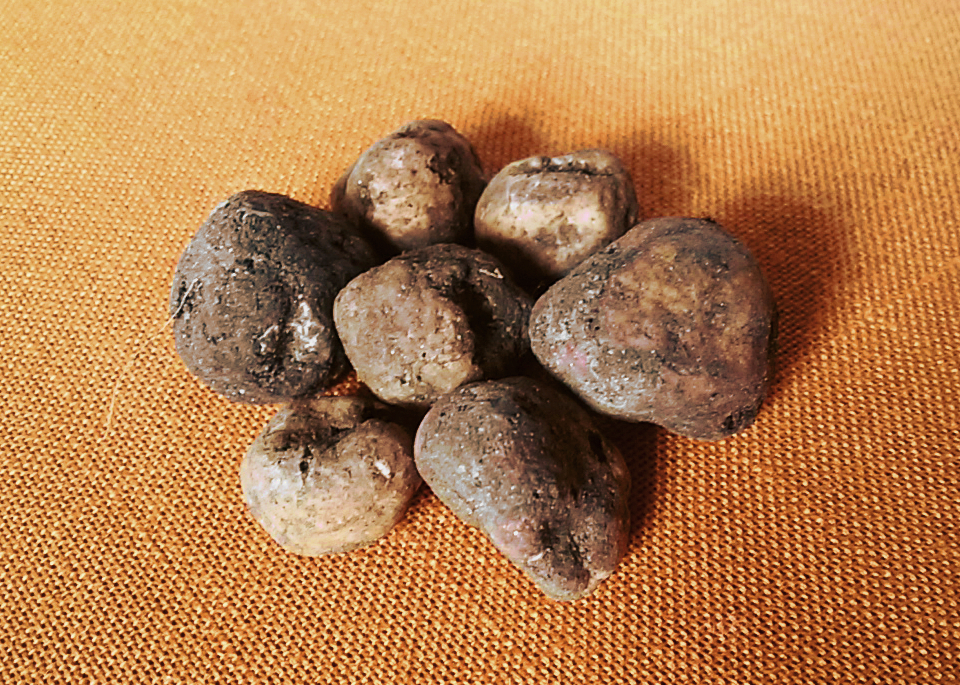
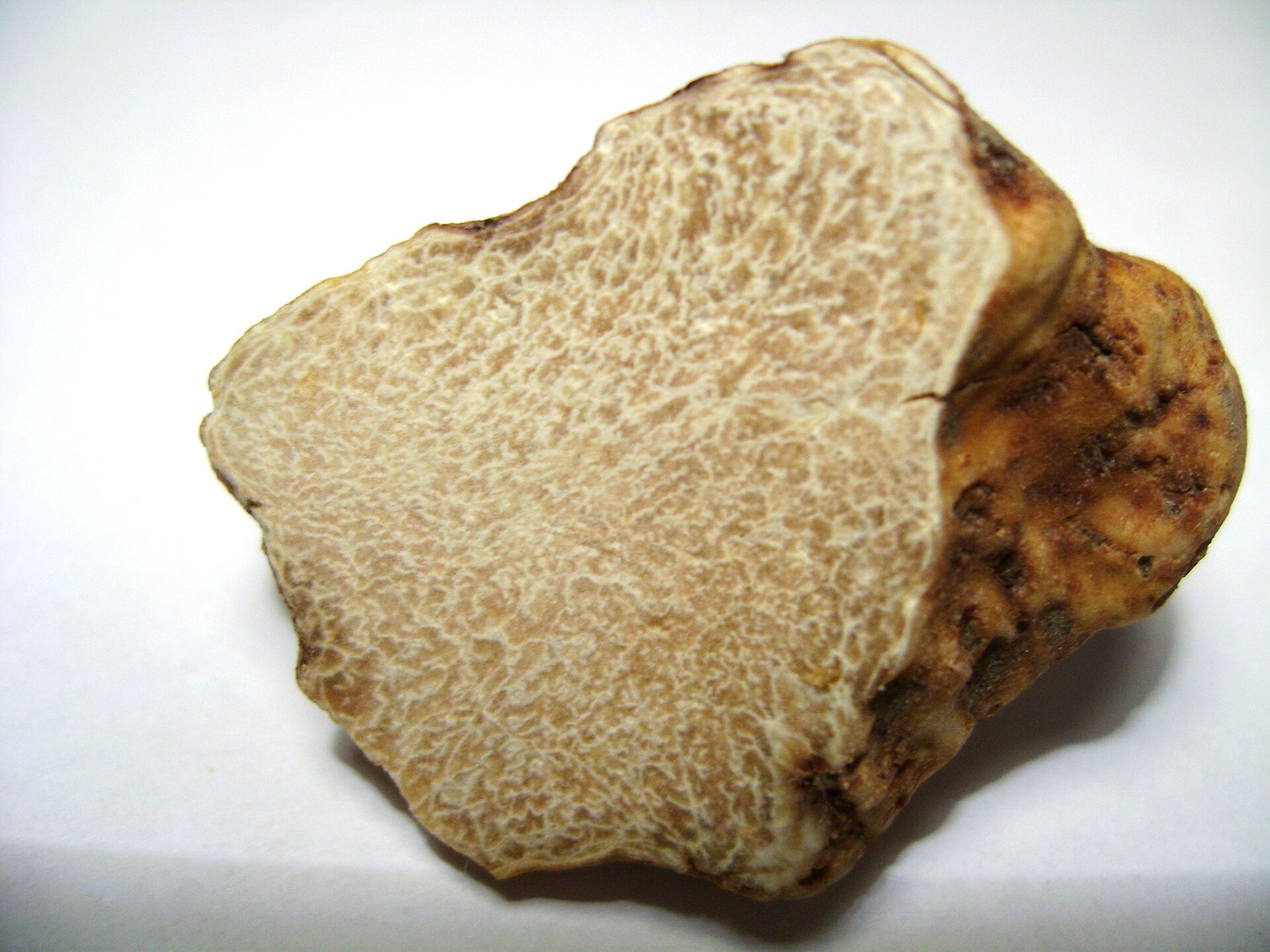
The exterior is covered in large, pyramidal warts, black to dark brown, giving it the texture of a small, rough golf ball. Cut it open, and the interior (gleba) is pale, ranging from off-white to hazelnut brown, with fine white marbling. The aroma is mild compared to its famous relatives: nutty, earthy, with a gentle mushroomy warmth rather than the explosive pungency of Tuber magnatum or Tuber melanosporum.
This subtlety is both its limitation and its selling point. Summer truffles are mild enough to use generously without overwhelming a dish. They work beautifully shaved over pasta, eggs, risotto, and salads. They are also the backbone of most truffle-infused products (oils, butters, sauces) on the market, though many of those products use synthetic truffle flavoring instead.
The Burgundy truffle, sometimes sold as a separate species (Tuber uncinatum), is now generally considered the same species as Tuber aestivum, just the autumn-fruiting form with slightly darker, more aromatic flesh. The taxonomic debate continues, but most molecular studies support treating them as a single species.
Summer truffles are the primary species being planted in truffle orchards (truffieres) across Europe, Australia, and North America. Young oaks and hazels are inoculated with Tuber aestivum spores at the nursery stage, planted out, and begin producing truffles after 5-10 years. The global truffle cultivation industry is expanding rapidly.
Summer Truffle Facts
- ●The Burgundy truffle (formerly Tuber uncinatum) is now generally considered the same species as Tuber aestivum, just the autumn-fruiting form. Molecular studies cannot reliably distinguish them.
- ●Truffles rely on animals (squirrels, deer, wild boar, insects) to dig them up and spread their spores. The distinctive aroma evolved specifically to attract these animal dispersers.
- ●A truffle-inoculated hazel or oak tree typically takes 5-10 years to produce its first truffles. Some orchards never produce, making truffle farming a high-risk, long-term investment.
- ●The global truffle market (wild and cultivated) is estimated at over 500 million euros annually, with Tuber aestivum making up the largest share by volume.
- ●Trained truffle dogs can detect truffles buried 30 cm underground. Most truffle hunters now use dogs rather than pigs, because pigs tend to eat the truffles before the hunter can retrieve them.
Stories From the Field
The English Truffle Renaissance
Truffles were considered extinct in England for decades until trained truffle dogs began finding Tuber aestivum in chalk downlands and beech woodlands across southern England in the 1990s and 2000s. The discoveries sparked a small but growing English truffle industry, with truffle orchards now established in Hampshire, Wiltshire, and Dorset.
Hungary's Truffle Dog Championships
Hungary hosts annual truffle dog competitions where trained dogs (primarily Lagotto Romagnolo and various mixed breeds) compete to locate buried truffles in timed trials. Tuber aestivum is the primary species found in Hungarian oak forests, and the country has become a significant exporter to western European markets.
The Australian Truffle Farm Experiment
Australian growers began planting truffle orchards inoculated with Tuber aestivum and Tuber melanosporum in the 1990s. The Southern Hemisphere growing season means Australian truffles mature during the Northern Hemisphere summer, allowing Australian producers to supply European and North American markets during their off-season. The industry is now worth over AUD $10 million annually.
Where It's Been Found
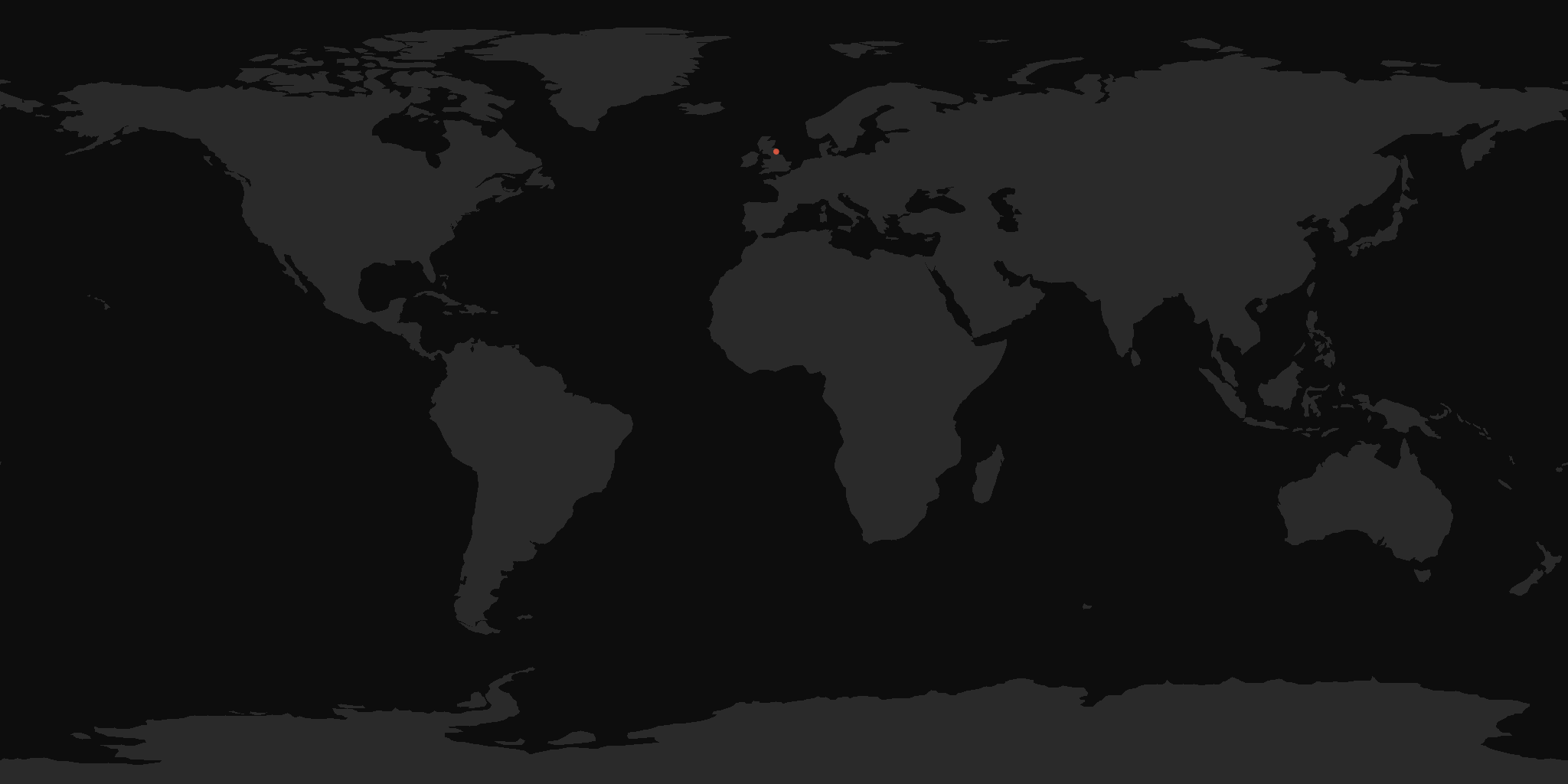
Based on reported sightings worldwide
How to Identify Summer Truffle
Cap
Fruiting body is a subterranean, roughly spherical tuber, 2-8 cm in diameter. Exterior (peridium) is covered in large, pyramidal, angular warts (3-5 mm across), black to dark brown. Interior (gleba) is firm, pale off-white to hazelnut brown, with fine white veining (marbling).
Gills
No gills. This is an underground ascomycete (truffle). Spores are produced inside the gleba in microscopic sac-like structures (asci).
Stem
No stem. The truffle is entirely subterranean, attached to tree roots by fine mycorrhizal connections.
Spore Print
Not applicable. Spores are contained within the gleba and dispersed when animals dig up and eat the truffles.
Odor
Mild, pleasant, nutty, earthy, with a gentle mushroomy warmth. Less pungent than Tuber melanosporum or Tuber magnatum. Aroma intensifies as the truffle matures.
Mushrooms That Look Like Summer Truffle
Perigord Black Truffle (Tuber melanosporum)
More valuable and aromatic. Exterior warts are smaller and finer. Interior is much darker (dark brown to black with white veining). Aroma is significantly stronger and more complex. Prefers warmer Mediterranean climates. Fruits in winter (November-March).
Read more on Wikipedia →Common False Truffle (Scleroderma citrinum)
Not a true truffle. Grows at or just below the soil surface, often partially exposed. Exterior is thick, yellowish, and warty. Interior is dark purple-black with white veining when young. Unpleasant rubbery odor. Mildly toxic. Much more common than true truffles.
Read more on First Nature →Smooth Black Truffle (Tuber macrosporum)
Exterior is smoother with flatter warts. Interior has broader, more widely spaced veining. Aroma is more garlicky. Less common than T. aestivum. Requires microscopic spore examination for definitive distinction.
Read more on iNaturalist →Is Summer Truffle Edible?
An excellent edible truffle, widely used in European cuisine. Milder than Perigord black or white truffles, making it more versatile and affordable. Best used fresh, shaved or sliced over finished dishes. Aroma diminishes with cooking, so add at the last moment. Pairs well with pasta, eggs, risotto, potatoes, and mild cheeses. Store wrapped in paper towels in a sealed container in the refrigerator; use within a week for best flavor.
Always verify with local experts before consuming wild mushrooms.
Found something that looks like this in the wild? Don't guess — identify it from a photo with Orangutany and check it against look-alikes before you touch it.