Photo by Manuel R. · Wikimedia Commons · CC BY 3.0
The winter forager's reward. While golden chanterelles hog the spotlight in summer, yellowfoot chanterelles quietly carpet the forest floor from late fall through the first hard freeze, giving dedicated hunters one last reason to stay in the woods.
Yellowfoot chanterelles are the smaller, more subtle cousin of the golden chanterelle, and many experienced foragers actually prefer them. Where golden chanterelles announce themselves with loud egg-yolk caps, yellowfoots blend into the leaf litter with their brownish caps and slender yellow stems. You have to earn these mushrooms by getting low to the ground and really looking.
They fruit later in the season than most choice edibles, often persisting into November and December in mild climates. In the Pacific Northwest, they are one of the last wild mushrooms standing before winter truly sets in. They grow in enormous quantities when conditions are right, sometimes carpeting entire hillsides in conifer forests. A single outing can yield several pounds without much effort once you locate the patch.
The flavor is more delicate than golden chanterelles, with a subtle sweetness and almost smoky quality. They dry exceptionally well, concentrating their flavor into something that works beautifully in risottos, soups, and cream sauces. In Scandinavia, dried yellowfoots are a pantry staple that carries the taste of autumn through the long winter months.
Yellowfoot Chanterelle Facts
- ●Yellowfoot chanterelles can survive light frosts that kill most other mushrooms, making them one of the last wild edibles available each year in northern climates.
- ●In Sweden, dried yellowfoots are sold in grocery stores as 'trattkantareller' and are considered a kitchen essential, not a luxury ingredient.
- ●A single mature yellowfoot weighs only a few grams, but they grow in such enormous quantities that experienced foragers routinely collect several kilograms per outing.
- ●The hollow stem of the yellowfoot goes all the way from the cap to the base, creating a tiny trumpet shape that inspired its other common name: trumpet chanterelle.
Stories From the Field
The December Carpet in Olympic National Forest
A forager in Washington State documented a December 2020 outing where yellowfoots were so dense on a mossy hillside that she filled two grocery bags in under 30 minutes without moving more than 20 feet. She described the forest floor as 'a yellow-stemmed ocean' and noted it was 38 degrees and raining sideways the entire time.
A Finnish Grandmother's Drying Tradition
In Finland, drying yellowfoots on strings hung near the woodstove is a tradition that goes back generations. One forager described visiting her grandmother in Kuopio, where the entire kitchen ceiling was draped with drying chanterelles every November. The smell, she said, was 'like autumn distilled into air.'
The 15-Pound Bonanza After First Frost
A mycological society outing in Vermont in 2019 found massive quantities of yellowfoots fruiting after the first light frost. Members collected over 15 pounds collectively in a single afternoon. The club president noted that many beginners overlooked them entirely because they were expecting something more dramatic looking.
Yellowfoots Save a Rainy Scottish Foray
During a 2021 fungus foray in the Scottish Highlands, persistent rain had beaten down most fruiting bodies. The group was about to call it when someone spotted yellowfoots growing in deep moss under Sitka spruce. They found patches extending for hundreds of meters along a forestry track.
Where It's Been Found

Based on reported sightings worldwide
How to Identify Yellowfoot Chanterelle
Cap
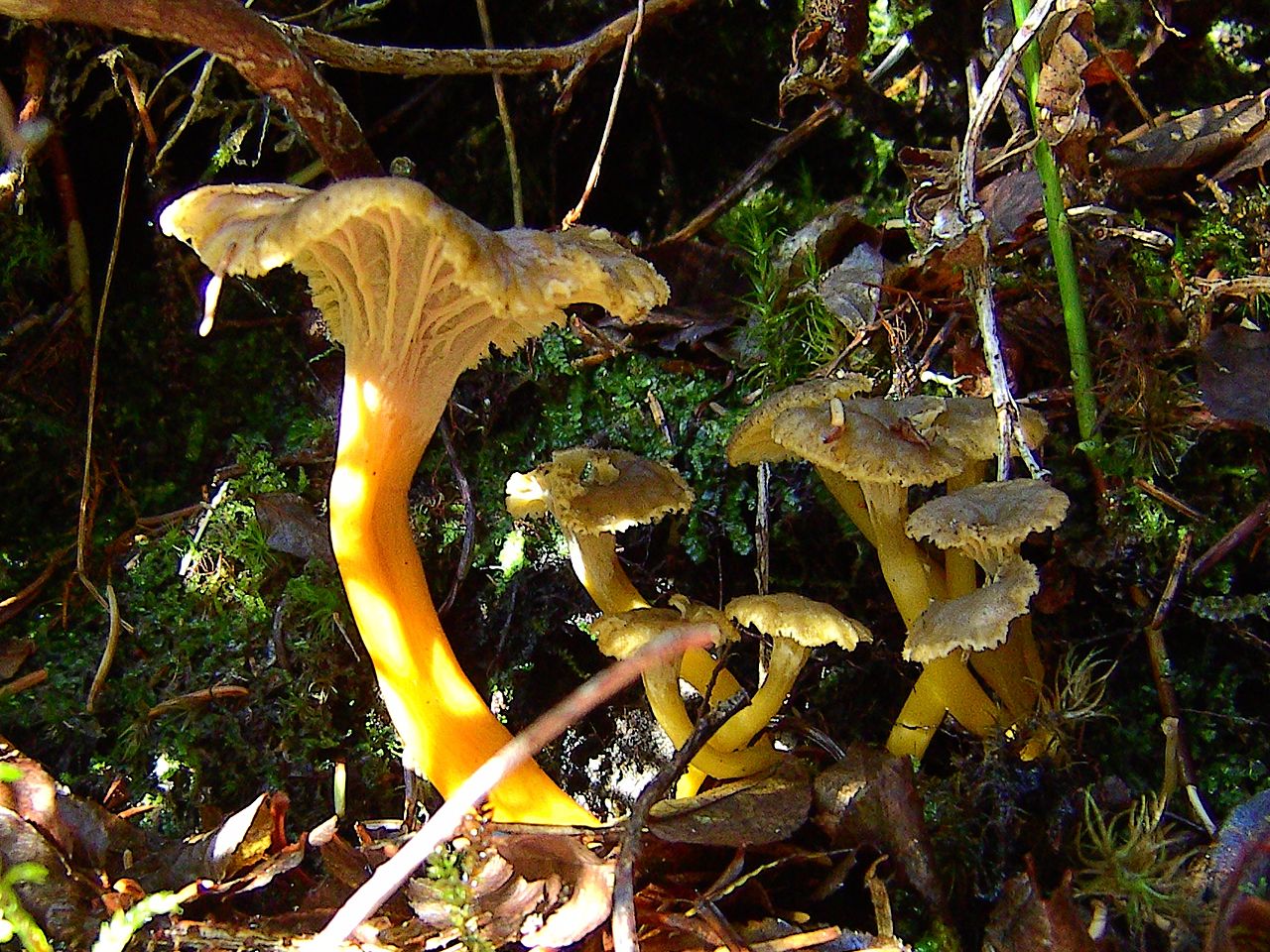
2-6 cm across. Thin, wavy, and funnel-shaped with an irregular margin. Color ranges from yellowish brown to dark brown, sometimes grayish. The surface is slightly scaly or fibrillose. Often develops a central depression or hole that goes right through to the hollow stem.
Gills
False gills, like all chanterelles. Shallow, forked, vein-like ridges on the underside, running partway down the stem. Yellowish to grayish, paler than the cap. Blunt and ridge-like rather than blade-like.
Stem
3-8 cm tall, slender and often compressed or flattened. Bright yellow to yellowish orange, which is the feature that gives this species its common name. Hollow throughout, which distinguishes it from many other chanterelles. Smooth or slightly grooved.
Spore Print
White to pale yellowish.
Odor
Mild, pleasant, slightly fruity but much less pronounced than golden chanterelles. Some describe a faint sweetness.
Mushrooms That Look Like Yellowfoot Chanterelle
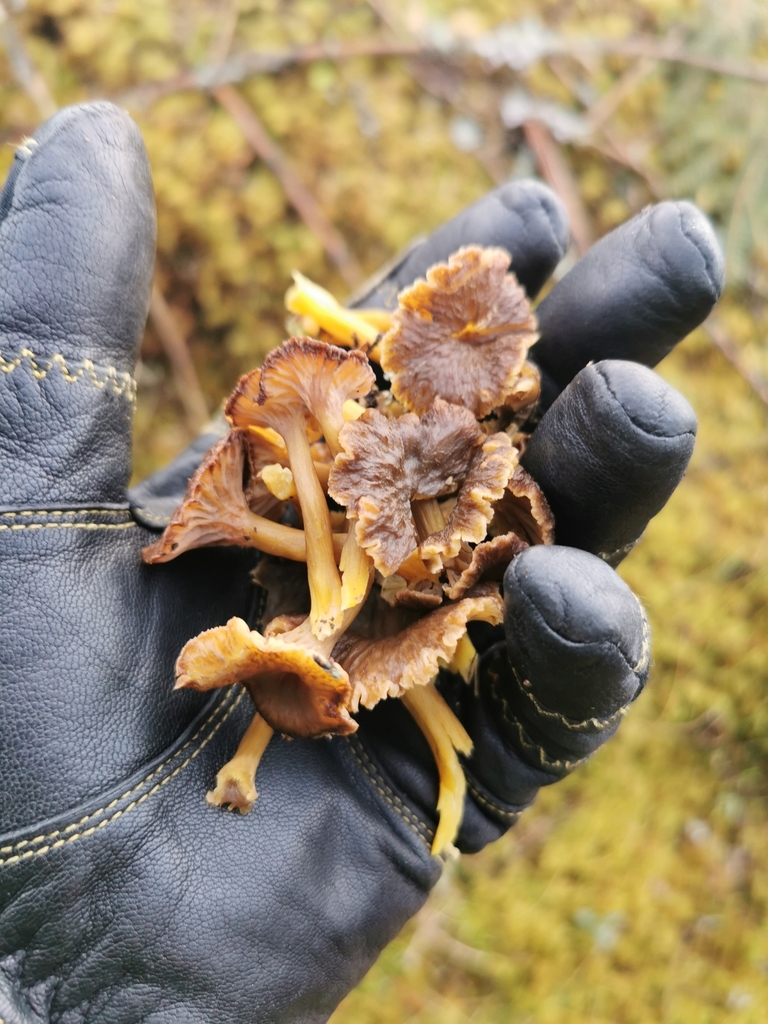
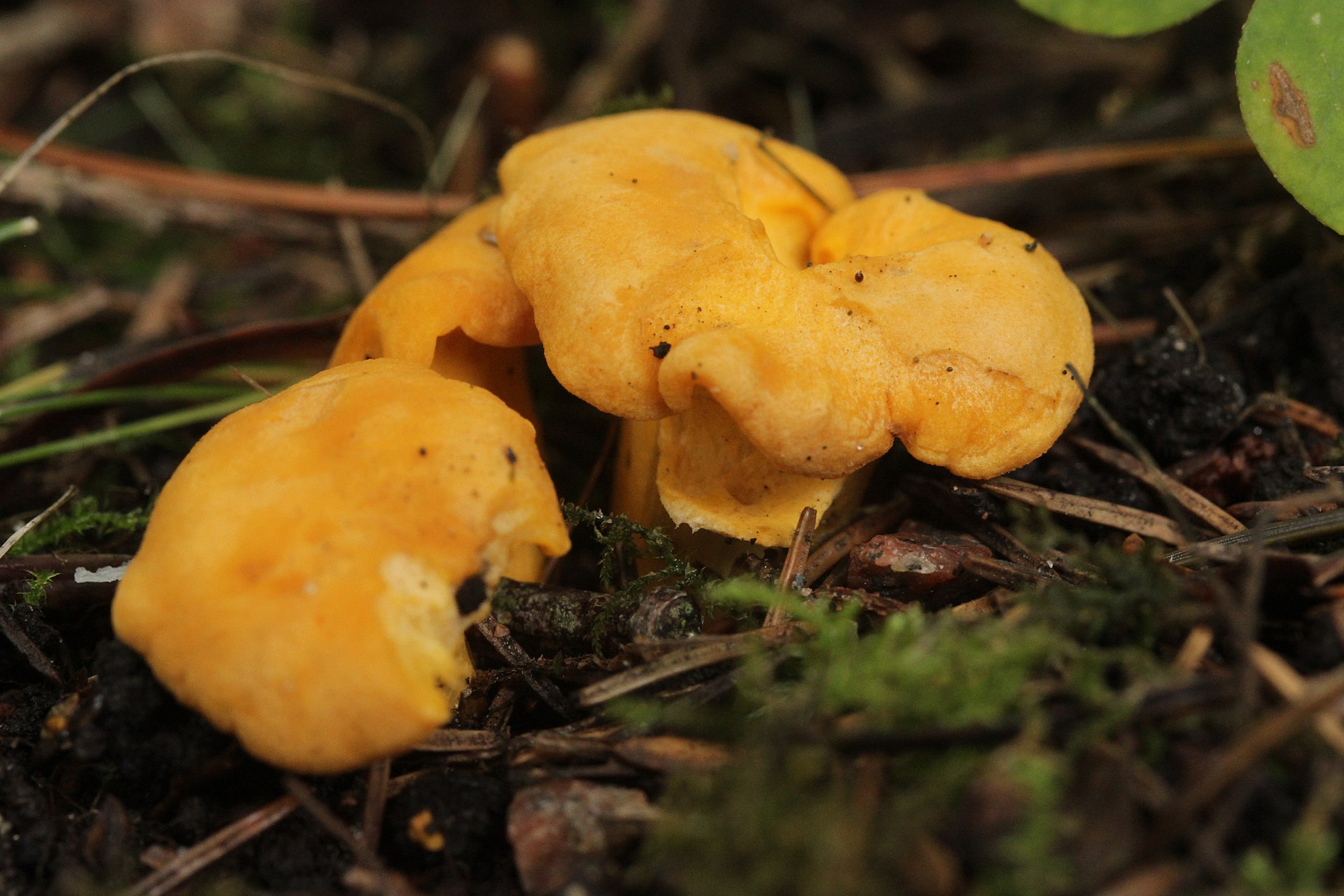
Taxonomists have moved some populations into Craterellus. Practically identical in the field and equally edible. The distinction is mostly academic for foragers. Both have hollow stems and false gills.
Side-by-side comparison →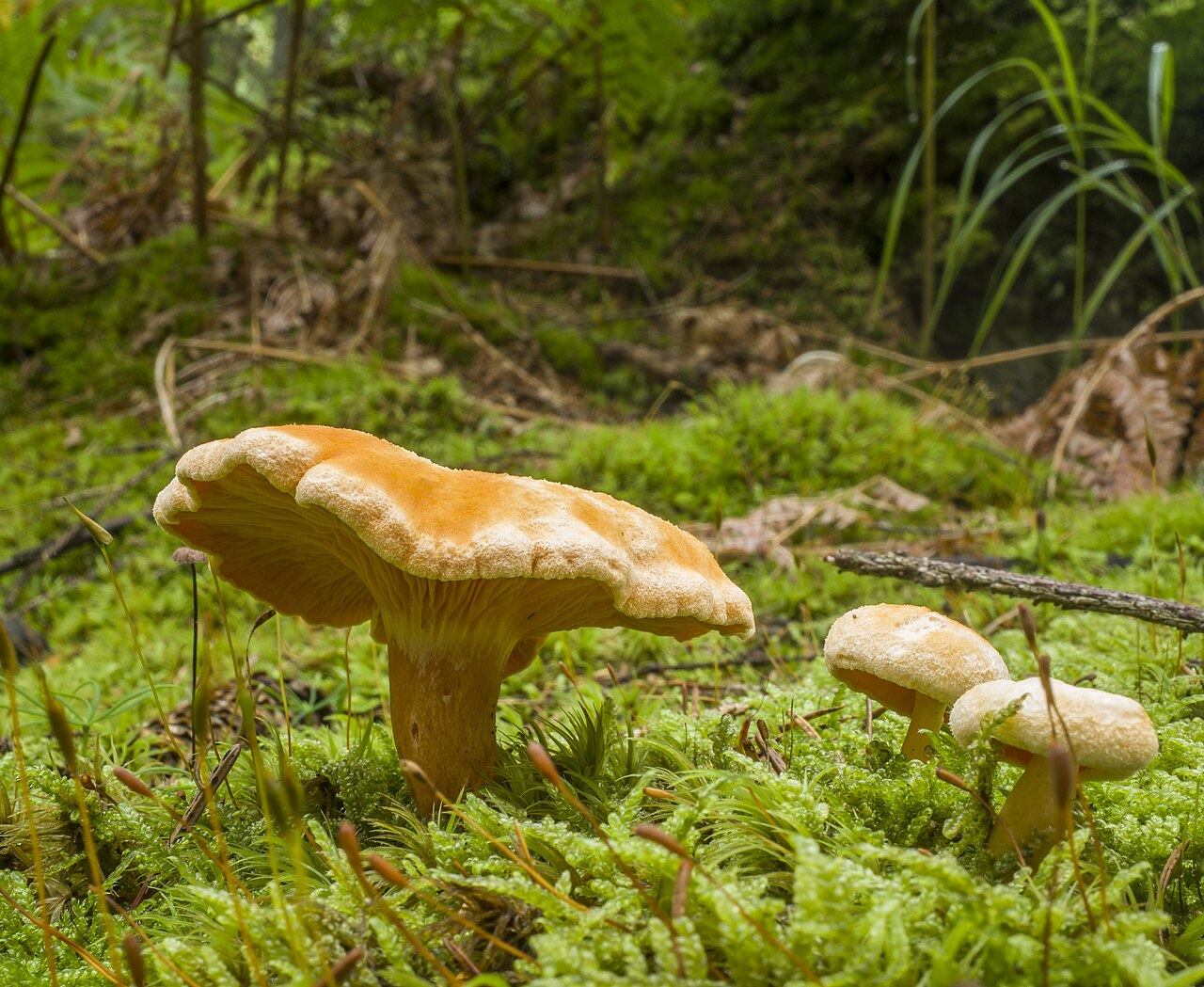
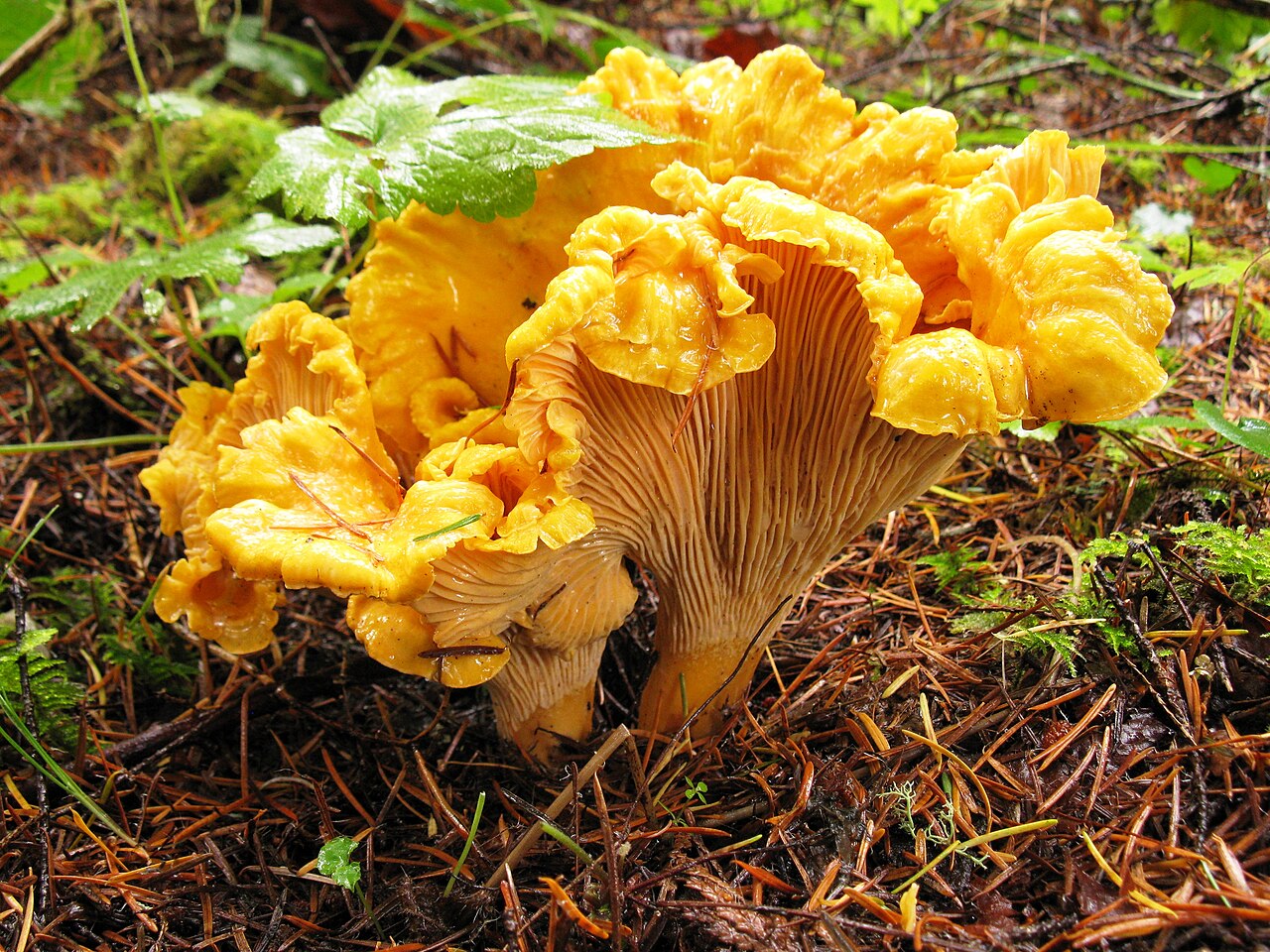
Has true, thin, blade-like gills rather than blunt ridges. Cap is more uniformly orange and often slightly fuzzy. Grows on decaying wood rather than soil. Can cause mild GI upset in some people.
Side-by-side comparison →Read more on Wikipedia →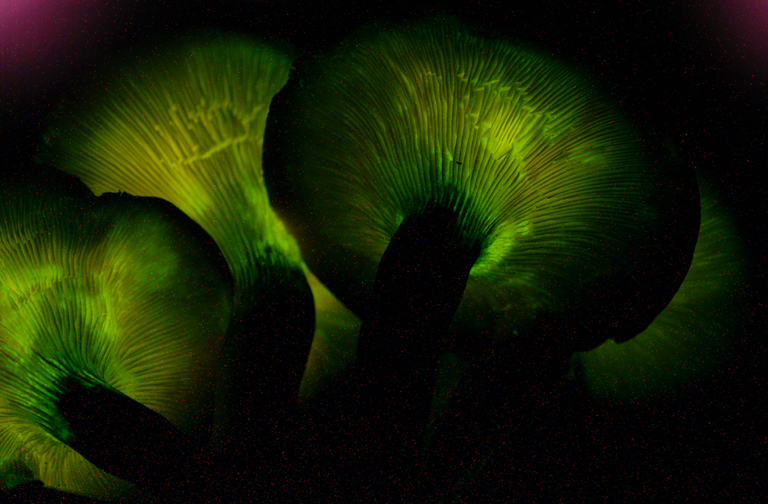
Much larger, deeper orange, and grows in dense clusters on wood or buried roots. Has true sharp gills. Bioluminescent. Causes severe vomiting. Unlikely confusion with yellowfoots due to significant size and color differences.
Side-by-side comparison →Is Yellowfoot Chanterelle Edible?
An excellent edible mushroom with a delicate, slightly smoky flavor. Dries better than almost any other wild mushroom, concentrating the flavor beautifully. Best sauteed in butter or added to soups and risottos. Cook before eating. The thin flesh means they cook quickly and can overcook easily.
Always verify with local experts before consuming wild mushrooms.
Found something that looks like this in the wild? Don't guess — identify it from a photo with Orangutany and check it against look-alikes before you touch it.