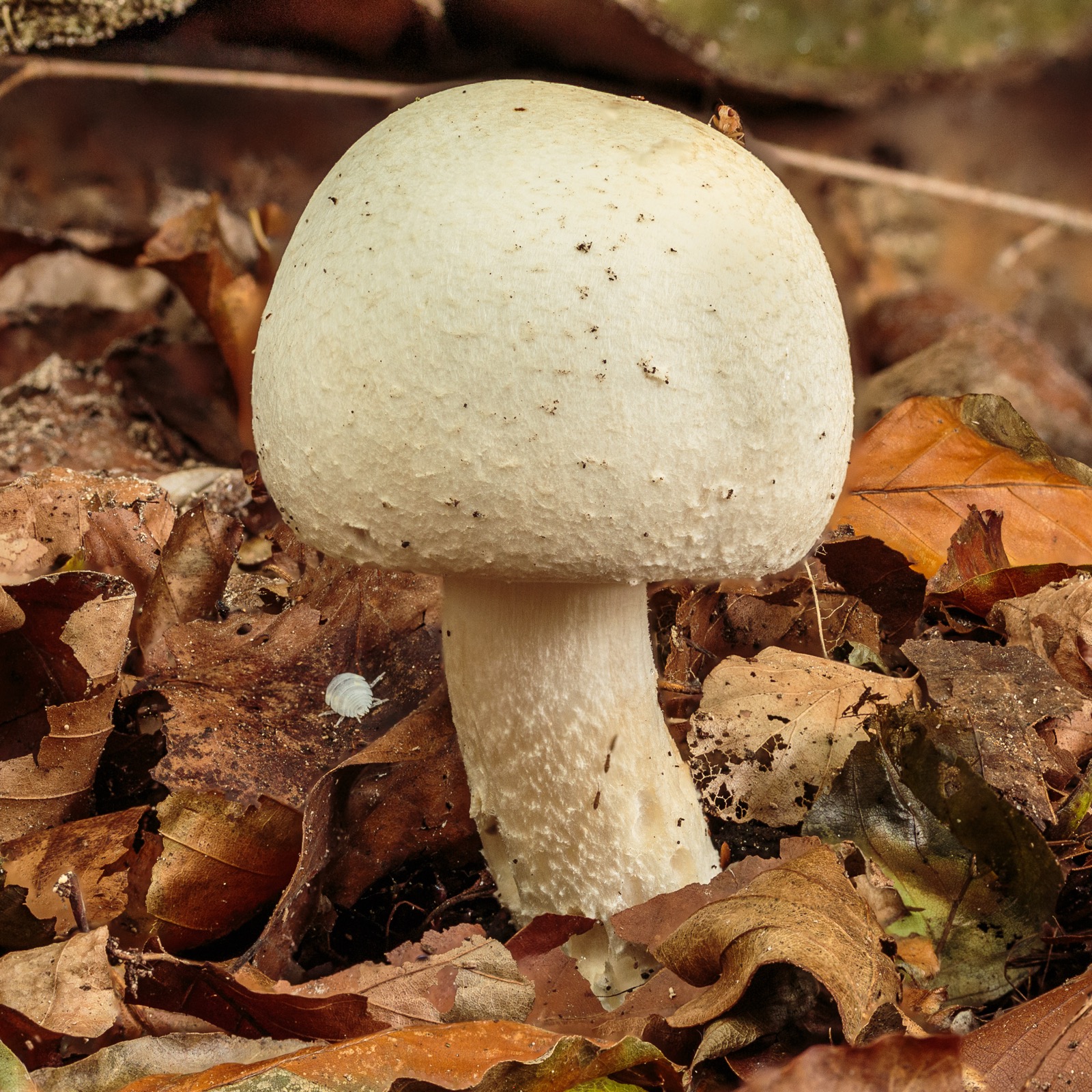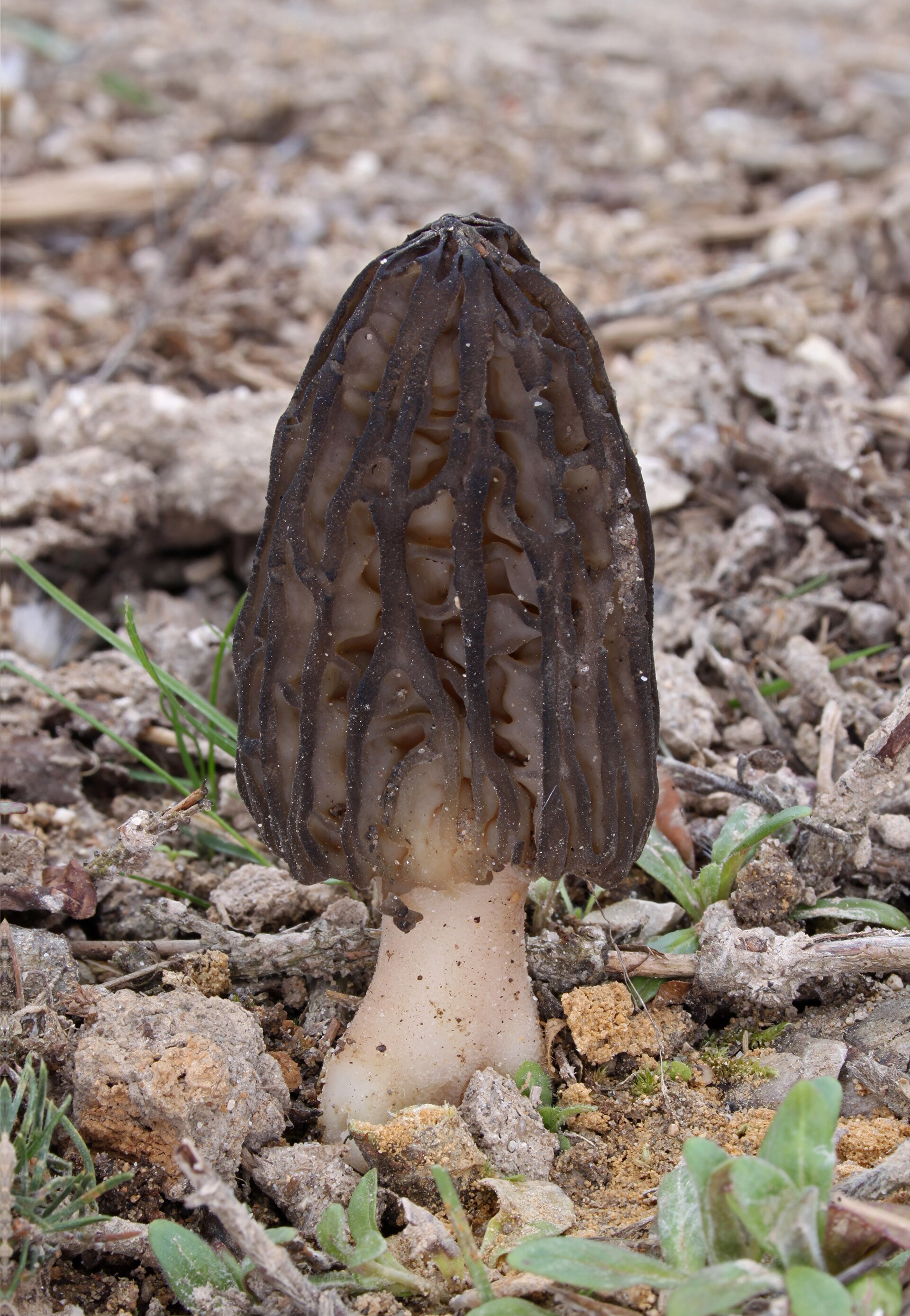
Photo by Dimitris Tzoumpas · Wikimedia Commons · CC BY-SA 4.0
The dark, smoky cousin of the common morel. Black morels are among the first mushrooms to emerge in spring, and their association with forest fires has created an entire subculture of burn-site foragers who chase last year's wildfires across the western landscape.
Black morels are one of the most sought-after wild mushrooms in North America, and their connection to fire has turned morel hunting into something between a sport and a treasure hunt. The year after a forest fire, black morels can erupt in staggering quantities across the burned landscape, drawing commercial pickers who set up camp for weeks and fill truck beds with mushrooms worth more per pound than most cuts of steak.
Even outside burn sites, black morels appear reliably in spring across conifer forests, riparian areas, and disturbed ground. They are typically the first morel species to emerge each season, sometimes pushing through soil while patches of snow still linger nearby. The dark honeycomb cap, ridged and pitted like a tiny cathedral, is unmistakable once you have seen one.
The flavor of black morels is deeper and smokier than yellow morels, with an earthy intensity that stands up to bold preparations. They are spectacular stuffed with cream cheese and herbs, sauteed with wild ramps, or dried and ground into a powder that transforms any dish it touches. In the Pacific Northwest, burn morel season draws thousands of foragers each spring, creating a transient community of pickers, buyers, and camp cooks.
Black Morel Facts
- ●Black morels can fruit in astonishing quantities the spring after a forest fire. A single burn site can yield thousands of pounds of morels, drawing commercial pickers from across the continent.
- ●The relationship between morels and fire is still not fully understood. One theory is that the heat kills competing fungi and releases nutrients, giving morels a temporary advantage.
- ●Black morels are among the few wild mushrooms that have been successfully cultivated on a commercial scale, though outdoor cultivation remains far more productive than indoor methods.
- ●In the Pacific Northwest, burn morel permits are required on national forest land, and competition for prime sites can be fierce enough to involve confrontations between rival picking crews.
Stories From the Field
The Burn Morel Gold Rush in British Columbia
After the record-breaking 2021 wildfire season in British Columbia, the spring of 2022 brought one of the largest burn morel harvests in Canadian history. Commercial pickers set up tent camps in remote burn areas, and buying stations popped up along forest roads. Some pickers reported earning over $1,000 per day. The RCMP was called to mediate disputes over prime picking territory.
A Chef Follows the Burn
Portland chef Ben Bettinger described planning his entire spring menu around burn morel season. Each year he drives to central Oregon with coolers, camps for three days, and returns with 50 to 80 pounds of black morels. 'The flavor of a burn morel is different from anything else,' he said. 'There is a smokiness built right into the mushroom.'
Snow Morels in the Cascades
A forager in Washington State posted photos of black morels pushing up through melting snow at 4,000 feet elevation in May 2019. The mushrooms were growing in a band along the retreating snowline in a burned area, perfectly fresh and firm. 'It looked surreal,' she wrote. 'Dark morels against white snow.'
The Great False Morel Scare
A novice forager in Minnesota collected what he thought were black morels in 2018, but some were actually Gyromitra esculenta mixed in with the haul. His wife noticed the brain-like texture on a few specimens before cooking. They separated them out and avoided a potential poisoning. He now runs a morel ID workshop for beginners each spring.
Where It's Been Found
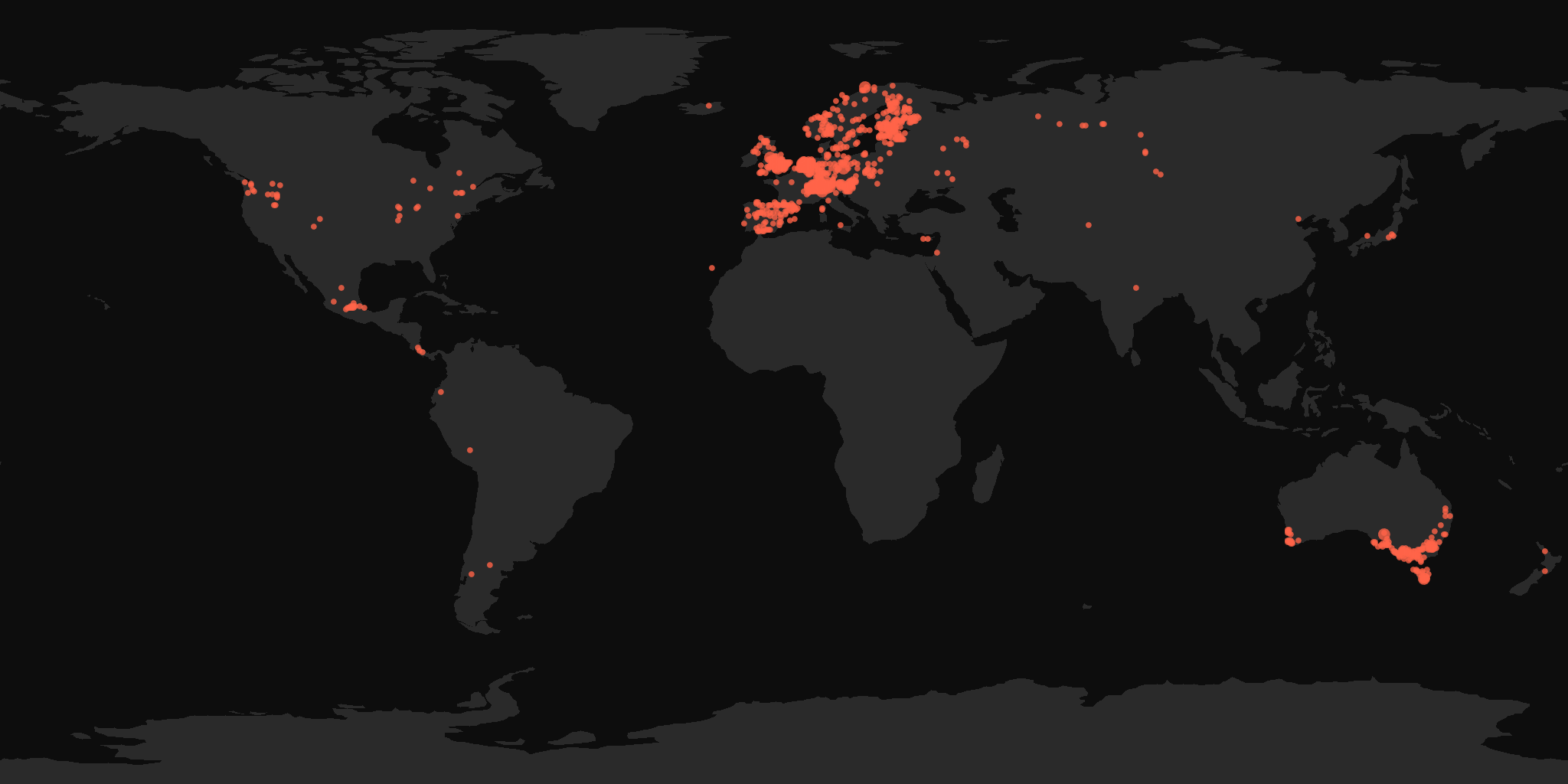
Based on reported sightings worldwide
How to Identify Black Morel
Cap
3-10 cm tall, conical to elongated-conical. Surface covered in a honeycomb pattern of pits and ridges. Ridges are dark brown to black, pits are lighter brown to grayish. The cap is attached directly to the stem at the base (not hanging free like a Verpa). Completely hollow inside.
Gills
None. Morels are ascomycetes, not gilled mushrooms. Spores are produced on the inner surfaces of the pits.
Stem
3-8 cm tall, pale whitish to cream, sometimes with a granular or slightly roughened surface. Completely hollow from base to tip. The cap attaches at the very bottom of the head, with no skirt-like overhang.
Spore Print
Cream to pale yellow-orange.
Odor
Earthy, pleasant, with a slightly smoky quality that intensifies when dried.
Mushrooms That Look Like Black Morel
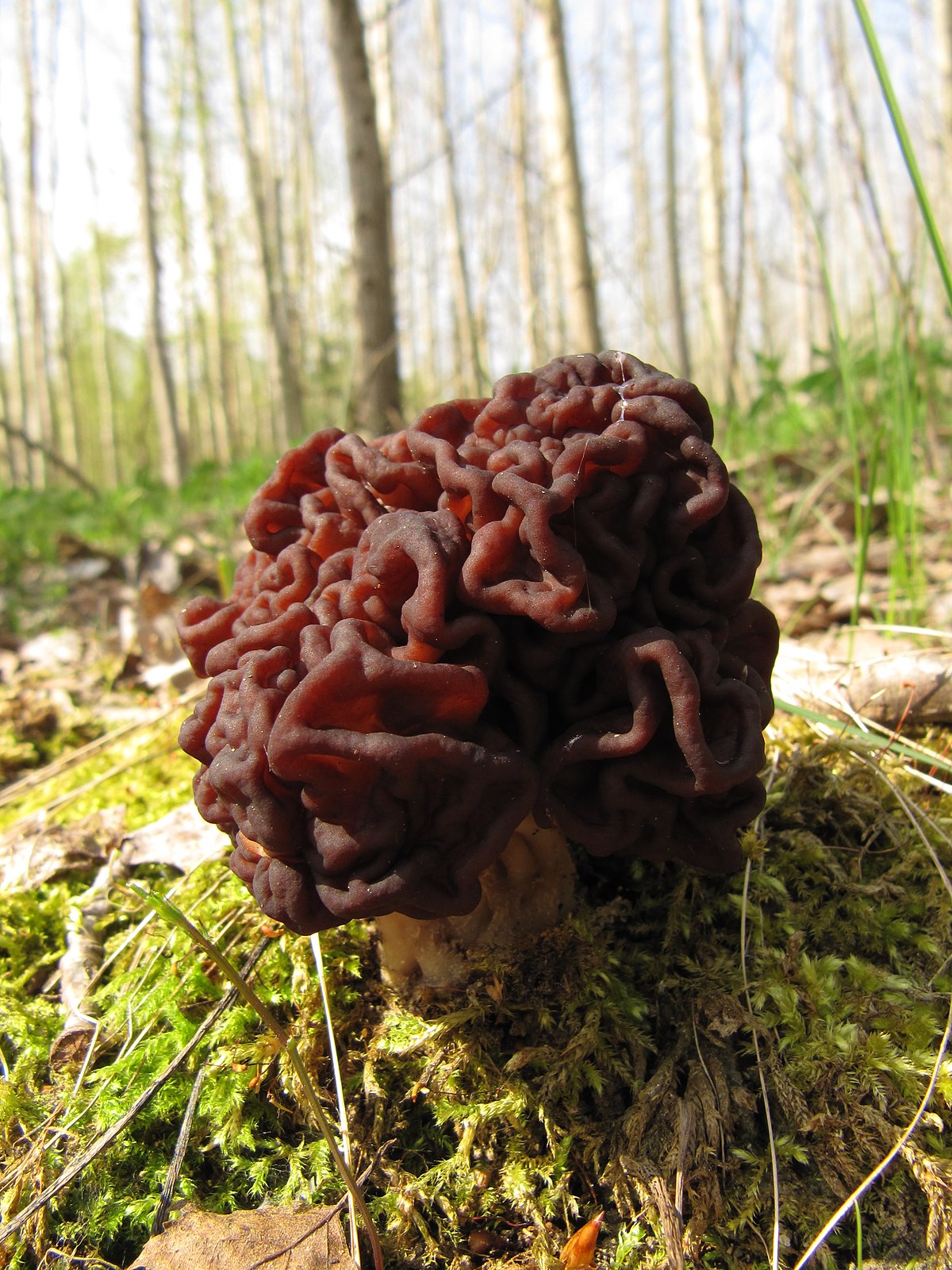
Brain-like, wrinkled surface rather than a honeycomb pattern of pits and ridges. The cap looks crumpled and irregular, not neatly pitted. Interior is chambered and cotton-like rather than cleanly hollow. Contains gyromitrin, a potentially deadly toxin. The distinction is clear once you know what to look for.
Side-by-side comparison →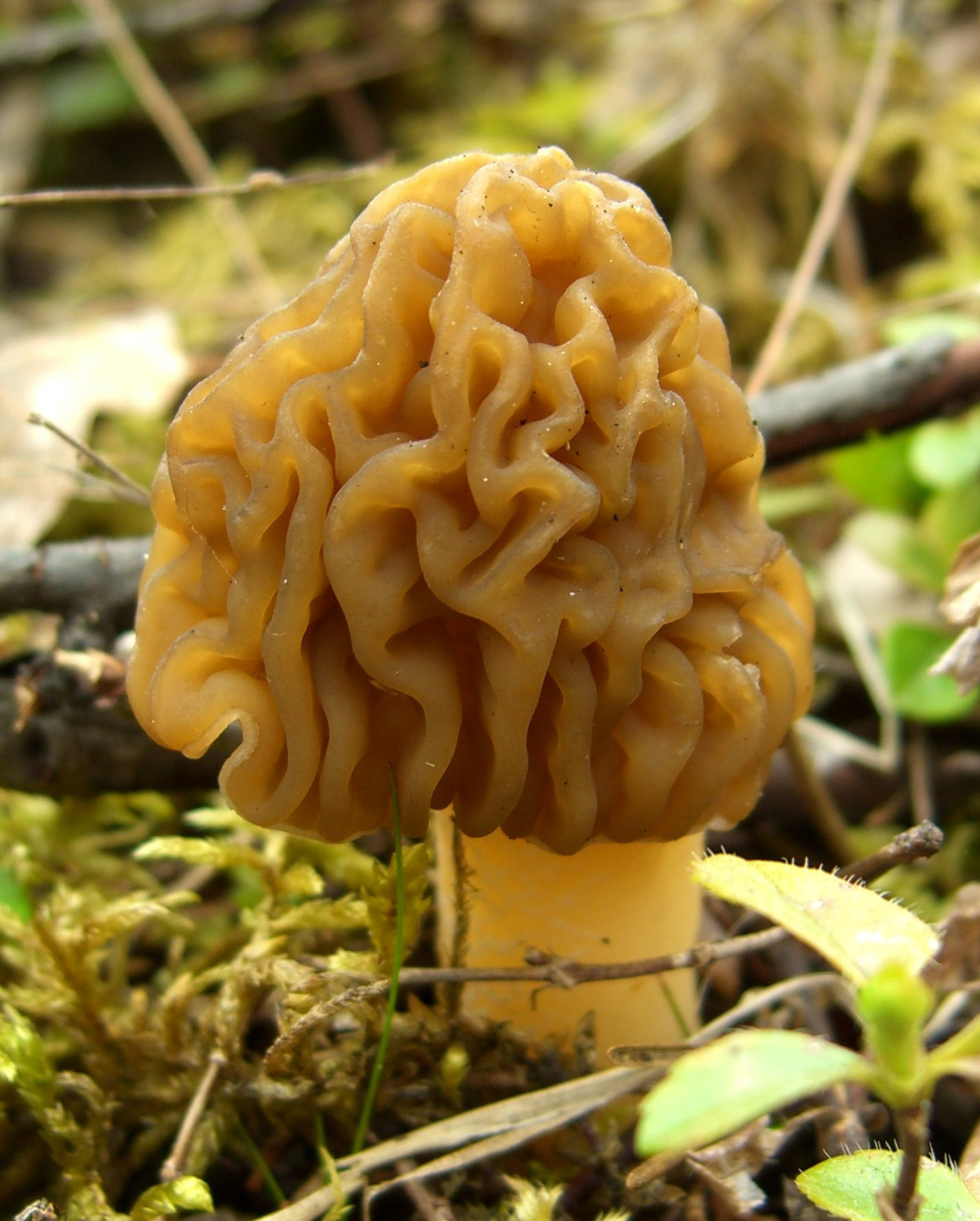
Cap hangs from the top of the stem like a thimble, attached only at the apex. True morels have the cap fused to the stem along its full length. Verpa stems are stuffed with cottony fibers rather than cleanly hollow. Edible with caution but can cause GI issues in some people.
Side-by-side comparison →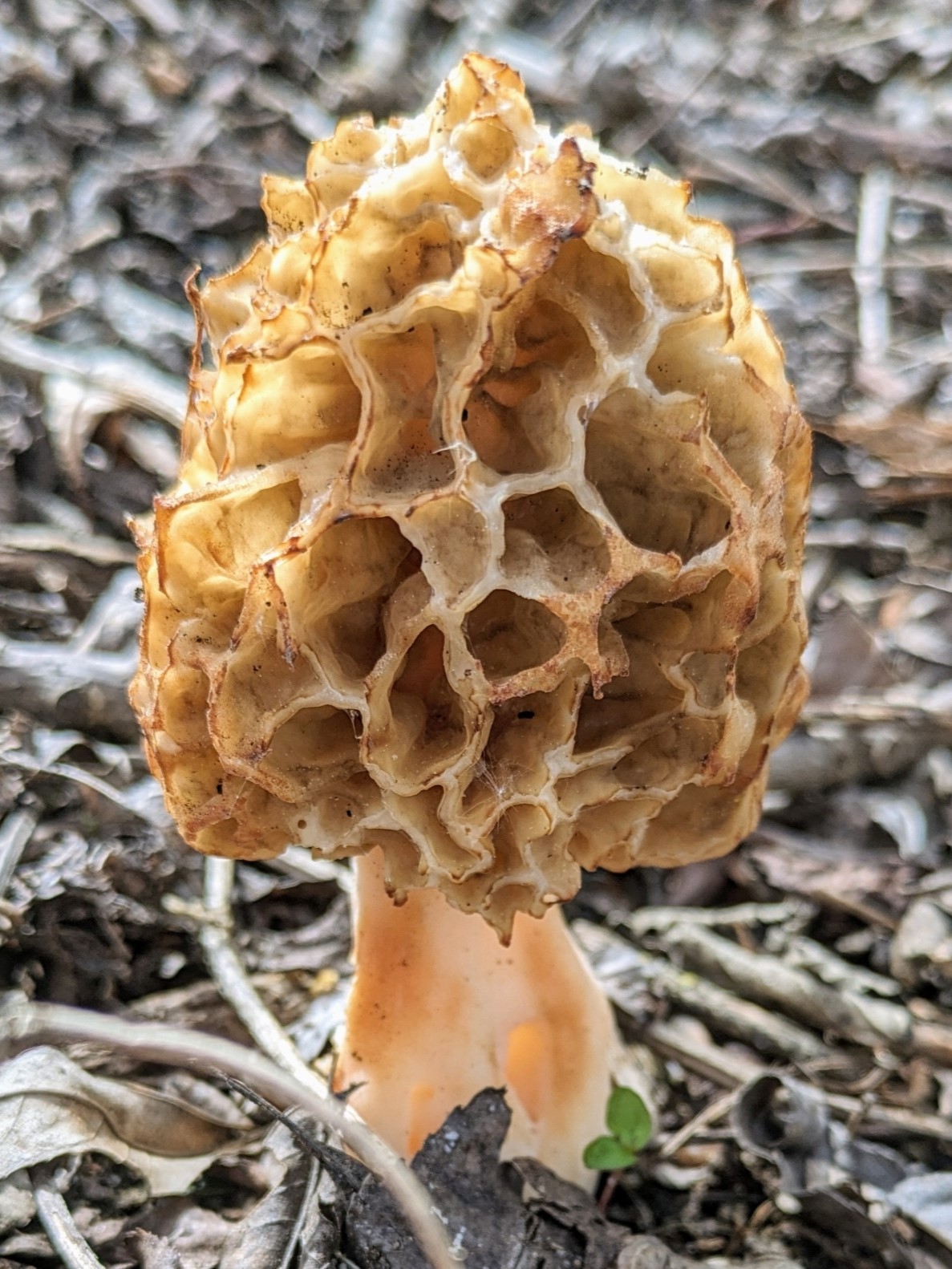
Lighter colored, with yellowish to tan pits and paler ridges. Tends to be rounder and less conical. Both species are excellent edibles. Black morels generally fruit earlier in the season and are more associated with conifers and fire.
Side-by-side comparison →Is Black Morel Edible?
A premier edible mushroom with deep, smoky, earthy flavor. Must be thoroughly cooked before eating; raw morels contain hydrazine compounds that are destroyed by heat. Never eat raw. Excellent sauteed, stuffed, dried, or in cream sauces. Pairs beautifully with asparagus, ramps, and spring onions.
Always verify with local experts before consuming wild mushrooms.
Found something that looks like this in the wild? Don't guess — identify it from a photo with Orangutany and check it against look-alikes before you touch it.