Chicken of the Woods Identification: A Forager's Field Guide
By Varun Vaid · Orangutany
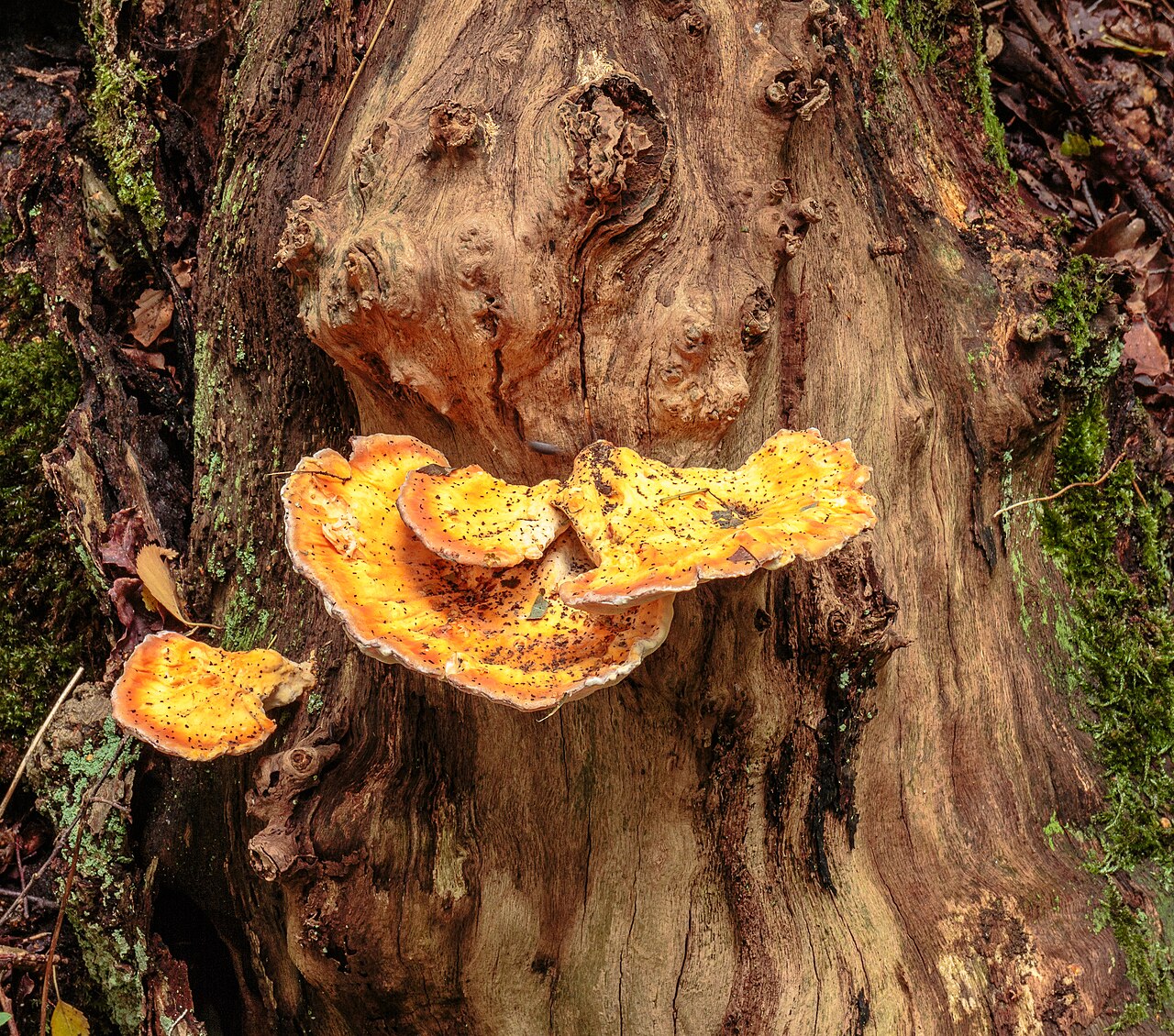
The first time I found chicken of the woods, I genuinely thought someone had stuck a painted shelf onto a fallen oak log. It was mid-August, somewhere along the Bruce Trail north of Toronto, and this thing was screaming orange. Not subtle orange, not “autumn leaves” orange. Electric, almost fluorescent, like someone had taken a highlighter to a tree stump. I crouched down and just stared at it for a good thirty seconds before I even touched it.
The edges were soft and pliable, almost like raw chicken breast. The top surface faded from bright orange at the growing edge into a muted yellow closer to where it attached to the wood. Underneath, instead of gills, there were thousands of tiny pores, pale sulfur yellow, smooth to the touch. I had been reading about this mushroom for months. My PhD supervisor back in Lancaster, who first got me into foraging, had told me “when you find your first chicken of the woods, you'll know.” He was right. There is no mistaking this thing once you've seen it in person. I cut a couple of the tender outer shelves with my knife, dropped them in my bag, and practically jogged back to the car.
What It Looks Like
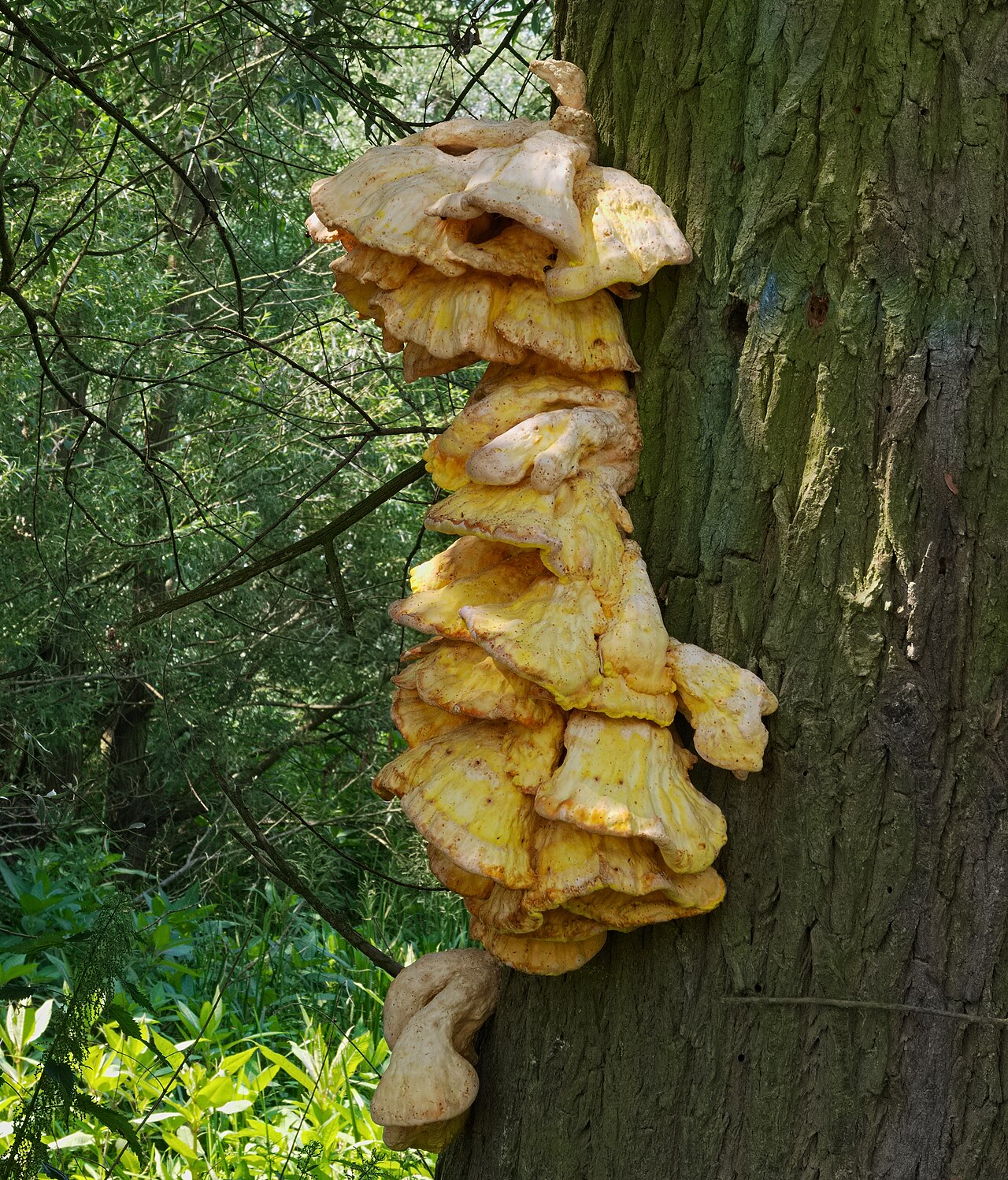
Chicken of the woods (Laetiporus sulphureus), described in detail on MushroomExpert.com, grows in overlapping brackets or shelves, often in large rosettes that can weigh several kilograms. Individual shelves range from 5 to 30 cm across. The top surface is bright orange to orange-yellow, often with a suede-like texture when young. The color fades as it ages, eventually turning pale and chalky. The growing edge is usually the most vivid, sometimes almost pinkish-orange.
Flip it over and you will see pores, not gills. This is a polypore. The pore surface is sulfur yellow when fresh, with very fine, almost pinprick-sized holes. If you do a spore print (place the pore surface face-down on dark paper), you will get a white print. The flesh is white to pale yellow, firm and somewhat moist in young specimens. Older specimens get dry, crumbly, and chalky. You do not want those.
One of the most useful field markers: there is no stem. Chicken of the woods attaches directly to wood via a broad base. If you find something with a stem that “looks like” chicken of the woods, it is not chicken of the woods.
Where and When to Find It
Laetiporus sulphureus is a wood-decay fungus. It feeds on dead or dying hardwood trees, with a strong preference for oak. You will also find it on cherry, beech, willow, and occasionally maple. It fruits from late spring through early fall in eastern North America, with peak season from June to September depending on your latitude and rainfall.
Look for it on standing dead trees, fallen logs, and large stumps. It tends to appear after a few days of rain followed by warm weather. The same log or stump will often produce flushes year after year. My neighbor has a sugar maple in their front yard that produces a beautiful cluster of chicken of the woods every September like clockwork. I have been watching it for three years now. Same spot on the trunk, same time of year, without fail.
If you are on the west coast, be aware that the species situation is different. Laetiporus conifericola grows on conifers in the Pacific Northwest. It looks very similar but the host tree matters enormously for edibility, which brings us to the next section.
The Trees Matter
This is something a lot of beginner foragers miss. Not all chicken of the woods is equally safe to eat, and the host tree is the variable that matters most. The general rule: stick to hardwoods, especially oak.
Chicken of the woods growing on conifers (pine, spruce, hemlock) or on eucalyptus has caused gastrointestinal upset in a significant number of people. The exact mechanism is not fully understood, but it likely has to do with compounds the fungus absorbs from the host wood. Some people eat conifer-grown specimens with no issues. Others get nausea, vomiting, and stomach cramps. It is not worth the gamble.
If you cannot identify the host tree, that is a reason to pass. Learn your trees. At minimum, learn to tell an oak from a conifer. If you are picking from a stump where the bark is gone and you cannot identify the species, leave it alone.
Cooking It Right
The nickname “poor man's chicken” exists for a reason. When you get a young, tender specimen and cook it properly, the texture is remarkably close to actual chicken breast. The key word there is “young.” Only harvest the outer edges of the brackets, the part that is still soft, pliable, and moist. If it is dry, crumbly, or has started to fade to white, leave it. Old chicken of the woods is like chewing on cork.
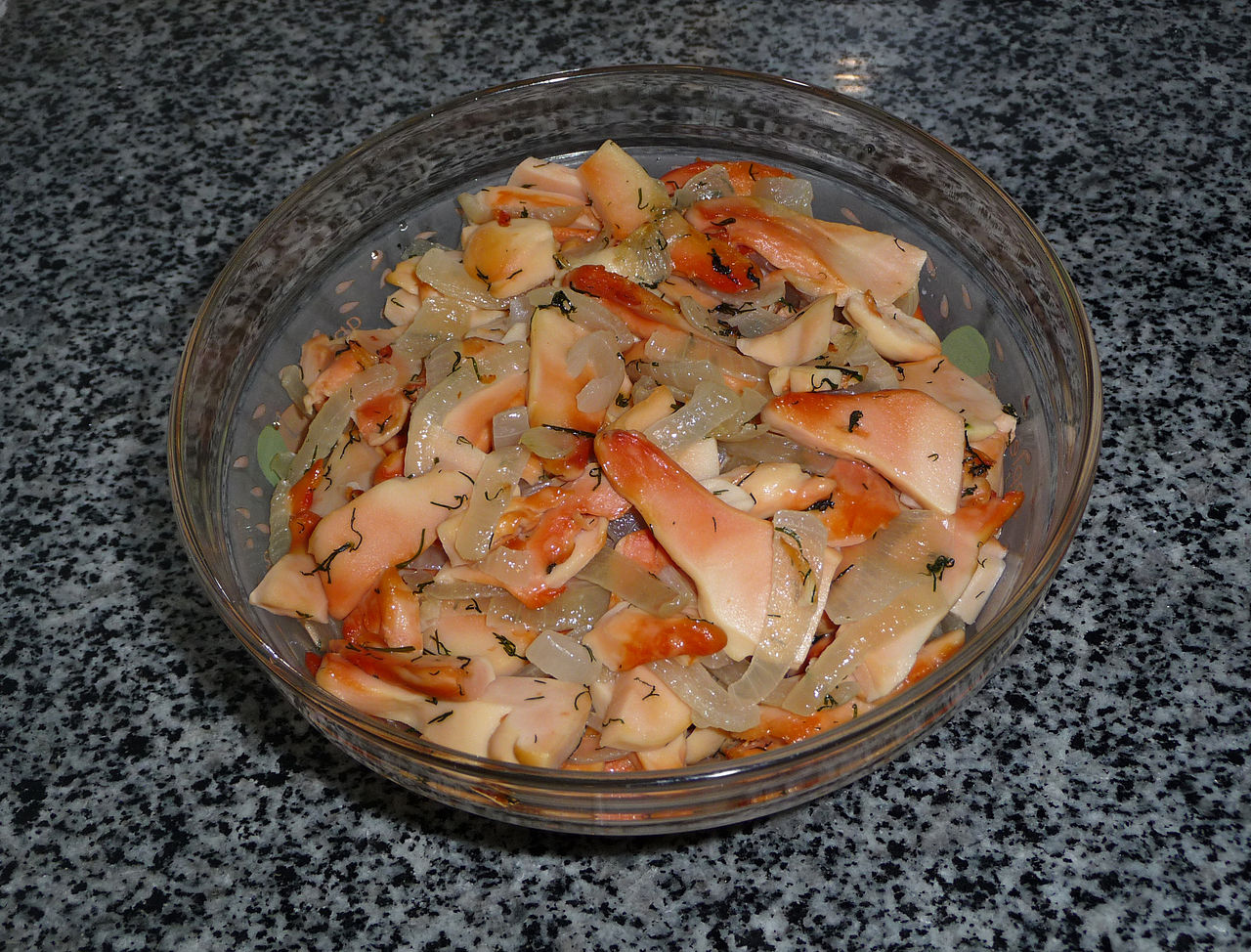
Slice the tender edges into strips about 1 cm thick. Get a pan hot with butter (or olive oil if you prefer), and sautee the strips until they are golden on both sides and cooked through. Salt, pepper, maybe a squeeze of lemon. That is it. You do not need to do anything fancy. Some people bread and fry it like actual chicken cutlets, and honestly that works great too.
The first time I cooked it, I brought it home and sauteed it in butter with garlic and a bit of salt. My mom was skeptical. She grew up in India where wild mushroom foraging is not really a thing, and the idea of her son bringing home fungus from a log in the woods did not inspire confidence. But she tried a piece, paused, and said “this actually tastes like chicken.” My dad had seconds. That was the moment I knew this mushroom was special. Even my parents, who have zero interest in foraging, were impressed.
Look-alikes
Chicken of the woods is considered one of the safer mushrooms for beginners precisely because it does not have many dangerous look-alikes. That said, there are a couple of species that occasionally cause confusion.
Black-staining Polypore (Meripilus giganteus)
This is probably the most common mix-up. Meripilus grows in large overlapping rosettes at the base of trees, similar to chicken of the woods. But the color is different: brown to tan on top, not orange. And here is the definitive test. Press or cut the flesh and it stains black within minutes. Chicken of the woods does not stain black. If it bruises dark, it is not what you want.
Jack O'Lantern (Omphalotus olearius)
Jack O'Lanterns are orange and grow on wood, which is where the similarity ends. They have true gills (not pores), they grow in clusters of individual capped mushrooms with stems, and they are shaped completely differently from the shelf-like brackets of chicken of the woods. Jack O'Lanterns will give you serious GI distress but are not lethal. Still, if you look at the underside and see gills instead of pores, walk away. Simple as that.
Allergic Reactions and Sensitivities
Here is something that catches people off guard: even when properly identified and properly cooked, chicken of the woods causes GI distress in roughly 10% of people who eat it, a reaction consistent with individual sensitivity patterns described in the NIH mushroom toxicity reference. Nausea, stomach cramps, sometimes vomiting. The reaction seems to be individual sensitivity rather than anything wrong with the mushroom itself.
The standard advice, and I follow this myself, is to try a very small amount the first time. Cook a single strip, eat it, and wait 24 hours. If you feel fine, go ahead and eat a full portion next time. Do not serve a big batch to a dinner party the first time you find it. You do not want to discover that three of your guests are in the unlucky 10% all at once.
Also worth noting: some people who react to specimens from one tree are fine with specimens from a different tree. The host wood and the age of the mushroom both seem to play a role. If you have reacted before, it might be worth trying again with a specimen from a different hardwood, in a small amount.
Found something in the wild you can't identify? Try Orangutany, it can ID mushrooms from a photo.